12 Most Beautiful Monasteries in Bulgaria to Visit in 2026

Bulgaria’s mountains, forests, and historic towns are home to some of the most remarkable Orthodox monasteries in the Balkans.
The best monasteries in Bulgaria are much more than religious landmarks. For centuries, they served as centers of faith, education, art, literature, and Bulgarian cultural identity, preserving traditions through some of the most turbulent periods in the country’s history.
Some are famous throughout the world. Rila Monastery, surrounded by the Rila Mountains, is one of Bulgaria’s most recognizable landmarks and a UNESCO World Heritage Site. Others remain quieter discoveries hidden among forests, cliffs, and mountain valleys.
You can admire extraordinary frescoes at Troyan Monastery, explore the medieval rock chambers of Aladzha Monastery, experience the dramatic mountain setting of Glozhene Monastery, or combine Rozhen Monastery with a trip through the sandstone landscapes and vineyards surrounding Melnik.
Many Bulgarian monasteries are also closely connected with the country’s history. Revolutionaries, writers, monks, artists, and national revival figures passed through these religious centers, leaving stories that extend far beyond their churches and icons.
And you don’t need to be religious to appreciate them.
Travelers come for the architecture, frescoes, mountain scenery, history, photography, peaceful courtyards, and opportunity to experience an important part of Bulgarian culture.
Whether you’re planning a dedicated monastery road trip or simply want to add one or two historic religious sites to a wider Bulgaria itinerary, these destinations are well worth the journey.
Here are 12 of the most beautiful and historically significant monasteries in Bulgaria to visit, including what makes each one special and what you shouldn’t miss while you’re there.
12 Most Beautiful Monasteries in Bulgaria
Bulgaria has a long Orthodox Christian tradition, and monasteries have played an important role in the country’s religious, cultural, artistic, and educational history for centuries.
Many were established in remote mountain locations, where monks created communities surrounded by forests, rivers, cliffs, and valleys. Some were destroyed and rebuilt several times, while others preserve medieval churches, Bulgarian National Revival architecture, historic icons, and remarkable frescoes.
Today, visiting the monasteries in Bulgaria offers much more than an opportunity to see religious buildings. These sites provide a window into different periods of Bulgarian history while taking travelers to some of the country’s most beautiful landscapes.
You don’t need to visit all 12 during one trip. Rila, Bachkovo, and Troyan are excellent choices for first-time visitors, while smaller monasteries such as Glozhene, Cherepish, Sokolski, and Zemen can be particularly rewarding for travelers exploring Bulgaria by car.
Here are the monasteries worth putting at the top of your Bulgaria itinerary.
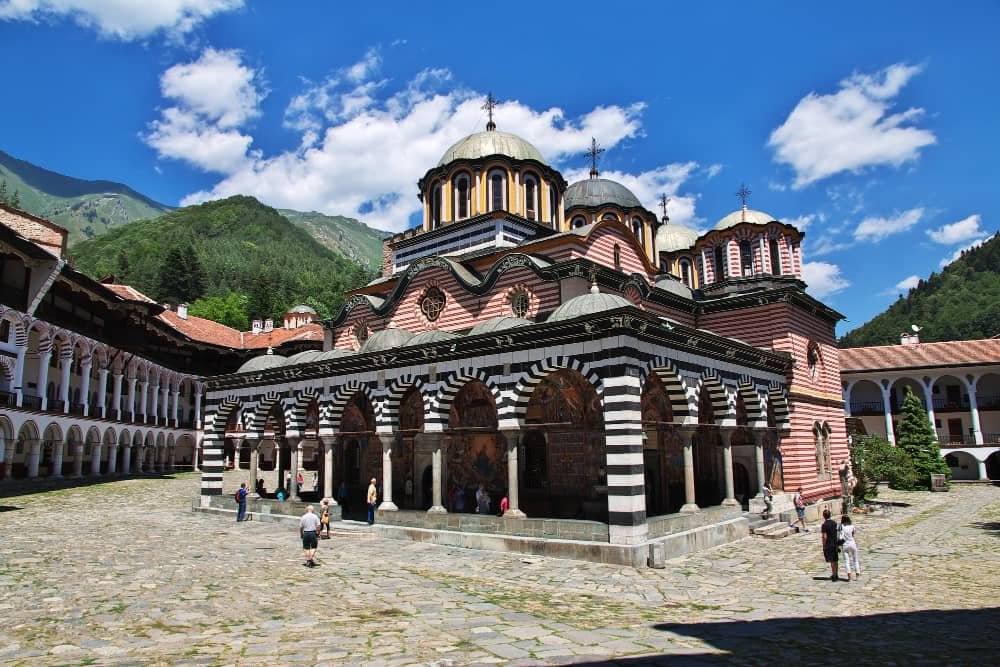
1. Rila Monastery – Best Overall
If you visit only one monastery in Bulgaria, Rila Monastery should be at the top of your list.
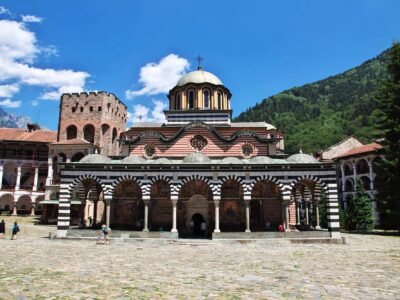
Surrounded by the forested peaks of the Rila Mountains, the monastery is Bulgaria’s largest and most famous Orthodox monastic complex. Its striped arcades, stone walls, colorful frescoes, domes, and dramatic mountain setting make it one of the country’s most recognizable landmarks.
The monastery’s history is connected with Saint Ivan of Rila, a 10th-century hermit who became one of Bulgaria’s most revered saints. A monastic community developed around his spiritual legacy, although much of the complex visitors see today dates from later periods following repeated destruction and rebuilding.
Rila Monastery is also Bulgaria’s best-known monastic UNESCO World Heritage Site.
Explore the Main Church
At the center of the courtyard stands the Church of the Nativity of the Virgin, constructed during the 19th century.
Its exterior galleries are covered with extraordinarily detailed frescoes depicting biblical scenes, saints, angels, demons, and moral themes.
Don’t rush inside immediately. Spend time examining the paintings around the exterior first—the amount of detail is remarkable.
Inside, you’ll find additional frescoes, religious objects, and an elaborate iconostasis.
See Hrelyo’s Tower
Beside the main church stands Hrelyo’s Tower, the oldest surviving structure within the present monastery complex.
Dating from the 14th century, the fortified medieval tower provides an important connection with an earlier period in Rila Monastery’s history.
Its heavy stone construction contrasts dramatically with the colorful 19th-century architecture surrounding it.
Visit the Monastery Museum
If you have enough time, add the monastery museum to your visit.
Its collections help explain Rila’s religious and cultural importance and include icons, manuscripts, church objects, historical artifacts, and works of craftsmanship connected with the monastery.
The museum adds useful context to what you see throughout the complex rather than treating Rila simply as a beautiful photography stop.
Explore Beyond the Main Complex
The surrounding mountains are part of what makes Rila Monastery so memorable.
Travelers with additional time can explore nearby walking routes and places associated with Saint Ivan of Rila, including the area connected with his hermitage.
This makes it possible to combine cultural sightseeing with a short mountain excursion.
Why Rila Monastery Is Worth Visiting
Rila Monastery brings together nearly everything that makes the monasteries in Bulgaria fascinating: centuries of history, Orthodox spirituality, extraordinary religious art, Bulgarian cultural heritage, and spectacular mountain scenery.
It’s also deeply connected with the preservation of Bulgarian identity and culture through different periods of the country’s history.
Rila is also one of the country’s essential landmarks, so don’t miss our guide to the top attractions in Bulgaria when planning the rest of your trip.
Allow at least a few hours rather than treating it as a quick roadside stop. Walk through the courtyard, study the frescoes, visit the museum, and spend some time appreciating the surrounding Rila Mountains.
For first-time visitors, Rila Monastery is the essential Bulgarian monastery experience.

2. Bachkovo Monastery – Best Near Plovdiv
Set among the forested foothills of the Rhodope Mountains, Bachkovo Monastery is one of the oldest and most important Orthodox monasteries in Bulgaria.
Located about 30 kilometers south of Plovdiv, the monastery was founded in 1083 and developed into an important religious and cultural center over the centuries.
Its combination of medieval heritage, historic churches, religious art, peaceful courtyards, and mountain scenery makes Bachkovo an excellent addition to a southern Bulgaria itinerary.
Explore the Monastery Complex
The complex contains several historic religious buildings surrounded by traditional monastery architecture.
At its heart is the Cathedral Church of the Dormition of the Mother of God, where visitors can admire religious artwork, icons, and richly decorated interiors.
One of the monastery’s most treasured objects is an icon of the Virgin Mary, which has attracted pilgrims to Bachkovo for generations.
See the Medieval Ossuary
One of Bachkovo’s most historically significant structures stands a short distance from the main courtyard.
The medieval ossuary survives from the monastery’s earliest period and is particularly important for its architecture and historic frescoes.
It’s easy to focus entirely on the main monastery complex, but travelers interested in medieval Bulgarian religious heritage shouldn’t overlook this part of the site.
Visit the Refectory
Another highlight is the monastery’s historic refectory, where monks traditionally gathered for meals.
Its architecture and wall paintings provide another glimpse into monastic life and the artistic traditions preserved at Bachkovo.
Access to individual areas can vary, so check what is open during your visit.
Combine Bachkovo With Asen’s Fortress
One of the advantages of visiting Bachkovo is its location.
The monastery can easily be combined with nearby Asen’s Fortress, dramatically positioned above the Asenitsa River valley.
Together, Bachkovo Monastery and Asen’s Fortress make an excellent day trip from Plovdiv, combining Orthodox heritage, medieval history, mountain scenery, and historic architecture.
Why Bachkovo Monastery Is Worth Visiting
Bachkovo offers a different experience from Rila.
Rila impresses immediately with its monumental courtyard and mountain setting, while Bachkovo feels more intimate and reveals layers of medieval, Byzantine, Georgian, and Bulgarian Orthodox heritage accumulated over centuries.
For travelers staying in Plovdiv or exploring the Rhodope Mountains, Bachkovo is one of the easiest and most rewarding monasteries in Bulgaria to add to an itinerary.
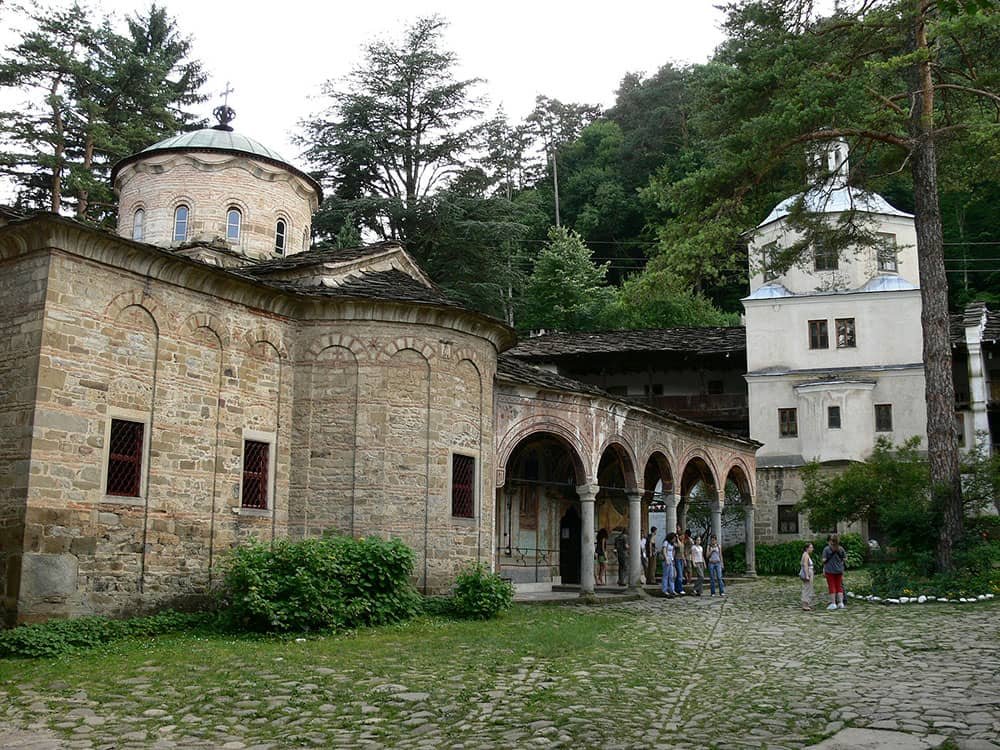
Photo: Nenko Lazarov / Wikipedia
3. Troyan Monastery – Best for Bulgarian Revival Art
Hidden among the forested foothills of the Balkan Mountains, Troyan Monastery is one of the largest and most important Orthodox monasteries in Bulgaria.
Located near the town of Troyan and the village of Oreshak, the monastery developed into an important spiritual and cultural center over the centuries. Today, it’s especially famous for its Bulgarian National Revival architecture, religious artwork, and frescoes associated with Zahari Zograf, one of Bulgaria’s best-known 19th-century painters.
The peaceful mountain setting also makes Troyan an excellent stop for travelers exploring central Bulgaria.
Admire the Frescoes of Zahari Zograf
One of the main reasons to visit Troyan Monastery is its remarkable collection of 19th-century frescoes.
Zahari Zograf decorated the monastery’s main church, the Church of the Dormition of the Mother of God, during the Bulgarian National Revival.
Take time to examine the paintings closely. Their biblical scenes, saints, symbolic imagery, and expressive figures provide an excellent introduction to Bulgarian Orthodox religious art from this period.
One particularly interesting detail is a self-portrait of Zahari Zograf, an unusual feature in Orthodox church decoration and something worth looking for during your visit.
See the Monastery’s Miraculous Icon
Troyan Monastery is also an important pilgrimage destination.
Its most revered religious treasure is the icon known as the Three-Handed Virgin (Troeruchitsa).
The icon holds an important place in the monastery’s spiritual traditions and continues to attract Orthodox pilgrims as well as visitors interested in Bulgarian religious heritage.
Walk Through the Monastery Courtyards
The complex itself is part of the attraction.
Traditional multi-level monastery buildings surround peaceful courtyards, with wooden balconies, stone passages, arches, and mountain scenery creating a distinctly different atmosphere from Bulgaria’s urban churches.
Rather than visiting only the main church, spend some time walking around the grounds and observing the architectural details.
Combine Troyan With Oreshak
The nearby village of Oreshak has long been associated with Bulgarian crafts and makes a natural addition to a monastery visit.
Depending on your itinerary, you can combine Troyan Monastery with local craft traditions, mountain scenery, and other destinations around the central Balkan Mountains.
The region is particularly attractive for a slower road trip through Bulgaria’s interior.
Why Troyan Monastery Is Worth Visiting
Troyan Monastery combines Orthodox spirituality, Bulgarian National Revival art, traditional architecture, and beautiful mountain surroundings.
It also provides an excellent contrast with Rila and Bachkovo. Each of these major monasteries developed its own architectural character and artistic heritage, so visiting more than one doesn’t feel repetitive.
For travelers interested in Bulgarian frescoes, Orthodox icons, National Revival history, traditional crafts, and the Balkan Mountains, Troyan is easily one of the best monasteries in Bulgaria to visit.
4. Rozhen Monastery – Best Near Melnik
Surrounded by the dramatic landscapes of southwestern Bulgaria, Rozhen Monastery is one of the country’s most atmospheric historic monasteries.
Located near the small village of Rozhen and only a short drive from Melnik, the monastery sits beneath the distinctive sandstone formations known as the Melnik Earth Pyramids.
Its traditional architecture, peaceful courtyard, historic frescoes, carved woodwork, and beautiful setting make it an excellent destination for travelers exploring the Pirin region.
Explore the Historic Monastery
Rozhen Monastery has medieval origins, although much of the complex visible today reflects reconstruction and artistic work from later centuries.
Traditional monastery buildings surround an intimate central courtyard, creating a quieter atmosphere than you’ll typically experience at larger sites such as Rila Monastery.
At the center stands the Church of the Nativity of the Mother of God, where visitors can see historic frescoes, icons, and an impressive carved wooden iconostasis.
Take time to look around the entire complex rather than simply entering the church and leaving. Wooden balconies, stone walls, covered passages, and views toward the surrounding landscape are all part of Rozhen’s appeal.
Admire the Frescoes and Woodcarving
Rozhen Monastery preserves religious artwork from different periods of its long history.
Its frescoes, icons, and detailed woodcarving provide another opportunity to experience the artistic traditions associated with Bulgarian Orthodox monasteries.
The monastery is particularly rewarding for travelers interested in religious art and traditional Bulgarian architecture, as the relatively compact complex makes it easy to notice smaller architectural and decorative details.
Walk to the Grave of Yane Sandanski
Near the monastery is the grave of Yane Sandanski, an important revolutionary figure associated with the struggle for liberation in Macedonia and the wider history of the region.
His grave is located near the Church of Saints Cyril and Methodius, a short walk from the monastery.
This adds another historical dimension to a visit and demonstrates how religious sites in Bulgaria often intersect with the country’s revolutionary and political history.
Combine Rozhen Monastery With Melnik
One of the best reasons to include Rozhen Monastery in your itinerary is the opportunity to combine it with Melnik.
Bulgaria’s smallest town is famous for its traditional architecture, historic houses, wine culture, and unusual sandstone surroundings.
A particularly good day in southwestern Bulgaria can combine:
Melnik → Melnik Earth Pyramids → Rozhen Monastery
Travelers interested in hiking can also explore trails through the sandstone landscape between the area around Melnik and Rozhen.
If you’re building a longer road trip, our guide to why Bulgaria should be your next travel destination has more ideas for combining history, nature, food, and traditional towns.
Why Rozhen Monastery Is Worth Visiting
Rozhen doesn’t have the monumental scale of Rila Monastery, but that’s part of its charm.
Its quiet courtyard, historic religious art, traditional architecture, mountain setting, and proximity to Melnik create one of the most enjoyable monastery experiences in southwestern Bulgaria.
For travelers interested in combining Bulgarian history, Orthodox heritage, traditional villages, wine country, hiking, and unusual landscapes, Rozhen is one of the best monasteries in Bulgaria to visit.

5. Dryanovo Monastery – Best for Revolutionary History
Tucked into a dramatic river valley in the Balkan Mountains, Dryanovo Monastery combines Orthodox heritage, Bulgarian revolutionary history, and beautiful natural surroundings.
Located near the town of Dryanovo, between Veliko Tarnovo and Gabrovo, the monastery has medieval origins but was destroyed and rebuilt several times over its long history.
Its most famous chapter came during the April Uprising of 1876, when Bulgarian revolutionaries used the monastery as a defensive position during their struggle against Ottoman rule.
Today, Dryanovo is one of the most historically significant monasteries in Bulgaria and an excellent stop on a journey through central Bulgaria.
Learn About the April Uprising
Dryanovo Monastery is closely associated with the revolutionary detachment led by Pop Hariton and Bacho Kiro during the April Uprising.
Hundreds of rebels and supporters took refuge within the monastery complex and resisted Ottoman forces during several days of fighting in May 1876.
The monastery suffered extensive damage during the battle and was later rebuilt.
A visit therefore offers much more than religious history. It provides a direct connection with one of the defining periods of Bulgaria’s National Revival and liberation movement.
Visit the Church of St. Archangel Michael
At the center of the complex stands the Church of St. Archangel Michael.
One unusual reminder of the fighting in 1876 can still be seen on the church itself: damage associated with the battle was deliberately preserved rather than completely erased during later restoration.
Look around the monastery grounds for memorials and historical information explaining the people and events connected with the uprising.
Dryanovo is one of many places where Bulgaria’s struggle for independence can still be experienced today. See more in our guide to the best historical places in Bulgaria.
Walk to Bacho Kiro Cave
One of the biggest advantages of visiting Dryanovo Monastery is its natural setting.
The nearby Bacho Kiro Cave is within walking distance and contains impressive underground formations as well as evidence of prehistoric human activity.
Combining the monastery and cave makes this an excellent half-day destination, particularly for families or travelers who want to mix Bulgarian history with nature.
The surrounding area also offers walking trails through the rocky valley and forests.
Combine Dryanovo With Gabrovo and Veliko Tarnovo
Dryanovo’s location makes it easy to incorporate into a central Bulgaria road trip.
You can combine it with Gabrovo, Etar Open-Air Museum, Sokolski Monastery, or continue toward Veliko Tarnovo and the historic sites surrounding Bulgaria’s former medieval capital.
This region contains enough cultural and historical attractions to justify several days rather than a quick drive through.
Why Dryanovo Monastery Is Worth Visiting
Dryanovo Monastery stands out because its story connects Orthodox Christianity, Bulgarian revolutionary history, national identity, and the dramatic landscapes of the Balkan Mountains.
While Rila impresses with its architecture and Troyan with its frescoes, Dryanovo tells one of the most powerful stories of Bulgaria’s struggle for liberation.
For travelers interested in Bulgarian history, the April Uprising, monasteries, caves, hiking, and scenic mountain destinations, Dryanovo Monastery is one of the most rewarding places to visit in central Bulgaria.

Photo: Vberger / Wikipedia
6. Transfiguration Monastery – Best Near Veliko Tarnovo
Set beneath dramatic cliffs in the Yantra River valley, the Transfiguration Monastery—also known as Preobrazhenski Monastery—is one of the most impressive monasteries in central Bulgaria.
Located just outside Veliko Tarnovo, the monastery provides an excellent addition to a visit to Bulgaria’s historic medieval capital.
The monastery has roots reaching back to the medieval period, although much of the complex visitors see today was reconstructed during the Bulgarian National Revival in the 19th century.
Its combination of mountain scenery, historic architecture, and remarkable frescoes makes it one of the best monasteries in Bulgaria for travelers interested in art and history.
Admire the Frescoes of Zahari Zograf
One of the greatest reasons to visit the Transfiguration Monastery is the artwork associated with renowned Bulgarian National Revival painter Zahari Zograf.
The monastery’s main church, dedicated to the Transfiguration of Christ, contains impressive 19th-century frescoes.
Among the most memorable is the famous Wheel of Life, an elaborate composition illustrating the stages of human existence and the temporary nature of worldly success.
Rather than rushing through the church, spend time studying the paintings and their symbolism.
Explore the Monastery Architecture
The complex includes traditional monastic buildings arranged beneath the steep rock formations above the Yantra valley.
Its architecture reflects the Bulgarian National Revival period and the work of important craftsmen associated with some of the country’s most significant religious buildings.
The contrast between the monastery’s white walls, surrounding forest, and towering cliffs makes the setting particularly photogenic.
Combine It With Veliko Tarnovo
The Transfiguration Monastery’s location is one of its biggest advantages.
It can easily be combined with a day exploring Veliko Tarnovo, where major historical attractions include Tsarevets Fortress, the old streets around Samovodska Charshiya, and churches connected with Bulgaria’s medieval past.
You can also combine the monastery with nearby Arbanasi, known for its historic houses and richly decorated churches.
This creates an excellent historical route:
Veliko Tarnovo → Transfiguration Monastery → Arbanasi
Why Transfiguration Monastery Is Worth Visiting
The Transfiguration Monastery combines several elements that make Bulgarian monasteries so rewarding: National Revival architecture, extraordinary frescoes, Orthodox heritage, mountain scenery, and proximity to major historical attractions.
It’s also considerably easier to incorporate into a central Bulgaria itinerary than the old article suggested—the monastery is near Veliko Tarnovo, not Sofia.
For travelers already visiting Veliko Tarnovo, the Transfiguration Monastery is one of the best nearby religious and cultural sites to add to the trip.

7. Aladzha Monastery – Best Rock Monastery
Hidden among the forests near Bulgaria’s Black Sea coast, Aladzha Monastery offers a completely different experience from the large Orthodox complexes at Rila, Bachkovo, and Troyan.
Rather than being built around a traditional courtyard, this medieval monastery was carved directly into a limestone cliff.
Located near Golden Sands and Varna, Aladzha is one of the most unusual monasteries in Bulgaria and an excellent cultural stop for travelers spending time along the northern Black Sea coast.
Explore the Rock-Cut Monastery
The surviving monastery chambers are arranged on different levels within the cliff.
Monks used natural caves and carved spaces to create cells, chapels, burial areas, corridors, and other rooms needed for monastic life.
Walking through these spaces gives you a sense of how dramatically different life here would have been from life in Bulgaria’s larger monastery communities.
The elevated openings also provide beautiful views toward the surrounding forest.
Discover Its Medieval History
The monastery is generally associated with the medieval Orthodox monastic tradition, particularly during the period of the Second Bulgarian Empire.
Although the site no longer preserves the elaborate interiors seen at active monasteries such as Rila or Troyan, traces of its religious past and rock-cut architecture make it archaeologically fascinating.
Its abandoned chambers also create an atmosphere unlike almost any other monastery on this list.
Visit the Museum
A small museum near the site provides additional context about Aladzha Monastery, medieval monastic life, archaeological discoveries, and Christianity in the region.
It’s worth visiting before or after exploring the rock chambers because the surviving ruins alone don’t always make the original purpose of each space immediately obvious.
Explore the Surrounding Forest
Aladzha Monastery lies within a wooded natural setting, making it easy to combine history with a short walk.
Nearby are additional caves and archaeological remains traditionally known as the Catacombs, associated with earlier Christian activity in the area.
The shaded forest also makes Aladzha a welcome change of pace from the busy beaches and resorts along the coast.
Combine Aladzha With Varna and the Black Sea Coast
Aladzha is particularly convenient for travelers staying around Varna or Golden Sands.
A visit can easily become part of a day combining:
Varna → Aladzha Monastery → Golden Sands → Black Sea coast
This makes it one of the easiest Bulgarian monasteries to incorporate into a beach-focused vacation without traveling deep into the country’s interior.
Why Aladzha Monastery Is Worth Visiting
Aladzha stands out because it shows a completely different form of Bulgarian monastic life.
Instead of monumental churches, colorful courtyards, and National Revival architecture, you’ll discover medieval chambers carved into rock, archaeological remains, forest trails, and centuries of religious history.
For travelers interested in rock monasteries, medieval Bulgaria, archaeology, unusual architecture, and Black Sea attractions, Aladzha Monastery is one of the most distinctive monasteries in Bulgaria to visit.
8. Glozhene Monastery – Best Mountain Setting
Perched high above the surrounding forests of the Balkan Mountains, Glozhene Monastery has one of the most dramatic settings of any monastery in Bulgaria.
Located near the village of Glozhene and the town of Teteven, the monastery sits on a rocky outcrop overlooking the surrounding mountains and valleys.
Unlike Bulgaria’s larger monastery complexes, Glozhene feels relatively compact and secluded. Its remote location, traditional architecture, and sweeping views make the journey itself an important part of the experience.
Discover the Monastery’s History
Glozhene Monastery is traditionally associated with medieval Bulgarian history, although the complex has undergone significant changes, destruction, and reconstruction over the centuries.
According to monastery tradition, its origins are connected with Prince Georgi Glozh, who came to the region during the medieval period and established a religious foundation here.
As with many centuries-old monasteries, legends and documented history have become intertwined, so some stories surrounding its earliest foundation should be understood as local tradition rather than firmly established fact.
Explore the Monastery Complex
The monastery’s buildings appear almost to grow from the rocky mountain ridge.
Inside the compact complex, visitors can explore the church and traditional monastic spaces while enjoying views across the surrounding landscape.
Glozhene doesn’t have the monumental scale or elaborate fresco-covered courtyards of Rila or Troyan. Its greatest attraction is the combination of history, isolation, architecture, and extraordinary location.
That quieter atmosphere can make it especially memorable.
Learn About Vasil Levski
Glozhene Monastery is also traditionally connected with Vasil Levski, Bulgaria’s most famous revolutionary.
Levski traveled extensively through Bulgarian lands while organizing revolutionary committees against Ottoman rule, and monasteries frequently provided shelter and support to members of the national liberation movement.
The monastery preserves traditions associated with his presence, adding another layer of Bulgarian National Revival history to the site.
Combine Glozhene With Teteven
The nearby town of Teteven makes a good base for exploring this part of the Balkan Mountains.
The surrounding region offers mountain scenery, hiking opportunities, waterfalls, villages, and other cultural attractions, making Glozhene particularly suitable for travelers exploring Bulgaria by car.
Because access involves mountain roads, allow more time than the distance on a map might suggest and check current road conditions before setting out.
Why Glozhene Monastery Is Worth Visiting
Glozhene Monastery proves that the most memorable monasteries in Bulgaria aren’t necessarily the largest or most famous.
Its spectacular position above the forest, medieval traditions, connections with Bulgarian history, and peaceful atmosphere create an experience completely different from the country’s major pilgrimage centers.
For travelers interested in mountain monasteries, Bulgarian history, scenic road trips, photography, and destinations away from the busiest tourist routes, Glozhene Monastery is well worth the journey.
9. Dragalevtsi Monastery – Best Near Sofia
You don’t have to travel far from Bulgaria’s capital to experience one of the country’s historic Orthodox monasteries.
Located on the lower slopes of Vitosha Mountain, Dragalevtsi Monastery offers a peaceful escape from Sofia while remaining close enough to include in a half-day trip.
The monastery has medieval origins and is traditionally associated with the period of the Second Bulgarian Empire. It later became particularly important during the Bulgarian National Revival and the country’s struggle for liberation from Ottoman rule.
Today, its combination of historic frescoes, revolutionary connections, forest surroundings, and proximity to Sofia makes it one of the easiest monasteries in Bulgaria for international visitors to explore.
Visit the Historic Church
The most important historic structure in the complex is the monastery church dedicated to the Dormition of the Mother of God.
The church preserves valuable frescoes from different periods, including important examples of medieval religious painting.
Its relatively modest scale creates a very different experience from the monumental churches at Rila or Bachkovo. Here, the details of the artwork and intimate interior are a large part of the attraction.
Take time to examine the frescoes closely and remember that this remains an active religious site rather than simply a tourist attraction.
Discover Its Connection With Vasil Levski
Dragalevtsi Monastery also played a role during Bulgaria’s National Revival and revolutionary movement.
The monastery is closely associated with Vasil Levski, who used religious communities and trusted supporters as part of the revolutionary network he developed while organizing resistance against Ottoman rule.
Its connection with Levski gives Dragalevtsi significance beyond its religious architecture and makes it particularly interesting for travelers learning about Bulgaria’s struggle for national liberation.
Combine the Monastery With Vitosha Mountain
One of Dragalevtsi Monastery’s greatest advantages is its location on Vitosha Mountain.
The surrounding area offers forest trails and mountain scenery only a short distance from central Sofia.
Depending on your plans and the season, you can combine a monastery visit with hiking or additional sightseeing around Vitosha.
This makes Dragalevtsi particularly useful for travelers who want to experience both Bulgarian history and nature without committing to a long day trip from Sofia.
Combine Dragalevtsi With Boyana
Another excellent option is to combine the monastery with Boyana Church, one of Bulgaria’s UNESCO World Heritage Sites.
Both attractions lie on the southern side of Sofia near Vitosha Mountain, making them a logical pairing for a cultural excursion outside the city center.
A possible route is:
Sofia → Boyana Church → Dragalevtsi Monastery → Vitosha Mountain
This provides a compact introduction to medieval religious art, Bulgarian Orthodox heritage, National Revival history, and the landscapes surrounding Sofia.
Why Dragalevtsi Monastery Is Worth Visiting
Dragalevtsi may not have the size or international fame of Rila Monastery, but its accessibility makes it especially valuable for travelers with limited time.
Its medieval heritage, historic frescoes, connections with Vasil Levski, and location beneath Vitosha Mountain provide several reasons to visit.
For travelers based in Sofia who want to discover one of the historic monasteries in Bulgaria without spending hours on the road, Dragalevtsi Monastery is one of the best choices.
10. Cherepish Monastery – Best for the Iskar Gorge
Set beside the Iskar River beneath the steep limestone cliffs of the Iskar Gorge, Cherepish Monastery combines Bulgarian Orthodox heritage with one of the most beautiful natural settings on this list.
Located in western Bulgaria near the village of Lyutibrod, the monastery is surrounded by forested slopes, rock formations, and the winding river.
Its relative isolation gives Cherepish a peaceful atmosphere, while its connections with Bulgarian literature, education, and the National Revival add considerable historical interest.
Discover the Monastery’s Long History
Cherepish Monastery has medieval origins and is traditionally associated with the period of the Second Bulgarian Empire.
Like many monasteries in Bulgaria, it experienced periods of destruction, abandonment, reconstruction, and renewed religious activity over the centuries.
The complex that visitors explore today reflects several stages of this long history rather than a single period of construction.
Its main church is dedicated to the Dormition of the Mother of God, surrounded by traditional monastic buildings that blend beautifully into the landscape.
Learn About Ivan Vazov’s Connection
One of the most interesting cultural connections at Cherepish involves Ivan Vazov, often called the patriarch of Bulgarian literature.
Vazov spent time in the area and drew inspiration from the dramatic landscapes and history of the Iskar Gorge.
The monastery and surrounding region are therefore particularly interesting for travelers who want to connect Bulgaria’s physical landscapes with the writers and cultural figures who helped shape its national identity.
Explore the Iskar Gorge
The setting is one of the strongest reasons to visit Cherepish.
Towering limestone cliffs rise above the Iskar River, creating a dramatic landscape very different from the broad mountain valleys surrounding some of Bulgaria’s other monasteries.
Rather than rushing away after seeing the church, spend time walking around the monastery grounds and enjoying the views toward the river and surrounding rocks.
The wider Iskar Gorge contains additional villages, hiking opportunities, rock formations, and historical landmarks that can turn a monastery visit into a full day of exploration.
Combine Cherepish With Other Historical Sites
Cherepish works particularly well as part of a road trip north from Sofia through the Iskar Gorge.
Depending on your route and available time, you can combine it with other natural and cultural attractions around Vratsa, Mezdra, and the surrounding Balkan Mountains.
This part of Bulgaria receives far fewer international visitors than Sofia, Rila, or the Black Sea coast, making it particularly rewarding for travelers looking to explore beyond the country’s most famous attractions.
Why Cherepish Monastery Is Worth Visiting
Cherepish Monastery isn’t about monumental scale.
Its appeal comes from the combination of Orthodox heritage, Bulgarian cultural history, dramatic cliffs, the Iskar River, and a peaceful setting away from major tourist centers.
It also adds geographical variety to a monastery itinerary, showing how closely Bulgarian religious communities were often connected with remote mountain landscapes.
For travelers interested in Bulgarian monasteries, literature, history, photography, road trips, and the natural beauty of the Iskar Gorge, Cherepish Monastery is a memorable place to visit.
11. Sokolski Monastery – Best Near Gabrovo
Hidden among the forests of the Balkan Mountains near Gabrovo, Sokolski Monastery is one of the most picturesque monasteries in Bulgaria.
Located near the village of Etar, the monastery was founded in the 19th century and became connected with both Bulgarian Orthodox life and the country’s National Revival period.
Its beautiful mountain setting, peaceful courtyard, historic church, and distinctive stone fountain make Sokolski an excellent addition to a cultural trip through central Bulgaria.
Explore the Monastery Complex
At the heart of the monastery stands the Church of the Dormition of the Mother of God, surrounded by traditional monastic buildings and forested mountain scenery.
The complex is smaller and quieter than Bulgaria’s major monasteries, which is part of its appeal.
Take time to walk through the courtyard, examine the architecture, and enjoy the peaceful setting rather than treating Sokolski as a quick sightseeing stop.
See the Historic Fountain
One of the monastery’s most recognizable features is its elegant stone fountain with multiple spouts, located in the courtyard.
The fountain is associated with Kolyu Ficheto, one of the most celebrated master builders of the Bulgarian National Revival.
Its distinctive design makes it an architectural highlight of the complex and one of Sokolski Monastery’s most photographed features.
Discover Its Revolutionary Connections
Like several monasteries in Bulgaria, Sokolski became connected with the country’s revolutionary movement during the 19th century.
The monastery provided support during periods of political unrest and is particularly associated with events surrounding the April Uprising of 1876.
These historical connections make Sokolski more than simply a beautiful religious retreat. It also provides another window into the role Bulgarian monasteries played during the country’s struggle for national liberation.
Combine Sokolski With Etar
One of the best reasons to visit Sokolski Monastery is its proximity to the Etar Open-Air Museum near Gabrovo.
Etar recreates the atmosphere of a Bulgarian National Revival settlement and introduces visitors to traditional crafts, workshops, architecture, water-powered machinery, and everyday life.
The two destinations work extremely well together:
Gabrovo → Etar Open-Air Museum → Sokolski Monastery
You can also combine them with Dryanovo Monastery for a longer day focused on Bulgarian National Revival culture and history.
Why Sokolski Monastery Is Worth Visiting
Sokolski Monastery combines Orthodox heritage, Bulgarian National Revival history, traditional architecture, revolutionary connections, and beautiful Balkan Mountain scenery.
Its location near Etar also makes it particularly easy to incorporate into a central Bulgaria itinerary.
For travelers interested in Bulgarian culture, historic monasteries, traditional crafts, mountain scenery, and quieter destinations, Sokolski Monastery is one of the most rewarding monasteries in Bulgaria to visit.
12. Zemen Monastery – Best for Medieval Frescoes
Located in western Bulgaria near the small town of Zemen, Zemen Monastery is one of the country’s most fascinating destinations for travelers interested in medieval religious art.
The monastery stands in a peaceful setting near the Struma River, surrounded by the landscapes of the Zemen Gorge.
Although the complex is much smaller than Rila, Bachkovo, or Troyan, its historic church preserves something particularly valuable: remarkable medieval frescoes dating primarily from the 14th century.
Visit the Church of St. John the Theologian
The monastery’s greatest treasure is the Church of St. John the Theologian.
Its compact stone architecture has a distinctive appearance, but the real highlights are found inside.
The church preserves medieval wall paintings depicting biblical scenes, saints, religious figures, and donor portraits.
These frescoes are especially valuable because they provide an intimate look at medieval Bulgarian religious art without the scale or crowds associated with the country’s most famous monasteries.
Look for the Medieval Donor Portraits
Among the most interesting paintings are portraits associated with the church’s medieval patrons.
Donor portraits are particularly useful to historians because they can provide clues about clothing, social status, artistic traditions, and the people connected with medieval religious foundations.
Take time to study the individual figures and expressions rather than viewing the interior only as a collection of religious scenes.
Explore the Zemen Gorge
The monastery’s location provides another reason to visit.
The surrounding Zemen Gorge offers rugged scenery along the Struma River and gives this relatively small monastery a beautiful natural backdrop.
Travelers exploring western Bulgaria by car can combine the monastery with other historical and natural destinations in the region rather than making the journey solely for the church.
Why Zemen Monastery Is Worth Visiting
Zemen Monastery demonstrates why smaller monasteries in Bulgaria shouldn’t be overlooked.
It doesn’t have Rila’s monumental architecture or Troyan’s large monastic complex. Instead, its appeal lies in the combination of medieval architecture, remarkably preserved frescoes, peaceful surroundings, and a more intimate visitor experience.
For travelers interested in medieval Bulgarian history, Orthodox art, frescoes, religious architecture, and lesser-known cultural landmarks, Zemen Monastery is an excellent final addition to this list.
Most Famous Monasteries in Bulgaria
With so many monasteries scattered across the country, first-time visitors may wonder which ones should take priority.
If you have limited time, Rila Monastery, Bachkovo Monastery, and Troyan Monastery are the three major Bulgarian monasteries I would put at the top of the list. Each offers a different combination of history, architecture, religious art, and scenery.
Rila Monastery
Best for: First-time visitors, UNESCO heritage, architecture, frescoes, and mountain scenery
Rila is the country’s most internationally recognized monastery and one of Bulgaria’s defining cultural landmarks.
Its dramatic courtyard, striped arcades, colorful frescoes, medieval tower, museum collections, and setting in the Rila Mountains make it the strongest choice if you have time for only one monastery.
It’s also relatively easy to include as a day trip while staying in Sofia.
Bachkovo Monastery
Best for: Medieval heritage, Orthodox traditions, and travelers staying in Plovdiv
Bachkovo is an excellent choice for a southern Bulgaria itinerary.
Its long history, churches, religious artwork, medieval ossuary, and location near the Rhodope Mountains provide a different experience from Rila.
Its proximity to Plovdiv and Asen’s Fortress also makes it easy to combine several major attractions in one day.
Troyan Monastery
Best for: Bulgarian National Revival art, Zahari Zograf frescoes, and traditional culture
Troyan is particularly rewarding for travelers interested in Bulgarian religious art.
Its frescoes, revered icon, traditional monastic architecture, and mountain surroundings make it one of the most important monasteries in Bulgaria.
Combine it with Oreshak and other destinations around the Balkan Mountains for a broader cultural experience.
Which Bulgarian Monastery Should You Visit?
If you have time for one monastery, choose Rila Monastery.
If you have time for two, visit Rila and add Bachkovo if your itinerary includes Plovdiv, or Troyan if you’re traveling through central Bulgaria.
If monasteries, religious art, and Bulgarian history are major interests, don’t stop with the three famous sites. Rozhen, Dryanovo, Transfiguration, Glozhene, Cherepish, Sokolski, Dragalevtsi, Aladzha, and Zemen reveal very different sides of Bulgaria’s monastic heritage.
In many cases, the smaller monasteries provide some of the most peaceful and memorable experiences because they receive fewer international visitors and are surrounded by spectacular Bulgarian landscapes.
Best Monasteries in Bulgaria by Region
Bulgaria’s monasteries are scattered across mountains, river valleys, forests, and historic regions throughout the country. Organizing them geographically makes it much easier to include several monasteries in a road trip without spending most of your day driving.
Sofia and Western Bulgaria
Best for: Easy day trips, medieval art, mountain scenery
Travelers based in Sofia have several excellent monastery options.
Dragalevtsi Monastery is one of the easiest to reach and can be combined with Vitosha Mountain and Boyana Church.
Farther south, Rila Monastery is the essential day trip from Sofia and deserves several hours to explore properly.
Zemen Monastery is another worthwhile option for travelers heading through western Bulgaria, particularly if medieval frescoes and quieter historical sites are among your interests.
Rila Mountains
Best for: Bulgaria’s most famous monastery and spectacular mountain landscapes
The obvious highlight is Rila Monastery.
Rather than visiting only the main complex, travelers with additional time can explore places connected with Saint Ivan of Rila and enjoy the surrounding mountain scenery.
Rila can be visited as a day trip from Sofia, but spending more time in the region allows you to combine religious heritage with hiking and nature.
Plovdiv and the Rhodope Mountains
Best for: Ancient monastic heritage and easy cultural day trips
Bachkovo Monastery is the major monastery to visit in this part of Bulgaria.
Its location south of Plovdiv makes it particularly easy to combine with Asen’s Fortress.
Travelers continuing deeper into southern Bulgaria can use Plovdiv as a starting point for a broader journey through the Rhodope region.
Melnik and Southwestern Bulgaria
Best for: Monasteries, wine, traditional architecture, and unusual landscapes
Rozhen Monastery is the standout choice in southwestern Bulgaria.
Combine it with Melnik and the Melnik Earth Pyramids for one of the most interesting cultural day trips in the country.
This region works particularly well for travelers who want to combine Bulgarian Orthodox heritage with historic villages, local wine traditions, and hiking.
Troyan and the Central Balkan Mountains
Best for: Religious art, traditional crafts, and mountain scenery
The major attraction here is Troyan Monastery, famous for its National Revival frescoes and religious heritage.
Nearby Oreshak adds traditional Bulgarian crafts, while the surrounding Balkan Mountains provide opportunities for scenic drives and outdoor activities.
Gabrovo and Dryanovo
Best for: Bulgarian National Revival and revolutionary history
This is one of the strongest regions for combining several cultural attractions.
Visit Dryanovo Monastery for its connection with the April Uprising, then continue to Sokolski Monastery near Gabrovo.
The Etar Open-Air Museum fits naturally into the same itinerary and provides additional insight into traditional crafts and Bulgarian National Revival life.
A strong route is:
Dryanovo Monastery → Gabrovo → Etar → Sokolski Monastery
Veliko Tarnovo
Best for: Medieval Bulgarian history and National Revival art
Travelers visiting Veliko Tarnovo should consider adding the Transfiguration Monastery.
Its location near the former medieval capital makes it easy to combine with Tsarevets Fortress and Arbanasi.
This is one of the best areas in Bulgaria for travelers who want to understand the relationship between medieval history, Orthodox Christianity, and the later National Revival.
Teteven and the Balkan Mountains
Best for: Remote monasteries and dramatic scenery
Glozhene Monastery is the highlight of this region.
Its extraordinary location on a rocky ridge makes it particularly appealing to photographers and travelers exploring Bulgaria by car.
Combine the monastery with Teteven and the surrounding mountain landscapes for a quieter alternative to Bulgaria’s major tourist routes.
Iskar Gorge
Best for: Monastery scenery, road trips, and Bulgarian cultural history
The Cherepish Monastery is beautifully positioned beside the Iskar River beneath dramatic limestone cliffs.
It’s an excellent stop on a journey through the Iskar Gorge, particularly for travelers driving between Sofia and destinations farther north.
The surrounding landscape is just as important to the experience as the monastery itself.
Varna and the Northern Black Sea Coast
Best for: Rock monasteries and combining culture with a beach vacation
Travelers staying around Varna or Golden Sands can easily visit Aladzha Monastery.
Its medieval rock-cut chambers provide a completely different experience from Bulgaria’s traditional Orthodox monastery complexes.
It’s particularly useful for travelers whose itinerary is focused mainly on the Black Sea coast but who still want to experience some Bulgarian history and culture.
Whether you’re exploring Bulgaria from Sofia, Plovdiv, Veliko Tarnovo, Varna, or the Balkan Mountains, there’s usually an important monastery that can be incorporated naturally into your route.
Planning by region is far better than trying to visit monasteries simply because they’re famous. It reduces driving time and allows you to combine religious heritage with historic towns, fortresses, mountains, caves, traditional villages, and other Bulgarian attractions.
UNESCO Monasteries in Bulgaria
Bulgaria has several remarkable UNESCO World Heritage Sites, but when it comes specifically to the monasteries in this guide, Rila Monastery is the only one inscribed as an individual UNESCO World Heritage Site.
That distinction reflects not only its architecture and religious importance but also the monastery’s extraordinary role in preserving Bulgarian culture and identity over the centuries.
Rila Monastery – Bulgaria’s UNESCO-Listed Monastery
Rila Monastery was inscribed on the UNESCO World Heritage List in 1983.
The monastery’s origins are closely connected with Saint Ivan of Rila, whose spiritual influence led to the development of the monastic community during the Middle Ages.
Although much of the present complex dates from later rebuilding, Rila remained an important center of Orthodox Christianity, education, literature, art, and Bulgarian cultural life.
Today, its combination of historic architecture, religious artwork, manuscripts, icons, and spectacular mountain surroundings makes it one of Bulgaria’s most important cultural landmarks.
What About the Other Famous Bulgarian Monasteries?
Monasteries such as Bachkovo, Troyan, Rozhen, Dryanovo, and the Transfiguration Monastery are extremely important to Bulgaria’s religious and cultural heritage, but they are not individually inscribed UNESCO World Heritage Sites.
That doesn’t make them any less worthwhile to visit.
In fact, visiting several monasteries provides a much broader picture of Bulgarian history because each represents different periods, artistic traditions, landscapes, and historical events.
Other UNESCO Religious Sites in Bulgaria
Travelers interested in Bulgaria’s religious heritage should also consider several UNESCO-listed sites that aren’t monasteries.
The Boyana Church near Sofia is famous for its exceptional medieval frescoes, particularly its paintings from 1259.
Another extraordinary site is the Rock-Hewn Churches of Ivanovo, near Ruse, where medieval churches, chapels, cells, and monastic spaces were carved into cliffs above the Rusenski Lom River.
Although the Ivanovo complex represents a medieval monastic tradition, it’s very different from an active monastery such as Rila and makes an excellent addition for travelers interested in rock-cut architecture, medieval frescoes, and Orthodox history.
Is Rila Monastery Worth Visiting Just for Its UNESCO Status?
Rila would be worth visiting even without the UNESCO designation.
Its importance comes from the combination of history, spirituality, architecture, frescoes, Bulgarian identity, and the surrounding Rila Mountains.
UNESCO recognition simply reinforces what becomes obvious when you visit: Rila Monastery isn’t only one of the most important monasteries in Bulgaria—it’s one of the country’s essential cultural landmarks.
If UNESCO heritage is a major part of your trip, combine Bulgaria’s monasteries with Boyana Church, the Rock-Hewn Churches of Ivanovo, Nessebar, the Thracian tombs, and the country’s other UNESCO World Heritage Sites.
Best Bulgaria Monastery Road Trip
If monasteries are one of the main reasons for your trip, a Bulgaria monastery road trip is one of the best ways to experience the country’s religious heritage while also exploring mountains, historic towns, traditional villages, and scenic countryside.
Because Bulgaria’s monasteries are spread across several regions, trying to visit all 12 in a few days would involve too much driving. Instead, this itinerary focuses on a practical route through western and central Bulgaria, where many of the country’s most important monasteries can be combined with other major attractions.
Day 1: Sofia and Dragalevtsi Monastery
Begin in Sofia and spend part of the day exploring the capital before heading toward Vitosha Mountain.
Visit Dragalevtsi Monastery, where you can see its historic church and learn about its connections with Bulgaria’s National Revival and revolutionary movement.
If time allows, combine it with Boyana Church and a short excursion around Vitosha Mountain.
Route: Sofia → Boyana Church → Dragalevtsi Monastery
Day 2: Rila Monastery
Dedicate the second day to Rila Monastery.
Don’t rush this visit. Explore the main courtyard, Church of the Nativity of the Virgin, Hrelyo’s Tower, frescoes, and museum.
Travelers who enjoy walking can also explore places in the surrounding mountains associated with Saint Ivan of Rila.
Return toward Sofia or stay in the wider Rila region depending on your plans for the following day.
Day 3: Zemen Monastery and Central Bulgaria
Continue toward Zemen Monastery for a quieter experience centered on medieval architecture and frescoes.
The contrast with Rila is significant. Instead of a monumental monastic complex, Zemen offers a small historic church where the surviving medieval paintings are the main attraction.
Continue toward central Bulgaria afterward rather than returning to Sofia.
Day 4: Troyan Monastery
Head into the Balkan Mountains for Troyan Monastery.
Spend time studying the frescoes associated with Zahari Zograf, visit the main church, and explore the monastery courtyards.
Combine your visit with nearby Oreshak, particularly if you’re interested in Bulgarian traditional crafts.
Day 5: Dryanovo and Sokolski Monasteries
Continue toward the Gabrovo region for one of the strongest monastery days of the trip.
Begin at Dryanovo Monastery, where the history of the April Uprising adds an important revolutionary dimension to your visit.
Walk to nearby Bacho Kiro Cave if time allows.
Then continue toward Etar Open-Air Museum and Sokolski Monastery.
Route: Dryanovo Monastery → Bacho Kiro Cave → Etar → Sokolski Monastery
It’s a full day, so travelers who prefer a slower pace can divide these attractions across two days.
Day 6: Veliko Tarnovo and Transfiguration Monastery
Travel toward Veliko Tarnovo, one of Bulgaria’s most important historical cities.
Visit the Transfiguration Monastery and spend time examining its National Revival architecture and frescoes, including the famous Wheel of Life.
Use the rest of the day to explore Tsarevets Fortress, Samovodska Charshiya, and the historic streets of Veliko Tarnovo.
Day 7: Veliko Tarnovo and Arbanasi
Rather than immediately adding another long drive, spend a second day exploring the region.
Visit Arbanasi, where historic houses and richly decorated churches provide additional insight into Bulgarian religious art and National Revival culture.
This also gives you more time in Veliko Tarnovo without turning the road trip into a race between monasteries.
Optional Extension: Bachkovo and the Rhodope Mountains
If you have another two days, continue south toward Plovdiv.
Use Plovdiv as a base for visiting Bachkovo Monastery and nearby Asen’s Fortress.
Route: Plovdiv → Asen’s Fortress → Bachkovo Monastery
This extension introduces another major Bulgarian monastery while allowing you to explore one of the country’s most fascinating historic cities.
Optional Extension: Rozhen and Melnik
With another day or two, continue into southwestern Bulgaria for Rozhen Monastery.
Combine it with Melnik, the Melnik Earth Pyramids, traditional Bulgarian architecture, and the region’s wine culture.
This is one of the most scenic ways to finish a longer monastery journey through Bulgaria.
Bulgaria Monastery Road Trip at a Glance
Days 1–2: Sofia → Dragalevtsi → Rila
Day 3: Zemen
Day 4: Troyan → Oreshak
Day 5: Dryanovo → Etar → Sokolski
Days 6–7: Transfiguration Monastery → Veliko Tarnovo → Arbanasi
Optional extension: Plovdiv → Asen’s Fortress → Bachkovo → Melnik → Rozhen
You don’t need to follow this route exactly. The best approach is to use Bulgaria’s monasteries as anchors while leaving enough time for the historic cities, mountains, fortresses, caves, villages, and landscapes surrounding them.
That creates a much more memorable trip than simply driving from one monastery to another.
Tips for Visiting Monasteries in Bulgaria
Visiting the monasteries in Bulgaria is generally straightforward, but these are active religious sites rather than ordinary tourist attractions. A few simple preparations will help you enjoy the experience while respecting the monks, worshippers, and historic buildings.
Dress Respectfully
Many Bulgarian monasteries expect visitors to wear modest clothing, particularly when entering churches.
Avoid very short shorts, revealing tops, and beachwear. Having a light layer or scarf with you can be useful during summer, especially if your itinerary combines monasteries with outdoor attractions.
Individual monasteries may have their own rules, so follow any instructions posted at the entrance.
Keep Quiet Inside Churches
Monasteries are places of worship, and religious services may be taking place during your visit.
Speak quietly inside churches and around areas used by monks. Avoid interrupting worshippers or treating religious ceremonies as tourist performances.
A peaceful atmosphere is part of what makes many Bulgarian monasteries so memorable.
Check Photography Rules
Don’t assume photography is permitted everywhere.
Some monasteries allow photographs in courtyards but restrict photography or video inside churches, museums, or areas containing historic frescoes and icons.
Flash photography may also be prohibited to protect delicate artwork.
Look for posted signs or ask before taking photographs when the rules aren’t clear.
Check Opening Hours Before Driving
Opening hours can vary by monastery and season, and access to museums, towers, churches, or other parts of a complex may follow different schedules.
Check current information before making a long journey, particularly when visiting smaller monasteries such as Glozhene, Zemen, Cherepish, or Sokolski.
This is especially important outside the main summer travel season.
Carry Some Cash
Smaller monasteries and nearby businesses may not always accept cards.
Keeping some Bulgarian leva available can be useful for entrance fees, museum tickets, candles, donations, souvenirs, food, and parking.
You don’t need large amounts of cash, but having some available makes visits to more remote areas easier.
Wear Comfortable Shoes
Many monasteries are surrounded by mountains, forests, cliffs, or uneven historic surfaces.
Comfortable shoes are particularly useful at places such as Rila, Glozhene, Aladzha, Cherepish, and Rozhen, especially if you plan to explore beyond the main monastery buildings.
Stone courtyards and stairs can also become slippery in wet weather.
Don’t Rush Your Visit
It’s easy to arrive, photograph the main church, and leave 20 minutes later—but you’ll miss much of what makes these places special.
Take time to examine the frescoes, icons, architecture, courtyards, historic towers, museums, and surrounding landscapes.
At major monasteries such as Rila, Bachkovo, and Troyan, allow at least a couple of hours if your schedule permits.
Combine Monasteries With Nearby Attractions
Many of Bulgaria’s best monasteries are located close to other worthwhile destinations.
Some particularly good combinations include:
Rila Monastery + Rila Mountains
Bachkovo Monastery + Asen’s Fortress + Plovdiv
Rozhen Monastery + Melnik + Melnik Earth Pyramids
Dryanovo Monastery + Bacho Kiro Cave
Sokolski Monastery + Etar + Gabrovo
Transfiguration Monastery + Veliko Tarnovo + Arbanasi
Dragalevtsi Monastery + Boyana Church + Vitosha Mountain
Combining attractions geographically saves driving time and creates a much more varied itinerary.
Remember That Some Monasteries Are Still Active
Several destinations in this guide remain functioning Orthodox monasteries.
Visitors may encounter monks, pilgrims, religious services, private residential areas, and spaces that aren’t open to tourists.
Respect barriers and signs, don’t enter private areas, and remember that everyday monastic life continues even while visitors are exploring the complex.
Consider Visiting Outside Peak Hours
Major sites such as Rila Monastery can become busy during weekends, holidays, and the summer travel season.
Arriving earlier in the day can provide a quieter experience and better conditions for appreciating the architecture and frescoes.
Smaller monasteries are generally more peaceful, which is one reason they’re worth including alongside Bulgaria’s famous religious landmarks.
Respect the History as Well as the Religion
Bulgarian monasteries aren’t important only because they’re beautiful.
For centuries, many served as centers of religion, education, literature, art, cultural preservation, and national identity.
Learning a little about each monastery before visiting makes the experience considerably more meaningful and helps explain why these sites remain so important to Bulgarian culture today.
Frequently Asked Questions About Monasteries in Bulgaria
What is the most famous monastery in Bulgaria?
Rila Monastery is the most famous monastery in Bulgaria and one of the country’s most recognizable cultural landmarks.
Founded around the spiritual legacy of Saint Ivan of Rila, the monastery is known for its spectacular mountain setting, colorful frescoes, distinctive architecture, historic collections, and importance to Bulgarian Orthodox Christianity.
It is also a UNESCO World Heritage Site.
What are the best monasteries in Bulgaria to visit?
For first-time visitors, Rila Monastery, Bachkovo Monastery, and Troyan Monastery are excellent choices.
Other monasteries worth visiting include Rozhen, Dryanovo, Transfiguration, Aladzha, Glozhene, Dragalevtsi, Cherepish, Sokolski, and Zemen.
The best choice depends largely on where you’re traveling. Bulgaria’s smaller monasteries are often easiest to experience as part of a regional road trip.
What is the oldest monastery in Bulgaria?
This question is more complicated than it initially appears because monasteries have been founded, destroyed, abandoned, relocated, and rebuilt over many centuries.
Among Bulgaria’s major active monasteries, Bachkovo Monastery was founded in 1083 and is one of the country’s oldest continuously important monastic centers.
Rila Monastery’s origins reach back to the 10th century, although the architectural complex visible today largely reflects later periods.
Is Rila Monastery worth visiting?
Yes. Rila Monastery is one of the essential places to visit in Bulgaria, even for travelers who aren’t particularly interested in religion.
Its combination of extraordinary frescoes, architecture, Bulgarian history, mountain scenery, religious heritage, and cultural importance makes it worthwhile for a wide range of visitors.
If you can visit only one Bulgarian monastery, Rila is the strongest choice.
Can you visit Rila Monastery from Sofia?
Yes. Rila Monastery is a popular day trip from Sofia.
Many travelers visit independently by car or join organized excursions from the capital. Because transportation options and schedules can change, check current arrangements before traveling if you aren’t driving.
Allow enough time at the monastery itself rather than planning only a brief stop.
Which monasteries can I visit near Sofia?
Dragalevtsi Monastery is one of the easiest monasteries to visit near Sofia and can be combined with Vitosha Mountain and Boyana Church.
Rila Monastery is farther away but remains one of the most popular monastery day trips from the capital.
Travelers exploring western Bulgaria can also consider Zemen Monastery or a journey through the Iskar Gorge toward Cherepish Monastery.
Which monastery should I visit near Plovdiv?
Bachkovo Monastery is the obvious choice for travelers staying in Plovdiv.
It’s located south of the city near the Rhodope Mountains and can easily be combined with Asen’s Fortress.
This pairing makes one of the best historical and cultural day trips from Plovdiv.
Are Bulgarian monasteries free to visit?
Access to the main grounds and churches at many Bulgarian monasteries may be free, but museums, towers, special exhibitions, parking, or particular areas can have separate fees.
Policies can change, so check current information for the monastery you plan to visit rather than assuming everything will be free.
Can you take photos inside Bulgarian monasteries?
Photography rules vary.
Outdoor photography is commonly possible in monastery courtyards, but some churches, museums, frescoed interiors, and religious spaces restrict photography, video, or flash.
Always follow posted rules and ask permission when you’re uncertain.
Do you need to follow a dress code at Bulgarian monasteries?
Visitors should dress respectfully because many monasteries remain active Orthodox religious sites.
Avoid beachwear and very revealing clothing, particularly when entering churches. Individual monasteries may have additional requirements, so follow instructions displayed at the entrance.
Can you stay overnight at a monastery in Bulgaria?
Some Bulgarian monasteries have historically provided accommodation or pilgrim lodging, but availability, conditions, and booking policies vary considerably.
Don’t assume that overnight accommodation is available simply because a monastery has guest rooms. Contact the monastery or check current official information before planning your trip around an overnight stay.
What is the best monastery road trip in Bulgaria?
A strong first monastery route can connect:
Sofia → Rila → Zemen → Troyan → Dryanovo → Sokolski → Transfiguration Monastery → Veliko Tarnovo
With additional time, extend the journey toward Plovdiv and Bachkovo Monastery, then continue southwest to Melnik and Rozhen Monastery.
This route combines some of the best monasteries in Bulgaria with medieval cities, National Revival heritage, mountains, caves, fortresses, and traditional towns.
More Bulgaria Travel Guides
Bulgaria’s monasteries are only one part of the country’s extraordinary cultural and natural heritage. You can easily combine them with medieval fortresses, historic cities, mountain landscapes, traditional villages, archaeological sites, and national parks.
Continue planning your trip with these Discover Balkania guides:
- Top Attractions in Bulgaria – Discover more of the country’s must-see landmarks, including historic cities, mountains, UNESCO sites, fortresses, and natural attractions.
- Why Bulgaria Should Be Your Next Travel Destination – A broader introduction to what makes Bulgaria worth visiting, from its history and culture to mountains, beaches, food, and affordable travel experiences.
- Balkan Mountains Travel Guide – Explore the mountain region surrounding several important monasteries, along with hiking trails, traditional towns, caves, waterfalls, and scenic landscapes.
- UNESCO World Heritage Sites in Bulgaria – Discover Bulgaria’s internationally protected cultural and natural heritage, including Rila Monastery, Boyana Church, ancient tombs, medieval sites, and national parks.
- Historical Places in Bulgaria – Go beyond the monasteries to explore fortresses, archaeological ruins, ancient cities, churches, monuments, and other places connected with Bulgaria’s long history.
- Things to Do in Sofia – Plan time in the Bulgarian capital before taking day trips to Rila Monastery, Dragalevtsi Monastery, Boyana Church, and Vitosha Mountain.
- Things to Do in Plovdiv – Explore one of Europe’s oldest cities and use it as a base for visiting Bachkovo Monastery and Asen’s Fortress.
- Things to Do in Veliko Tarnovo – Discover Tsarevets Fortress, Bulgaria’s medieval heritage, nearby Arbanasi, and the Transfiguration Monastery.
If this is your first trip to Bulgaria, start with our Top Attractions in Bulgaria guide to build your overall itinerary, then use this monastery guide to decide which religious and historical sites fit naturally along your route.
The key is not to visit monasteries in isolation. Some of the most rewarding days in Bulgaria combine a historic monastery with a fortress, mountain hike, traditional village, cave, museum, or old town, giving you a much deeper experience of the country.
Discover Bulgaria Through Its Monasteries
Bulgaria’s monasteries offer far more than beautiful churches and peaceful courtyards. Together, they tell the story of a country shaped by Orthodox Christianity, medieval kingdoms, centuries of cultural change, the Bulgarian National Revival, and the struggle for national liberation.
The best monasteries in Bulgaria also reveal just how diverse the country’s landscapes can be.
At Rila Monastery, colorful frescoes and striped arcades rise against the Rila Mountains. Bachkovo sits near the foothills of the Rhodopes, while Troyan is surrounded by the forests of the Balkan Mountains. Rozhen overlooks the unusual landscapes near Melnik, and Glozhene occupies one of the most dramatic mountain settings of them all.
Smaller monasteries can be equally memorable.
At Dryanovo, you’ll encounter powerful connections with the April Uprising. At the Transfiguration Monastery, you can admire National Revival frescoes associated with Zahari Zograf. Aladzha introduces an entirely different form of medieval monastic life through chambers carved directly into limestone cliffs.
You don’t need to visit all 12 monasteries during one trip.
For a first visit to Bulgaria, Rila Monastery is the essential choice. Add Bachkovo if you’re traveling through Plovdiv, Troyan when exploring the Balkan Mountains, Rozhen while visiting Melnik, or the Transfiguration Monastery when staying in Veliko Tarnovo.
Travelers with more time should venture beyond the famous names. Places such as Glozhene, Cherepish, Sokolski, Dragalevtsi, and Zemen provide quieter experiences and often lead you into parts of Bulgaria that international visitors rarely explore.
Most importantly, take your time.
Walk through the courtyards, look closely at the frescoes, learn the stories behind the churches and icons, and spend a few moments enjoying the mountains, forests, rivers, and cliffs surrounding them.
Whether you’re drawn by history, architecture, religion, art, photography, or simply the peaceful atmosphere, visiting Bulgaria’s monasteries provides one of the most meaningful ways to experience the country’s cultural heritage.
What's your reaction?