10 Best Monasteries to Visit in the Balkans

The Balkans are home to some of Europe’s most spectacular monasteries, where centuries of history, religious tradition, extraordinary architecture, and dramatic landscapes come together. The best monasteries to visit in the Balkans range from medieval Orthodox sanctuaries hidden deep in the mountains to remarkable complexes built on towering cliffs and remote peninsulas.
Some, such as Bulgaria’s Rila Monastery and Greece’s Meteora, are recognized as UNESCO World Heritage Sites and attract travelers from around the world. Others, including Montenegro’s Ostrog Monastery and Serbia’s Žiča Monastery, remain important places of pilgrimage and active centers of religious life.
What makes these monasteries particularly memorable is their diversity. You can discover colorful frescoes and medieval manuscripts, walk through peaceful courtyards surrounded by mountains, explore centuries-old churches, and learn how monastic communities helped preserve the art, culture, and religious traditions of Southeastern Europe.
Many of these monasteries remain active places of worship today. Visiting them is therefore about more than admiring beautiful architecture — it’s also an opportunity to experience a living part of Balkan history and culture.
Whether you’re interested in history, architecture, photography, spirituality, or simply discovering extraordinary places away from Europe’s typical tourist routes, these monasteries deserve a place on your Balkan itinerary.
Below, we’ll explore 10 of the best monasteries to visit in the Balkans, what makes each one special, and what you should know before planning your visit.
Best Monasteries to Visit in the Balkans at a Glance
The Balkans are filled with remarkable monasteries, from famous UNESCO World Heritage Sites to active religious communities hidden among mountains, forests, and dramatic cliffs. Here’s a quick look at the 10 monasteries and monastic destinations featured in this guide.
| Monastery | Country | Known For |
|---|---|---|
| Rila Monastery | Bulgaria | Frescoes, architecture, mountain setting |
| Mount Athos | Greece | Historic Orthodox monastic community |
| Ostrog Monastery | Montenegro | Dramatic cliffside location and pilgrimage |
| Visoki Dečani Monastery | Kosovo | Medieval architecture and frescoes |
| Troyan Monastery | Bulgaria | Religious art and Balkan Mountain setting |
| Prohor Pčinjski Monastery | Serbia | Medieval heritage and peaceful surroundings |
| Žiča Monastery | Serbia | Serbian medieval history and distinctive architecture |
| Meteora Monasteries | Greece | Monasteries built atop towering rock formations |
| Putna Monastery | Romania | Moldavian history and Stephen the Great |
| Kostanjevica Monastery | Slovenia | History, art, and the Bourbon crypt |
Together, these monasteries offer an extraordinary journey through the religious traditions, architecture, art, and history of the Balkans. Some are internationally famous attractions, while others provide a quieter opportunity to discover the region’s cultural heritage away from the busiest tourist routes.
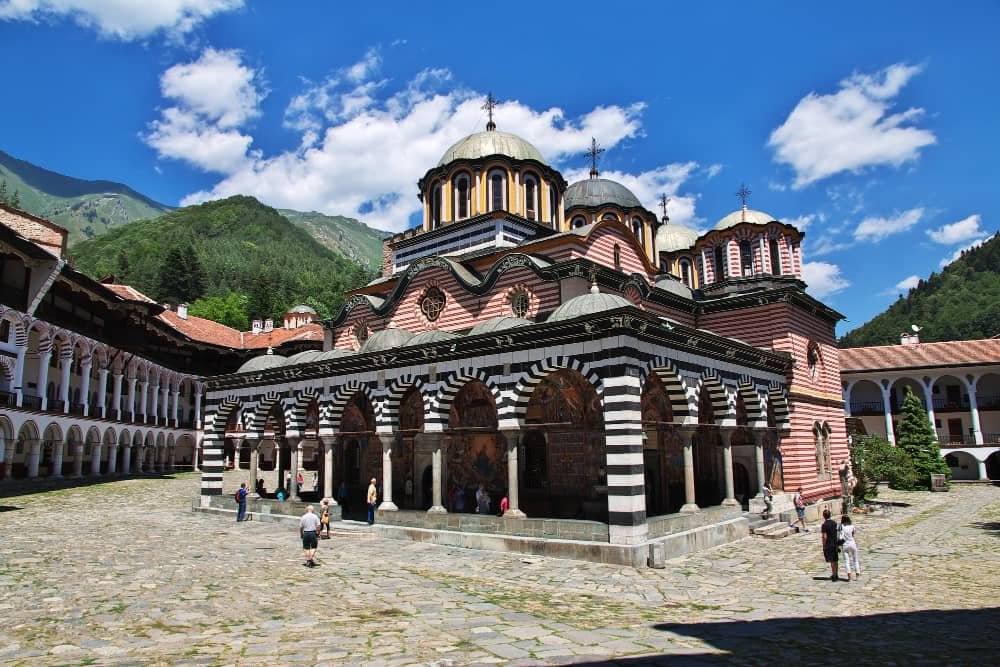
1. Rila Monastery, Bulgaria
Surrounded by the forested peaks of Bulgaria’s Rila Mountains, Rila Monastery is one of the most impressive religious and cultural landmarks in the Balkans. Its striped arches, colorful frescoes, stone walls, and dramatic mountain setting make it an unforgettable stop on any trip through Bulgaria.
Founded in the 10th century, the monastery is closely associated with Saint Ivan of Rila (St. John of Rila), Bulgaria’s patron saint. Over the centuries, it became an important center of Bulgarian Orthodox Christianity, education, literature, and culture.
UNESCO added Rila Monastery to the World Heritage List in 1983, recognizing its exceptional importance to Bulgaria’s cultural and spiritual history.
What Makes Rila Monastery Special?
Stepping through the monastery’s fortress-like outer walls reveals a large courtyard surrounded by distinctive multi-level residential buildings and arched galleries.
At its center stands the magnificent Church of the Nativity of the Virgin, famous for the elaborate frescoes covering its exterior and interior. Biblical scenes, saints, angels, and religious imagery create one of the most visually impressive monastery interiors in Bulgaria.
Another highlight is Hrelyo’s Tower, a medieval defensive tower dating to the 14th century and the oldest surviving structure within the monastery complex.
Visitors can also explore the monastery museum, which preserves religious art, manuscripts, icons, historical objects, and treasures connected with centuries of Bulgarian Orthodox tradition.
Visiting Rila Monastery
Rila Monastery is located approximately 120 kilometers (75 miles) south of Sofia, making it one of the most popular day trips from Bulgaria’s capital.
However, the surrounding Rila Mountains are worth more than a rushed visit. Travelers with additional time can explore nearby hiking trails, forests, mountain scenery, and other attractions throughout the region.
Because Rila remains an active Orthodox monastery, visitors should dress respectfully and follow posted rules regarding photography and access to religious areas.
If you’re visiting only a few religious landmarks during a Balkan trip, Rila deserves a place near the top of the list. Its combination of history, architecture, religious significance, and spectacular surroundings makes it one of the best monasteries to visit in the Balkans.
Location: Rila Mountains, Bulgaria
Founded: 10th century
UNESCO status: World Heritage Site since 1983
Best for: Frescoes, Bulgarian history, Orthodox heritage, architecture, and mountain scenery
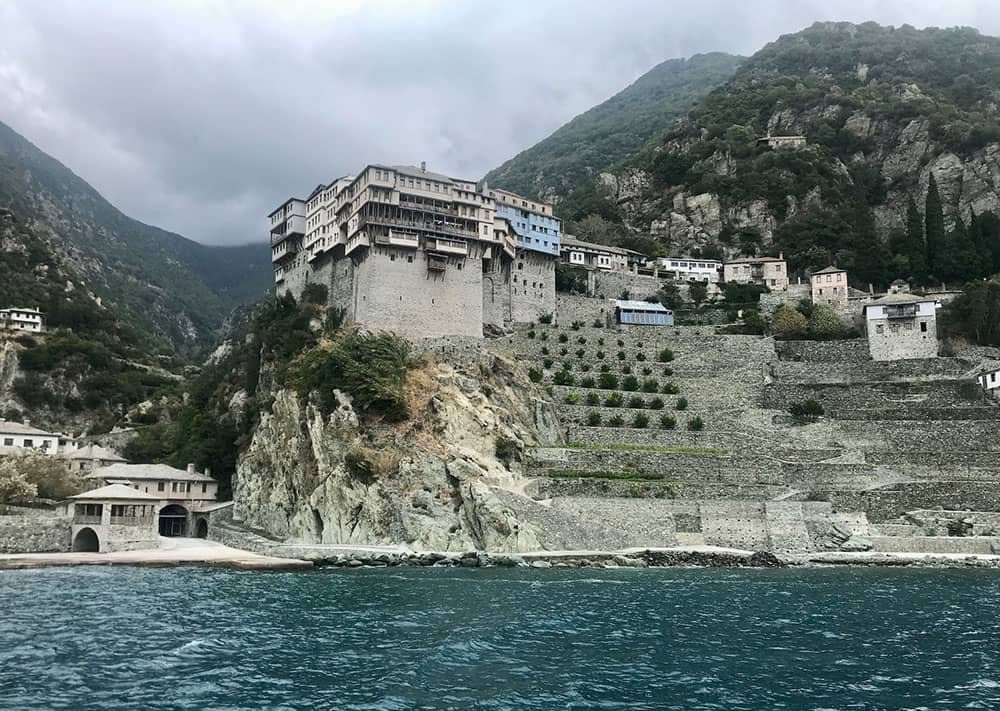
Photo: Aleksei / Алексей Simonenko / Unsplash
2. Mount Athos, Greece
Extending into the Aegean Sea from northern Greece’s Halkidiki Peninsula, Mount Athos is one of the most important centers of Orthodox monasticism in the world. Often called the Holy Mountain, this remarkable region has preserved a centuries-old monastic tradition within an isolated landscape of mountains, forests, and coastline.
Unlike the other destinations on this list, Mount Athos is not a single monastery. It is a self-governed monastic community containing 20 historic monasteries, along with smaller monastic settlements, hermitages, and cells.
Mount Athos has been included on the UNESCO World Heritage List since 1988, recognized for both its cultural significance and exceptional natural setting.
What Makes Mount Athos Special?
Organized monastic life on Mount Athos stretches back more than a thousand years. Its monasteries preserve an extraordinary collection of Orthodox Christian art, manuscripts, icons, religious objects, architecture, and traditions.
Among its best-known monasteries is Great Lavra, founded in the 10th century and considered the oldest of the 20 ruling monasteries. Other famous communities include Vatopedi, Iviron, Hilandar, Dionysiou, and the spectacular Simonopetra Monastery, which appears to rise directly from a steep mountainside above the sea.
The isolation of Mount Athos has helped preserve a way of monastic life that has disappeared from many other parts of Europe.
Can Tourists Visit Mount Athos?
Visiting Mount Athos requires considerably more planning than visiting most monasteries in the Balkans.
Entry is controlled through a special permit known as a diamonitirion, and the number of visitors admitted each day is limited. Travelers who intend to enter should arrange permission in advance rather than arriving without preparation.
Mount Athos also follows the centuries-old avaton rule, under which women are not permitted to enter the monastic territory. Female travelers can still experience views of several monasteries from sightseeing boats operating along the coastline without entering the restricted area.
Visitors who are permitted to enter should remember that Mount Athos is primarily a living religious community rather than a conventional tourist attraction. Respect for its monastic rules, dress requirements, worship, and daily life is essential.
For travelers able to visit, Mount Athos offers one of the most unusual opportunities to experience Orthodox monastic heritage anywhere in Europe.
Location: Halkidiki, northern Greece
Monastic community: 20 monasteries
UNESCO status: World Heritage Site since 1988
Best for: Orthodox heritage, medieval history, religious art, pilgrimage, and monastic culture
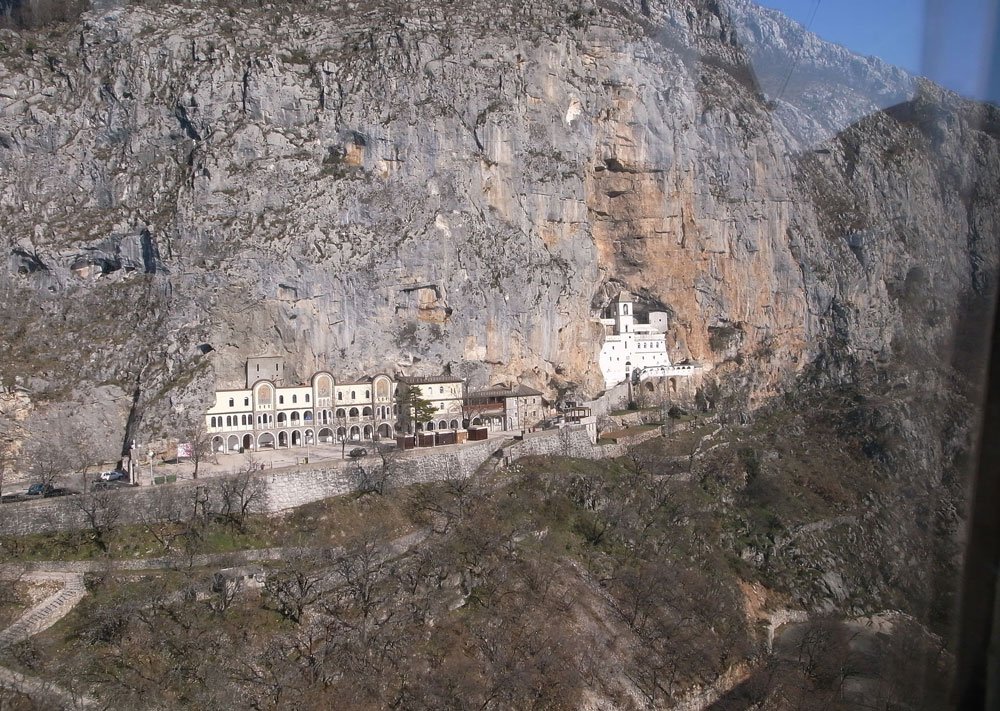
Photo: William Hall / Wikipedia
3. Ostrog Monastery, Montenegro
Built dramatically into an almost vertical rock face high above Montenegro’s Zeta Valley, Ostrog Monastery is one of the most extraordinary religious landmarks in the Balkans. Its white monastery buildings appear almost embedded within the mountain itself, creating a sight that has become one of the most recognizable images of Montenegro.
The monastery was founded in the 17th century by Saint Basil of Ostrog, an important figure in the Serbian Orthodox Church whose relics are preserved at the monastery. Today, Ostrog remains an active religious community and one of the most significant pilgrimage destinations in the region.
What Makes Ostrog Monastery Special?
Ostrog is divided into Upper and Lower Monasteries, with the Upper Monastery being the most famous part of the complex.
The Upper Monastery is built directly into the cliffs and contains small cave churches dedicated to the Presentation of the Mother of God and the Holy Cross. Its unusual construction and spectacular position make the monastery impressive even for travelers whose primary interest is architecture or history rather than religion.
Ostrog is also deeply associated with Saint Basil of Ostrog. Orthodox pilgrims travel from Montenegro and neighboring countries to venerate his relics, pray, and participate in religious services.
Stories of healing and miracles associated with Saint Basil have been passed down among believers for generations. For visitors, it is important to understand these accounts within the context of religious faith and tradition rather than presenting them as medically established events.
Visiting Ostrog Monastery
Ostrog lies between Podgorica and Nikšić, making it possible to visit as part of a road trip through central Montenegro.
The final approach involves steep and winding mountain roads, so drivers should take their time. Depending on where you park and current access arrangements, reaching parts of the monastery complex may also require walking uphill.
Because Ostrog remains an important pilgrimage destination, visitors should wear respectful clothing, speak quietly around worship areas, and avoid disrupting religious services or pilgrims.
The monastery can become particularly busy during important Orthodox religious celebrations and pilgrimage periods. Visiting outside the busiest times can provide a quieter opportunity to appreciate both the monastery and the remarkable landscape surrounding it.
With its dramatic cliffside architecture, centuries of religious history, and continuing importance as a place of pilgrimage, Ostrog easily ranks among the best monasteries to visit in the Balkans.
Location: Near Danilovgrad and Nikšić, Montenegro
Founded: 17th century
Religious tradition: Serbian Orthodox
Best for: Pilgrimage, religious heritage, architecture, mountain scenery, and photography
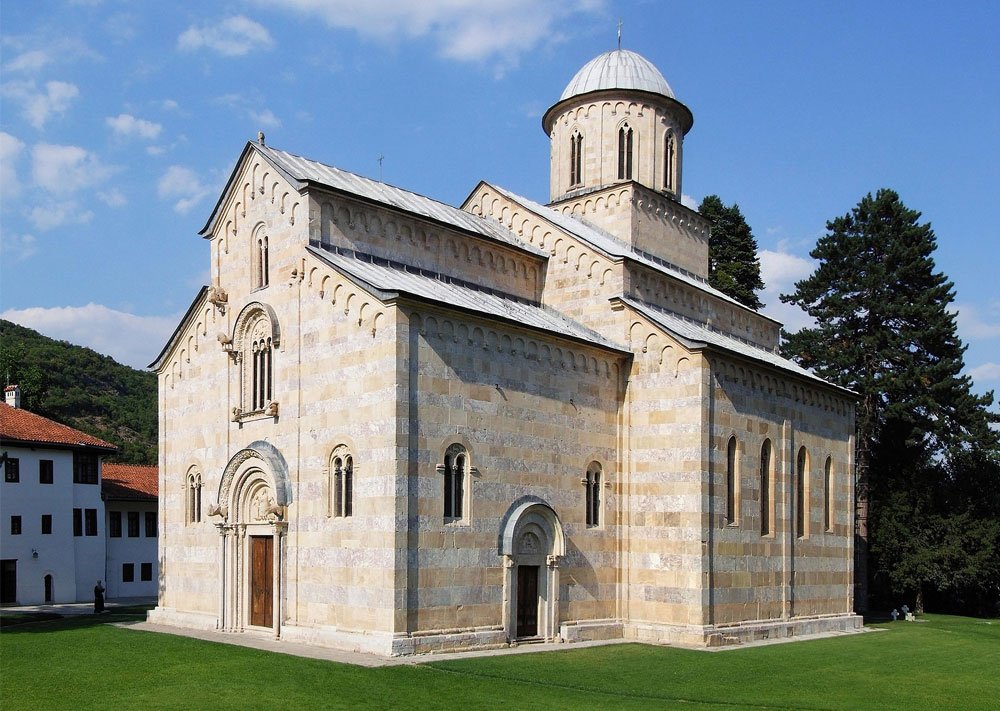
Photo: Pudelek / Wikipedia
4. Visoki Dečani Monastery, Kosovo
Set against the forested foothills of the Prokletije Mountains in western Kosovo, Visoki Dečani Monastery is one of the most important medieval Orthodox monasteries in the Balkans. Its beautifully preserved church, remarkable collection of frescoes, and centuries of history make it an exceptional destination for travelers interested in religious art and medieval architecture.
The monastery was founded in the 14th century by Serbian King Stefan Dečanski, with construction of its main church beginning in 1327. The monastery remains an active Serbian Orthodox religious community today.
Visoki Dečani forms part of the UNESCO World Heritage property known as the Medieval Monuments in Kosovo, which brings together four significant medieval religious sites.
What Makes Visoki Dečani Special?
At the heart of the monastery stands the Church of Christ Pantocrator, an extraordinary medieval building constructed from carefully arranged stone and combining elements of Byzantine and Western Romanesque architecture.
The church’s interior is even more remarkable. Its walls preserve an extensive collection of 14th-century frescoes, with hundreds of compositions and thousands of individual figures depicting biblical scenes, saints, historical personalities, and religious narratives.
Together, the architecture and paintings provide an exceptional record of medieval artistic traditions and the cultural connections that existed across the Balkans and Adriatic region.
The monastery also preserves icons, manuscripts, religious objects, and other works accumulated during its long history.
UNESCO World Heritage Status
Visoki Dečani was initially inscribed on the UNESCO World Heritage List in 2004. The property was expanded in 2006 to include three additional religious monuments and renamed the Medieval Monuments in Kosovo.
The UNESCO property now includes Visoki Dečani Monastery, the Patriarchate of Peć, Gračanica Monastery, and the Church of the Virgin of Ljeviša.
The property is also included on UNESCO’s List of World Heritage in Danger, reflecting ongoing concerns surrounding its conservation and protection.
Visiting Visoki Dečani Monastery
Because Visoki Dečani is both an active monastery and a protected heritage site, visitors should expect access procedures that may be different from those at a typical tourist attraction.
Bring identification, follow any security instructions in place at the time of your visit, dress respectfully, and observe monastery rules concerning photography and access to religious areas.
Travel conditions and entry arrangements can change, so checking current information before traveling is particularly important.
Once inside, take time to appreciate the monastery as a living religious community rather than simply a historical monument. Its combination of medieval architecture, extraordinary frescoes, mountain surroundings, and centuries of spiritual tradition makes Visoki Dečani one of the best monasteries to visit in the Balkans.
Location: Near Deçan/Dečani, western Kosovo
Founded: 14th century
Religious tradition: Serbian Orthodox
UNESCO status: Part of the Medieval Monuments in Kosovo World Heritage property
Best for: Medieval frescoes, architecture, Orthodox heritage, history, and religious art
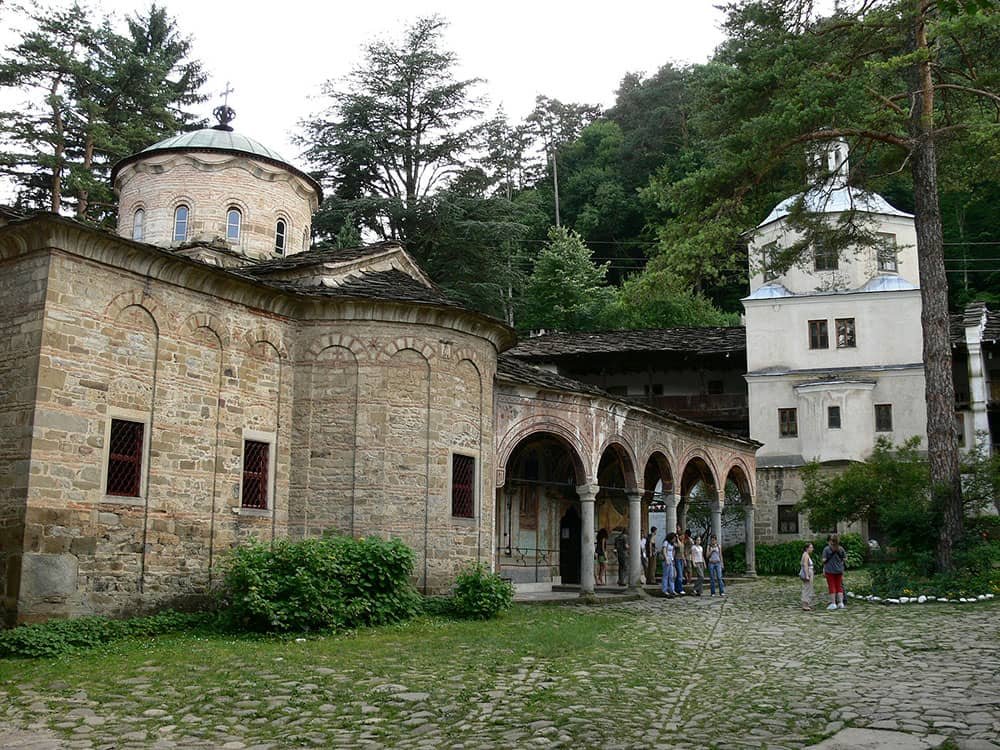
Photo: Nenko Lazarov / Wikipedia
5. Troyan Monastery, Bulgaria
Surrounded by forests in the foothills of Bulgaria’s Balkan Mountains, Troyan Monastery is one of the country’s most important Orthodox monasteries and a beautiful stop for travelers exploring central Bulgaria. Officially known as the Monastery of the Dormition of the Mother of God, it combines religious significance, Bulgarian Revival architecture, remarkable frescoes, and a peaceful mountain setting.
The monastery was founded around the beginning of the 17th century and grew into an important spiritual and cultural center. Today, it is generally considered one of Bulgaria’s largest and most significant monasteries after Rila Monastery.
What Makes Troyan Monastery Special?
At the heart of the complex stands the monastery’s main church, the Church of the Dormition of the Mother of God, built in the 19th century.
One of its greatest artistic treasures is the work of Zahari Zograf, one of the most celebrated painters of the Bulgarian National Revival. His colorful frescoes decorate the church and include religious scenes, saints, biblical figures, and distinctive artistic details.
Visitors can even find a self-portrait of Zahari Zograf among the paintings, an unusual feature in Orthodox religious art of the period.
The monastery is also famous for the Three-Handed Virgin (Troeruchitsa), a highly revered icon associated with longstanding Orthodox traditions and pilgrimage.
Beyond its religious treasures, the monastery’s arched galleries, stone courtyards, wooden balconies, and surrounding forest create a distinctly peaceful atmosphere.
Visiting Troyan Monastery
Troyan Monastery is located near the village of Oreshak, approximately 10 kilometers (6 miles) from the town of Troyan.
Its location makes it easy to combine with other attractions in the central Balkan Mountains. The nearby village of Oreshak is particularly known for traditional Bulgarian crafts, while the wider Troyan region offers hiking, mountain scenery, small villages, and local food.
The monastery remains an active Orthodox religious community, so visitors should dress respectfully and observe any restrictions regarding photography and access to worship areas.
Troyan receives pilgrims throughout the year and becomes particularly important during the Orthodox celebration of the Dormition of the Mother of God in August.
With its beautiful Revival-era architecture, celebrated frescoes, revered icon, and tranquil mountain surroundings, Troyan Monastery is easily one of the best monasteries to visit in the Balkans.
Location: Near Oreshak and Troyan, Bulgaria
Founded: Early 17th century
Religious tradition: Bulgarian Orthodox
Best for: Frescoes, Bulgarian history, Orthodox heritage, traditional architecture, and mountain scenery
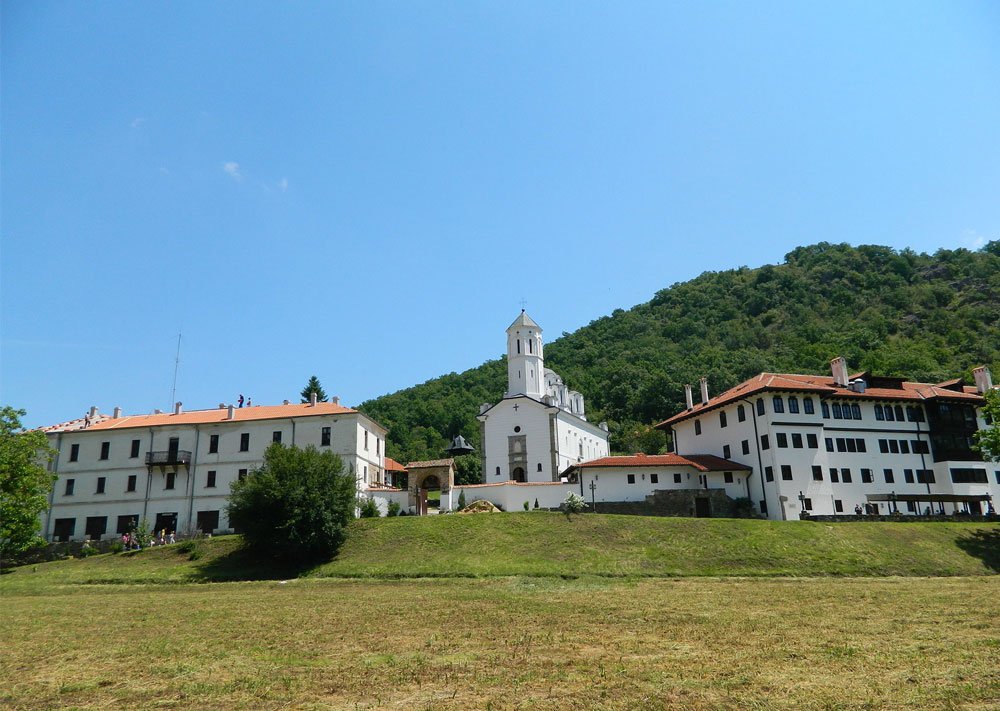
Photo: Танович / Wikipedia
6. Prohor Pčinjski Monastery, Serbia
Hidden among the wooded hills of southern Serbia near the border with North Macedonia, Prohor Pčinjski Monastery is one of the country’s most atmospheric Orthodox monasteries. Its secluded setting in the Pčinja River Valley, centuries of religious history, and colorful church interiors make it an excellent destination for travelers looking beyond Serbia’s better-known attractions.
The monastery’s origins date to the 11th century and are traditionally associated with Byzantine Emperor Romanos IV Diogenes and Saint Prohor of Pčinja, an Orthodox hermit who lived in the region.
Over the centuries, the monastery was damaged, rebuilt, and expanded several times, resulting in a complex that reflects different periods of Serbian religious and architectural history.
What Makes Prohor Pčinjski Monastery Special?
The monastery is dedicated to Saint Prohor of Pčinja, whose relics are associated with the complex and who remains an important figure in the religious traditions of the region.
One of the monastery’s highlights is its richly decorated church interior. Frescoes from different periods illustrate the long artistic history of the monastery, while icons and other religious objects reflect centuries of Serbian Orthodox tradition.
The architecture is equally appealing. Stone buildings, arched passages, traditional roofs, and peaceful courtyards are surrounded by the forested slopes of the Pčinja Valley, giving the monastery a sense of isolation that is increasingly difficult to find at more heavily visited religious landmarks.
Unlike internationally famous sites such as Rila or Meteora, Prohor Pčinjski generally offers a quieter experience and an opportunity to encounter an active monastery away from major tourist routes.
Visiting Prohor Pčinjski Monastery
Prohor Pčinjski Monastery is located in southern Serbia near the village of Klenike, not far from the North Macedonian border. Because of its relatively remote location, traveling by car is generally the most convenient option.
The monastery can be incorporated into a longer road trip through southern Serbia or combined with travel between Serbia and North Macedonia.
Visitors should remember that this remains an active Serbian Orthodox monastery. Dress respectfully, keep noise to a minimum around worship areas, and follow any rules concerning photography inside the church.
For travelers interested in medieval history, Orthodox heritage, and lesser-known cultural destinations, Prohor Pčinjski offers a peaceful contrast to some of the Balkans’ busier monastery attractions.
Location: Pčinja Valley, southern Serbia
Origins: 11th century
Religious tradition: Serbian Orthodox
Best for: Medieval history, Orthodox heritage, frescoes, peaceful surroundings, and off-the-beaten-path travel
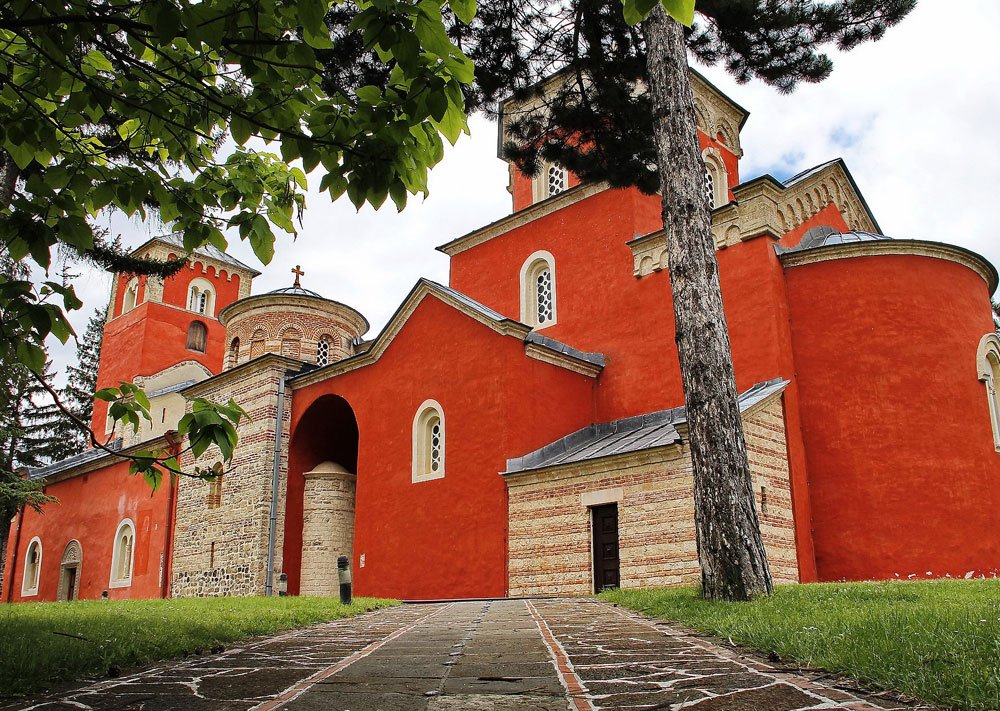
Photo: Vera Bukvic / Wikipedia
7. Žiča Monastery, Serbia
With its distinctive red exterior and deep connection to medieval Serbian history, Žiča Monastery is one of Serbia’s most important Orthodox religious landmarks. Located near the city of Kraljevo in central Serbia, the monastery played a major role in the development of both the medieval Serbian state and the Serbian Orthodox Church.
Žiča was founded in the early 13th century by Stefan the First-Crowned and his brother Saint Sava, one of the most influential figures in Serbian religious history. After the Serbian Church gained independence in 1219, Žiča became the first seat of the autocephalous Serbian archbishopric.
What Makes Žiča Monastery Special?
Žiča’s importance extends far beyond its architecture. The monastery became closely associated with the coronation of medieval Serbian rulers, including Stefan the First-Crowned, whose coronation marked an important chapter in the formation of the medieval Serbian kingdom.
At the heart of the complex stands the Church of the Ascension, also known as the Church of the Holy Savior. Its architecture reflects the Raška style, which combined Byzantine traditions with influences from the Adriatic and Western Europe.
Inside, surviving and restored frescoes represent different periods of the monastery’s long history. Although Žiča suffered repeated destruction and rebuilding over the centuries, it has remained an enduring symbol of Serbian Orthodox Christianity and medieval Serbian culture.
Its striking red-painted exterior makes Žiča immediately recognizable and gives the monastery a very different appearance from many of the stone monasteries found elsewhere in the Balkans.
Visiting Žiča Monastery
Žiča Monastery is located only a short distance from Kraljevo, making it relatively easy to incorporate into a road trip through central Serbia.
Travelers interested in Serbian medieval history can combine Žiča with other important monasteries and historical attractions in the wider region. The area around Kraljevo also provides access to mountain landscapes, traditional villages, and additional cultural sites.
Žiča remains an active Serbian Orthodox monastery, so visitors should dress appropriately, respect religious services, and follow any posted rules regarding photography.
Compared with some of the Balkans’ internationally famous monastery destinations, Žiča often provides a quieter experience while offering an exceptional connection to the origins of Serbia’s medieval kingdom and independent Orthodox Church.
Location: Near Kraljevo, Serbia
Founded: Early 13th century
Religious tradition: Serbian Orthodox
Best for: Medieval Serbian history, Orthodox heritage, architecture, frescoes, and cultural travel
8. Monasteries of Meteora, Greece
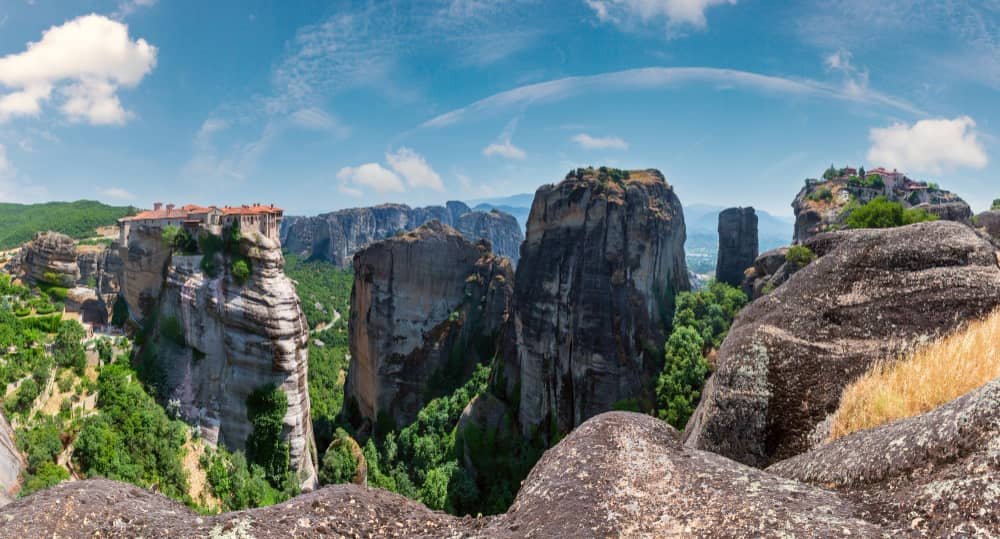
Rising above the plains of Thessaly in central Greece, the Monasteries of Meteora create one of the most extraordinary landscapes in the Balkans. Historic Orthodox monasteries sit atop enormous sandstone rock pillars, seemingly suspended between the earth and sky.
Monastic communities began developing at Meteora centuries ago, with organized monastery construction flourishing from the 14th century onward. At its height, the area contained more than 20 monasteries. Today, six active historic monasteries remain open as important religious and cultural sites.
UNESCO inscribed Meteora on the World Heritage List in 1988, recognizing both its cultural importance and exceptional landscape.
What Makes Meteora Special?
Meteora’s spectacular location immediately sets it apart from almost every other monastic destination in Europe. Early monks sought isolation among the towering rocks, establishing communities in places that were once extremely difficult to reach.
Historically, access could involve removable ladders and nets or baskets raised by ropes. Modern visitors have a considerably easier journey thanks to roads, pathways, bridges, and stairways constructed around the monasteries.
The six surviving monasteries are the Great Meteoron, Varlaam, Roussanou, St. Nicholas Anapausas, Holy Trinity, and St. Stephen.
The Great Meteoron Monastery is the largest and oldest of the surviving monasteries. Founded in the 14th century, it contains historic frescoes, religious objects, manuscripts, and spaces illustrating centuries of monastic life.
Nearby Varlaam Monastery is another highlight, known for its impressive church, frescoes, and dramatic position high above the surrounding landscape.
Visiting the Meteora Monasteries
The towns of Kalabaka and Kastraki provide convenient bases for exploring Meteora. Roads connect the main monastery area, while hiking trails offer a more immersive way to experience the rock formations and surrounding landscape.
You don’t necessarily need to enter all six monasteries. Visiting two or three while allowing time for viewpoints and walks can provide a more relaxed experience than rushing between every site.
Each monastery has its own opening schedule, and individual monasteries may close on different days of the week. Check current opening information before planning your route.
Visitors are also expected to follow modest dress requirements when entering the monasteries. Because these remain active religious communities, respectful behavior is important even at the busiest tourist periods.
For photography and scenery, early morning and late afternoon can be particularly beautiful as changing light transforms the enormous rock formations.
Combining remarkable architecture, Orthodox history, religious art, hiking, and one of Europe’s most unusual landscapes, Meteora unquestionably deserves its place among the best monasteries to visit in the Balkans.
Location: Thessaly, central Greece
Monastic development: Primarily from the 14th century onward
Active historic monasteries: 6
UNESCO status: World Heritage Site since 1988
Best for: Dramatic scenery, Orthodox heritage, hiking, photography, frescoes, and architecture
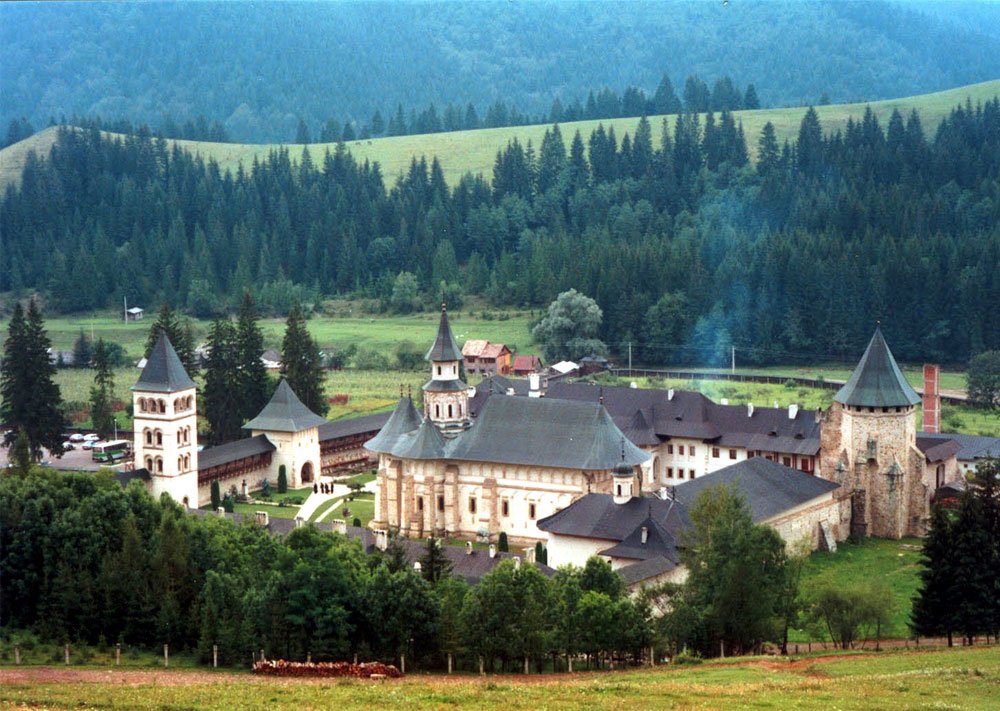
Photo: Petr Sporer / Wikipedia
9. Putna Monastery, Romania
Surrounded by the forested hills of Bucovina in northeastern Romania, Putna Monastery is one of the country’s most important religious and historical landmarks. Founded by Stephen the Great (Ștefan cel Mare) in the 15th century, the monastery became closely connected with the history of medieval Moldavia and remains an important center of Romanian Orthodox Christianity.
Construction began in 1466, during the reign of Stephen the Great, who established Putna as one of his most significant religious foundations. After his death in 1504, Stephen was buried at the monastery, making Putna an important place of pilgrimage and remembrance.
What Makes Putna Monastery Special?
At the heart of the complex stands the Church of the Dormition of the Mother of God, surrounded by monastery buildings, defensive walls, towers, and peaceful courtyards.
Putna has experienced fires, warfare, earthquakes, rebuilding, and restoration during its long history. As a result, the monastery visitors see today reflects several different periods of Romanian and Moldavian architecture.
One of its most historically significant features is the tomb of Stephen the Great, who is remembered as one of the most important rulers in Romanian history and is venerated as a saint by the Romanian Orthodox Church.
The monastery also preserves an important collection of religious and historical treasures, including manuscripts, embroidered textiles, icons, liturgical objects, and other artifacts associated with medieval Moldavian culture.
Visiting Putna Monastery
Putna is located in Romania’s historic Bucovina region, close to the border with Ukraine. The monastery can be incorporated into a longer itinerary exploring northeastern Romania and the region’s remarkable religious heritage.
Bucovina is particularly famous for its painted monasteries and churches, several of which are recognized by UNESCO for their extraordinary exterior frescoes. This makes Putna an excellent starting point for travelers interested in spending several days exploring Romania’s monastic traditions.
Because Putna remains an active Orthodox monastery and pilgrimage destination, visitors should dress respectfully and observe any restrictions concerning photography and religious services.
Allow time to explore the church, museum, monastery grounds, and Stephen the Great’s tomb rather than treating Putna as a quick sightseeing stop.
With its connection to one of Romania’s most important historical rulers, centuries of Orthodox tradition, and beautiful Bucovina setting, Putna deserves its place among the best monasteries to visit in the Balkans.
Location: Putna, Suceava County, Romania
Founded: 1466
Religious tradition: Romanian Orthodox
Best for: Romanian history, Stephen the Great, Orthodox heritage, religious art, and Bucovina travel
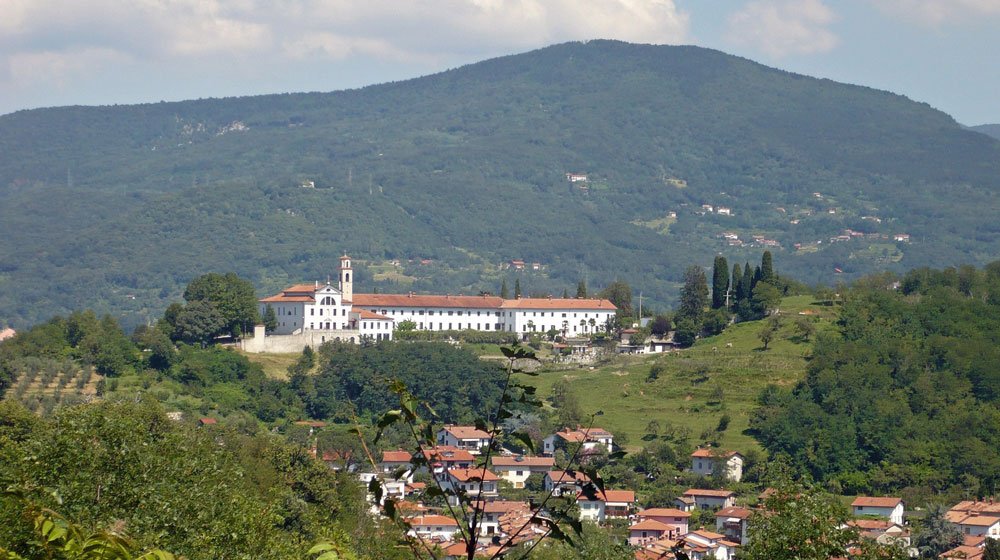
Photo: Viator slovenicus / Wikipedia
10. Kostanjevica Monastery, Slovenia
Perched on a hill overlooking Nova Gorica near Slovenia’s border with Italy, Kostanjevica Monastery combines religious heritage, European royal history, art, and beautiful views in one peaceful setting. Also known as Kostanjevica Franciscan Monastery, it is an active Franciscan community and one of Slovenia’s more unusual historical religious destinations.
The monastery complex developed around the Church of the Annunciation, with Franciscan friars establishing themselves at Kostanjevica in the 19th century. Today, visitors come not only for the church and monastery but also for its historic library, rose garden, and remarkable royal crypt.
What Makes Kostanjevica Monastery Special?
One of Kostanjevica’s most distinctive features is the Bourbon Crypt, which contains the tombs of members of the French Bourbon royal family who lived in exile in nearby Gorizia during the 19th century.
The most famous person buried here is Charles X of France, the last Bourbon king to rule France. After being forced into exile following the July Revolution of 1830, Charles eventually came to Gorizia and died there in 1836.
Several members of his family are also buried in the crypt, giving this relatively small Slovenian monastery a fascinating connection to French and wider European royal history.
The monastery is also known for the Škrabec Library, which preserves an important collection of historical books and manuscripts.
Another highlight is its rose garden, particularly associated with Bourbon roses, which adds a colorful dimension to the monastery grounds during the flowering season.
Visiting Kostanjevica Monastery
Kostanjevica Monastery is located above Nova Gorica and is convenient to visit while exploring western Slovenia or traveling between Slovenia and neighboring Italy.
Allow time to see the church, Bourbon Crypt, library collections where accessible, and monastery surroundings. The elevated location also provides attractive views over Nova Gorica and the surrounding landscape.
As this remains an active Franciscan monastery, visitors should respect religious services and follow any rules regarding access and photography.
Kostanjevica may not have the dramatic cliffs of Ostrog or Meteora, but its combination of monastic tradition, French royal history, historic collections, and peaceful surroundings gives it a character entirely its own.
Location: Nova Gorica, Slovenia
Religious tradition: Franciscan / Roman Catholic
Known for: Bourbon Crypt and Charles X of France
Best for: European history, religious heritage, royal history, gardens, and cultural travel
How to Plan a Balkan Monastery Trip
The monasteries featured in this guide are spread across several Balkan countries, so visiting all 10 during a single vacation would require a fairly ambitious itinerary. For most travelers, the better approach is to combine monasteries that fit naturally into the countries and regions you’re already planning to explore.
A road trip offers the greatest flexibility, particularly for monasteries located in mountain areas or away from major cities.
Combine Monasteries by Region
If you’re traveling through Bulgaria, Rila Monastery can easily be incorporated into an itinerary based around Sofia, while Troyan Monastery fits naturally into a journey through central Bulgaria and the Balkan Mountains.
In Greece, Meteora deserves at least a full day and preferably longer if you want to visit several monasteries and explore the surrounding landscape. Mount Athos requires separate planning because entry is restricted and permits must be arranged in advance.
Travelers exploring Serbia can combine Žiča Monastery with other medieval religious landmarks in central Serbia, while Prohor Pčinjski is better suited to an itinerary through the country’s south.
Ostrog Monastery can be included in a Montenegro road trip connecting the coast with Podgorica, Nikšić, or the mountainous interior.
Putna Monastery works particularly well as part of a longer journey through Romania’s Bucovina region, while Kostanjevica Monastery can be visited while exploring western Slovenia and the area around Nova Gorica.
Respect Monastery Dress Codes
Many of the best monasteries to visit in the Balkans remain active places of worship rather than simply historical attractions.
Visitors should generally wear clothing that covers the shoulders and knees. Individual monasteries may have additional requirements, and some provide wraps or coverings at the entrance.
Rules can be particularly strict at certain Orthodox monasteries, so checking current visitor information before arriving is worthwhile.
Photography and Religious Services
Photography policies vary considerably. Some monasteries allow photographs throughout much of the complex but prohibit them inside churches, museums, or areas containing historic frescoes and icons.
Never assume photography is permitted simply because other visitors are using cameras or phones. Look for signs or ask before taking photographs inside religious buildings.
If a service is taking place, avoid walking around unnecessarily, speaking loudly, or positioning yourself between worshippers and religious icons.
Remember That These Are Living Religious Communities
Many Balkan monasteries have survived for hundreds of years because generations of monks, nuns, clergy, and local communities have continued to care for them.
Visiting respectfully means keeping noise down, avoiding restricted areas, dressing appropriately, and treating religious objects and ceremonies with consideration.
You don’t need to be religious to appreciate these places. Their architecture, artwork, history, landscapes, and cultural importance make them fascinating destinations, but remembering their primary religious purpose will make your visit more respectful and rewarding.
How Many Monasteries Should You Visit?
Unless your trip is specifically focused on religious heritage, there’s little reason to rush through all 10 monasteries simply to complete the list.
For a typical Balkan vacation, choosing two to four monasteries that fit naturally along your route will usually provide a better experience. You’ll have more time to explore each location, appreciate the surrounding region, and avoid turning remarkable historical sites into quick photo stops.
Best Time to Visit Monasteries in the Balkans
The best monasteries to visit in the Balkans can be explored throughout much of the year, but the ideal season depends on their location. Some sit along relatively mild coastal areas, while others are surrounded by mountains where winter weather can significantly affect road and hiking conditions.
For most travelers, May through June and September through early October provide an excellent combination of comfortable temperatures, beautiful landscapes, and fewer crowds than the busiest summer months.
Spring: April to June
Spring is one of the most rewarding times for a monastery-focused Balkan trip. Mountain valleys and forests become increasingly green, temperatures are generally comfortable for sightseeing, and major attractions are often quieter than during midsummer.
This can be a particularly beautiful season for visiting Rila Monastery, Troyan Monastery, Meteora, Žiča, and other monasteries surrounded by natural landscapes.
Higher mountain areas may still experience cold weather or occasional snow earlier in the season, so check local conditions when planning trips to more remote locations.
Summer: July and August
Summer provides long daylight hours and generally convenient conditions for road trips across the Balkans. However, famous destinations such as Meteora and Rila Monastery can become considerably busier during peak vacation season.
Temperatures can also become very hot, particularly in Greece, Montenegro, and lower-elevation inland areas.
If you’re visiting during July or August, arriving early in the morning can help you avoid both the strongest afternoon heat and some of the largest tour groups.
Autumn: September and October
Early autumn is another excellent period for exploring Balkan monasteries. September often retains warm weather while bringing fewer visitors than July and August.
As autumn progresses, forests surrounding monasteries such as Rila, Troyan, Prohor Pčinjski, and Putna begin changing color, creating particularly beautiful scenery.
Daylight hours become shorter later in the season, and mountain weather can become less predictable, so allow enough time for travel between remote sites.
Winter: November to March
Winter can provide an atmospheric and much quieter monastery experience, but it requires additional planning.
Snow and icy roads can affect access to monasteries in mountainous areas, while some attractions may operate shorter seasonal hours. Always check road conditions and current visitor information before traveling to remote monasteries during winter.
For travelers comfortable with colder conditions, snow-covered mountains and quieter courtyards can make some Balkan monasteries especially memorable.
Consider Religious Holidays
Orthodox Easter, Christmas, monastery feast days, and other major religious celebrations can be fascinating times to experience local traditions. They can also bring large numbers of worshippers and pilgrims to active monasteries.
If your primary goal is sightseeing, you may prefer a quieter date. If you intentionally visit during a religious celebration, remember that worship takes priority over tourism and behave accordingly.
Best Overall Months
For a trip combining several monasteries across different Balkan countries, May, June, September, and early October are generally among the best choices.
These months offer a good balance of pleasant sightseeing weather, attractive mountain scenery, road-trip conditions, and manageable visitor numbers.
FAQs About Monasteries in the Balkans
What are the best monasteries to visit in the Balkans?
Some of the best monasteries to visit in the Balkans include Rila Monastery in Bulgaria, the monasteries of Meteora and Mount Athos in Greece, Ostrog Monastery in Montenegro, Visoki Dečani and Žiča, Putna Monastery in Romania, and Troyan Monastery in Bulgaria.
The best choice depends on whether you’re most interested in history, religious art, dramatic scenery, pilgrimage, or architecture.
What is the most famous monastery in the Balkans?
There isn’t a single definitive answer, but Rila Monastery and Meteora are among the most internationally recognizable monastic destinations in the Balkans.
Rila is one of Bulgaria’s most important cultural and religious landmarks, while Meteora is famous worldwide for its historic monasteries built atop enormous rock formations.
Which Balkan monasteries are UNESCO World Heritage Sites?
Several destinations featured in this guide have UNESCO World Heritage status. Rila Monastery, Mount Athos, and Meteora are individually associated with UNESCO World Heritage properties.
Visoki Dečani Monastery is also UNESCO-listed as part of the Medieval Monuments in Kosovo World Heritage property.
Can women visit Mount Athos?
No. Under Mount Athos’s longstanding avaton rule, women are not permitted to enter the monastic territory.
Women can, however, experience views of Mount Athos and some of its historic monasteries from sightseeing boats operating along the peninsula’s coastline.
What should you wear when visiting a Balkan monastery?
Visitors should generally dress modestly, with shoulders and knees covered. Some monasteries have more specific requirements concerning trousers, skirts, dresses, or head coverings.
Because rules vary between religious communities, check the monastery’s current visitor requirements before arriving. Some popular monasteries provide coverings for visitors who need them.
Do you have to be religious to visit Balkan monasteries?
No. Most monasteries that welcome visitors can be explored regardless of your religious beliefs.
Many travelers visit because of their architecture, frescoes, history, mountain scenery, photography opportunities, and cultural importance. However, visitors should always remember that active monasteries are primarily places of worship and behave respectfully.
Are monasteries in the Balkans free to visit?
Admission policies vary. Some monasteries can be entered without a general admission fee, while others charge for museums, specific buildings, heritage areas, or visitor access.
Opening hours and admission policies can change, so checking current information before traveling is recommended.
Can you take photos inside Balkan monasteries?
It depends on the monastery. Photography may be permitted in courtyards and outdoor areas while being prohibited inside churches, museums, crypts, or rooms containing historic frescoes and religious objects.
Always look for signs or ask permission before taking photographs indoors.
Which Balkan country has the most impressive monasteries?
Several countries have exceptional monastic heritage. Greece is particularly famous for Mount Athos and Meteora, while Bulgaria and Serbia have extensive Orthodox monastic traditions and numerous medieval and historic monasteries.
Romania is especially rewarding for travelers interested in the monasteries and painted churches of Bucovina, while Montenegro’s Ostrog Monastery offers one of the most dramatic cliffside settings in the region.
Rather than choosing one country as the “best,” a multi-country Balkan trip provides the greatest variety of architecture, religious traditions, landscapes, and historical periods.
More Places to Visit in the Balkans
The Balkans are filled with extraordinary cultural landmarks far beyond their historic monasteries. Ancient cities, medieval fortresses, UNESCO World Heritage Sites, mountain villages, national parks, beaches, and archaeological treasures make this one of Europe’s most diverse regions to explore.
If you’re planning a longer trip, explore more of our Balkan travel guides to discover destinations that pair naturally with the monasteries featured above.
- UNESCO World Heritage Sites in Bulgaria – Discover Rila Monastery, Boyana Church, ancient Thracian tombs, Nessebar, Pirin National Park, and Bulgaria’s other UNESCO treasures.
- UNESCO World Heritage Sites in Montenegro – Explore Kotor, Durmitor National Park, medieval stećci tombstones, and historic Venetian fortifications.
- Best Historical Places to Visit in Bulgaria – Discover ancient ruins, medieval fortresses, religious landmarks, and some of Bulgaria’s most important cultural attractions.
- Best Places to Visit in Greece – Explore ancient cities, islands, mountain landscapes, historic landmarks, and unforgettable destinations across Greece.
- Best Places to Visit in Serbia – Discover medieval heritage, historic cities, monasteries, fortresses, and beautiful natural landscapes.
- Most Beautiful Places in the Balkans – Find spectacular destinations across Southeastern Europe, from dramatic mountains and lakes to historic towns and Adriatic coastal scenery.
Whether you’re planning a monastery-focused journey or a wider Balkan road trip, combining religious landmarks with nearby historical and natural attractions can help you experience much more of the region’s culture and landscapes.
Discover the Monasteries of the Balkans
From monasteries perched on towering rock formations to peaceful sanctuaries hidden among forests and mountains, the best monasteries to visit in the Balkans offer much more than beautiful architecture. They preserve centuries of religious tradition, art, history, and cultural identity across Southeastern Europe.
Rila Monastery and Troyan Monastery reveal important chapters of Bulgaria’s Orthodox heritage, while Meteora and Mount Athos represent two extraordinary expressions of Greek monastic life. Ostrog’s dramatic cliffside setting makes it one of Montenegro’s most unforgettable landmarks, while Visoki Dečani, Žiča, and Prohor Pčinjski provide fascinating connections to medieval Serbian Orthodox history and culture.
Farther north, Putna Monastery tells the story of medieval Moldavia and Stephen the Great, while Kostanjevica Monastery offers an unexpected connection between Slovenia and French royal history.
What makes these places particularly rewarding is that many remain active religious communities. Their churches, icons, frescoes, courtyards, libraries, and traditions aren’t simply remnants of the past — they’re part of a living heritage that continues today.
You don’t need to visit all 10 monasteries in one trip. Choose the ones that fit naturally into your Balkan itinerary and give yourself enough time to experience each destination without rushing.
Whether you’re drawn by history, architecture, religious art, dramatic landscapes, or simple curiosity, visiting a Balkan monastery can become one of the most memorable experiences of your journey through this remarkable part of Europe.
What's your reaction?