10 Most Beautiful Places in Albania to Visit in 2026

Albania packs an impressive variety of landscapes into a relatively small country. Travel from north to south and you’ll pass rugged mountain peaks, deep lakes, centuries-old towns, hilltop castles, and eventually the blue waters of the Ionian coast.
In the north, Theth sits among the peaks of the Albanian Alps, while Lake Koman cuts through steep mountain terrain. Shkodër adds a historic city, castle, and one of the Balkans’ largest lakes to the same part of the country.
Farther south, Berat and Gjirokastër are known for their historic neighborhoods and castles, while Krujë offers another look at Albania’s past. Tirana brings a completely different experience, with museums, busy neighborhoods, restaurants, and Mount Dajti rising just outside the capital.
Head east and you’ll reach Pogradec and Lake Ohrid. Continue toward southern Albania and the landscape changes again around Llogara Pass, the Albanian Riviera, and the small islands off Ksamil.
The ten places below are among the most beautiful places in Albania, but they aren’t all beautiful for the same reason. Some are worth visiting for the mountains or water, others for their architecture, history, or the journey required to reach them.
Most Beautiful Places in Albania at a Glance
From mountain villages and lakes in the north to historic cities and the Ionian coast, these ten destinations show how much Albania changes from one region to another.
| Place | Region | Best For | Don’t Miss |
|---|---|---|---|
| Albanian Alps & Theth | Northern Albania | Mountains, hiking & nature | Theth Valley and Grunas Waterfall |
| Lake Koman | Northern Albania | Lake scenery & boat journeys | The Koman–Fierza ferry |
| Berat | Central-southern Albania | History & architecture | Berat Castle, Mangalem and Gorica |
| Gjirokastër | Southern Albania | Stone architecture & history | Gjirokastër Castle and the Old Bazaar |
| Lake Ohrid & Pogradec | Eastern Albania | Lake views & slower travel | Pogradec waterfront, Tushemisht and Drilon |
| Krujë | Central Albania | History, castles & local crafts | Krujë Castle and the Old Bazaar |
| Ksamil Islands | Southern Albania | Ionian scenery & swimming | The four small islands just offshore |
| Tirana | Central Albania | City life, museums & food | Skanderbeg Square, Blloku and Mount Dajti |
| Shkodër & Lake Shkodër | Northern Albania | Castles, cycling & lake views | Rozafa Castle and Shirokë |
| Llogara Pass & Albanian Riviera | Southern Albania | Road trips, mountains & sea views | Llogara Pass and the Ionian coastline |
If mountains and hiking are your priority, spend more time around Theth, Lake Koman, and Shkodër. Berat, Gjirokastër, and Krujë bring history and architecture into the route, while Pogradec offers a quieter stop beside Lake Ohrid.
Tirana gives you the urban side of Albania, and farther south, Ksamil and Llogara bring you to the Ionian coast. You don’t need to fit all ten into one trip; choosing places that connect naturally usually makes for a much easier itinerary.
For a closer look at the coast, see our separate guide to the best beaches in Albania.
10 Most Beautiful Places in Albania to Visit
Albania’s most memorable landscapes aren’t concentrated in one part of the country. The ten places below take you from the Albanian Alps and Lake Koman in the north to historic cities, Lake Ohrid, the capital, and the Ionian coast in the south.
1. Albanian Alps and Theth
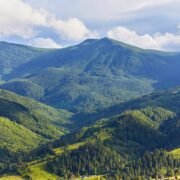
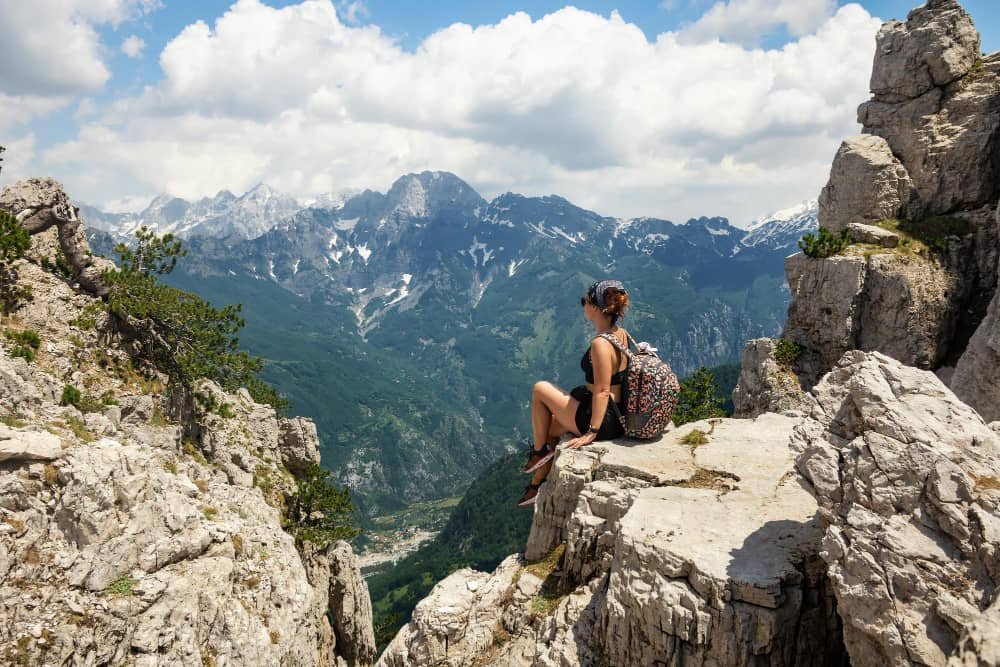
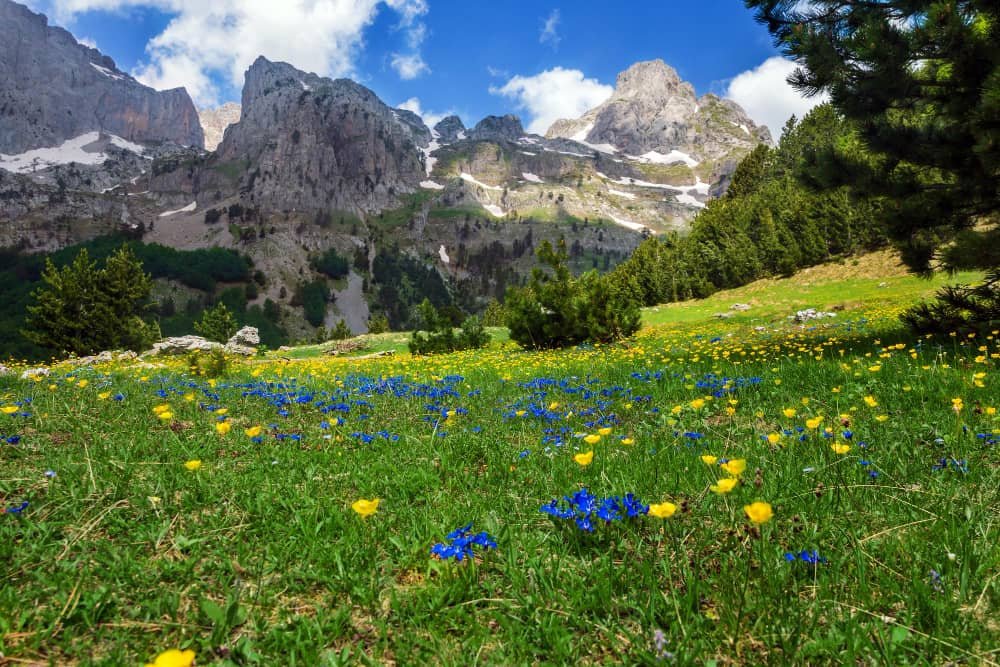
Northern Albania feels worlds away from the country’s coastal resorts and larger cities. Here, the Albanian Alps rise above deep valleys, forests, rivers, and small mountain settlements, creating some of the country’s most dramatic landscapes.
Theth is one of the best-known villages in the region. Surrounded by steep peaks, it’s a popular base for hiking, exploring the valley, and spending a few days away from Albania’s busier cities and coastal destinations.
If your itinerary allows, stay overnight rather than trying to squeeze Theth into a quick visit. You’ll have more time to walk through the village, explore nearby trails, and enjoy the valley after many daytime visitors have moved on.
What to See Around Theth
Grunas Waterfall is one of the area’s best-known natural attractions and can be reached on foot from the village. The waterfall drops through a rocky setting surrounded by the steep slopes of the valley and is commonly included in walks around Theth.
Another popular excursion leads to the Blue Eye of Theth, a striking natural pool near Nderlysaj. Don’t confuse it with the better-known Blue Eye spring in southern Albania near Saranda; they’re separate attractions in completely different parts of the country.
The village itself is worth exploring too. Traditional stone houses, views across the valley, and landmarks such as the Church of Theth give you plenty to see even if you’re not planning a long hike.
Hiking in the Albanian Alps
The trails around Theth range from relatively short walks to demanding mountain routes. One of the region’s best-known hikes connects Theth and Valbona across a high pass, with expansive views of the surrounding peaks and valleys.
The Theth–Valbona route requires more preparation than a casual walk around the village. Weather can change quickly at higher elevations, trail conditions vary throughout the year, and snow can affect the route outside the main hiking season. Check current conditions locally before setting out and choose a route that matches your experience and fitness level.
If mountain hiking is a major part of your trip, you may also want to explore our guide to the highest peaks in the Balkans and see more ideas for traveling through the Balkan Mountains.
When to Visit Theth
Late spring through early autumn is the main travel season around Theth, although conditions can vary from year to year. Summer usually brings the easiest access and the widest choice of accommodation and services, but it’s also when you’ll encounter the most visitors.
If hiking is a major part of your trip, check the weather and current trail conditions shortly before you go rather than relying only on the time of year.
Are the Albanian Alps Worth Visiting?
If you’re coming to Albania specifically for the mountains, give northern Albania a few days rather than trying to see Theth on a rushed day trip. The landscape here feels completely different from the historic cities, lakes, and Ionian coast farther south.
Best for: Mountain landscapes, hiking, photography, nature and multi-day stays
Good to know: Give yourself at least two nights in the area if your itinerary allows. Journeys through northern Albania can take longer than the distances on a map might suggest.
2. Lake Koman
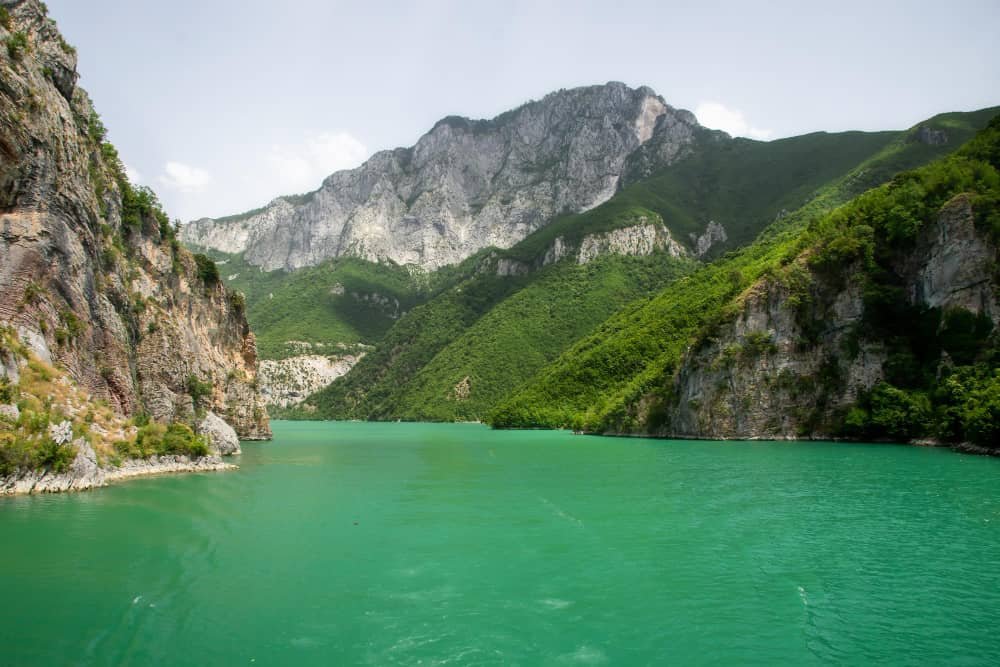
At Lake Koman, getting there is part of the experience. The reservoir winds through the mountains of northern Albania, narrowing in places between forested slopes and rocky cliffs that rise directly from the water.
Created as part of Albania’s hydroelectric system, the lake is now best known to travelers for the boat trip between Koman and Fierza. The scenery changes constantly along the way, from broad stretches of water to narrow passages surrounded by steep mountains.
Lake Koman is also a natural addition to a trip through northern Albania. Many travelers cross the lake while traveling between Shkodër and the Valbona Valley, so the boat ride can double as both transportation and sightseeing.
The Lake Koman Ferry
The best-known way to see Lake Koman is on the Koman–Fierza ferry. For much of the crossing, mountains rise on both sides of the water, with small settlements and stretches of undeveloped shoreline appearing along the way.
Some sections of the lake open into wide views, while others narrow between the surrounding slopes. That’s what makes the crossing memorable: the scenery keeps changing rather than being concentrated around a single viewpoint.
Passenger and vehicle services vary by season, and schedules can change. Check current departure information before arranging accommodation or onward transportation around the crossing.
Combining Lake Koman With Northern Albania
Lake Koman makes the most sense as part of a longer trip through the north rather than as a quick out-and-back excursion.
A popular route connects Shkodër, Lake Koman, Valbona, and Theth, combining the ferry with time in the Albanian Alps. This also avoids traveling all the way to the lake simply to return in the same direction.
Leave some flexibility in your schedule. Roads through this part of Albania are mountainous, and transfers between the ferry terminals and other destinations can take longer than the map might suggest.
When to Visit Lake Koman
Late spring through early autumn is the most practical period for combining Lake Koman with other destinations in northern Albania, particularly if hiking in Valbona or Theth is part of your plans.
July and August bring the largest summer crowds, while the shoulder months can offer a quieter experience. Because ferry services and transportation arrangements may change during the year, confirm current schedules before setting out.
Is Lake Koman Worth Visiting?
If you’re already traveling through northern Albania, Lake Koman is an easy place to build into the route. The ferry isn’t simply transportation between Koman and Fierza; the crossing itself is the attraction.
Combined with Valbona or Theth, it becomes a memorable change of pace between days spent exploring the mountains.
Best for: Lake and mountain landscapes, photography, boat journeys and northern Albania road trips
Good to know: Check current ferry schedules and transportation connections before traveling to Koman rather than relying on an older timetable found online.
3. Berat
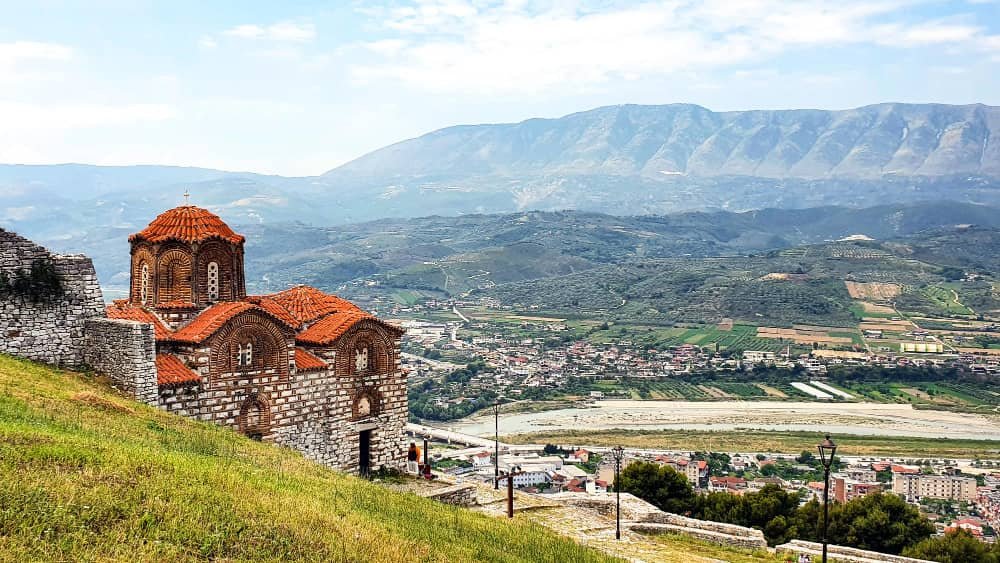
Berat shifts the focus from Albania’s mountains to its history and architecture. The city stretches along the Osum River, with white houses climbing the hillsides, old neighborhoods on both banks, and a castle overlooking everything from above.
Its historic center forms part of the UNESCO World Heritage property Historic Centres of Berat and Gjirokastra. Much of Berat’s character comes from the way different layers of the city remain visible at once: Ottoman-era houses, churches, mosques, stone lanes, and the fortified settlement above them.
The historic center is compact enough to explore on foot, but don’t spend all your time beside the river. The climb toward the castle reveals a very different view of Berat.
Explore Berat Castle
Berat Castle, or Kalaja e Beratit, occupies the hill above the old town. This isn’t simply a fortress that you enter, walk around, and leave. Houses, churches, narrow lanes, ruins, and viewpoints are scattered throughout the fortified area.
Give yourself time to wander rather than following a strict route. Between the stone buildings and historic sites, you’ll find viewpoints looking across the city, the Osum River, and the surrounding hills.
The climb from the lower town is steep in places, especially under the summer sun, so bring water and wear comfortable shoes.
Walk Through Mangalem and Gorica
On opposite sides of the Osum River are Mangalem and Gorica, the two historic neighborhoods that shape much of Berat’s distinctive appearance.
Mangalem climbs the hillside beneath the castle, its white houses appearing almost stacked above one another when viewed from across the river. Gorica sits opposite, with traditional houses and narrow streets spreading up the other side of the valley.
Walk across the river and explore both sides rather than seeing Berat from a single viewpoint. Some of the nicest moments here come from simply wandering the quieter streets or stopping along the river as the light changes later in the day.
When to Visit Berat
Spring and autumn are comfortable times to explore Berat on foot, particularly if you plan to walk up to the castle.
Summer brings longer days but also higher temperatures. During the hottest months, start early or wait until later in the afternoon for the climb to the castle and spend the middle of the day at a slower pace.
Why Spend a Night in Berat?
Stay overnight if you can. It gives you time to explore the castle and both historic neighborhoods without squeezing everything into a few hours, and Berat becomes noticeably quieter once many daytime visitors have left.
Best for: Historic architecture, UNESCO heritage, photography, castles and walking
Good to know: Comfortable shoes make a difference here. The historic areas include cobbled streets, slopes, steps, and a steep climb toward the castle.
4. Gjirokastër
Gjirokastër climbs a steep hillside above the Drino Valley, its stone-roofed houses packed beneath a fortress that seems to watch over the entire city. The gray stone architecture gives the old town a look and atmosphere quite different from Berat, even though the historic centers of both cities are recognized together by UNESCO.
Exploring Gjirokastër involves plenty of uphill walking. Cobbled lanes twist between old houses, shops, and small courtyards, with views opening unexpectedly across the rooftops and toward the mountains on the other side of the valley.
Above it all sits Gjirokastër Castle, visible from almost everywhere in the historic center.
Explore Gjirokastër Castle
Gjirokastër Castle stretches along the ridge above the old town and is difficult to appreciate from below until you see just how large it is.
Inside, stone passages lead between towers, open courtyards, fortifications, and exhibitions connected to the city’s history. The elevated position also gives you wide views across the old town, Drino Valley, and surrounding mountains.
Don’t rush straight to the viewpoint and leave. There’s enough inside the fortress to spend some time wandering through the different sections before heading back into town.
Wander Through the Old Bazaar
Below the castle, the Old Bazaar forms the lively center of historic Gjirokastër. Cobbled streets meet between traditional buildings now occupied by shops, cafés, restaurants, and small businesses.
The streets around the main bazaar can get busy, particularly during the summer. Turn away from the busiest intersections, though, and you’ll quickly find quieter lanes climbing between old stone houses.
The polished stone streets can be surprisingly slippery, particularly on the steeper sections, so wear shoes with decent grip.
Step Inside a Traditional Gjirokastër House
Seeing the old houses from the street is only part of the experience. Several historic homes are open to visitors, allowing you to see how these imposing stone buildings were arranged inside.
Thick walls, multiple levels, wooden interiors, fireplaces, and rooms designed for different uses reveal far more about everyday life in historic Gjirokastër than the exterior façades alone.
If you have time, visit at least one before leaving the old town.
When to Visit Gjirokastër
Spring and autumn are comfortable times to explore the castle and steep streets on foot. Summer is popular too, but climbing through the old town during the hottest part of the day can be tiring.
In July and August, start earlier in the morning or leave some of the uphill exploring until later in the afternoon. Evenings are also a good time to wander around the bazaar once the daytime heat begins to ease.
Is Gjirokastër Worth Visiting?
Give Gjirokastër at least one night if your itinerary has room for it. That gives you time to see the castle and historic houses without racing through them, then return to the old streets later in the day when the pace feels slower.
And although Berat and Gjirokastër are often paired on Albania itineraries, visiting one doesn’t make the other unnecessary. Berat unfolds around the Osum River beneath its castle, while Gjirokastër climbs steeply into the hillside, with stone architecture and its fortress dominating the view.
Best for: Historic architecture, castles, UNESCO heritage, photography and old-town walks
Good to know: Expect plenty of uphill walking and uneven stone streets. Staying close to the historic center can save you repeated climbs from the newer parts of the city.
5. Lake Ohrid and Pogradec
Along Albania’s eastern border with North Macedonia, Lake Ohrid brings another change of scenery. Mountains surround the vast lake, which is shared between the two countries, while Pogradec stretches along its Albanian shore.
Pogradec has a relaxed rhythm compared with Albania’s busier coastal destinations. Its long waterfront, open views across the lake, and proximity to villages such as Tushemisht and Lin make it an easy place to spend a couple of days without filling every hour with sightseeing.
Lake Ohrid is an ancient lake with exceptional biodiversity and natural importance. The Albanian side is included in UNESCO’s Natural and Cultural Heritage of the Ohrid Region, a World Heritage property extending across Albania and North Macedonia.
Walk Along the Pogradec Waterfront
The lakefront is the natural place to begin exploring Pogradec. A promenade follows the shore, with cafés, restaurants, parks, and broad views across the water toward the surrounding mountains.
Later in the day, the waterfront becomes a pleasant place for a walk as the heat eases and more people head outside.
You don’t need a long checklist of attractions here. Walk beside the lake, stop for coffee or dinner, and leave some time simply to enjoy being by the water.
Visit Tushemisht and Drilon
A short distance from Pogradec, Tushemisht is a small lakeside village known for its traditional houses, springs, canals, and restaurants.
Nearby Drilon is a green recreation area shaped by clear spring water, channels, trees, and walking paths. It feels quite different from Pogradec’s open waterfront and is easy to combine with Tushemisht in the same outing.
Together, the two make a simple half-day addition to a stay around Lake Ohrid.
Explore More of the Lake Ohrid Shoreline
Pogradec is only one part of the Albanian side of Lake Ohrid. Following the shoreline reveals small settlements, mountain views, and places where you can stop close to the water.
Northwest of Pogradec, Lin occupies a small peninsula extending into the lake. The village is known for its traditional houses, lakeside setting, and archaeological remains, and makes an interesting stop when approaching or leaving the Lake Ohrid region.
If your trip continues into North Macedonia, Pogradec can also form part of a wider journey around the lake rather than being the end of the route.
When to Visit Lake Ohrid and Pogradec
Late spring through early autumn offers the most flexibility for walking, sightseeing, and spending time beside the water. July and August are the warmest and busiest months, while late spring and early autumn generally bring fewer summer visitors.
Temperatures can also drop after sunset, especially compared with the heat of the day, so bringing a light extra layer is useful if you plan to stay out along the waterfront in the evening.
How Long Should You Spend in Pogradec?
Lake Ohrid adds something the other destinations in this guide don’t. Instead of another historic city or mountain base, Pogradec gives you time beside one of the Balkans’ most important lakes, with villages and smaller sights close enough to explore at an easy pace.
One or two nights can fit comfortably into a longer Albania itinerary, especially if you’re traveling across the eastern part of the country or continuing into North Macedonia.
Best for: Lake views, waterfront walks, villages, nature and slower-paced travel
Good to know: Lake Ohrid is shared by Albania and North Macedonia. If you’re driving across the international border, check current entry requirements and confirm that your rental-car agreement allows cross-border travel.
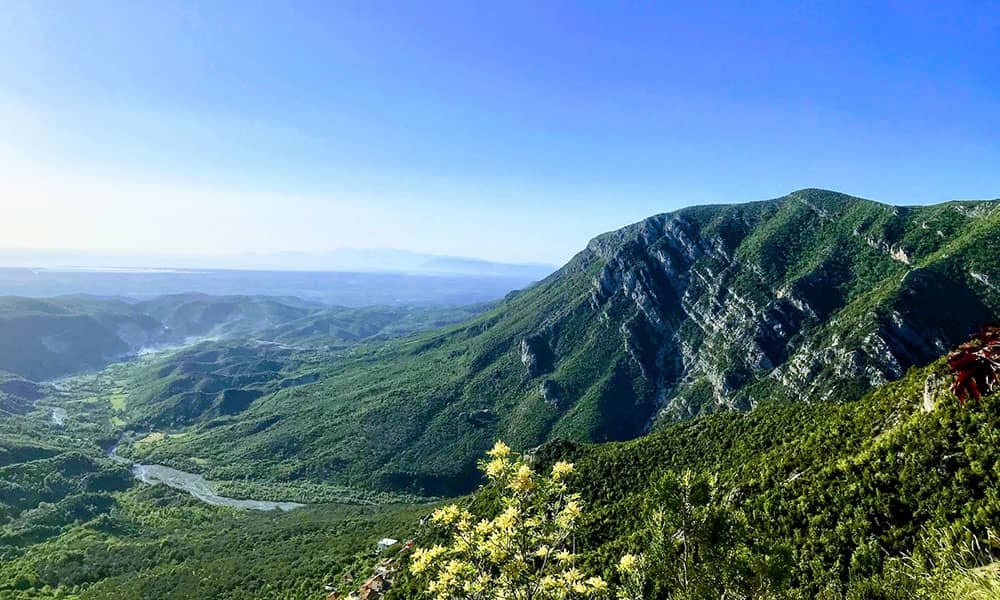
Photo by Drini Teta on Unsplash
6. Krujë
Krujë sits against the slopes of Mount Krujë in central Albania, with its castle and old bazaar high above the surrounding plain. On a clear day, you can see far across western Albania from the castle area.
The town is closely associated with Gjergj Kastrioti Skanderbeg, Albania’s national hero, who made Krujë an important center of resistance against the Ottoman Empire during the 15th century.
Most visits revolve around the castle and the Old Bazaar directly below it. They’re close enough to explore together on foot, making Krujë manageable even if you only have part of a day.
Explore Krujë Castle
Krujë Castle stands on a rocky hill above the town, although its history began centuries before Skanderbeg.
The fortress took on particular importance during the 15th century, when Skanderbeg’s forces resisted repeated Ottoman sieges. The site has changed considerably over the centuries, but its connection to this period remains central to Krujë’s identity.
Inside the castle complex are stone lanes, surviving structures, museums, and several places to stop and look across the landscape below. The Skanderbeg Museum is the main stop for anyone wanting to understand more about Skanderbeg and Krujë’s role in the resistance.
Don’t leave as soon as you’ve seen the museum. Walk through the rest of the complex as well; the setting and views are a large part of the experience.
Walk Through Krujë’s Old Bazaar
Just below the castle, Krujë’s Old Bazaar follows a narrow cobbled street lined with wooden-fronted shops.
Carpets, textiles, embroidery, woodwork, antiques, and souvenirs fill the displays along the street. The bazaar is firmly on the tourist trail today, but it’s still an enjoyable part of a visit and one of the easiest places in Krujë to browse for Albanian crafts.
If you’re planning to buy something, take time to look around and ask about where an item was made, particularly if you’re hoping to find locally produced work rather than a mass-produced souvenir.
How Much Time Do You Need in Krujë?
Half a day is enough to see the castle, visit the Skanderbeg Museum, and walk through the Old Bazaar without rushing too much.
With more time, you can add another museum, stop for lunch, and explore the castle grounds at a more relaxed pace. Krujë is also close enough to Tirana to fit easily into the beginning or end of many Albania itineraries.
If you’re driving, check parking options before reaching the historic center. The castle and bazaar sit above the newer parts of town, and the streets become tighter as you approach the old area.
When to Visit Krujë
Spring and autumn are comfortable times to explore Krujë on foot. Summer brings more visitors and hotter conditions, particularly around the exposed parts of the castle.
During July and August, arriving earlier in the morning or later in the afternoon can make the uphill walking much more comfortable.
Is Krujë Worth Visiting?
For a relatively small town, Krujë carries a large piece of Albania’s national history. Within a compact area, you can explore the castle, learn about Skanderbeg, walk through the old bazaar, and take in the views across the plain below.
You don’t necessarily need to stay overnight. Half a day covers the main historic area, while a full day gives you time for the museums, lunch, and a slower walk around the castle.
Best for: Albanian history, castles, museums, local crafts and panoramic views
Good to know: The castle and bazaar have cobbled and sloping surfaces, so comfortable shoes are a better choice than footwear with smooth soles.
7. Ksamil Islands
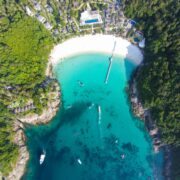
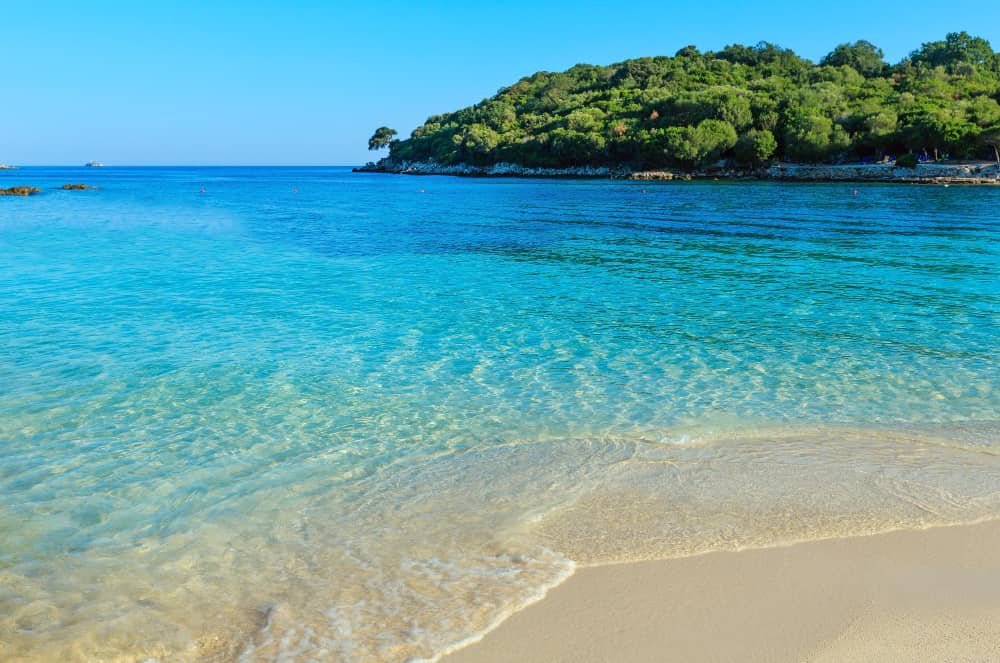
At the southern end of Albania, the Ksamil Islands bring the Ionian coast into the picture. Just offshore from the town of Ksamil, four small islands and islets sit in clear blue-green water, with Corfu visible across the channel on clear days.
After the mountains, lakes, and stone cities earlier in this guide, Ksamil feels like a completely different side of the country. The small islands, sheltered water, and views across the Ionian are what give this part of southern Albania its distinctive look.
Ksamil itself has developed rapidly and gets extremely busy at the height of summer, so don’t arrive expecting an undiscovered coastal village. It’s a popular resort, and in July and August that popularity is impossible to miss.
See the Ksamil Islands From the Water
The islands sit close to shore, and local boats and water taxis offer one of the easiest ways to see them from a different perspective and reach spots away from the mainland.
Kayaks and paddleboards are also available around Ksamil when conditions are suitable. Although the islands look very close from shore, the water can have boat traffic and currents, so don’t assume that swimming across is always a safe option.
You don’t have to go out on the water to enjoy the view, either. The islands are visible from several beaches and waterfront areas around Ksamil.
Visit Butrint While You’re in Ksamil
A stay in Ksamil also puts you close to Butrint, one of Albania’s most important archaeological sites.
The UNESCO-listed site contains remains from different periods of history, including Greek, Roman, Byzantine, and Venetian influences, all within an unusual setting of woodland, wetlands, and water.
Butrint is close enough to visit while staying in Ksamil, giving you an easy break from the beach and a chance to see one of Albania’s major historic sites during the same part of your trip.
When to Visit Ksamil
July and August bring the hottest weather as well as the largest crowds. Beaches, roads, restaurants, and accommodation can become very busy during the peak summer weeks.
Late spring and early autumn can be more comfortable if you’d rather explore without the intensity of midsummer. Conditions on the water and the availability of seasonal services vary outside the main summer season, so check locally if swimming or boat trips are important to you.
Are the Ksamil Islands Worth Visiting?
Ksamil is easy to understand once you see the setting: tiny islands just offshore, clear Ionian water, and Corfu on the horizon. The trade-off is that plenty of other travelers want to see it too.
If you’re visiting during peak summer, expect crowds and plan accordingly. Get out on the water if conditions allow, visit nearby Butrint, and don’t limit your time in southern Albania to the busiest beachfront areas.
For more places to swim and explore along the country’s coast, see our guide to the best beaches in Albania.
Best for: Ionian scenery, swimming, boat trips, kayaking and trips to nearby Butrint
Good to know: If your dates are flexible, visiting outside the busiest weeks of July and August can make a noticeable difference.
For more places to swim and explore along the country’s coast, see our guide to the best beaches in Albania.

8. Tirana
Tirana brings a completely different energy to this list. Albania’s capital is colorful, busy, and constantly changing, with broad public spaces, lively neighborhoods, modern development, and mountains rising beyond the city.
The center mixes architecture from different periods with cafés, restaurants, museums, pedestrian areas, and public spaces that have been transformed as Tirana has grown. Mount Dajti rises to the east, giving the city a mountain backdrop that becomes especially noticeable from higher viewpoints.
For many travelers, Tirana is the first introduction to Albania. Give it a day or two rather than heading straight for the mountains or coast, and you’ll see a side of the country that’s easy to miss in the smaller historic towns.
Start at Skanderbeg Square
Skanderbeg Square is the natural starting point for exploring central Tirana. The large pedestrian space is surrounded by some of the capital’s most recognizable landmarks, including the Et’hem Bey Mosque, Clock Tower, and several major cultural and government buildings.
At its center stands the equestrian statue of Gjergj Kastrioti Skanderbeg, Albania’s national hero.
From here, many central sights are within walking distance, so you can continue through the city without constantly relying on taxis or public transportation.
Explore Bunk’Art 2 and Tirana’s Recent History
Modern Tirana makes more sense once you understand what Albania experienced during the 20th century.
Near Skanderbeg Square, Bunk’Art 2 occupies a former underground bunker and explores Albania’s communist period, including the country’s security and surveillance system.
Another important stop is the House of Leaves, housed in a building once used by Albania’s secret police.
Neither is a lighthearted attraction, but both provide valuable context for understanding Albania’s recent history and the changes the capital has experienced since the end of communist rule.
Walk Through Blloku
Today, Blloku is filled with cafés, restaurants, bars, shops, and some of Tirana’s busiest evening streets.
That would have been difficult to imagine during Albania’s communist period, when the neighborhood was reserved for senior party officials and closed to most ordinary citizens.
The contrast is part of what makes Blloku interesting. You can come for dinner or drinks, but knowing what the neighborhood once represented adds another layer to walking through it today.
See Tirana From Mount Dajti
When you want a break from the traffic and busy streets, head toward Mount Dajti, east of the city.
The Dajti Ekspres cable car takes visitors up the mountainside, where clear weather can bring wide views over Tirana and the surrounding landscape.
It’s an easy way to see the capital from a completely different perspective and add a few hours outdoors without leaving the Tirana area for an entire day.
When to Visit Tirana
Spring and autumn are comfortable seasons for exploring Tirana on foot. Summer can be hot, particularly during the middle of the day, although evenings remain lively around the center and Blloku.
Winter brings cooler weather and fewer summer visitors and can still work well for museums, restaurants, and city sightseeing. Trips toward Mount Dajti naturally depend more on the day’s weather and visibility.
How Much Time Do You Need in Tirana?
Don’t use Tirana simply as an airport stop before heading elsewhere. One or two days gives you time to explore the center, visit a museum or two, experience the city’s food and café culture, and see how different modern Tirana feels from Albania’s historic towns.
Tirana won’t give you the mountain scenery of Theth or the Ionian setting of Ksamil, but that’s not why you come. Spend a day or two here for the museums, food, neighborhoods, nightlife, and a better understanding of modern Albania.
Best for: Albanian history, museums, food, cafés, nightlife and contemporary culture
Good to know: Much of central Tirana is easy to explore on foot, so you don’t need a car for the main sights around Skanderbeg Square and Blloku.
9. Shkodër and Lake Shkodër
Shkodër is often treated as a stop on the way to Theth, Valbona, or Lake Koman, but there’s plenty to see before heading into the mountains. The city sits close to Lake Shkodër, with rivers, wetlands, and mountain ranges surrounding this part of northern Albania.
The center is compact and easy to explore, with pedestrian streets, cafés, historic buildings, and bicycles everywhere. Just outside the city, Rozafa Castle rises above the landscape, while the lake is close enough to visit without turning it into a separate day trip.
If you’re already traveling through northern Albania, give Shkodër some time of its own rather than using it only as a transportation stop.
Climb to Rozafa Castle
Rozafa Castle occupies a rocky hill southwest of central Shkodër, on a site with a history stretching back more than two thousand years.
The fortress was controlled, rebuilt, and expanded during different periods, leaving behind walls, gateways, ruins, and other structures spread across the hilltop.
The location is a major part of the experience. From the castle, you can look across Shkodër and toward Lake Shkodër, the surrounding rivers, plains, and mountains.
Some sections are exposed to the sun, so during summer it’s more comfortable to visit earlier in the morning or later in the afternoon.
Explore the Center of Shkodër
Back in the city, Rruga Kolë Idromeno and the surrounding pedestrian streets are good places to explore without much of a plan.
Cafés and restaurants occupy the ground floors of colorful buildings, while bicycles remain a noticeable part of everyday life. With much of the central area relatively flat, cycling is also an easy way to get around.
Museums, churches, mosques, galleries, and older buildings are scattered around the center, so allow a few hours rather than stopping only for lunch before continuing north.
Spend Time at Lake Shkodër
Lake Shkodër, also known as Lake Skadar, stretches across the border between Albania and Montenegro and is the largest lake in the Balkans.
On the Albanian side, Shirokë is one of the easiest places to reach the water from Shkodër. The lakeside settlement has restaurants and open views across the lake, with mountains rising beyond the opposite shoreline.
Continue along the water and the surroundings become increasingly rural, providing a noticeable contrast to the city only a short distance away.
The lake and its wetlands are also important habitats for birds and other wildlife, so this isn’t simply a place to stop for a photograph before returning to Shkodër.
Shkodër and a Northern Albania Itinerary
Shkodër fits naturally into almost any trip through northern Albania. Transfers and transportation toward Theth, Lake Koman, and the Valbona region commonly pass through or begin around the city.
Instead of arriving late and leaving again first thing the next morning, consider adding a full day. That’s enough time to see Rozafa Castle, walk through the center, and head out toward Lake Shkodër without slowing down the rest of your trip too much.
When to Visit Shkodër
Spring and autumn are comfortable for walking, cycling, visiting the castle, and spending time beside the lake.
Summer also fits naturally with trips into the Albanian Alps, although afternoons in the city can be hot. If you’re visiting Rozafa Castle in July or August, aim for the cooler part of the day and explore the flatter city center afterward.
How Long Should You Spend in Shkodër?
Give Shkodër at least one full day if your northern Albania itinerary allows it. That’s enough time for Rozafa Castle, the pedestrian center, and a trip toward Lake Shkodër. Add another night if you’d like a slower afternoon around Shirokë or the lake before continuing into the mountains.
Best for: Castles, lake views, cycling, history and northern Albania itineraries
Good to know: If you’re continuing to Theth, Valbona, or Lake Koman, confirm your onward transportation shortly before traveling. Ferry and mountain connections can vary with the season.
10. Llogara Pass and the Albanian Riviera
Few places show Albania’s mountain-and-sea geography as clearly as Llogara. The Ceraunian Mountains rise sharply above the Ionian coast, with high slopes and forests sitting surprisingly close to the water.
Travel through the area and the scenery can change quickly. One moment you’re surrounded by mountain forest; farther along, the landscape opens toward the Ionian Sea and the coastline of southern Albania.
Llogara is best experienced as part of that journey rather than as a single viewpoint to photograph and leave. The newer Llogara Tunnel provides a faster route through the mountains, so travelers who specifically want the views from the old pass should plan for that route rather than assuming they’ll automatically cross it on the way south.
Stop at Llogara Pass
Llogara Pass crosses the Ceraunian Mountains at more than 1,000 meters above sea level, putting you high above the beaches and coastal settlements below.
Forests cover much of the higher ground, while open sections provide views toward the Ionian Sea when the weather is clear. It’s the height that makes the setting unusual: the coast can feel close even when you’re standing in a noticeably cooler mountain environment.
Weather can change quickly here, and conditions at the pass may be cooler, windier, or cloudier than they are beside the sea.
If you’re driving, use proper stopping areas for photographs and viewpoints. The mountain roads require attention, especially during busy periods or poor weather.
Explore Llogara National Park
The surrounding Llogara National Park gives you a reason to get out of the car instead of treating the area purely as a scenic drive.
Pine and fir forests cover much of the landscape, with walking routes allowing you to spend some time away from the road. Even a short walk feels very different from being down on the hot Ionian coast.
You don’t need to plan a full day of hiking. A couple of hours around the park can fit naturally into a longer journey through southern Albania.
Continue Along the Albanian Riviera
From the Llogara area, the journey continues toward the villages and coastline of the Albanian Riviera.
Mountains remain close to the sea along much of this part of southern Albania, creating a road trip where the drive between destinations can be just as interesting as the stops themselves. Villages sit against steep slopes, and the Ionian Sea appears repeatedly as the road moves along the coast.
Don’t turn the Riviera into a race between famous beaches. Leave some room in your schedule for viewpoints, villages, roadside stops, and places you hadn’t planned to visit.
For specific places to swim and spend time by the water, see our guide to the best beaches in Albania.
When to Visit Llogara and the Albanian Riviera
Late spring and early autumn are good times to combine the mountains with the coast. The weather is generally comfortable for exploring, while the Riviera is outside its busiest midsummer period.
July and August bring the largest summer crowds, heavier traffic, and greater demand for accommodation along the coast.
Even on a hot summer day, don’t assume the temperature at Llogara will match the beach below. An extra layer can be useful if you’re planning to spend time around the pass.
Is Llogara Pass Worth Visiting?
Llogara shouldn’t be treated simply as a road you have to cross before reaching the beaches. The meeting of the Ceraunian Mountains and the Ionian Sea is part of what makes this stretch of southern Albania so memorable.
Stop when you have time, walk through the forest, take in the views, and then continue toward the Riviera. The transition from high mountain terrain to the Ionian coast happens over a relatively short distance, and that’s the real attraction here.
Best for: Mountain and sea views, road trips, photography, nature and Albanian Riviera itineraries
Good to know: Conditions around Llogara Pass can be very different from the coast below. Check the weather before driving through and keep an extra layer in the car.
How to Plan a Trip Around Albania’s Most Beautiful Places
Seeing all ten places on a single trip is possible, but it doesn’t necessarily make for the best itinerary. Albania may look compact on a map, yet the destinations in this guide are spread from the Albanian Alps in the north to Ksamil in the far south, with Lake Ohrid over on the eastern border.
If you have a week, concentrate on one or two regions. With 10 days, you can connect several major stops without trying to cover the entire country. Two weeks gives you much more freedom, although even then there’s no need to visit everything just to complete the list.
A 7-Day Albania Route
With one week, choose between northern Albania and a route through the center and south.
For the north, you could travel:
Tirana → Krujë → Shkodër → Lake Koman → Valbona → Theth
This route usually involves hiking between Valbona and Theth rather than simply driving from one village to the other. If you don’t plan to complete the mountain crossing, adjust the route and transportation accordingly.
This route puts most of the emphasis on mountains and outdoor scenery, with Tirana, Krujë, and Shkodër adding some city time and history.
For a southern route, consider:
Tirana → Berat → Gjirokastër → Ksamil and Butrint → Tirana
You’ll miss the Albanian Alps, but you’ll have a much more manageable trip with time for two historic cities and the Ionian coast.
A 10-Day Albania Route
Ten days gives you more flexibility, but trying to cover the far north, far south, and Lake Ohrid can still create a lot of driving.
One option is:
Tirana → Krujë → Berat → Gjirokastër → Ksamil → Pogradec and Lake Ohrid → Tirana
This route moves through central, southern, and eastern Albania and includes historic cities, the Ionian coast, and Lake Ohrid.
If Theth and Lake Koman are higher priorities, spend those days in northern Albania instead of adding Ksamil. Trying to include both ends of the country in ten days is possible, but you’ll spend more of the trip moving between destinations.
A 14-Day Albania Route
Two weeks gives you enough time to build a much broader journey.
You could begin in Tirana, travel through Krujë and Shkodër, and continue toward Lake Koman and the Albanian Alps. From the north, return through central Albania for Berat, then continue south to Gjirokastër and Ksamil.
Adding Pogradec and Lake Ohrid creates a more complete circuit, but it also adds another substantial stretch of travel. If you prefer slower trips, skip one region and use those extra nights in Theth, Berat, Gjirokastër, or along the southern coast.
There’s no prize for seeing all ten places. A good Albania itinerary leaves enough time to enjoy them once you arrive.
For destination information and current travel inspiration, you can also check Albania’s official tourism website.
Don’t Underestimate Travel Times
Distances in Albania can look surprisingly short on a map. Mountain roads, traffic, ferry connections, road conditions, and slower routes between regions can all add time.
This matters especially in northern Albania, where traveling through Shkodër, Lake Koman, Valbona, and Theth requires more planning than simply driving between the country’s larger cities.
Avoid building important connections around the assumption that every journey will take exactly as long as a navigation app predicts. Leave some flexibility on days involving ferries, mountain roads, or several transportation connections.
For a first trip, choose places that fit naturally together rather than trying to check every destination off a list. Leaving some room in your itinerary also makes it easier to stop somewhere you hadn’t originally planned to visit.
Frequently Asked Questions About Visiting Albania
What is the most beautiful part of Albania?
That depends on the kind of scenery you’re looking for. The Albanian Alps around Theth offer some of the country’s most dramatic mountain landscapes, while Llogara and the Albanian Riviera combine high mountains with views over the Ionian Sea.
For historic towns, Berat and Gjirokastër stand out for their preserved architecture and castles. Lake Koman and Lake Ohrid are better suited to travelers drawn to lakes and mountain scenery.
How many days do you need in Albania?
For a first trip, 7 to 10 days gives you enough time to explore several places without spending every day in transit. With two weeks, you can combine northern Albania, historic cities, and the Ionian coast much more comfortably.
See the itineraries above for suggested 7-, 10-, and 14-day routes.
What is the best time to visit Albania?
For a trip combining cities, mountains, and the coast, May, June, September, and early October are good months to consider. Temperatures are generally more comfortable for sightseeing and hiking than during the hottest part of summer.
July and August bring the busiest summer season along the coast, particularly around popular destinations such as Ksamil.
Mountain conditions can be very different from those on the coast, so check local weather and trail conditions before heading to places such as Theth or Llogara.
Can you visit Albania without renting a car?
Yes, especially if your itinerary concentrates on Tirana and larger towns. Buses, minibuses, taxis, transfers, and organized transportation connect many popular destinations.
A car gives you more flexibility for rural areas, smaller villages, scenic stops, and parts of the coast. Northern mountain destinations require more planning, and transportation toward Theth, Lake Koman, and Valbona should be checked shortly before your trip rather than relying on an old timetable.
Is northern or southern Albania better for a first trip?
They offer very different experiences.
Northern Albania suits travelers interested in mountains, hiking, Lake Koman, Theth, and the landscapes around Shkodër.
Southern Albania combines historic cities such as Berat and Gjirokastër with the Ionian coast, Ksamil, and the Albanian Riviera.
If you have around two weeks, you don’t necessarily have to choose between them. A longer itinerary can include highlights from both regions.
Are Berat and Gjirokastër both worth visiting?
The two UNESCO-listed cities are different enough that visiting both doesn’t feel repetitive. Berat spreads along the Osum River beneath its hilltop castle and is known for the historic neighborhoods of Mangalem and Gorica.
Gjirokastër has a steeper, more compact old town dominated by stone houses, cobbled streets, an old bazaar, and its large fortress.
If your itinerary allows, spend at least one night in each rather than treating both as quick daytime stops.
Can you visit Theth and Ksamil on the same trip?
You can, but they’re at opposite ends of Albania. Theth is in the northern mountains, while Ksamil sits close to the country’s southern border with Greece.
With 10 days, combining both is possible but requires careful planning. With two weeks, it’s much easier to include northern Albania and the Ionian coast while still leaving time for places such as Tirana, Berat, or Gjirokastër.
More Albania and Balkan Travel Ideas
Planning more of your trip? These guides can help you explore Albania’s coast, prepare for the mountains, and discover more of the Balkans.
- Best Beaches in Albania – Find places to swim and stay along Albania’s Ionian coast, including Ksamil, Dhërmi, Himara, Borsh, and Gjipe.
- 7 High Peaks of the Balkans – Discover some of the highest mountains across Albania and neighboring Balkan countries.
- Why You Should Travel in the Balkan Mountains – Get more ideas for exploring the mountain landscapes that stretch across the Balkan Peninsula.
- Must-Have Travel Essentials for the Balkans – Prepare for your trip with practical gear and packing ideas for traveling around the region.
- Travel Gear for the Balkans – Compare useful travel gear for road trips, city breaks, mountain trips, and longer journeys through the Balkans.
- Explore More of Albania – Browse our latest Albania travel guides, destination ideas, and trip-planning articles.
Which of Albania’s Most Beautiful Places Should You Visit?
The most beautiful places in Albania are spread across the country, so don’t feel that you need to squeeze all ten into one trip.
If you’re drawn to mountains, build more time around Theth, Lake Koman, and Shkodër. For history and old architecture, Berat, Gjirokastër, and Krujë can easily become the backbone of an itinerary. Pogradec and Lake Ohrid offer a slower change of pace, while Tirana is worth seeing for a completely different side of Albania.
In the south, Llogara Pass, the Albanian Riviera, and Ksamil bring the mountains and Ionian coast into the same journey. This part of the country can become especially busy in summer, so leaving some flexibility in your schedule helps.
For a first trip, choose the places that fit naturally together rather than trying to check every destination off a list. Albania may look small on a map, but mountain roads, ferry connections, and worthwhile stops along the way can make journeys take longer than expected.
Give yourself enough time to stop between the major destinations too. A small town, a mountain viewpoint, a lakeside restaurant, or an unplanned stop along the coast can end up being just as memorable as the places you originally came to see.
What's your reaction?