 By
By Balkans Packing List: 35 Essential Things to Bring in 2026
Planning a trip through the Balkans is exciting, but figuring out what to pack can be surprisingly tricky. One day you might be wandering the cobblestone streets of Dubrovnik or Kotor, and a few days later you could be hiking in the mountains of Montenegro, Albania, or Bulgaria. Add hot Adriatic beaches, cool evenings, long bus rides, and changing weather, and packing suddenly requires a little more thought.
This Balkans packing list covers the essentials you’ll actually need for a comfortable trip, from clothing and footwear to electronics, travel documents, toiletries, and useful gear. The goal isn’t to fill your suitcase with things you might never use. It’s to help you pack lighter while still being prepared for the different places and conditions you may encounter.
What belongs in your bag will depend on where you’re going and when. A summer trip along the Croatian, Montenegrin, or Albanian coast calls for very different clothing than an autumn road trip through Serbia, North Macedonia, or Bosnia and Herzegovina. If your itinerary includes mountain areas, you may need warmer layers even when temperatures along the coast are high.
You also don’t need to bring everything from home. Larger cities throughout the region have supermarkets, pharmacies, shopping centers, and stores where you can pick up most everyday items. Focus instead on the things that make traveling between destinations easier, keep you comfortable, and would be inconvenient to replace during your trip.
Whether you’re visiting one Balkan country or traveling across several, this guide will help you decide what to pack for the Balkans—and what you can safely leave at home.
Quick Balkans Packing Checklist
Affiliate Disclosure: This post may contain affiliate links, which means we may earn a small commission if you make a purchase through our links at no extra cost to you. We only recommend products we believe can provide value to our readers and improve their travel experience.
If you want the short version, this Balkans packing list covers the main things worth bringing for a trip through the region:
- Passport and important travel documents
- Credit/debit cards and some local cash
- Comfortable walking shoes
- Lightweight, versatile clothing
- Sweater or light jacket
- Rain jacket or compact umbrella
- Swimsuit and beach essentials
- Sunscreen and sunglasses
- European travel adapter
- Phone charger and portable power bank
- Reusable water bottle
- Small daypack
- Personal medications and basic first-aid supplies
- Toiletries
- Offline maps and essential travel apps
Your exact packing list will depend on the season and itinerary. A summer trip along the Adriatic coast requires different gear from hiking in the mountains or visiting the Balkans in autumn or winter.
Below, we’ll break down what is actually worth bringing, what you can buy after you arrive, and what you probably don’t need to pack at all.
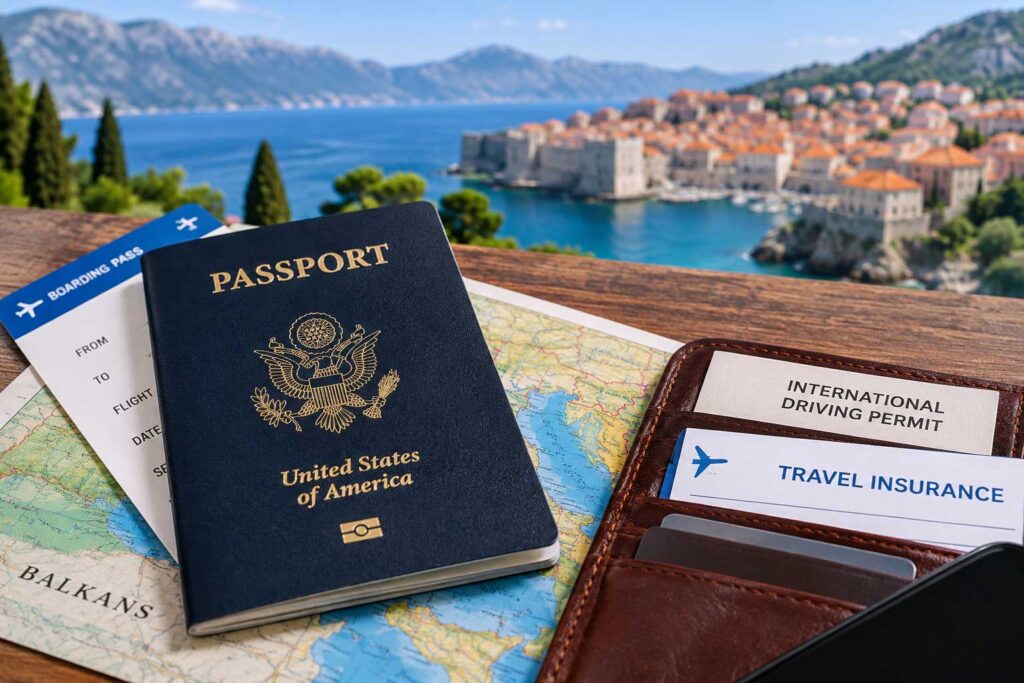
Passport and Entry Documents
Your passport should be one of the first things you check when working through your Balkans packing list. Make sure it meets the entry requirements for every country on your itinerary.
U.S. travelers can check current country-specific entry requirements through the U.S. Department of State before departure.
If your itinerary includes countries in the Schengen Area, check the European Union’s official travel information for current rules and practical guidance.
Keep your passport somewhere secure but accessible on travel days. Border checks are still part of many routes through the region, particularly when traveling between countries inside and outside the EU and Schengen Area.
It’s also smart to keep a digital copy of your passport somewhere you can access independently of your phone.
Travel Insurance Information
Keep your travel insurance policy number, emergency contact information, and instructions for making a claim somewhere easy to find.
You don’t necessarily need to carry a thick folder of paperwork. A digital copy backed up online, along with the important details saved offline on your phone, is usually much more practical.
Credit and Debit Cards
Bring at least one card that works internationally, and ideally keep a backup card somewhere separate from your main wallet.
Cards are widely accepted in major Balkan cities, hotels, restaurants, supermarkets, and tourist areas, but you shouldn’t expect to use a card everywhere. Smaller businesses, local markets, rural accommodations, bakeries, cafés, parking areas, and transportation services may still prefer or require cash.
Local Currency and Some Cash
One of the easiest mistakes to make on a multi-country Balkan trip is assuming the entire region uses the euro.
Some Balkan destinations use the euro, while others have their own currencies. If you’re crossing several countries, you may therefore handle more than one currency during the same trip.
You don’t need to arrive with large amounts of cash. Having enough for your first expenses can be useful, and you can withdraw additional money when necessary.
Avoid carrying all of your cash in one place. Keep your everyday spending money accessible and store the rest separately.
Driver’s License and International Driving Permit
If you’re planning a Balkan road trip, bring your valid driver’s license and check the requirements for each country where you intend to drive.
Depending on your license and destination, an International Driving Permit (IDP) may also be required or requested by a rental company. Check this before leaving rather than discovering it at the rental counter.
Also keep your rental agreement, insurance information, and any documents required for taking a rental vehicle across international borders.
U.S. travelers can also review International Driving Permit information from the U.S. Department of State before renting or driving a vehicle abroad.
Copies of Important Reservations
You don’t need to print every hotel confirmation, but don’t depend entirely on having a mobile connection either.
Download or screenshot important information before traveling, including:
- Accommodation addresses and confirmations
- Flight and transportation details
- Car rental information
- Travel insurance details
- Important phone numbers
- Tickets that can be stored offline
This is particularly useful when arriving in a new country, crossing a border, or trying to find accommodation somewhere with weak mobile service.
Balkan travel tip: If your itinerary includes several countries, create one offline folder on your phone containing your passport copy, insurance information, reservations, transportation tickets, and rental-car documents. It takes only a few minutes to organize before your trip and can save a lot of frustration later.
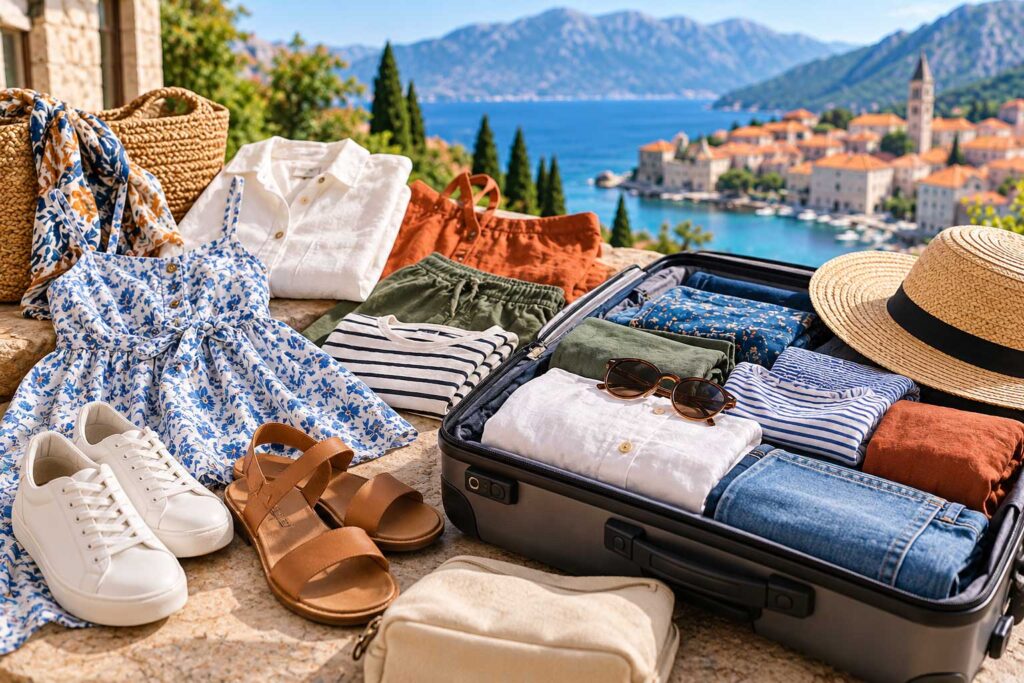
Clothing to Pack for the Balkans
Clothing takes up a big part of any Balkans packing list, but you don’t need an outfit for every possible situation. Choose versatile pieces that can handle changing temperatures, long sightseeing days, and different settings without filling your suitcase.
If you’re still deciding what clothing works best for your itinerary, our guide to travel gear for the Balkans goes deeper into choosing practical gear for different destinations and activities.
What you need depends heavily on the season and itinerary. Summer along the Adriatic and Aegean coasts can be hot, while mountain areas may feel considerably cooler, particularly in the evening. Spring and autumn can bring much greater temperature changes throughout the day.
Lightweight Shirts and Tops
Pack several comfortable tops that you can mix and match with the rest of your clothing. Lightweight, breathable fabrics are especially useful during summer when cities and coastal destinations can get very hot.
Rather than packing a completely different outfit for every day, choose tops that can be washed easily and worn with several pairs of shorts, pants, or skirts.
Shorts, Pants, and Comfortable Bottoms
A combination of shorts and lightweight pants works well for most warm-weather trips.
Shorts are practical for beaches and casual sightseeing, while lightweight pants give you more coverage from the sun and work well for cooler evenings, travel days, and places where shorts may not be appropriate.
If you’re traveling outside summer, bring warmer pants suited to the temperatures expected during your trip.
A Light Sweater or Fleece
Even during warmer months, one extra layer deserves a place in your bag.
Mountain destinations such as the Albanian Alps, Montenegro’s Durmitor region, and Bulgaria’s Rila and Pirin Mountains can be much cooler than nearby cities or coastal areas. Air-conditioned buses, airports, and ferries can also feel surprisingly cold after spending the day outside.
A lightweight sweater, fleece, or similar layer is usually enough for summer trips.
Lightweight Rain Jacket
Weather can change quickly, particularly in mountainous parts of the Balkans. A lightweight waterproof jacket doesn’t take up much room and can be useful during sudden rain.
For a mostly urban summer itinerary, a compact umbrella may be enough. If you’re hiking or spending significant time outdoors, a proper lightweight rain jacket is the better choice.
One Nicer Outfit
You don’t need formal clothing for most Balkan trips, but having one slightly nicer outfit is useful for dinners, bars, evening walks, or special occasions.
Choose something comfortable that works with shoes you’re already bringing rather than packing an entire outfit you’ll wear only once.
Women looking for something comfortable enough for sightseeing but versatile enough for evenings can also browse our guide to the best travel dresses for women.
Clothing for Churches and Monasteries
The Balkans are filled with historic churches, monasteries, mosques, and other religious sites, and some have expectations regarding appropriate clothing.
Having an option that covers your shoulders and knees makes visiting these places much easier. A lightweight scarf can also be useful because it takes almost no room in your bag and can provide extra coverage when needed.
Underwear, Socks, and Sleepwear
Pack enough underwear and socks for several days rather than necessarily bringing a fresh set for every day of a long trip. Laundry services and washing machines are widely available in many destinations, particularly if you’re staying in apartments.
If hiking is part of your itinerary, bring socks designed for longer walks rather than relying entirely on thin everyday socks.
Balkan travel tip: Layers are usually more useful than one bulky piece of clothing. They allow you to adjust easily when moving between hot coastal destinations, cooler mountain regions, air-conditioned transportation, and evenings outdoors.
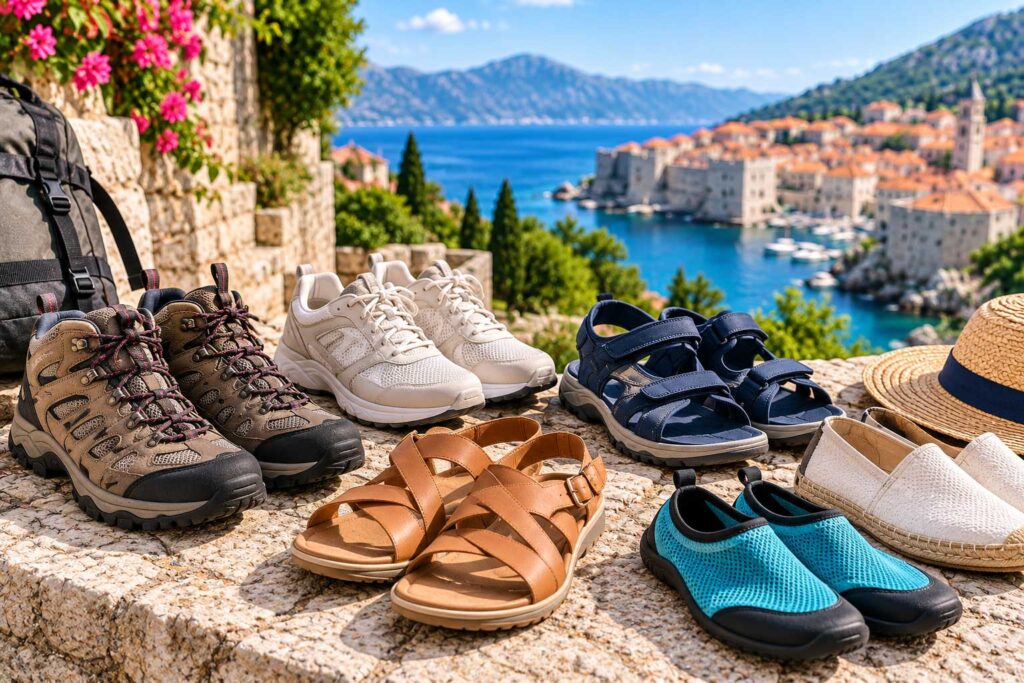
Footwear for a Balkan Trip
Comfortable footwear matters more than packing several different pairs of shoes. Balkan trips often involve long sightseeing days, cobblestone streets, steep old-town lanes, uneven paths, and plenty of walking.
For most trips, two or three carefully chosen pairs are enough.
Comfortable Walking Shoes
A dependable pair of walking shoes should be near the top of your Balkans packing list.
Historic centers in cities such as Dubrovnik, Split, Kotor, Sarajevo, Plovdiv, and Ohrid are best explored on foot, and many have cobblestones, stairs, hills, or uneven pavement. Shoes that feel comfortable at home for an hour may feel very different after an entire day of sightseeing.
Choose a pair you’ve already worn and know is comfortable. A Balkan vacation isn’t the best time to break in brand-new shoes.
Good footwear becomes even more important when your itinerary includes long sightseeing days. You can also see our complete travel gear for the Balkans guide for more help preparing for different types of trips.
Sandals or Lightweight Summer Shoes
For warm-weather trips, sandals are useful for beaches, casual dinners, and relaxed days along the coast.
Look for something comfortable enough for more than just walking between your hotel and the beach. If you’re trying to pack light, a versatile pair that works for both daytime exploring and evenings can eliminate the need for another pair of shoes.
Hiking Shoes
You don’t automatically need hiking boots just because you’re traveling through the Balkans.
If your itinerary is primarily cities, beaches, and established tourist attractions, comfortable walking shoes may be all you need. But proper hiking footwear becomes much more useful if you’re planning trails in places such as Theth, Durmitor National Park, the Rila Mountains, the Pirin Mountains, or other mountainous areas.
Choose your footwear according to the difficulty of the trails you actually plan to hike rather than packing heavy boots “just in case.”
Water Shoes for Rocky Beaches
Water shoes are optional, but they can be surprisingly useful along parts of the Adriatic and other rocky coastlines.
Not every Balkan beach has soft sand. Pebbles, rocks, and uneven entries into the water are common in some coastal areas, so lightweight water shoes can make swimming much more comfortable.
If your itinerary is mostly cities or sandy beaches, however, you can easily leave them at home.
Balkan travel tip: Wear your bulkiest shoes while flying or traveling between destinations. Shoes take up a surprising amount of suitcase space, and packing three or four heavy pairs is one of the easiest ways to overpack.
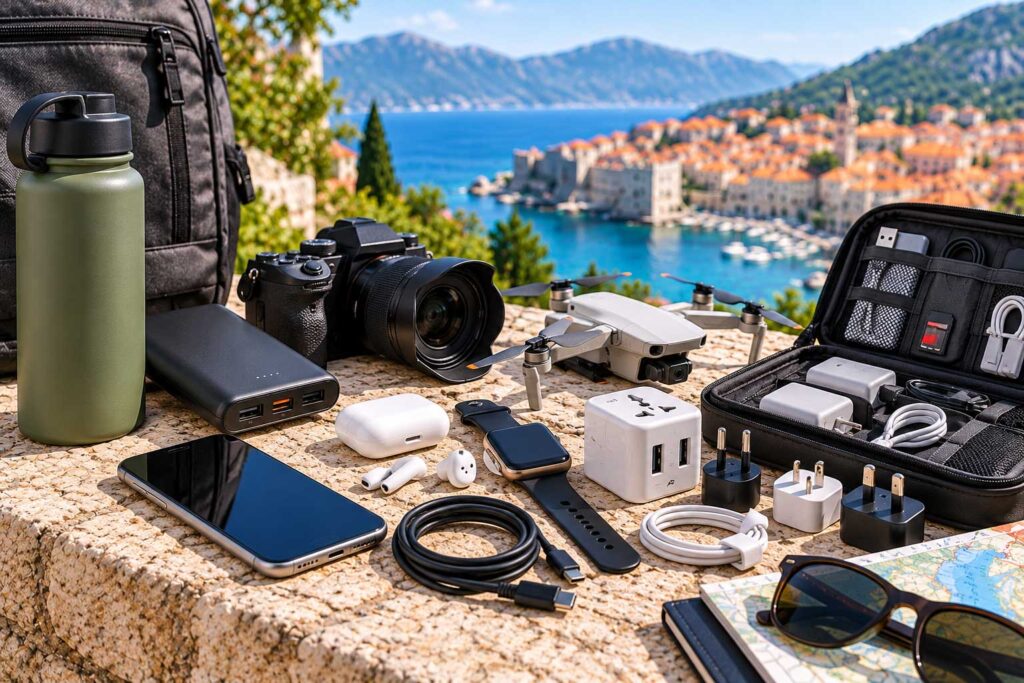
Electronics and Charging Essentials
Electronics don’t need to take up much space on your Balkans packing list, but a few charging essentials can make traveling around the region much easier. Your phone will probably serve as your map, camera, translator, ticket holder, and navigation system, so keeping it charged should be the priority.
European Travel Adapter
If you’re traveling from the United States, Canada, the United Kingdom, or another country that uses different electrical outlets, pack a suitable European travel adapter.
Type C and Type F plugs are commonly used across much of the Balkans. A compact adapter with several USB ports can be especially convenient when hotel rooms have limited outlets.
Remember that a plug adapter changes the shape of the plug—it does not necessarily convert voltage. Check that your devices support the local voltage before plugging them in. Most modern phone and laptop chargers are designed for a broad voltage range, but you should verify the label on your own equipment.
Portable Power Bank
A portable charger is one of the most useful electronics to carry during long sightseeing and transportation days.
Using your phone all day for maps, photos, translations, tickets, and restaurant searches can drain the battery faster than you might expect. A power bank becomes particularly useful on long bus rides, ferry journeys, hiking days, and road trips when an outlet may not be nearby.
You don’t need the biggest power bank you can find. A smaller one that can recharge your phone once or twice is usually much easier to carry around all day.
If you’re deciding which electronics are actually worth carrying, see our guide to the best travel gadgets for more ideas.
Charging Cables
Bring the cables you actually need and, if several devices use the same connection, consider carrying one spare.
A small cable organizer can prevent chargers, earbuds, and adapters from becoming tangled at the bottom of your backpack, but there’s no need to buy a dedicated organizer if a small pouch you already own works just as well.
Phone and Offline Essentials
Before leaving home, download anything you may need without an internet connection.
Useful offline items can include:
- Maps for the destinations you’re visiting
- Airline or transportation tickets
- Hotel addresses and confirmations
- Translation language packs
- Important phone numbers
- Copies of travel documents
- Music, podcasts, or entertainment for long journeys
Mobile coverage is generally available throughout populated areas, but offline access is still useful when you’re crossing borders, traveling through rural or mountainous regions, or simply don’t want to depend on having a connection.
Camera Gear
For most travelers, a modern smartphone is more than enough for everyday travel photography.
If photography is an important part of your trip, bring your camera, batteries, memory cards, and charger—but avoid carrying equipment you rarely use. Camera gear becomes heavy quickly when you’re walking around old towns or moving frequently between destinations.
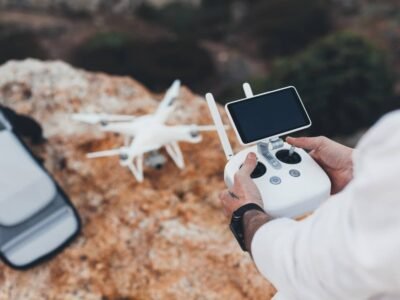
If you’re bringing a drone, check the current rules for every country and location where you intend to fly rather than assuming regulations are the same throughout the Balkans.
Balkan travel tip: Put your adapter, main charging cable, and power bank in your daypack rather than checked luggage. You’ll have access to them during long travel days, delays, and airport connections.
Travelers interested in aerial photography can also read our guide to the best travel drones before deciding whether bringing a drone is worthwhile.
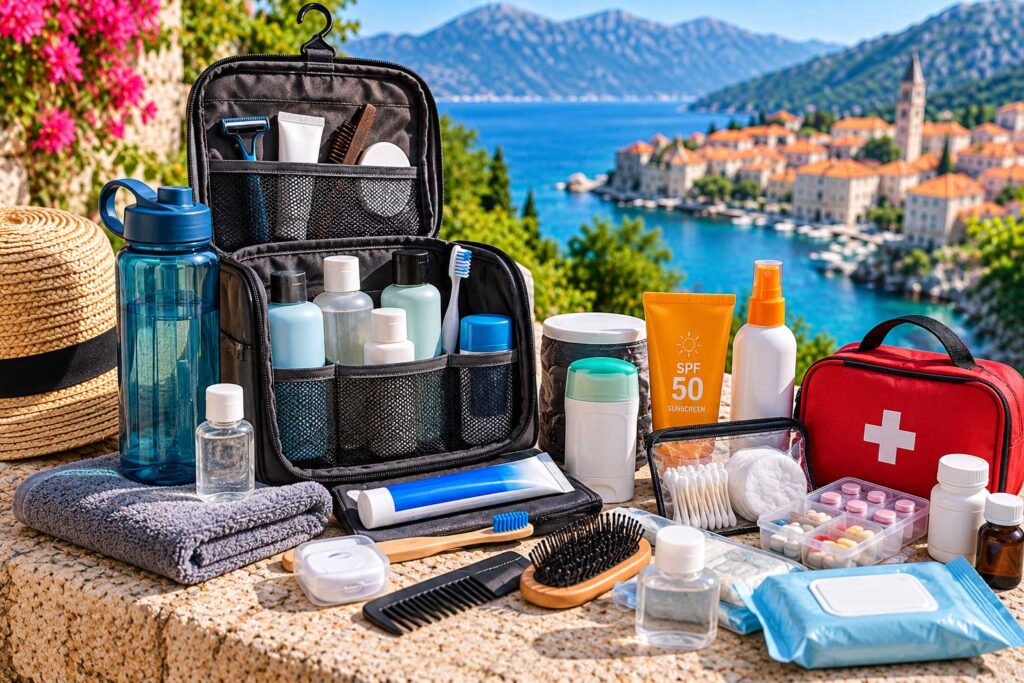
Health, Toiletries, and Personal Care Essentials
Toiletries are another area where a Balkans packing list can quickly get out of control. You can buy everyday products throughout the region, so there’s little reason to pack your bathroom cabinet. Bring the personal items you use regularly, anything that would be difficult to replace, and enough supplies to get comfortably through the first part of your trip.
Before traveling, you can check current destination-specific health recommendations through the CDC Travelers’ Health website.
Prescription Medications
Bring enough prescription medication for your entire trip, preferably with a little extra in case your return is delayed.
Keep essential medication in your carry-on rather than checked luggage. Depending on what you’re taking and where you’re traveling, carrying a copy of your prescription or a doctor’s note may also be useful.
Don’t assume that the same medication will be sold under the same brand name in every Balkan country.
Sunscreen
Sunscreen is essential for summer trips, particularly if you’re spending time along the Adriatic, Ionian, Aegean, or Black Sea coasts.
It’s equally important when hiking. Higher elevations and long hours outdoors can result in significant sun exposure even when temperatures feel comfortable.
You can easily buy sunscreen after arriving, but packing a small amount means you’re protected from the first day.
Basic First-Aid Supplies
You don’t need to carry a large medical kit for a normal sightseeing trip. A small pouch with a few basics is usually enough.
Consider bringing adhesive bandages, blister treatment, antiseptic wipes, and any over-the-counter medication you commonly use.
Blister supplies are particularly useful if your itinerary involves long walking days or hiking.
Insect Repellent
Mosquitoes can be annoying in warmer months, particularly near lakes, wetlands, rivers, and some coastal areas.
A small insect repellent is more practical than packing numerous specialized mosquito products. If insects aren’t an issue at your destination, it may stay in your bag—but it takes very little space.
Everyday Toiletries
Bring travel-size versions of the products you actually use rather than packing large bottles.
Your toiletry bag might include:
- Toothbrush and toothpaste
- Deodorant
- Shampoo and conditioner if needed
- Razor
- Hairbrush or comb
- Skincare products
- Contact lenses and solution
- Feminine hygiene products
- Hand sanitizer
Most of these items are readily available in supermarkets, pharmacies, and drugstores throughout the region, so running out isn’t usually a major problem.
Electrolytes for Hot or Active Days
Electrolyte packets are optional rather than a true must-have, but they can be useful during very hot weather, strenuous hikes, or long active days.
You don’t need to bring a large supply. A few lightweight packets take almost no room and can be convenient when you’re spending hours outdoors.
Small Toiletry or Cosmetic Bag
Keeping toiletries together makes frequent hotel changes much easier, particularly on a multi-country trip.
A hanging toiletry bag can be convenient in small bathrooms, but a simple lightweight pouch works perfectly well. Use whatever keeps your belongings organized without adding unnecessary bulk.
Balkan travel tip: Pharmacies are common in Balkan cities and towns, so don’t pack excessive quantities of everyday health and personal-care products. Prioritize prescription medication and anything specific that you know may be difficult to replace.
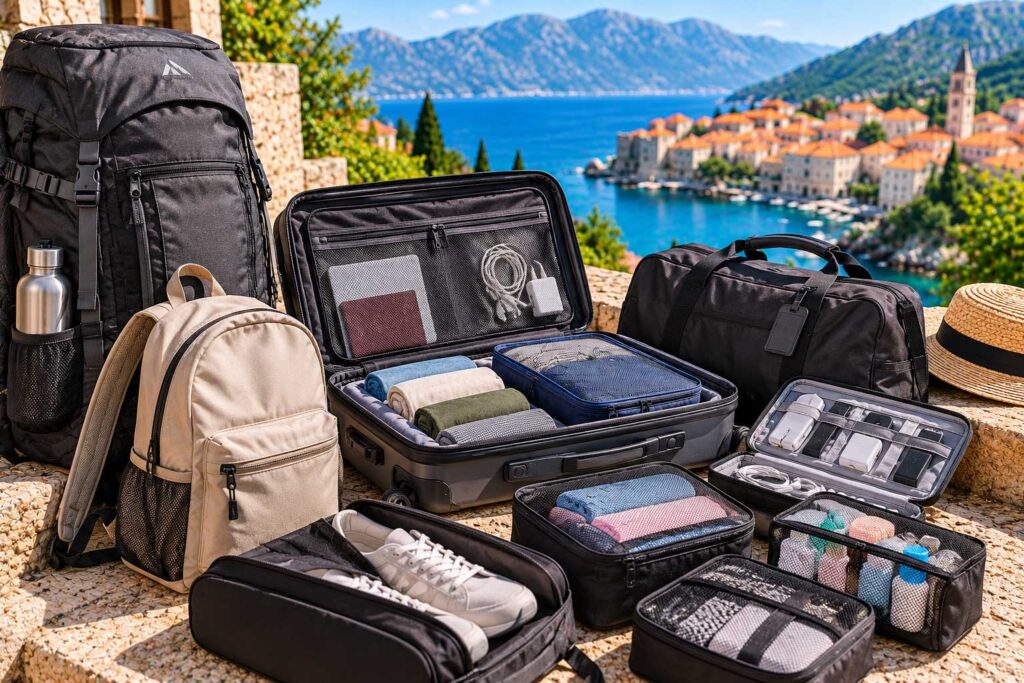
Bags, Packing, and Organization
A practical Balkans packing list isn’t about buying a specialized travel accessory for everything. Good organization matters much more, especially if you’re moving between several destinations. Being able to pack and unpack quickly can make the trip noticeably easier.
Small Daypack
A lightweight daypack is one of the most useful bags you can bring.
It gives you somewhere to carry water, sunscreen, a light jacket, power bank, camera, and other essentials while exploring cities or taking day trips.
Choose something comfortable enough to carry for several hours. If you’re planning serious hiking, however, use a pack appropriate for the trail rather than relying on a basic sightseeing backpack.
If you need a new bag before your trip, compare the options in our guide to the best travel backpacks.
Packing Cubes
Packing cubes aren’t essential, but they can make a suitcase or backpack much easier to organize.
They’re especially handy when you’re changing hotels every few days because you don’t have to dig through your entire bag every time you need a shirt or pair of socks.
Compression cubes can save some space, but don’t treat them as permission to bring more. A compressed suitcase can still be overweight.
Shoe Bag
A lightweight shoe bag keeps dusty walking or hiking shoes away from clean clothing.
You don’t need a specialized product for this. A reusable fabric bag or another lightweight pouch works just as well.
Laundry Bag
Bring something simple for separating worn clothing from clean clothes.
A lightweight laundry sack, packing cube, or reusable bag is enough. If you’re traveling for more than a week, planning to do laundry once or twice is usually easier than packing a fresh outfit for every day.
Foldable Tote or Reusable Shopping Bag
A foldable tote takes almost no space and can become surprisingly useful.
You can use it for groceries, beach supplies, laundry, snacks for a road trip, or extra belongings during a day out. It can also help when you suddenly need a little more carrying space without unpacking your main luggage.
Luggage Lock
A small luggage lock can be useful for suitcases, hostel lockers, or temporarily securing your bag during transportation.
It shouldn’t replace normal awareness of your belongings, and valuables such as your passport, wallet, and phone are better kept with you rather than left inside unattended luggage.
Balkan travel tip: If your itinerary involves buses, ferries, trains, and several hotel changes, packing lighter becomes much more valuable than having every possible travel accessory. You’ll appreciate a manageable bag the first time you have to carry it up a staircase or across an old town with uneven streets.
For more luggage options, our guide to the best travel bags for vacation covers different styles for short trips, longer vacations, and international travel.
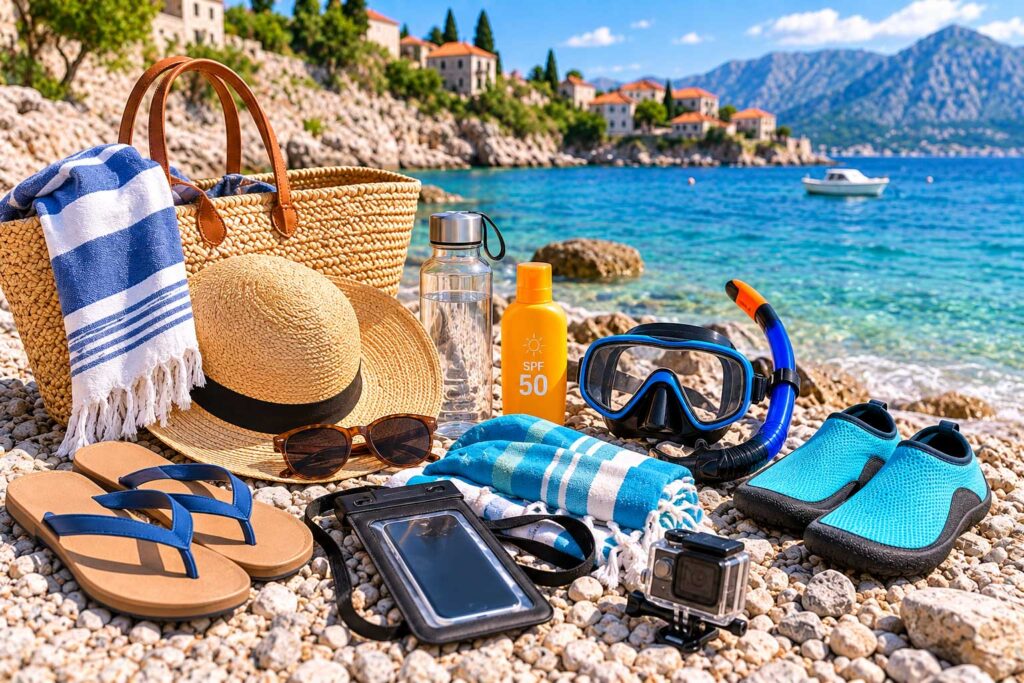
Beach and Coastal Essentials
If your Balkan itinerary includes Croatia, Montenegro, Albania, Greece, Slovenia, Bulgaria, or another coastal destination, leave some room for a few beach essentials.
You don’t need to bring an entire beach setup from home. Towels, umbrellas, and other basics may be available through your accommodation or at organized beaches, but a few lightweight items are worth having in your bag.
Swimsuit
Bring at least one swimsuit for a summer coastal trip. If you’re spending several days at the beach, bringing two makes life easier—you can wear one while the other dries.
A swimsuit can also come in handy at hotel pools, spas, thermal pools, lakes, and other swimming areas away from the coast.
Sunglasses and Sun Hat
Strong summer sun can make sunglasses and a hat particularly useful during long sightseeing days, boat trips, hikes, and afternoons at the beach.
Choose sunglasses you will actually wear rather than an expensive pair you’ll constantly worry about losing while traveling.
A lightweight hat or cap also provides useful protection when you’re spending hours outdoors with limited shade.
Quick-Dry Towel
A microfiber or other compact quick-dry towel can be useful if you’re staying in hostels, visiting less-developed beaches, camping, or swimming somewhere away from your accommodation.
For a conventional hotel vacation, however, you may not need one at all. Check what your accommodation provides before using valuable luggage space on a towel.
Waterproof Phone Pouch
A waterproof phone pouch is optional but can be useful for boat trips, kayaking, paddleboarding, beach days, and other activities around water.
It’s particularly handy when you don’t want to leave your phone, cards, or a small amount of cash unattended on shore.
For an ordinary sightseeing trip with only an occasional beach visit, you can probably skip it.
Reusable Water Bottle
Hot Balkan summers make staying hydrated important, particularly during sightseeing, hiking, and long transportation days.
A reusable bottle is easy to keep in your daypack and saves you from buying another plastic bottle every time you get thirsty.
Tap-water conditions can vary by destination, so check reliable local guidance where you’re staying rather than assuming the same advice applies throughout the entire region.
Beach Bag or Foldable Tote
You don’t need a dedicated beach bag if you’ve already packed a foldable tote. The same lightweight bag can carry your towel, sunscreen, water, book, and other beach essentials.
Using items for more than one purpose is one of the easiest ways to keep a Balkans packing list under control.
Balkan travel tip: Many beaches along the Adriatic are pebbly or rocky rather than soft and sandy. If your itinerary includes this type of coastline, the water shoes mentioned earlier may be more useful than an extra pair of fashionable sandals.
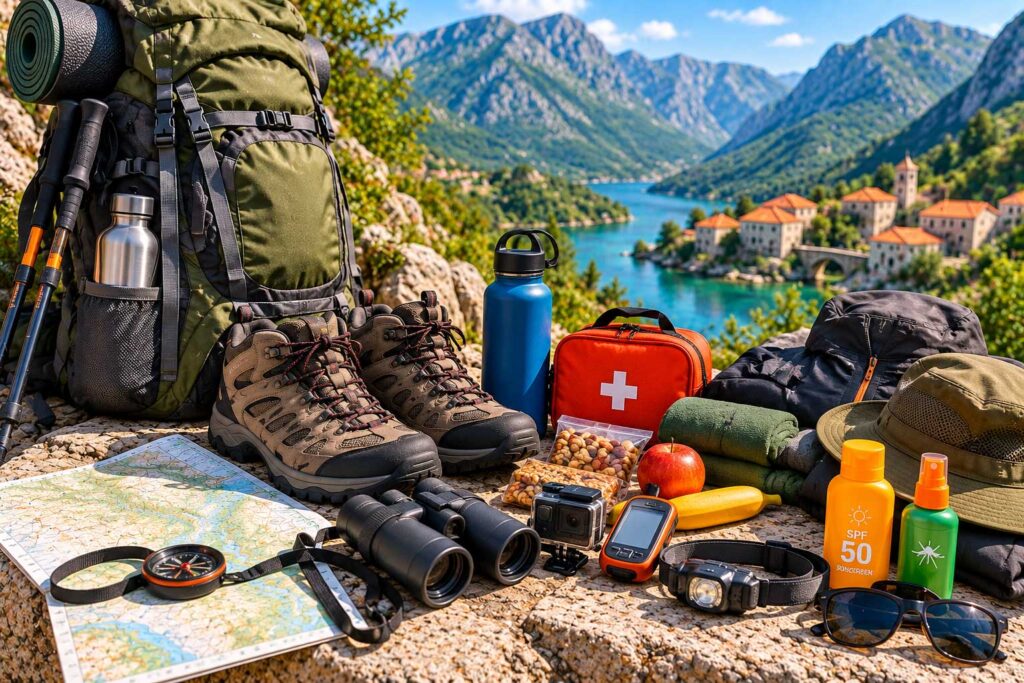
Mountain, Hiking, and Outdoor Essentials
Not every Balkans packing list needs hiking equipment. If your trip is focused on cities and beaches, you can probably leave most specialized outdoor gear at home. But if your itinerary includes places such as the Albanian Alps, Durmitor, Rila, Pirin, Tara, or other mountain regions, a few additions to your packing list can make a significant difference.
Mountain weather can feel completely different from the coast or nearby cities, so don’t judge what you’ll need based only on the forecast at lower elevations.
Extra Warm Layer
Bring an additional lightweight layer if you’re heading into the mountains, even during summer.
Temperatures can drop with elevation and after sunset, and weather can change much faster than it does in many coastal destinations. A fleece or warm mid-layer that fits underneath your rain jacket is usually more versatile than one bulky coat during warmer months.
Appropriate Hiking Footwear
For easy viewpoints and short established paths, your regular walking shoes may be sufficient.
For longer or rockier trails, you’ll want shoes with better grip and support. Check the actual route before deciding what to bring rather than packing heavy hiking boots for a trip that includes only one easy nature walk.
Water and Snacks
Carry enough water for the route you’re attempting, particularly during hot summer weather.
A reusable bottle works well for ordinary sightseeing and shorter walks, but longer hikes may require greater carrying capacity. Bringing a few compact snacks is also useful when shops, restaurants, and mountain huts aren’t available along the route.
Sun and Rain Protection
Mountain weather can change quickly, so sunscreen, sunglasses, a hat, and a lightweight waterproof layer are all useful.
Don’t assume cooler mountain temperatures mean there is little risk from the sun. Long periods outdoors and higher elevations can still result in substantial sun exposure.
Offline Maps
Download your route before leaving reliable mobile coverage.
Offline maps can be useful throughout the Balkans, but they become especially important in mountain and rural areas where reception may be inconsistent.
A phone should not be your only safety preparation for a difficult or remote hike. Research the trail, weather, transportation, and local conditions beforehand, and use appropriate navigation equipment for more serious routes.
Balkan travel tip: Don’t underestimate distances in mountainous areas. A destination that appears close on a map may take much longer to reach because of winding roads, elevation, trail conditions, or limited transportation connections.
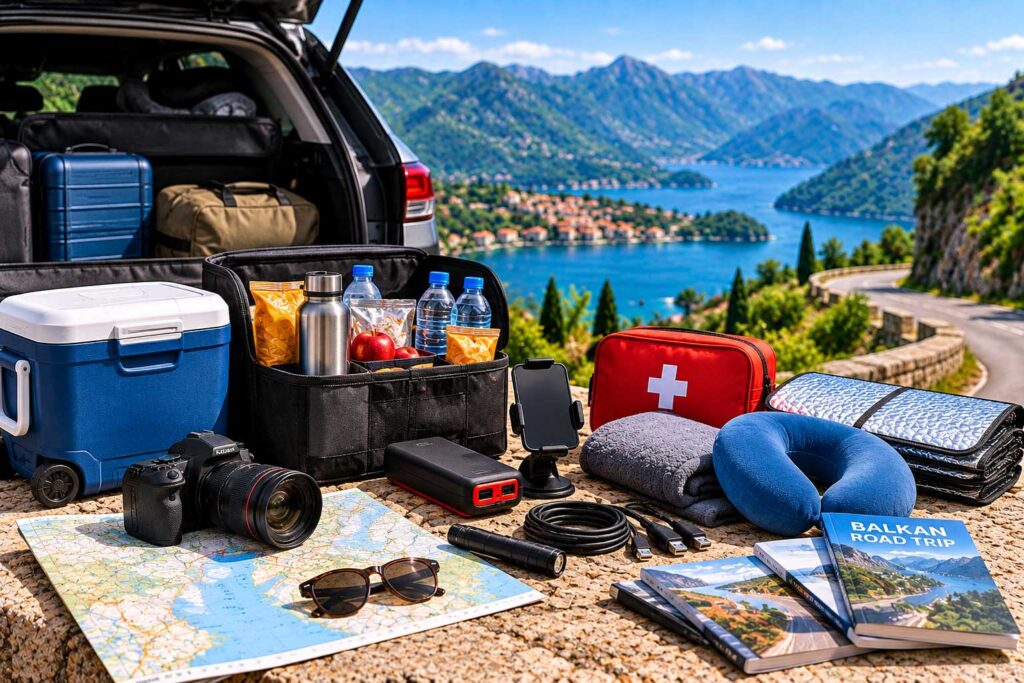
Road Trip Essentials for the Balkans
A road trip can be one of the best ways to explore the Balkans, particularly if you want to reach mountain villages, national parks, beaches, monasteries, and smaller towns that are less convenient by public transportation.
A road trip also changes how you pack. You’ll have more room than someone traveling by bus or plane, but that doesn’t mean you need to fill the car with gear you probably won’t use.
Download maps for the areas you’ll be driving through before leaving reliable Wi-Fi or mobile coverage.
Navigation apps are extremely useful, but don’t rely completely on a constant data connection. Offline maps provide a backup when you’re driving through mountain areas, crossing borders, or traveling in rural regions.
It’s also worth checking your route before setting out. The fastest-looking option on a map isn’t always the easiest road to drive.
Car Charger
A USB car charger or charging cable is worth bringing if you’ll rely on your phone for navigation.
Running GPS for several hours can drain a battery quickly, and keeping your phone connected while driving means your power bank remains available for sightseeing or emergencies.
Check what connections your rental vehicle provides before buying anything specifically for the trip if that information is available.
Phone Mount
A simple phone mount makes navigation much easier and safer than trying to look at a phone sitting on the passenger seat.
Rental vehicles don’t always include one, and a compact mount takes very little room in your luggage.
Water and Snacks
Keep some drinking water in the car, especially during summer or when driving through mountainous and rural areas.
A few snacks are also useful on longer routes. You may encounter stretches where convenient stops are less frequent than around major cities and highways.
Small Amount of Accessible Cash
Keep some cash somewhere easy to reach rather than buried inside your luggage.
Depending on your route, it may be useful for parking, small cafés, local shops, tolls, or other situations where paying by card isn’t convenient or possible.
Cross-Border Rental Documents
If you’re renting a car and planning to drive into another country, confirm that cross-border travel is permitted before leaving the rental location.
Ask what paperwork and insurance coverage are required for every country on your itinerary. Rental-company policies can differ, and restrictions may apply to particular countries or vehicle categories.
Don’t assume that because you can physically drive across a border, your rental agreement automatically allows it.
Small Emergency Kit
Check what safety equipment is already supplied with the rental vehicle before adding anything yourself.
Requirements vary by country, and rental cars should generally include locally required equipment. Before driving away, familiarize yourself with where items such as the warning triangle, reflective vest, or spare-tire equipment are stored if provided.
Balkan road-trip tip: Build extra time into days that involve border crossings. The distance between two destinations may look short, but border traffic, mountain roads, roadworks, and summer congestion along popular coastal routes can make the journey considerably longer.
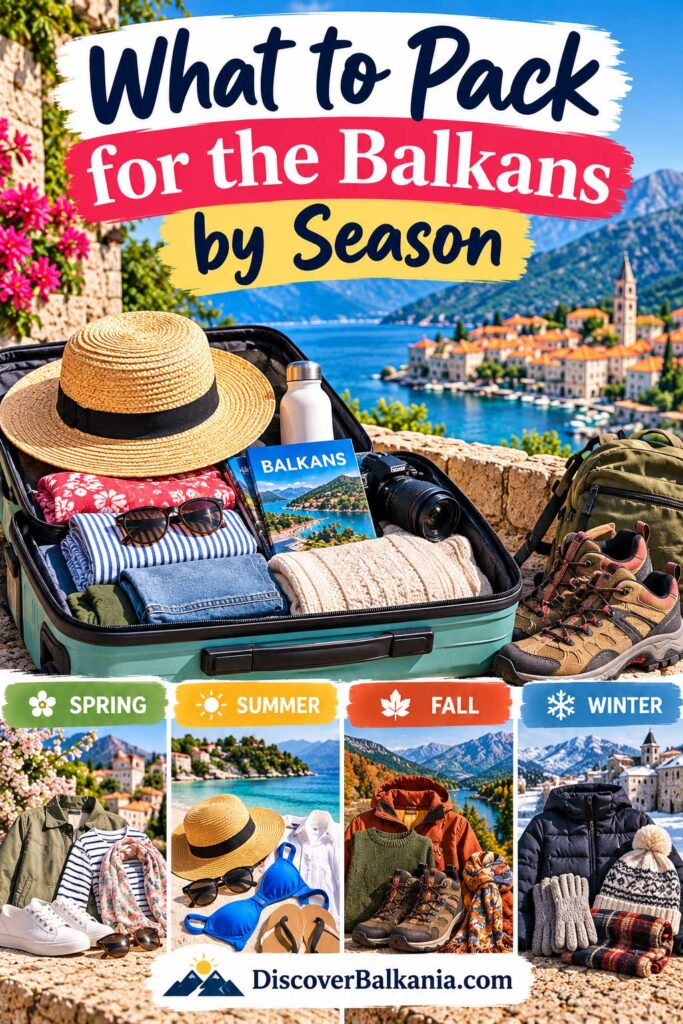
What to Pack for the Balkans by Season
There isn’t one Balkans packing list that works perfectly in every season. What belongs in your suitcase depends heavily on when you’re traveling and where you’re going.
Coastal destinations, inland cities, and mountain regions can experience very different conditions during the same trip. Always check the forecast for your specific destinations shortly before departure, but the following seasonal guidelines provide a useful starting point.
If you’re still shopping for smaller packing accessories, see our guide to the best travel essentials on Amazon for additional ideas.
What to Pack for the Balkans in Summer
Summer is the busiest travel season across much of the region, particularly along the Adriatic, Ionian, Aegean, and Black Sea coasts.
For a typical summer trip, prioritize:
- Lightweight, breathable clothing
- Comfortable walking shoes
- Sandals
- Swimsuit
- Sunglasses
- Sun hat
- Sunscreen
- Reusable water bottle
- Lightweight rain layer
- One warmer layer for evenings or mountains
Hot weather doesn’t mean you should pack only shorts and T-shirts. Lightweight pants or another option that provides more coverage can be useful for religious sites, evenings, transportation days, and sun protection.
If your summer itinerary includes mountain destinations, bring an extra layer. Temperatures at higher elevations can be noticeably cooler than they are along the coast.
What to Pack for the Balkans in Spring
Spring is a great time to explore the Balkans, but it’s also one of those seasons when you’ll be glad you packed layers.
Temperatures can vary considerably depending on the country, elevation, and month. Warm sunny afternoons may be followed by cool evenings, and rain is something you should be prepared for.
Useful spring items include:
- T-shirts and lightweight tops
- Long pants
- Sweater or fleece
- Lightweight waterproof jacket
- Comfortable closed-toe shoes
- Compact umbrella
- Light scarf
- Sunglasses
Layers are particularly valuable during spring because you can add or remove clothing as temperatures change throughout the day.
What to Pack for the Balkans in Autumn
Early autumn can still feel quite summery in parts of the region, particularly along the coast, while later in the season can become considerably cooler and wetter.
For an autumn trip, consider packing:
- Long pants
- T-shirts and long-sleeve tops
- Sweater or fleece
- Waterproof jacket
- Comfortable closed shoes
- Warmer socks
- Compact umbrella
- Light scarf
If you’re traveling in September, a swimsuit may still deserve a place in your bag depending on your destination and the weather.
By late autumn, warmer clothing becomes increasingly important, especially in inland and mountain areas.
What to Pack for the Balkans in Winter
Winter packing varies significantly across the Balkans. Coastal destinations can experience relatively mild conditions compared with inland and mountain regions, where snow, freezing temperatures, and icy conditions are possible.
For colder destinations, your packing list may include:
- Warm insulated jacket
- Sweaters or fleece layers
- Thermal base layers
- Warm pants
- Waterproof footwear
- Thick socks
- Gloves
- Scarf
- Warm hat
- Compact umbrella or waterproof outer layer
If you’re visiting ski resorts or spending substantial time in the mountains, you’ll need appropriate winter equipment beyond a standard city packing list.
Don’t Pack for the Season Alone
One of the biggest packing mistakes is looking only at the month of travel.
A July trip that combines the Albanian Riviera with the mountains around Theth, for example, may require both hot-weather clothing and warmer layers. Likewise, a spring itinerary covering coastal Croatia and inland Bosnia and Herzegovina can expose you to noticeably different conditions.
Instead of packing for “summer in the Balkans,” pack for the actual combination of destinations and activities on your itinerary.
Balkan travel tip: Check forecasts for several stops on your route—not just your arrival city. When a trip covers coast, cities, and mountains, the weather at your first destination may tell you very little about what you’ll encounter later.
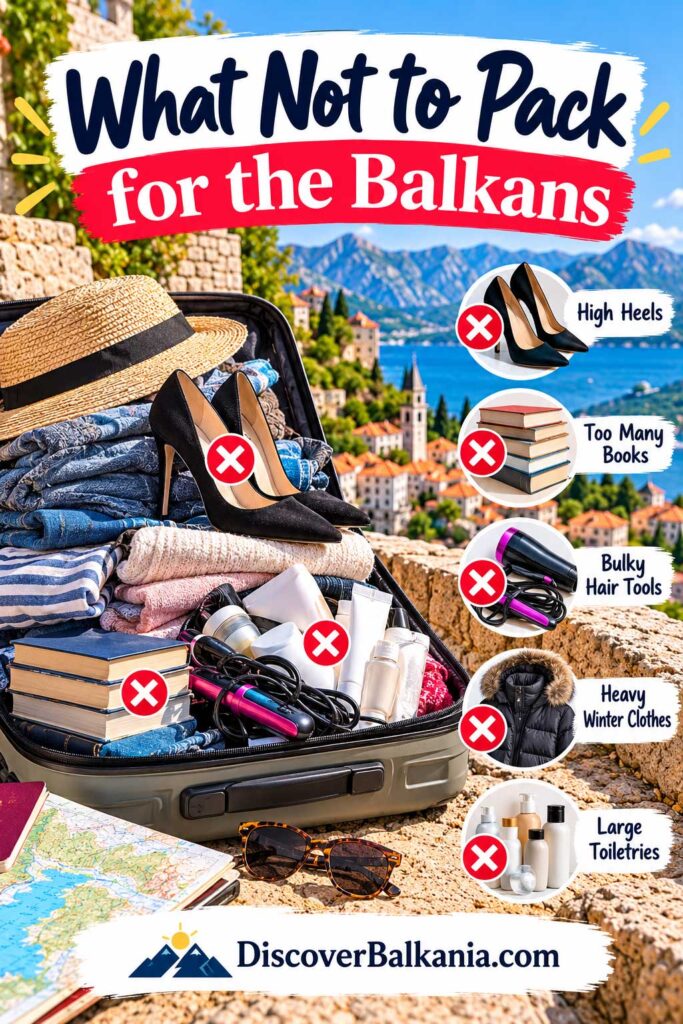
What Not to Pack for the Balkans
A useful Balkans packing list isn’t only about what to bring. Knowing what to leave at home can save luggage space, reduce weight, and make moving between destinations much easier.
You can buy most everyday necessities throughout the region, so there is little benefit in preparing for every possible situation before you leave.
Too Many Shoes
Shoes are bulky, heavy, and one of the easiest ways to lose valuable luggage space.
For most warm-weather trips, comfortable walking shoes and sandals are enough. Add hiking footwear only if your itinerary genuinely includes trails that require it.
Packing several pairs simply to match different outfits usually isn’t worth the space.
Full-Size Toiletries
Unless you have a product you absolutely depend on, leave the oversized shampoo, conditioner, body wash, and other toiletries at home.
Travel-size quantities are easier to carry, and everyday personal-care products are widely available once you arrive.
Too Many Clothes
Packing a different outfit for every day sounds convenient until you have to carry everything between hotels, bus stations, airports, and apartments.
Choose clothing that can be mixed and matched, and plan to do laundry during longer trips.
A smaller wardrobe of versatile pieces is usually much more practical than a suitcase packed with outfits you may wear only once.
Excessive Electronics
Think realistically about which devices you’ll actually use.
If your phone handles navigation, photography, communication, entertainment, and travel bookings, you may not also need a tablet, laptop, large camera setup, multiple chargers, and several other gadgets.
Bring specialized electronics when they serve a clear purpose—not simply because you own them.
Large Amounts of Cash
Carrying some cash is useful in the Balkans, but traveling with a large amount creates unnecessary risk.
Use cards where practical and withdraw additional local currency when necessary. Keep backup money and cards separate from your everyday wallet rather than carrying everything together.
Expensive Jewelry and Unnecessary Valuables
If an item would cause significant stress if it were lost or damaged, consider whether you need to bring it at all.
Expensive jewelry and other unnecessary valuables can usually stay at home. The fewer things you have to constantly protect and keep track of, the easier travel becomes.
Heavy “Just in Case” Gear
It’s easy to fill a suitcase with items for situations that are unlikely to happen.
Heavy hiking equipment for one short nature walk, multiple jackets for a summer beach vacation, specialized travel accessories you’ve never used before, and oversized first-aid kits can quickly add unnecessary weight.
Pack for your actual itinerary, not every possible Balkan adventure.
Things You Can Easily Buy After Arrival
Don’t worry about bringing enough everyday supplies for every day of a long trip.
Supermarkets, pharmacies, shopping centers, convenience stores, and local shops are easy to find in cities and tourist destinations throughout the region. If you run out of toothpaste, shampoo, sunscreen, snacks, or another basic item, you can usually replace it without difficulty.
Balkan travel tip: Before closing your suitcase, look at every “just in case” item and ask yourself whether you would actually have difficulty buying or replacing it during the trip. If the answer is no, that’s often a good candidate to leave behind.
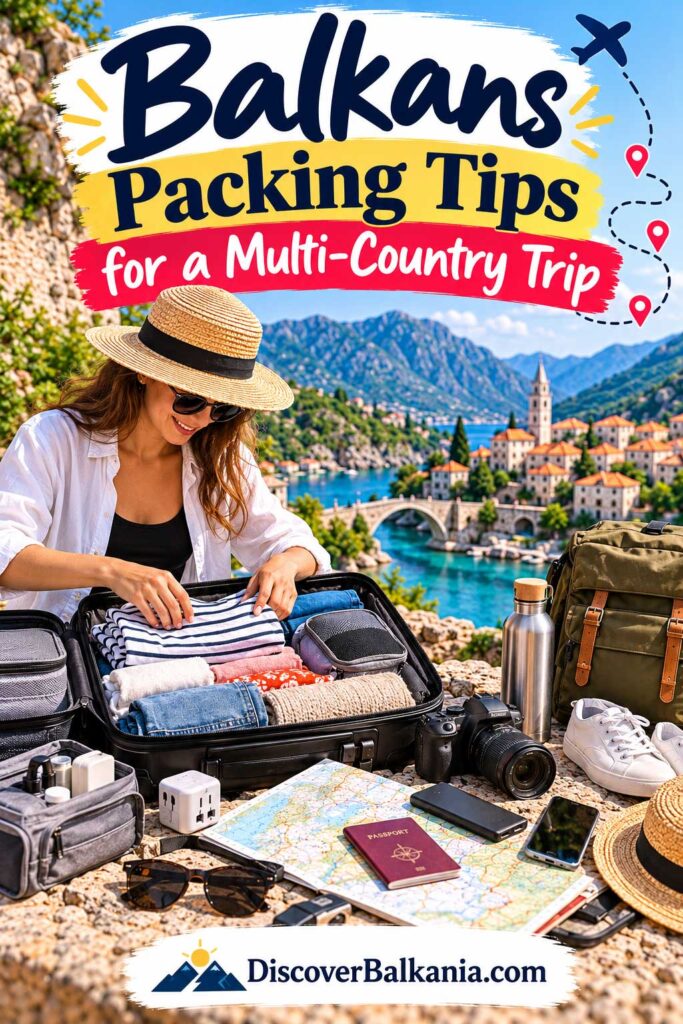
Balkans Packing Tips for a Multi-Country Trip
It’s easy to cross several countries on one Balkan trip. You might start in Croatia, continue through Montenegro into Albania, or build a longer route through Serbia, Bosnia and Herzegovina, North Macedonia, Bulgaria, Greece, and beyond.
For a multi-country trip, the best Balkans packing list is usually a lighter one. The more often you change destinations, the more you’ll appreciate traveling with a manageable, well-organized bag.
Pack for Frequent Travel Days
If you’re changing destinations every few days, you’ll spend more time carrying your luggage than you would on a one-resort vacation.
You may need to navigate bus stations, ferry terminals, airports, stairs, cobblestone streets, and accommodations without elevators. A suitcase that feels manageable at the airport can become much less enjoyable after several transfers.
Try to leave some empty space rather than packing your bag to its absolute limit.
Keep Important Documents Accessible
Don’t bury your passport, transportation tickets, or accommodation information underneath your clothing.
Keep the documents you’ll need during travel days somewhere secure but easy to reach, particularly when your route includes international border crossings.
Digital copies should also be available offline in case you don’t have mobile service when you need them.
Be Prepared for Different Currencies
A multi-country Balkan itinerary may involve more than one currency.
Avoid exchanging large amounts of money for every destination in advance. Instead, research what currency is used at your next stop and keep smaller amounts of cash organized so you don’t accidentally mix currencies.
Before leaving a country, consider whether you’ll realistically use your remaining coins and small notes again.
Don’t Assume Your Mobile Plan Works Everywhere
Crossing a border can change how your mobile service works.
Check what your carrier or eSIM covers before the trip, particularly if your itinerary includes both EU and non-EU countries. Don’t assume that roaming conditions will remain identical throughout your route.
Downloading maps, hotel addresses, tickets, and other essential information before crossing a border gives you a useful backup.
Choose Clothing That Works Across Destinations
A multi-country trip rarely requires a completely different wardrobe for every stop.
Instead, build around clothing that can be layered and combined in different ways. One lightweight jacket, a warmer layer, versatile pants, comfortable shoes, and several interchangeable tops can cover a surprisingly wide range of conditions.
This becomes particularly useful when your itinerary combines coastal destinations with inland cities or mountain areas.
Leave Room in Your Bag
You may pick up local food products, small souvenirs, clothing, or other items during your trip.
Starting with an overstuffed suitcase leaves no room for anything you acquire along the way. A little unused space also makes everyday packing much easier—you shouldn’t need to solve a puzzle every morning just to close your suitcase.
Do Laundry Instead of Packing More
For a two- or three-week Balkan trip, doing laundry once or twice is often much easier than bringing enough clothing for the entire journey.
Apartments with washing machines are common in many destinations, and hotels or local laundry services may also be available.
Planning one laundry day can eliminate a surprising amount of luggage.
Balkan travel tip: The more often you’re changing destinations, the more you’ll appreciate packing light. Those few extra items may not seem like much at home, but you’ll notice the weight when you’re carrying your bag through an old town or up several flights of stairs.
Balkans Packing List by Type of Trip
Your itinerary matters just as much as the season. A week exploring historic cities requires a very different bag from a beach holiday or hiking trip.
Here are the extras worth prioritizing for some of the most common Balkan trips.
City Break
For destinations such as Sofia, Belgrade, Sarajevo, Zagreb, Ljubljana, Skopje, or Bucharest, focus on comfort and versatility.
Prioritize:
- Comfortable walking shoes
- Lightweight daypack
- Reusable water bottle
- Portable charger
- Weather-appropriate layers
- Compact umbrella or rain jacket
- One nicer outfit for evenings
Historic centers often involve more walking than expected, so comfortable footwear matters far more than packing several fashionable options.
Beach Vacation
For Croatia, Montenegro, Albania, Greece, Bulgaria, and other coastal destinations, add:
- Swimsuit
- Sunscreen
- Sunglasses
- Sun hat
- Sandals
- Quick-dry towel if needed
- Foldable beach tote
- Waterproof phone pouch if useful
- Water shoes for rocky or pebbly beaches
You can usually buy forgotten beach supplies after arriving, so there’s no need to bring your entire beach setup from home.
Hiking and Mountain Trip
If your itinerary includes substantial time in the mountains, prioritize:
- Appropriate hiking footwear
- Comfortable hiking socks
- Warm layer
- Waterproof outer layer
- Sun protection
- Adequate water capacity
- Snacks
- Offline maps
- Small first-aid supplies
Research the specific trails before packing. A casual viewpoint walk and a full-day mountain hike require very different equipment.
Balkan Road Trip
For a driving itinerary, useful additions include:
- Phone mount
- Car charging cable or adapter
- Offline maps
- Water and snacks
- Accessible cash
- Driver’s license and any required documents
- Rental and insurance paperwork
If you’re crossing international borders in a rental car, confirm permission and documentation requirements with the rental company beforehand.
Multi-Country Backpacking Trip
When moving frequently between countries, prioritize items that are lightweight and serve more than one purpose.
A practical setup includes:
- Comfortable backpack or manageable suitcase
- Small daypack
- Packing cubes
- Quick-drying clothing
- Lightweight layers
- Comfortable walking shoes
- Power bank
- Travel adapter
- Laundry bag
- Foldable tote
- Offline copies of important documents
The biggest advantage isn’t bringing more equipment—it’s being able to move easily with everything you have.
Balkan travel tip: If your trip combines several styles—such as cities, beaches, and mountains—don’t pack three separate wardrobes. Start with versatile basics and add only the specialized items your planned activities genuinely require.
Frequently Asked Questions About Packing for the Balkans
What should I pack for a trip to the Balkans?
For most Balkan trips, pack comfortable walking shoes, versatile clothing, a light jacket or sweater, rain protection, a travel adapter, portable charger, reusable water bottle, sunscreen, personal medication, and a small daypack.
Your exact Balkans packing list should depend on the season, destinations, and activities planned. Add beach essentials for coastal trips and appropriate outdoor gear if you’re heading into the mountains.
What type of clothes should I wear in the Balkans?
Casual clothing is suitable for most sightseeing and everyday travel. Comfortable shirts, pants, shorts, skirts, dresses, and walking shoes work well depending on the season.
Bring something that provides additional coverage when visiting churches, monasteries, mosques, and other religious sites. A slightly nicer outfit can also be useful for restaurants and evenings out.
Do I need a travel adapter for the Balkans?
Travelers coming from countries with different plug types, including the United States, Canada, and the United Kingdom, will generally need an adapter.
Type C and Type F plugs are commonly used across much of the region. Check the plug type and voltage for the specific countries you’re visiting before traveling, particularly on a multi-country trip.
Should I bring cash to the Balkans?
Yes, carrying some cash is useful.
Cards are widely accepted in many cities and tourist destinations, but smaller restaurants, cafés, markets, parking facilities, accommodations, and other businesses may prefer or require cash.
Remember that not every Balkan country uses the same currency, so check what you’ll need for each destination on your itinerary.
Do I need hiking boots for the Balkans?
Not necessarily.
If your trip consists mainly of cities, beaches, and major attractions, comfortable walking shoes may be sufficient. Hiking shoes or boots become more important for longer, steeper, rocky, or mountainous trails.
Pack according to the hikes you actually plan to do rather than bringing heavy boots just in case.
Are water shoes necessary for Balkan beaches?
They aren’t essential everywhere, but they can be very useful.
Many beaches along parts of the Adriatic and other Balkan coastlines are pebbly or rocky rather than sandy. Water shoes can make entering and leaving the water much more comfortable.
If you’re visiting mostly sandy beaches, you may not need them.
Can I buy toiletries in the Balkans?
Yes. Everyday toiletries such as shampoo, toothpaste, deodorant, sunscreen, razors, and other personal-care products are readily available in cities and tourist destinations.
Bring anything specific that you strongly prefer or may have difficulty replacing, but there’s generally no reason to pack large quantities of ordinary toiletries.
Should I bring a backpack or suitcase to the Balkans?
Either can work.
A suitcase is convenient for trips with fewer hotel changes and straightforward transportation. A backpack can be easier when you’re moving frequently, using buses and trains, or staying in places with stairs and uneven streets.
Whichever you choose, keeping your luggage reasonably light is more important than the type of bag itself.
How much should I pack for two weeks in the Balkans?
You don’t need 14 completely different outfits.
For a two-week trip, pack enough versatile clothing for several days and plan to do laundry once or twice. Choosing items that can be mixed, matched, layered, and reworn will dramatically reduce how much luggage you need.
Is it safe to drink tap water in the Balkans?
Tap-water conditions shouldn’t be generalized across the entire region. Water quality and local recommendations can vary by country and destination.
Check reliable local guidance for each place you’re visiting. A reusable bottle is still useful whether you’re filling it from the tap or another safe drinking-water source.
What should I pack for the Balkans in summer?
Prioritize lightweight clothing, comfortable shoes, sunscreen, sunglasses, a hat, swimsuit, and reusable water bottle.
Also bring a light sweater or similar layer if you’re visiting mountain regions, and consider a lightweight rain jacket for changing weather.
What is the biggest packing mistake for a Balkan trip?
Overpacking is one of the easiest mistakes to make, particularly on a multi-country itinerary.
Moving between buses, ferries, airports, accommodations, and old towns becomes much easier with manageable luggage. Pack for the activities you actually have planned and remember that most ordinary items can be purchased after you arrive.
Read More Balkan Travel and Packing Guides
Planning your trip? These guides can help you choose the right gear, pack more efficiently, and prepare for your Balkan adventure:
- Travel Gear for the Balkans – A more detailed guide to choosing practical luggage, clothing, electronics, and travel gear for exploring the region.
- Best Travel Gadgets – Useful travel technology and gadgets that can make long journeys, sightseeing days, and international travel easier.
- Best Travel Items on Amazon – Practical travel accessories and essentials to consider before your next trip.
- Best Travel Backpacks for Every Type of Traveler – Compare backpack styles for sightseeing, international trips, weekend travel, and longer adventures.
- Best Travel Backpacks for Drones – Backpack options for travelers carrying drones, cameras, batteries, and other photography equipment.
- Best Travel Bags for Vacation – Explore carry-ons, duffel bags, rolling luggage, and other practical options for different types of trips.
- Best Travel Dresses for Women – Comfortable, versatile dresses for sightseeing, beach destinations, dinners, and warm-weather travel.
- Best Travel Drones – What to consider when choosing a compact drone for travel photography and aerial video.
Pack Smart and Enjoy Your Balkan Adventure
Packing for the Balkans doesn’t need to be complicated. The key is to think about your actual itinerary rather than preparing for every possible situation.
A summer trip along the Adriatic coast may require little more than lightweight clothing, comfortable shoes, beach essentials, and sun protection. Add mountain destinations such as Theth, Durmitor, Rila, or Pirin, and warmer layers, rain protection, and appropriate footwear become much more important. Spring, autumn, and winter trips require their own adjustments.
If you’re traveling through several countries, packing light becomes even more valuable. You’ll appreciate having a manageable bag when you’re navigating bus stations, ferry terminals, cobblestone streets, stairs, and frequent hotel changes.
Remember that you can buy most everyday necessities after you arrive. There’s no reason to fill your suitcase with oversized toiletries, excessive clothing, unnecessary electronics, or gear you might never use.
Use this Balkans packing list as a starting point, adjust it for the season and destinations you’re visiting, and leave yourself a little extra room in your bag.
The best-packed suitcase isn’t the one that contains everything. It’s the one that has what you genuinely need without making the journey harder than it needs to be.
What's your reaction?