 By
By 10 Most Beautiful Beaches in the Balkans
The Balkans are home to some of the most beautiful beaches in Europe, but the region still doesn’t always get the attention it deserves. While travelers crowd the better-known Mediterranean hotspots, the coastlines of Croatia, Albania, Greece, Montenegro, and Bulgaria offer everything from tiny pebble coves and turquoise bays to long stretches of golden sand.
And that variety is a big part of what makes a Balkan beach vacation so appealing.
You might spend one morning swimming in impossibly clear water beneath limestone cliffs, then finish the day wandering through a centuries-old coastal town. In other places, you can kayak to a hidden cove, snorkel along a rocky shoreline, or simply find a quiet spot under the pines and stay there until sunset.
Croatia is famous for its islands and clear Adriatic waters, while Albania’s Riviera has become increasingly popular for its dramatic scenery and beautiful Ionian beaches. Greece hardly needs an introduction when it comes to spectacular coastlines, but Montenegro packs an impressive number of beaches into its relatively short Adriatic shore. Bulgaria offers something different again, with wide sandy beaches and lively resorts along the Black Sea.
There’s plenty to explore beyond the water, too. Some of the best beaches in the Balkans are within easy reach of UNESCO World Heritage Sites, medieval old towns, national parks, historic villages, and scenic hiking trails. That makes it easy to combine a relaxing beach trip with history, food, culture, and outdoor adventure.
You don’t necessarily need a luxury-travel budget, either. Although you’ll find upscale resorts and stylish beach clubs throughout the region, there are also smaller coastal towns, family-run accommodations, local restaurants, and less-developed beaches where the experience can feel wonderfully simple.
So, which beaches deserve a place on your itinerary?
We’ve narrowed it down to 10 of the most beautiful beaches in the Balkans, chosen for their scenery, water, setting, accessibility, and the experiences waiting nearby. Some are famous Balkan beaches you may already recognize, while others offer a quieter escape from the region’s busiest coastal destinations.
From Croatia’s brilliant Adriatic waters to Albania’s hidden coves and Greece’s spectacular island beaches, here are 10 places worth packing your swimsuit for.
Most Beautiful Beaches in the Balkans
From secluded coves along the Adriatic to sandy shores on the Black Sea, the Balkans offer an impressive mix of coastal landscapes. Each beach on this list brings something different—dramatic cliffs, remarkably clear water, peaceful island scenery, or lively seaside towns.
Here are 10 of the most beautiful beaches in the Balkans to consider for your next trip.
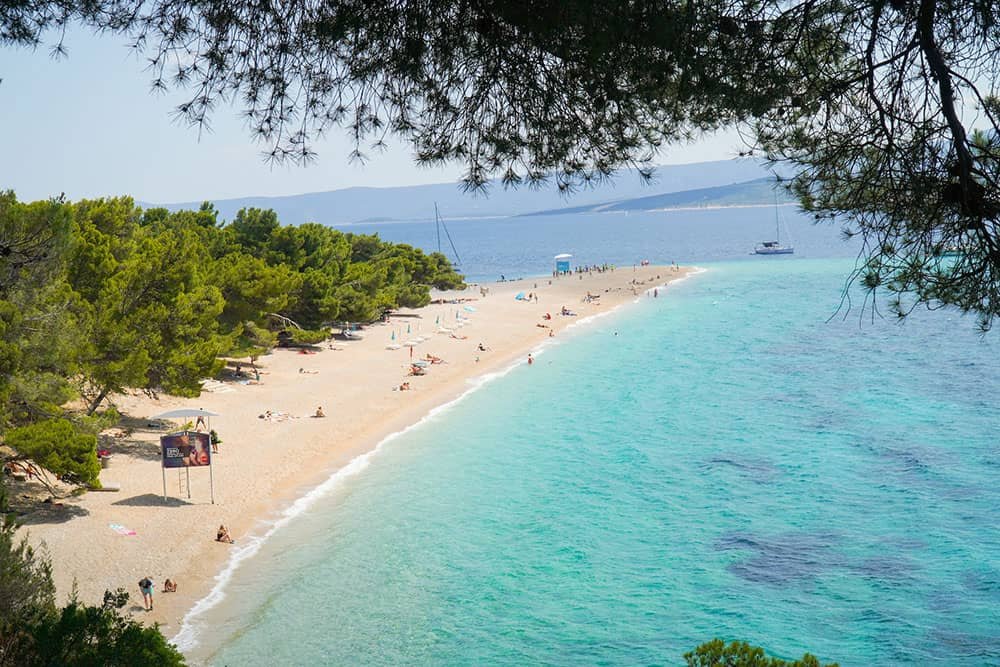
PHOTO BY Karolina Kołodziejczak ON Unsplash
1. Zlatni Rat Beach (Croatia)
Zlatni Rat, often called the Golden Horn, is one of the most recognizable beaches in Croatia. Located near the town of Bol on the southern coast of Brač, the beach is famous for its distinctive shape, extending hundreds of meters into the clear blue waters of the Adriatic Sea.
One of the things that makes Zlatni Rat so unusual is that its tip can subtly change shape depending on waves, currents, and wind conditions. Seen from above, the narrow strip of pale pebbles surrounded by brilliant blue water creates one of the most memorable coastal views in the Balkans.
Despite what photographs may suggest, Zlatni Rat isn’t a sandy beach. Its shoreline is covered in smooth, light-colored pebbles, and the remarkably clear water shifts between shades of turquoise and deep blue. A grove of Mediterranean pine trees behind the beach provides welcome natural shade during hot summer afternoons.
Swimming and Things to Do at Zlatni Rat
Zlatni Rat is an excellent place for swimming, but it’s particularly well known for windsurfing and kitesurfing. The winds around Bol, especially during the afternoon, have helped make this part of Brač one of Croatia’s best-known destinations for wind-powered water sports.
If you’d rather take things slowly, you can rent a kayak or paddleboard, go snorkeling along the shoreline, or simply find a shady spot beneath the pine trees.
The nearby town of Bol is worth exploring as well. Its waterfront promenade is lined with restaurants, cafés, shops, and accommodations, and the walk between Bol and Zlatni Rat is an enjoyable part of the experience.
For an entirely different perspective, head up toward Vidova Gora, the highest point on the Adriatic islands. The elevated viewpoints offer sweeping views across Brač, the surrounding Adriatic, and toward neighboring Hvar.
Why Visit Zlatni Rat Beach?
- Distinctive and constantly changing shoreline
- Exceptionally clear Adriatic water
- Excellent swimming conditions
- One of Croatia’s best-known windsurfing destinations
- Kayaking, paddleboarding, and snorkeling opportunities
- Mediterranean pine trees providing natural shade
- Walking distance from the seaside town of Bol
- Easy to combine with exploring the rest of Brač
Zlatni Rat Visitor Information
| Feature | Details |
|---|---|
| Country | Croatia |
| Location | Bol, Brač Island |
| Beach Type | Fine pebbles |
| Sea | Adriatic Sea |
| Best Time to Visit | June–September |
| Family Friendly | ⭐⭐⭐⭐⭐ |
| Swimming | ⭐⭐⭐⭐⭐ |
| Snorkeling | ⭐⭐⭐⭐☆ |
| Water Sports | ⭐⭐⭐⭐⭐ |
| Facilities | Restaurants, cafés, sunbeds, showers, and nearby parking |
Travel Tip
If you’re visiting in July or August, arrive earlier in the morning to enjoy a quieter stretch of beach before the busiest part of the day. Don’t limit your visit to the shoreline, either. Spend some time exploring Bol and, if your itinerary allows, head toward Vidova Gora for one of the best panoramic views on Brač.
If Zlatni Rat has you dreaming about more of Croatia’s coastline, explore our guide to the 10 Best Beaches in Croatia. You can also discover the Most Famous Islands in Croatia or add some nature to your itinerary with our guide to the Best National Parks in the Balkans.
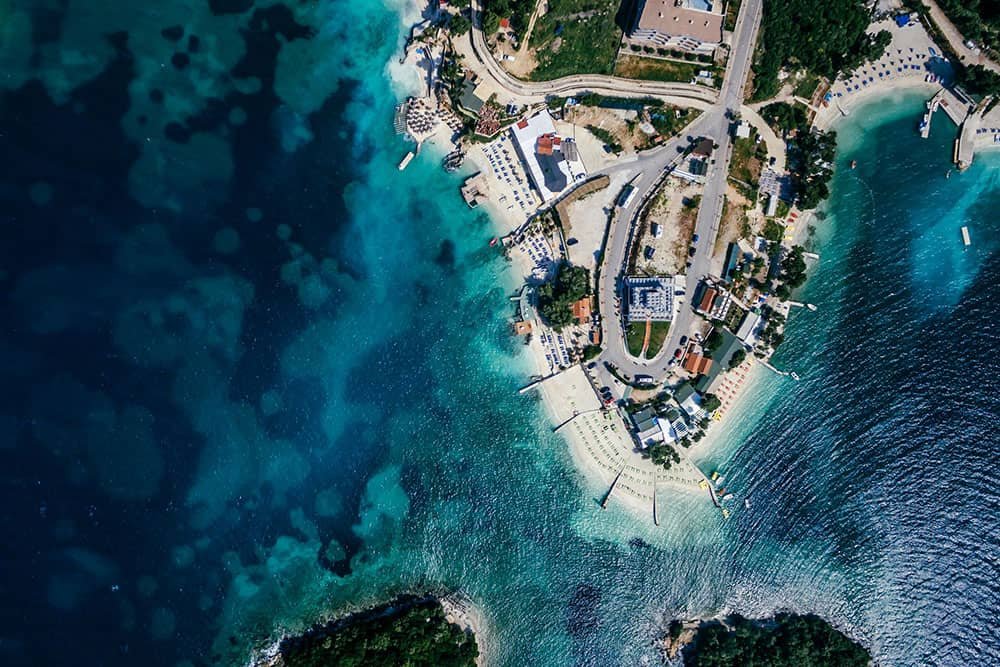
PHOTO BY Polina Rytova ON Unsplash
2. Ksamil Beach (Albania)
Ksamil Beach is one of the brightest jewels of the Albanian Riviera and has quickly become one of the most sought-after beach destinations in Europe. Located just south of Sarandë near the Greek border, Ksamil is one of the destinations featured in our guide to the Top-Rated Beaches to Visit in Albania, thanks to its white sand, shallow turquoise water, and small offshore islands.
Unlike many Adriatic beaches that are covered with pebbles, Ksamil offers soft sandy shores and calm, warm water, making it especially popular with families and couples. The vibrant blue and emerald colors of the Ionian Sea rival those of tropical destinations, earning Ksamil the nickname “the Maldives of Europe.”
One of the beach’s biggest attractions is its nearby islands. Visitors can rent kayaks, pedal boats, or stand-up paddleboards to reach these tiny, uninhabited islets in just a few minutes. The islands provide peaceful spots for swimming, snorkeling, and relaxing away from the busier sections of the main beach.
Beyond the coastline, Ksamil is perfectly positioned for exploring southern Albania. Just a short drive away is Butrint National Park, home to one of the country’s most important archaeological sites and a UNESCO World Heritage Site. If you’re planning to explore beyond the coast, see our guide to the Most Beautiful Places in Albania for more destinations worth adding to your itinerary.
Travelers can also visit the lively seaside city of Sarandë, discover the famous Blue Eye (Syri i Kaltër) natural spring, or continue along the spectacular Albanian Riviera to beaches such as Dhërmi, Himarë, and Gjipe.
Summer is the busiest season, with July and August attracting visitors from across Europe. For a quieter experience with warm weather and fewer crowds, consider visiting in May, June, or September.
Why Visit Ksamil Beach?
- Soft white sand and crystal-clear Ionian waters
- One of Albania’s most famous beach destinations
- Easy kayaking and swimming to nearby islands
- Excellent snorkeling in calm, transparent water
- Perfect for families, couples, and beach lovers
- Close to UNESCO-listed Butrint National Park
- Great base for exploring the Albanian Riviera
- Affordable accommodations and restaurants compared to many Mediterranean destinations
Visitor Information
| Feature | Details |
|---|---|
| Country | Albania |
| Region | Albanian Riviera |
| Beach Type | White sand |
| Water | Crystal-clear Ionian Sea |
| Best Time to Visit | May–September |
| Family Friendly | ⭐⭐⭐⭐⭐ |
| Swimming | ⭐⭐⭐⭐⭐ |
| Snorkeling | ⭐⭐⭐⭐☆ |
| Water Sports | ⭐⭐⭐⭐☆ |
| Facilities | Beach clubs, restaurants, cafés, sunbeds, parking |
Travel Tip
Visit early in the morning during peak summer months to enjoy the clearest water and avoid the busiest crowds. Renting a kayak or paddleboard is one of the best ways to explore Ksamil’s offshore islands and discover quieter swimming spots.
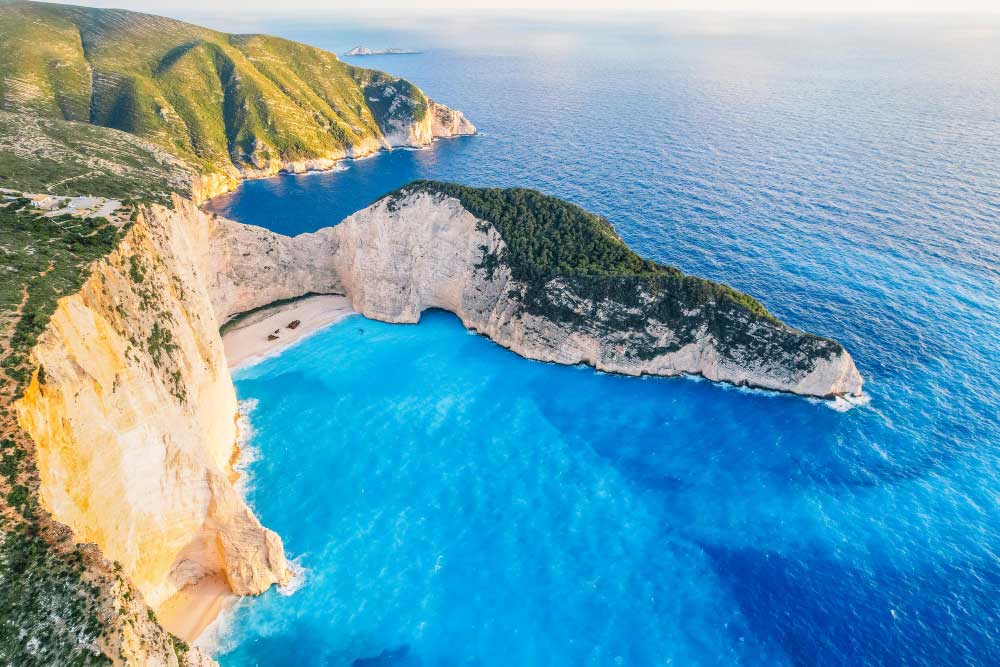
Navagio Beach, better known as Shipwreck Beach, is one of the most recognizable coastal landmarks in Greece. Hidden within a dramatic limestone cove on the island of Zakynthos, it is famous for its brilliant blue water, towering white cliffs, pale pebble shoreline, and the remains of the MV Panagiotis shipwreck.
The contrast between the rugged cliffs, intensely blue Ionian Sea, and rusting shipwreck has made Navagio one of the most photographed places in Greece. Even if you’ve never visited Zakynthos, there’s a good chance you’ve seen the famous view of this secluded cove from above.
There is an important difference between seeing Navagio Beach and actually accessing the beach.
For the 2026 season, visitors are not permitted to land on the beach because of the continuing risk of rockfalls and landslides from the surrounding limestone cliffs. Swimming inside the restricted cove is also prohibited, and boats must remain a safe distance from the shoreline.
That means Navagio should currently be considered a scenic attraction rather than a traditional swimming beach.
Visitors can still experience its extraordinary landscape from designated viewpoints above the cove, while boat excursions around Zakynthos may provide views from the sea when local regulations and weather conditions allow.
Because access rules can change, always check the latest local restrictions before visiting.
Navagio is only one reason to explore Zakynthos. Boat excursions around the island often include other spectacular sections of coastline, including the famous Blue Caves, where sunlight reflects through remarkably clear water and creates vivid shades of blue.
Zakynthos is also known for its protected marine environment and endangered loggerhead sea turtles (Caretta caretta). Travelers interested in swimming and snorkeling should plan time at other accessible beaches around the island rather than expecting to swim at Navagio itself.
The combination of dramatic cliffs, turquoise water, and the famous shipwreck still makes Navagio one of the most memorable coastal sights in the Balkans—even when experienced from a distance.
- One of Greece’s most recognizable coastal landmarks
- Famous MV Panagiotis shipwreck
- Spectacular turquoise Ionian waters
- Towering limestone cliffs surrounding the cove
- Incredible panoramic views from above
- Excellent photography opportunities
- Easy to combine with the Blue Caves
- One of the signature natural attractions of Zakynthos
| Feature | Details |
|---|---|
| Country | Greece |
| Location | Zakynthos Island |
| Beach Type | White pebble cove |
| Sea | Ionian Sea |
| Best Time to Visit | May–September |
| Beach Access in 2026 | Restricted / no landing |
| Swimming at Navagio | Prohibited within the restricted cove |
| Photography | ⭐⭐⭐⭐⭐ |
| Scenery | ⭐⭐⭐⭐⭐ |
| Nearby Attractions | Blue Caves, Zakynthos coastline, marine areas |
Travel Tip
Don’t plan your visit to Navagio as a traditional beach day. Instead, treat it as one of Zakynthos’ great scenic landmarks and combine it with other accessible beaches around the island. Stay within designated viewing areas above the cliffs and never cross barriers to get closer to the edge.
If Greece is part of a larger Balkan trip, read our Greece Travel Tips: 10 Things to Know Before You Go before planning your itinerary.

PHOTO BY Djordje Milivojevic ON Unsplash
4. Sveti Stefan Beach (Montenegro)
Sveti Stefan is one of the most recognizable sights on Montenegro’s Adriatic coast. Located along the Budva Riviera, roughly 10 kilometers from Budva, the beach faces the famous fortified islet of Sveti Stefan, where centuries-old stone buildings rise above the brilliant blue sea.
The setting is what makes this place special. Pale pinkish pebbles, clear Adriatic water, Mediterranean greenery, and the historic stone village create a scene that looks almost too perfect to be real. It’s no surprise that views of Sveti Stefan have become some of the most recognizable images of Montenegro.
Swimming at Sveti Stefan Beach
The beaches around Sveti Stefan offer clear water and beautiful views of the historic islet, making this a wonderful place to combine swimming with sightseeing.
Access arrangements have changed over the years, so it’s worth knowing what to expect in 2026. Sveti Stefan Beach and King’s Beach are accessible to the public, while Queen’s Beach remains reserved for guests of the luxury resort.
The historic island itself is part of the Aman Sveti Stefan resort and shouldn’t be treated as an unrestricted sightseeing attraction. If seeing the old stone village up close is important to you, check current resort access policies before your visit.
Even without entering the island, the views from the mainland and surrounding coastline are spectacular.
What to See Near Sveti Stefan
Don’t make the mistake of visiting only for the beach. The surrounding stretch of coast is one of the prettiest parts of Montenegro.
Nearby Miločer Park is known for its Mediterranean vegetation, cypress trees, olive groves, and scenic coastal paths. Continue north and you’ll reach Budva, where you can wander through the narrow streets of the medieval Old Town before stopping at one of the cafés or restaurants overlooking the Adriatic.
Travelers with more time can also continue along the coast toward Petrovac or explore the dramatic scenery surrounding the Bay of Kotor.
Why Visit Sveti Stefan Beach?
- One of Montenegro’s most recognizable coastal landmarks
- Beautiful views of the historic Sveti Stefan islet
- Clear Adriatic water
- Attractive pinkish-pebble shoreline
- Excellent swimming and photography
- Close to Miločer Park
- Only a short drive from Budva
- Ideal stop on a Montenegro coastal road trip
Sveti Stefan Visitor Information
| Feature | Details |
|---|---|
| Country | Montenegro |
| Location | Budva Riviera |
| Beach Type | Sand and fine pebbles |
| Sea | Adriatic Sea |
| Best Time to Visit | May–September |
| Family Friendly | ⭐⭐⭐⭐☆ |
| Swimming | ⭐⭐⭐⭐⭐ |
| Photography | ⭐⭐⭐⭐⭐ |
| Nearby Attractions | Miločer Park, Budva, Petrovac |
| Facilities | Restaurants, cafés, sunbeds, parking, and nearby hotels |
Travel Tip
For the classic Sveti Stefan photograph, stop at one of the elevated viewpoints along the road above the coastline. Early morning and the hours before sunset provide particularly beautiful light across the island and Adriatic Sea.
If you’re exploring more of the country, continue with our guide to the UNESCO World Heritage Sites in Montenegro. It’s an excellent way to add some history and culture to a beach-focused Montenegro itinerary.
5. Punta Rata Beach (Croatia)
Punta Rata Beach is one of the highlights of Croatia’s Makarska Riviera. Located in the seaside town of Brela, it combines clear Adriatic water, pale pebbles, Mediterranean pine trees, and the dramatic slopes of Biokovo rising behind the coastline.
It’s the kind of beach that immediately feels Croatian. Instead of a long stretch of sand, you’ll find smooth pebbles disappearing into remarkably transparent water, with pine trees growing surprisingly close to the shore. Their shade is especially welcome during the hottest days of July and August.
Punta Rata has also received Blue Flag recognition, reflecting standards for water quality, environmental management, safety, and beach services.
The Famous Brela Stone
One sight you shouldn’t miss is Kamen Brela, or the Brela Stone, just offshore near Punta Rata.
This small rock formation rising from the Adriatic has pine trees growing directly from it, creating one of the most recognizable coastal scenes on the Makarska Riviera. It’s become a symbol of Brela and a favorite photography spot, particularly when the surrounding water is calm.
Swimming and Things to Do at Punta Rata
The clear Adriatic water makes Punta Rata an excellent choice for swimming and snorkeling. Bring a mask and snorkel if you have one—the rocky sections around the beach are particularly interesting to explore underwater.
Kayaking and paddleboarding are also great ways to see more of the coastline. Rather than staying in one place all day, you can follow the shore and discover smaller coves and swimming spots around Brela.
One of the nicest features of the area is the seaside promenade, which connects Punta Rata with other beaches, cafés, restaurants, and accommodations. It’s perfect for an evening walk after spending the afternoon by the water.
Brela also makes a good base for exploring more of this part of Croatia. The dramatic landscapes of Biokovo Nature Park are nearby, while boat trips can take you toward Brač and Hvar. If island hopping is part of your itinerary, our guide to the Most Famous Islands in Croatia can help you decide where to go next.
Why Visit Punta Rata Beach?
- Exceptionally clear Adriatic water
- Beautiful pebble shoreline backed by pine trees
- Famous Brela Stone just offshore
- Excellent swimming and snorkeling
- Natural shade along parts of the beach
- Scenic seaside promenade
- Easy access to restaurants and cafés
- Great location for exploring the Makarska Riviera
Punta Rata Visitor Information
| Feature | Details |
|---|---|
| Country | Croatia |
| Location | Brela, Makarska Riviera |
| Beach Type | Pebble |
| Sea | Adriatic Sea |
| Best Time to Visit | June–September |
| Family Friendly | ⭐⭐⭐⭐⭐ |
| Swimming | ⭐⭐⭐⭐⭐ |
| Snorkeling | ⭐⭐⭐⭐⭐ |
| Water Sports | ⭐⭐⭐⭐☆ |
| Facilities | Restaurants, cafés, showers, sunbeds, parking, and promenade |
Travel Tip
Visit Punta Rata earlier in the morning if you’re traveling during July or August. You’ll have a better chance of finding a good spot beneath the pines and can enjoy the shoreline before the busiest part of the day.
Don’t leave immediately after swimming. Walk along Brela’s coastal promenade and explore some of the smaller coves nearby—you may find that your favorite swimming spot isn’t the famous beach at all.
If Punta Rata has you wanting to see more of the country’s coastline, continue with our guide to the 10 Best Beaches in Croatia. For a change of scenery, you can also explore our guide to the Best National Parks in the Balkans.
6. Sunny Beach (Bulgaria)
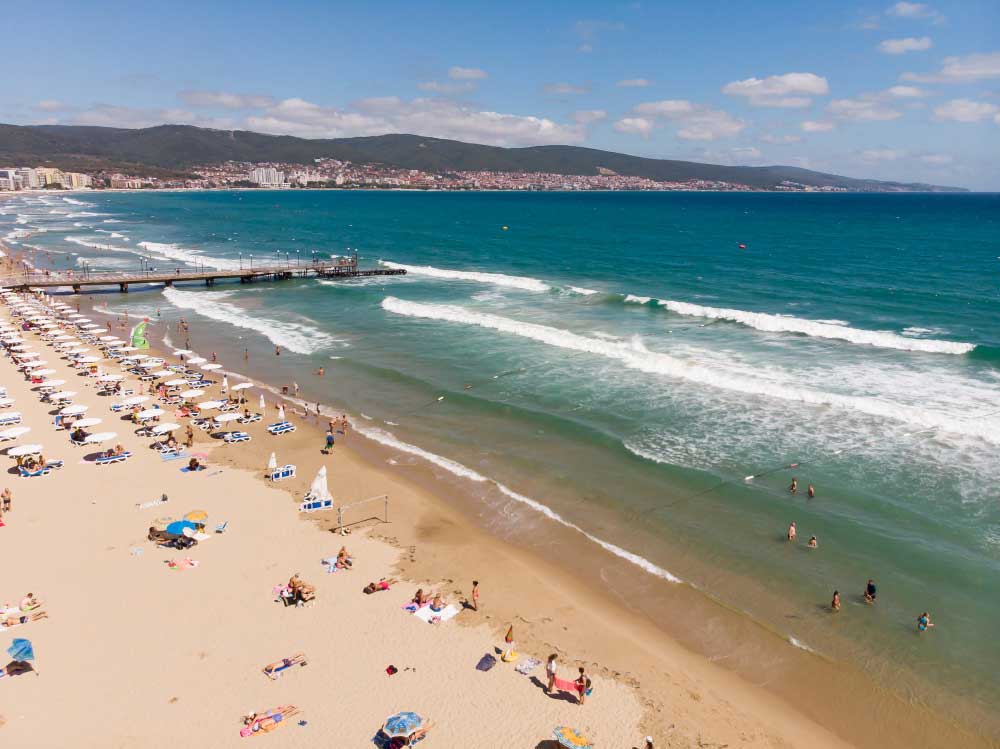
Sunny Beach is Bulgaria’s best-known seaside resort and one of the largest beach destinations on the Black Sea coast. Located about 35 kilometers (22 miles) north of Burgas, the resort is built around a long stretch of golden sand with hotels, restaurants, cafés, entertainment, and water sports just steps from the shoreline.
It offers a very different experience from the secluded coves and pebble beaches found elsewhere on this list. Sunny Beach is lively, developed, and designed around the classic summer beach holiday. If you’re looking for plenty to do during the day and an active atmosphere after sunset, this is one of Bulgaria’s easiest coastal destinations to enjoy.
Swimming and Things to Do at Sunny Beach
One of Sunny Beach’s biggest advantages is its long sandy shoreline. The beach stretches for several kilometers, providing considerably more room than many of the smaller coves found along the Adriatic.
The sand is soft and golden, while the shoreline generally slopes gradually into the Black Sea. These conditions make parts of the beach particularly appealing to families, although visitors should always pay attention to lifeguard flags and local sea conditions before swimming.
There’s no shortage of activities, either. Depending on the operator and conditions, you’ll find everything from parasailing and jet skiing to banana boats, paddleboarding, beach volleyball, and other water sports.
Sunny Beach is equally famous for what happens after dark. Restaurants, beach bars, clubs, and entertainment venues make this one of the liveliest summer resorts in Bulgaria. Travelers looking for something quieter may prefer smaller Black Sea towns, but for nightlife and convenience, Sunny Beach is difficult to beat.
Visit Nessebar While You’re Here
One of the best reasons to choose Sunny Beach is what you’ll find just to the south.
The historic town of Nessebar is a UNESCO World Heritage Site with thousands of years of history. Its old quarter occupies a small peninsula filled with narrow cobbled streets, medieval churches, traditional houses, archaeological remains, and beautiful views across the Black Sea.
It’s a striking contrast to the modern resort atmosphere of Sunny Beach and makes an excellent half-day or evening excursion.
If historical places are an important part of your trip, our guide to the 10 Most Popular Historical Places in Bulgaria includes even more destinations worth exploring around the country.
Exploring Beyond Sunny Beach
Sunny Beach can also work as a starting point for seeing more of Bulgaria’s southern Black Sea coast. Travelers can combine a few relaxing beach days with historic towns, coastal scenery, nature areas, and trips farther south toward Burgas and other seaside destinations.
If this is your first trip to the country, our guide to Explore Bulgaria: The Perfect Vacation Destination is a useful starting point for discovering what else you can add to your itinerary.
Why Visit Sunny Beach?
- Long stretch of golden sandy beach
- Generally shallow shoreline suitable for families
- Wide selection of water sports and activities
- Restaurants, cafés, beach bars, and nightlife
- Plenty of hotels and vacation accommodations
- Easy access to historic Nessebar
- Convenient base for exploring Bulgaria’s southern Black Sea coast
- A completely different beach experience from the Adriatic and Ionian destinations on this list
Sunny Beach Visitor Information
| Feature | Details |
|---|---|
| Country | Bulgaria |
| Location | Southern Black Sea Coast |
| Beach Type | Golden sand |
| Sea | Black Sea |
| Best Time to Visit | June–September |
| Family Friendly | ⭐⭐⭐⭐⭐ |
| Swimming | ⭐⭐⭐⭐⭐ |
| Snorkeling | ⭐⭐⭐☆☆ |
| Water Sports | ⭐⭐⭐⭐⭐ |
| Nightlife | ⭐⭐⭐⭐⭐ |
| Facilities | Restaurants, hotels, beach bars, showers, lifeguards, sunbeds, and parking |
Travel Tip
Don’t spend your entire stay inside the resort. Set aside at least a few hours for Nessebar, especially in the late afternoon when you can explore the Old Town before watching the sunset over the Black Sea.
For more ideas beyond the coast, see our guide to the 10 Top Attractions in Bulgaria. If you’re planning to visit Sofia, Plovdiv, Veliko Tarnovo, or other destinations during the same trip, our guide to the 10 Most Popular Cities in Bulgaria can help you decide where to go next.
7. Pasjača Beach (Croatia)
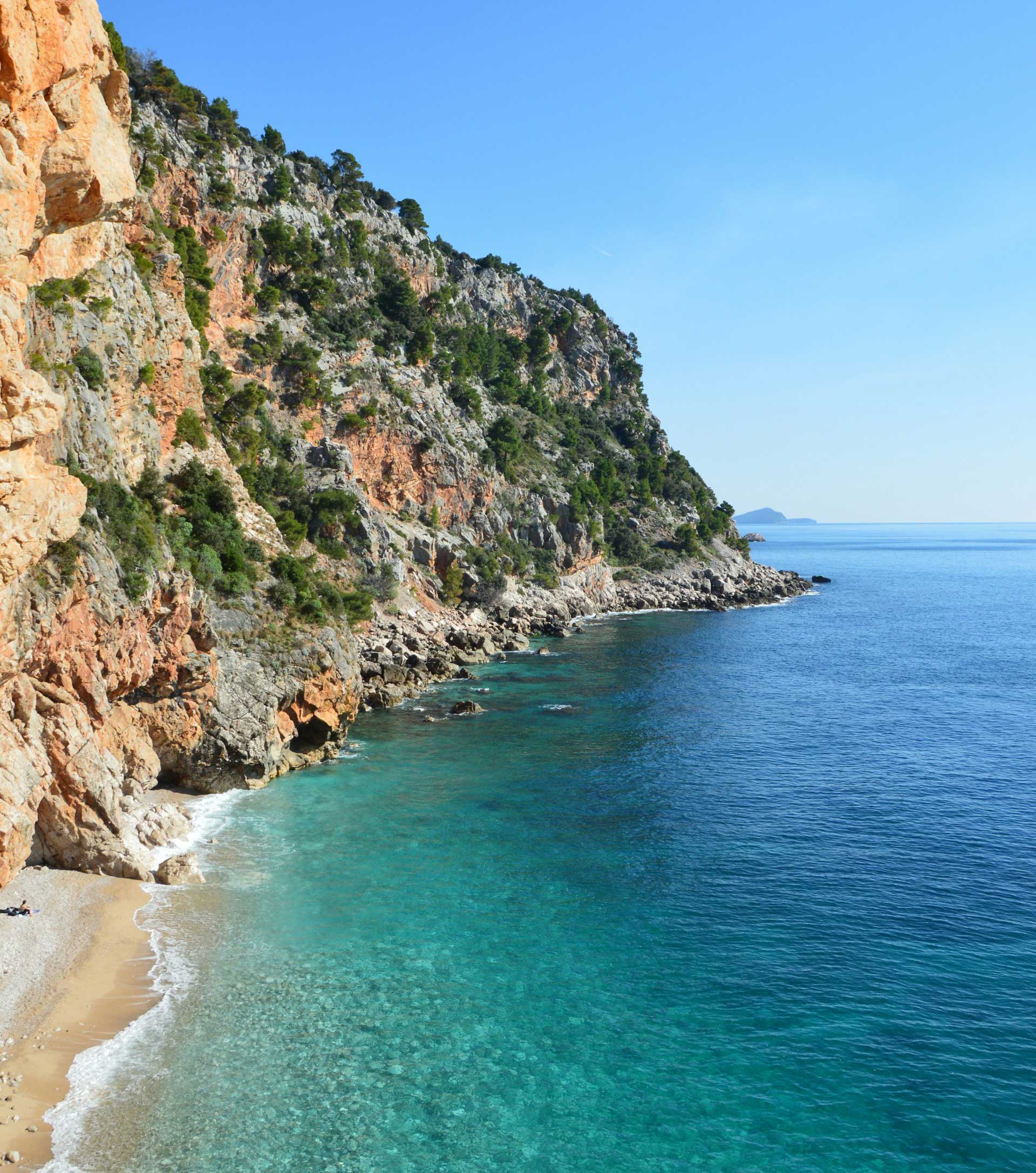
Pasjača Beach is one of the most dramatic beaches on Croatia’s southern Adriatic coast. Hidden beneath steep cliffs near the village of Popovići in the Konavle region, roughly 30 kilometers (19 miles) south of Dubrovnik, this small beach feels very different from the busy waterfronts and resort beaches found elsewhere along the Croatian coast.
Part of the appeal is simply getting there. From the parking area, visitors follow a path and series of steps down the cliffside before reaching the shoreline below. As you descend, views of the brilliant blue Adriatic begin to appear between the rocks, making the journey almost as memorable as the beach itself.
What Makes Pasjača Beach Special?
Pasjača sits directly beneath towering cliffs, creating a secluded setting with clear water and a narrow shoreline of pebbles and small stones. The surrounding rock walls give the beach a wild, almost hidden-away feeling despite its growing popularity with travelers.
On calm days, the clear Adriatic water can be excellent for swimming and snorkeling. Bring a mask if you have one, as the rocky coastline and good underwater visibility make exploring below the surface part of the experience.
Pasjača is also an excellent photography spot. From the path above, you can capture the contrast between the rugged cliffs and deep blue sea, while the beach itself offers a completely different perspective looking back toward the rock walls.
What to Know Before Visiting
Pasjača isn’t the kind of beach where you should expect rows of restaurants, beach clubs, or extensive tourist facilities. That’s part of its appeal, but it means you should arrive prepared.
Bring drinking water, sunscreen, and anything else you’ll need during your visit. Water shoes can also be useful on the pebble shoreline.
The descent is another important consideration. You’ll need to walk down—and later climb back up—a steep cliffside route, so Pasjača may not be the best choice for travelers with limited mobility or anyone looking for an effortless family beach day.
Sea conditions also matter. The beach is exposed to changing waves and weather, so always assess conditions before entering the water and follow any local warnings or restrictions.
Combine Pasjača With Dubrovnik
Pasjača’s location makes it an excellent addition to a trip through southern Croatia. You can spend part of the day along the coast and then explore Dubrovnik, one of the country’s most historically important cities.
Dubrovnik’s Old City is one of the remarkable places featured in our guide to the UNESCO World Heritage Sites in Croatia, making it easy to combine a beach day with some of Croatia’s most impressive history and architecture.
If historic destinations are a major part of your itinerary, you can also explore our guide to the Top Historical Places in Croatia for more places worth visiting around the country.
Why Visit Pasjača Beach?
- Dramatic location beneath towering coastal cliffs
- Clear blue Adriatic water
- Memorable cliffside approach to the beach
- Excellent swimming when sea conditions are suitable
- Good snorkeling opportunities
- Beautiful coastal photography
- Less developed than Croatia’s major resort beaches
- Convenient day trip from the Dubrovnik area
Pasjača Beach Visitor Information
| Feature | Details |
|---|---|
| Country | Croatia |
| Location | Popovići, Konavle |
| Region | Dubrovnik-Neretva County |
| Beach Type | Pebbles and small stones |
| Sea | Adriatic Sea |
| Best Time to Visit | May–September |
| Family Friendly | ⭐⭐⭐☆☆ |
| Swimming | ⭐⭐⭐⭐⭐ |
| Snorkeling | ⭐⭐⭐⭐⭐ |
| Accessibility | ⭐⭐☆☆☆ |
| Facilities | Limited – bring your own essentials |
Travel Tip
Wear comfortable shoes for the descent and remember that you’ll have to climb back up the cliffside path afterward. Bring plenty of drinking water and sun protection, particularly during the hottest summer months.
If you’re visiting in July or August, arriving earlier in the day can make the walk more comfortable and give you a chance to enjoy the beach before the busiest period.
Want to discover more places like this? Continue with our guide to the 10 Best Beaches in Croatia, or explore the Most Famous Islands in Croatia if island hopping is part of your Balkan itinerary.

PHOTO BY Pudelek ON Wikipedia
8. Gjipe Beach (Albania)
Gjipe Beach is one of the most dramatic stops along the Albanian Riviera. Tucked between Dhërmi and Himarë, the beach sits where the narrow Gjipe Canyon opens toward the Ionian Sea, creating an impressive landscape of steep cliffs, clear blue water, and a relatively undeveloped shoreline.
Unlike Ksamil and some of Albania’s easier-to-reach beaches, getting to Gjipe requires a little more effort. That’s part of what makes visiting so memorable.
How to Get to Gjipe Beach
Most independent visitors reach Gjipe by following the road toward the coast and then continuing on foot from the parking area. The final approach involves a walk over uneven terrain, so comfortable shoes are a much better choice than flip-flops.
Depending on where you park and your pace, allow roughly 30 minutes or more for the walk to the beach. The route can feel considerably harder on the return journey, particularly during the heat of a summer afternoon.
Another option is to approach Gjipe from the sea. Seasonal boat services and excursions operate along parts of the Albanian Riviera, although availability and sea conditions can vary.
However you arrive, the first view of the beach framed by cliffs makes the extra effort worthwhile.
Swimming and Things to Do at Gjipe Beach
Gjipe’s clear Ionian water is one of its biggest attractions. On suitable days, visitors can swim, snorkel, kayak, or simply cool off after the walk down to the coast.
The rocky landscape surrounding the beach also makes kayaking particularly appealing. Seeing the cliffs from the water gives you an entirely different perspective and allows you to explore more of this rugged section of Albania’s coastline.
If you’re building a beach-focused itinerary through the country, take a look at our guide to the Top-Rated Beaches to Visit in Albania for more places to swim along the Albanian Riviera.
Explore Gjipe Canyon
What really separates Gjipe from many other Balkan beaches is the canyon immediately behind it.
Gjipe Canyon cuts inland between steep rock walls, creating a rugged landscape that feels worlds away from Albania’s busy summer resorts. Visitors can explore sections of the canyon on foot, but the terrain becomes more challenging farther inside.
Wear appropriate footwear, pay attention to weather conditions, and don’t venture into difficult sections unless you’re properly prepared. Heavy rain can also make canyon environments dangerous, so conditions should always be considered before exploring.
Even if you don’t hike far into the canyon, simply seeing it rise behind the beach adds another dimension to the visit.
What to Know Before You Go
Gjipe has become much better known in recent years, so don’t expect to have this once-secret beach entirely to yourself during July and August.
It’s still considerably less developed than major resort destinations, however. Facilities can be limited and seasonal, so bring enough drinking water, sunscreen, snacks, and other essentials rather than assuming everything will be available when you arrive.
The combination of hiking, cliffs, canyon scenery, and clear Ionian water makes Gjipe particularly rewarding for travelers who prefer a little adventure with their beach day.
If you’re planning to explore beyond the coast, our guide to the Most Beautiful Places in Albania includes more destinations worth adding to your itinerary.
Why Visit Gjipe Beach?
- Dramatic location where Gjipe Canyon meets the sea
- Clear Ionian water
- Scenic walk to the coastline
- Swimming and snorkeling opportunities
- Kayaking along the surrounding cliffs
- Canyon scenery directly behind the beach
- Less developed setting than major Albanian resorts
- Excellent stop on an Albanian Riviera road trip
Gjipe Beach Visitor Information
| Feature | Details |
|---|---|
| Country | Albania |
| Location | Between Dhërmi and Himarë |
| Region | Albanian Riviera |
| Beach Type | Pebbles and stones |
| Sea | Ionian Sea |
| Best Time to Visit | May–September |
| Family Friendly | ⭐⭐⭐☆☆ |
| Swimming | ⭐⭐⭐⭐⭐ |
| Snorkeling | ⭐⭐⭐⭐☆ |
| Kayaking | ⭐⭐⭐⭐⭐ |
| Accessibility | ⭐⭐☆☆☆ |
| Facilities | Limited and seasonal |
Travel Tip
Start early if you’re visiting during the hottest months. You’ll avoid walking in the strongest midday heat and have a better chance of experiencing Gjipe before the busiest part of the day.
Bring sturdy footwear for the approach, plenty of drinking water, and sun protection. And remember that the walk back is uphill, so save some energy for the return journey.
For more outdoor inspiration around the region, continue with our guide to the Best National Parks in the Balkans.

PHOTO: Stefan Kostić ON Unsplash
9. Jaz Beach (Montenegro)
Jaz Beach is one of the largest and best-known beaches along Montenegro‘s Budva Riviera. Located just a few kilometers west of Budva, it offers a long shoreline, clear Adriatic water, water sports, beach bars, and plenty of room to settle in for a full day by the sea.
While nearby Sveti Stefan is all about iconic scenery and historic atmosphere, Jaz offers a more relaxed, activity-filled beach experience. It’s a particularly convenient choice for travelers staying in Budva who want to escape the town’s smaller and often busier beaches without driving far along the coast.
Swimming and Things to Do at Jaz Beach
Jaz has a mixture of pebbles, small stones, and sand depending on where you settle along the shoreline. The water is typically clear, and the open bay provides plenty of space for swimming during suitable sea conditions.
Water sports are a major part of the summer experience. Depending on the season and local operators, visitors may find kayaking, paddleboarding, jet skiing, parasailing, and other activities available directly from the beach.
If you’d rather do very little, that’s easy too. Rent a sunbed, find a spot along the shore, or stop at one of the seasonal cafés and beach bars overlooking the Adriatic.
Families can enjoy Jaz as well, although conditions vary across such a long beach. Choose your swimming area carefully, watch for boats and water-sports zones, and always follow lifeguard instructions and local warning flags.
Jaz Beach and Montenegro’s Music History
Jaz isn’t known only for swimming.
The beach has also hosted some of Montenegro’s biggest outdoor concerts and music events. International artists, including Madonna and The Rolling Stones, have performed at Jaz, helping establish the beach as one of the country’s most recognizable large-scale outdoor event locations.
Concerts aren’t an everyday feature of Jaz Beach, however, so don’t plan your visit around live music unless you’ve checked the current event schedule first.
Combine Jaz Beach With Budva
One of the biggest advantages of Jaz is its proximity to Budva.
You can spend the morning exploring Budva’s historic Old Town, head to Jaz for an afternoon swim, and return to town for dinner along the coast. The contrast between medieval stone streets and a relaxed Adriatic beach makes for an easy and varied day.
From Budva, you can also continue along the coastline toward Sveti Stefan or travel north toward the spectacular Bay of Kotor.
Kotor’s historic old town and its surrounding fortifications form part of one of the country’s UNESCO-listed cultural and natural areas. If you’re continuing your Montenegro road trip in that direction, our guide to the UNESCO World Heritage Sites in Montenegro is a useful next read.
Why Visit Jaz Beach?
- One of the largest beaches near Budva
- Clear Adriatic water
- Long shoreline with plenty of space
- Swimming and seasonal water sports
- Beach bars, cafés, and other summer facilities
- History of major concerts and music events
- Just a short distance from Budva
- Easy addition to a Montenegro coastal road trip
Jaz Beach Visitor Information
| Feature | Details |
|---|---|
| Country | Montenegro |
| Location | Near Budva |
| Region | Budva Riviera |
| Beach Type | Pebbles, small stones, and sections of sand |
| Sea | Adriatic Sea |
| Best Time to Visit | May–September |
| Family Friendly | ⭐⭐⭐⭐☆ |
| Swimming | ⭐⭐⭐⭐⭐ |
| Snorkeling | ⭐⭐⭐⭐☆ |
| Water Sports | ⭐⭐⭐⭐⭐ |
| Facilities | Restaurants, beach bars, sunbeds, parking, and seasonal water-sports rentals |
Travel Tip
June and September are particularly attractive months for visiting Jaz Beach. The weather is generally suitable for a coastal vacation, while you may encounter fewer visitors than during the peak weeks of July and August.
If you’re visiting during summer, check Montenegro’s current event calendar before your trip. Jaz has a long history as an event venue, but concerts and festivals vary from year to year.
And if you’re continuing toward Kotor after Budva, leave enough time to explore the historic old town rather than treating the Bay of Kotor as just another beach stop.
10. Balos Lagoon (Greece)
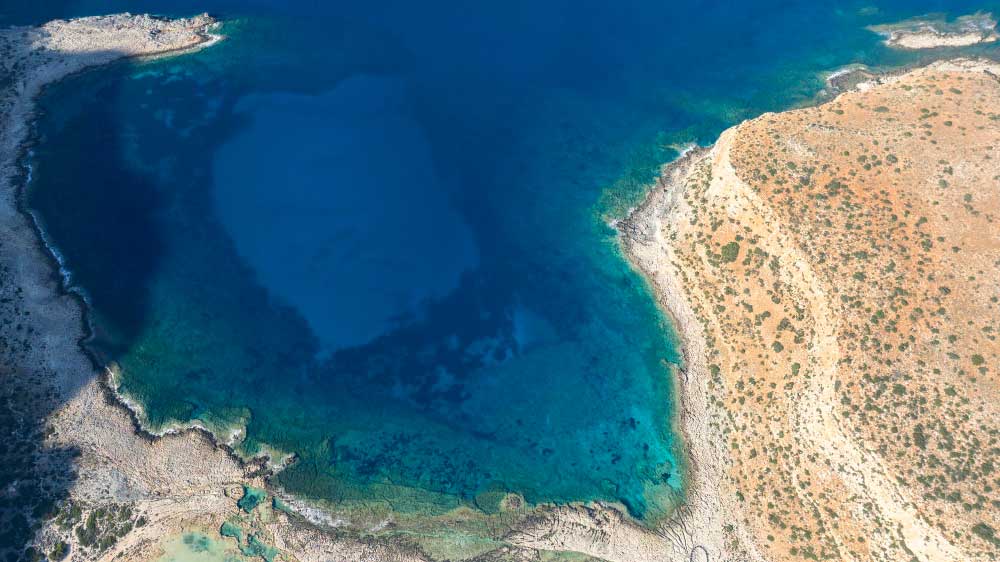
Balos Lagoon is one of the most spectacular coastal landscapes in Greece. Located on the remote Gramvousa Peninsula in northwestern Crete, it’s famous for shallow turquoise water, pale sand, rugged mountains, and a sweeping lagoon that looks almost unreal when viewed from above.
The colors are what most visitors notice first. Depending on the sunlight and depth of the water, the lagoon shifts between pale turquoise, aquamarine, and deeper shades of blue. Add the surrounding rocky landscape and white-to-pinkish sand, and it’s easy to understand why Balos has become one of Crete’s most photographed destinations.
Swimming at Balos Lagoon
Balos isn’t a typical Mediterranean beach.
Large sections of the lagoon are shallow, and the water can become pleasantly warm during summer. This makes wading and swimming one of the main reasons people come here, although conditions can vary with wind and weather.
The shallow lagoon is particularly appealing to families, but parents should still supervise children closely. Balos is a natural coastal environment rather than a conventional resort beach, and facilities are much more limited than at developed beaches elsewhere on Crete.
Outside the shallowest parts of the lagoon, you’ll find deeper water and opportunities for swimming while surrounded by some of the most dramatic scenery on the island.
How to Get to Balos Lagoon
There are two main ways to experience Balos: by land or by boat.
Boat excursions typically depart from Kissamos and often combine Balos with nearby Gramvousa Island. This is a convenient option if you’d rather avoid driving the rough road across the Gramvousa Peninsula and hiking down to the lagoon.
Reaching Balos by land is more adventurous. The route involves an unpaved road followed by a walk down toward the beach. Conditions on the road can change, so check locally before driving and make sure your rental-car agreement allows travel on unpaved roads.
The reward for arriving overland is the famous elevated view of Balos. From above, you can see the entire lagoon spreading across the coastline—one of the most memorable panoramas in Crete.
Just remember that after walking down, you’ll eventually have to climb back up.
Visit Gramvousa Island
If you choose a boat excursion, consider one that also stops at Gramvousa Island.
The island is known for its Venetian fortress, which stands high above the coastline. Reaching the fortress requires an uphill walk, but the views across the surrounding sea and rugged coastline are impressive.
Combining Gramvousa and Balos also gives you two very different experiences in a single day: history and panoramic views on the island followed by swimming and relaxation at the lagoon.
A Protected Natural Landscape
Balos is more than a beautiful swimming spot. The wider Gramvousa and Balos area is environmentally sensitive and protected for its habitats, plants, wildlife, and coastal ecosystems.
That makes responsible visiting especially important.
Stay on established paths where required, don’t leave litter behind, avoid disturbing wildlife or vegetation, and don’t remove sand, shells, plants, or other natural materials from the area.
With large numbers of people visiting during summer, small choices by individual travelers can make a meaningful difference in protecting the landscape.
Why Visit Balos Lagoon?
- Extraordinary turquoise and aquamarine water
- Beautiful pale and pinkish sand
- Shallow sections suitable for wading and swimming
- Famous panoramic viewpoint above the lagoon
- Dramatic scenery of the Gramvousa Peninsula
- Boat excursions from Kissamos
- Easy to combine with Gramvousa Island
- One of Crete’s most recognizable natural attractions
Balos Lagoon Visitor Information
| Feature | Details |
|---|---|
| Country | Greece |
| Location | Northwestern Crete |
| Region | Gramvousa Peninsula |
| Beach Type | Sandy lagoon |
| Sea | Mediterranean Sea |
| Best Time to Visit | May–October |
| Family Friendly | ⭐⭐⭐⭐☆ |
| Swimming | ⭐⭐⭐⭐⭐ |
| Photography | ⭐⭐⭐⭐⭐ |
| Accessibility | ⭐⭐⭐☆☆ |
| Facilities | Limited and seasonal; boat excursions available from Kissamos |
Travel Tip
If you’re reaching Balos by land, wear comfortable walking shoes and bring plenty of drinking water, sunscreen, and other essentials. The descent provides spectacular views, but remember that you’ll have an uphill walk back to your vehicle.
During the busiest summer months, arriving earlier can help you experience the viewpoint and lagoon before peak crowds. If you’re taking a boat instead, compare departure times and itineraries from Kissamos before choosing an excursion.
Balos is an unforgettable place to finish a tour of the most beautiful beaches in the Balkans, but don’t stop exploring Greece here. Before planning the rest of your trip, read our Greece Travel Tips: 10 Things to Know Before You Go for practical advice on traveling around the country.
Frequently Asked Questions
Which Balkan country has the best beaches?
There isn’t one country that has the best beaches for every traveler. Croatia, Greece, and Albania are particularly strong choices, but each offers a different experience.
Croatia is known for remarkably clear Adriatic water, pebble coves, and hundreds of islands. Greece combines sandy beaches, dramatic island landscapes, and an enormous variety of coastal destinations. Albania’s Riviera offers beautiful Ionian water, rugged scenery, and beaches ranging from popular Ksamil to more adventurous spots such as Gjipe.
Montenegro is an excellent choice if you want to combine beaches with historic coastal towns, while Bulgaria stands out for its long sandy beaches and Black Sea resorts.
Which beaches in the Balkans have the clearest water?
Many beaches along the Adriatic and Ionian coasts are known for exceptionally clear water. Zlatni Rat and Punta Rata in Croatia, Gjipe and Ksamil in Albania, and Balos Lagoon in Greece are excellent examples from this list.
Water clarity isn’t constant, however. Wind, waves, weather, currents, and the number of swimmers can all affect conditions on any particular day.
When is the best time to visit beaches in the Balkans?
For most Adriatic, Ionian, and Aegean destinations, June and September are excellent months to consider. The weather is generally warm enough for a beach vacation, while popular destinations can be less crowded than during July and August.
July and August bring the hottest weather and liveliest resort atmosphere, but they’re also peak season. Expect larger crowds, higher accommodation prices, and busier beaches.
Late May can also be beautiful, although sea temperatures may feel cool depending on the destination and weather that year. In parts of Greece, the beach season can extend well into October.
Are beaches in the Balkans good for families?
Yes, but some are much easier with children than others.
Sunny Beach in Bulgaria, Ksamil in Albania, Punta Rata in Croatia, and parts of Balos Lagoon in Greece can work particularly well for families because of their swimming conditions or access to visitor facilities.
More adventurous beaches such as Gjipe and Pasjača require walking over uneven or steep terrain and have fewer facilities, making them less convenient for families with very young children.
Regardless of the beach, always check local weather and sea conditions, follow lifeguard instructions, and supervise children closely around the water.
Which Balkan beaches are best for snorkeling?
For snorkeling, look for clear water combined with rocky sections of coastline. Gjipe Beach in Albania, Pasjača and Punta Rata in Croatia, and areas around Sveti Stefan in Montenegro can offer good conditions when the sea is calm.
Visibility varies with weather and waves, so conditions won’t be identical every day.
Navagio Beach should not currently be treated as a snorkeling destination. Access to the beach and swimming within the restricted cove are prohibited because of the risk of rockfalls and landslides.
Are there sandy beaches in the Balkans?
Absolutely. Although Croatia and Montenegro are famous for pebble beaches, you’ll find plenty of sandy coastlines elsewhere in the region.
Sunny Beach in Bulgaria offers kilometers of golden sand, while Ksamil in Albania has small sandy beaches overlooking turquoise Ionian water. Greece has an enormous variety of sandy beaches and lagoons, including the remarkable landscape of Balos in Crete.
If sand is important to you, check the beach surface before booking accommodation. Even neighboring beaches can differ significantly between sand, fine pebbles, larger stones, and rocky shoreline.
Are Balkan beaches expensive to visit?
Costs vary considerably by country, destination, and season.
Popular destinations in Croatia and Greece can become expensive during July and August, particularly for waterfront accommodations, parking, sunbeds, and restaurants. Albania, Bulgaria, and parts of Montenegro may offer better value, although prices in their most popular coastal resorts have also risen as tourism has grown.
Traveling in June or September can often provide a better balance between good beach weather, availability, and cost.
Final Thoughts on the Most Beautiful Beaches in the Balkans
Choosing just 10 of the most beautiful beaches in the Balkans isn’t easy. The region’s coastlines are incredibly varied, and that’s exactly what makes exploring them so rewarding.
You can swim beneath pine-covered hills at Punta Rata, hike between cliffs to reach Gjipe, experience the lively Black Sea atmosphere of Sunny Beach, photograph the famous shipwreck at Navagio, or simply watch the colors of the water change across Balos Lagoon.
And these 10 beaches are only the beginning.
If Croatia is calling you back to the Adriatic, explore our 10 Best Beaches in Croatia and Most Famous Islands in Croatia. Travelers heading south along the Ionian coast can discover even more places in our Top-Rated Beaches to Visit in Albania and Most Beautiful Places in Albania guides.
Planning a trip to Greece? Start with our Greece Travel Tips: 10 Things to Know Before You Go. For Montenegro, our guide to the UNESCO World Heritage Sites in Montenegro shows why it’s worth leaving the beach for a day and exploring the country’s history and dramatic landscapes.
And if Bulgaria’s Black Sea coast has caught your attention, explore the 10 Top Attractions in Bulgaria or read Explore Bulgaria: The Perfect Vacation Destination for more ideas beyond Sunny Beach.
Whichever coastline you choose, don’t rush it. Some of the best Balkan travel experiences happen when you leave enough time to explore the old towns, islands, national parks, mountain landscapes, and small coastal communities between the famous beaches.
For even more outdoor inspiration, continue with our guide to the Best National Parks in the Balkans and start planning the next stop on your journey through Southeast Europe.
What's your reaction?