 By
By 10 Most Popular Historical Places in Bulgaria
Bulgaria’s history stretches back thousands of years, leaving behind an extraordinary collection of Thracian tombs, Roman ruins, medieval fortresses, monasteries, churches, and historic towns. For travelers interested in archaeology and European history, exploring these sites can become one of the most memorable parts of a trip through the country.
Some of the most remarkable historical places in Bulgaria date to civilizations that existed long before the modern Bulgarian state. Ancient Thracian monuments reveal sophisticated art and burial traditions, while Roman cities, medieval strongholds, and Orthodox monasteries tell the story of the many cultures and empires that shaped the region.
You can walk through Roman ruins in Plovdiv, explore the medieval fortress of Tsarevets in Veliko Tarnovo, admire centuries-old frescoes inside Boyana Church, or travel into the Rila Mountains to visit Bulgaria’s most famous monastery.
Several of these landmarks are also recognized by UNESCO, reflecting their importance not only to Bulgarian history but to the cultural heritage of Europe and the wider world.
Whether you’re planning a history-focused road trip or simply want to add a few meaningful cultural stops to your vacation, these ten historical sites offer an excellent introduction to Bulgaria’s remarkably layered past.
Here are 10 of the most popular historical places in Bulgaria and why each one deserves a place on your itinerary.
Historical Places in Bulgaria at a Glance
Bulgaria’s historical landmarks span thousands of years, so visiting them can feel like traveling through several completely different eras. Ancient Thracian culture, the Roman Empire, medieval Bulgarian kingdoms, Orthodox Christianity, and the struggle for national liberation have all left important landmarks across the country.
Here’s a quick look at the ten historical places covered in this guide:
| Historical Place | Location | Historical Period | Best Known For |
|---|---|---|---|
| Rila Monastery | Rila Mountains | Medieval to modern | Bulgaria’s most famous Orthodox monastery and UNESCO World Heritage Site |
| Tsarevets Fortress | Veliko Tarnovo | Medieval | Capital stronghold of the Second Bulgarian Empire |
| Boyana Church | Sofia | Medieval | Exceptional 13th-century frescoes and UNESCO recognition |
| Madara Rider | Near Shumen | Early medieval | Monumental rock relief associated with the First Bulgarian Empire |
| Thracian Tomb of Kazanlak | Kazanlak | Ancient Thracian | Remarkably preserved Thracian funerary paintings |
| Ancient Plovdiv | Plovdiv | Thracian and Roman | Roman theater, ancient ruins, and layers of urban history |
| Ancient Nessebar | Nessebar | Ancient to medieval | Historic Black Sea town with archaeological remains and medieval churches |
| Perperikon | Eastern Rhodope Mountains | Ancient to medieval | Large archaeological complex carved into rocky terrain |
| Bachkovo Monastery | Near Asenovgrad | Medieval to modern | Centuries of Orthodox religious history and art |
| Shipka Monument | Shipka Pass | Modern Bulgarian history | Memorial to the battles connected with Bulgaria’s liberation |
Together, these sites provide an excellent introduction to the extraordinary depth of Bulgarian history. Some can be explored during easy day trips from Sofia or Plovdiv, while others are best incorporated into a longer road trip through the country’s mountains, historic cities, and archaeological regions.
Next, we’ll explore each of these historical places in Bulgaria in greater detail, beginning with one of the country’s most recognizable cultural landmarks.
10 Most Popular Historical Places in Bulgaria
Choosing only ten historical sites is difficult in a country with thousands of years of recorded history and archaeological heritage. Bulgaria’s landmarks range from ancient Thracian tombs and Roman cities to medieval fortresses, Orthodox monasteries, and monuments connected with the country’s struggle for liberation.
The following historical places in Bulgaria were selected for their cultural importance, distinctive architecture or archaeology, and value to travelers who want to understand the country’s past. Together, they represent several major periods of Bulgarian history and can be incorporated into everything from day trips to a longer journey across the country.
Let’s begin with Bulgaria’s most famous monastery and one of its most important cultural symbols.
1. Rila Monastery
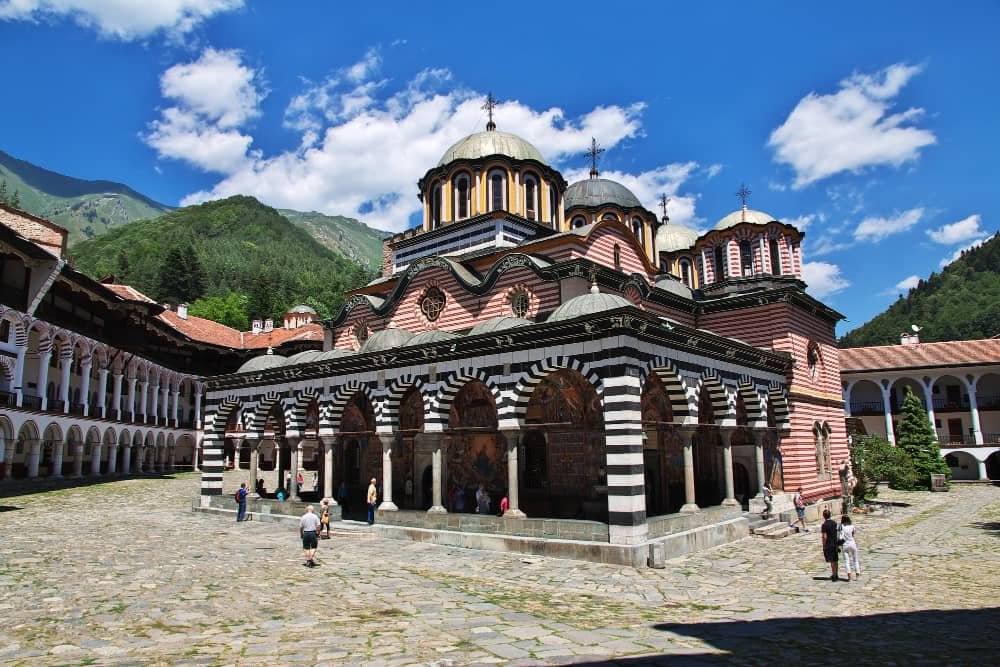
Hidden among the forested slopes of the Rila Mountains, Rila Monastery is one of Bulgaria’s most important cultural, historical, and religious landmarks. Its dramatic mountain setting, striped stone arches, colorful frescoes, and centuries of history make it an essential stop for travelers interested in Bulgaria’s past.
The monastery traces its origins to St. Ivan of Rila (St. John of Rila), a 10th-century hermit who became one of Bulgaria’s most revered Orthodox saints. A monastic community developed around his spiritual legacy, although the complex visitors see today reflects centuries of destruction, rebuilding, and expansion.
A UNESCO World Heritage Site
Rila Monastery was inscribed on the UNESCO World Heritage List in 1983.
Its importance extends beyond its architecture. During periods of foreign rule and political upheaval, the monastery became an important center for Bulgarian religion, culture, education, and national identity.
Much of the present complex dates from the 19th-century Bulgarian National Revival, when the monastery was extensively rebuilt following a devastating fire.
What to See at Rila Monastery
The centerpiece of the complex is the Church of the Nativity of the Virgin, immediately recognizable for its arcaded exterior and richly painted frescoes.
Take time to walk beneath the arches surrounding the church, where vivid religious scenes cover walls and ceilings in extraordinary detail.
Another major landmark is Hrelyo’s Tower, a fortified medieval tower dating from the 14th century and one of the oldest surviving structures within the monastery complex.
The monastery museum also preserves religious and historical objects connected with the site’s long history.
Don’t Rush Your Visit
Rila Monastery can be visited as a day trip from Sofia, but its location is part of what makes the experience special.
Rather than arriving, photographing the main courtyard, and immediately leaving, allow enough time to explore the complex, appreciate the frescoes, and take in the surrounding mountain scenery.
Remember that Rila Monastery remains an active religious site. Dress respectfully, keep noise to a minimum inside sacred spaces, and follow posted photography rules.
For travelers interested in Bulgarian history, Orthodox Christianity, architecture, or art, Rila Monastery is one of the historical places in Bulgaria that should be near the top of the list.
2. Tsarevets Fortress
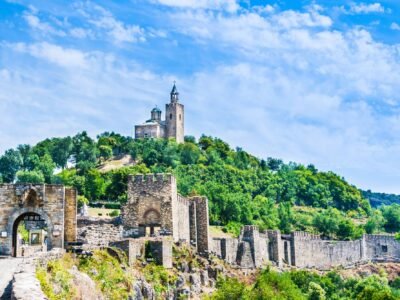
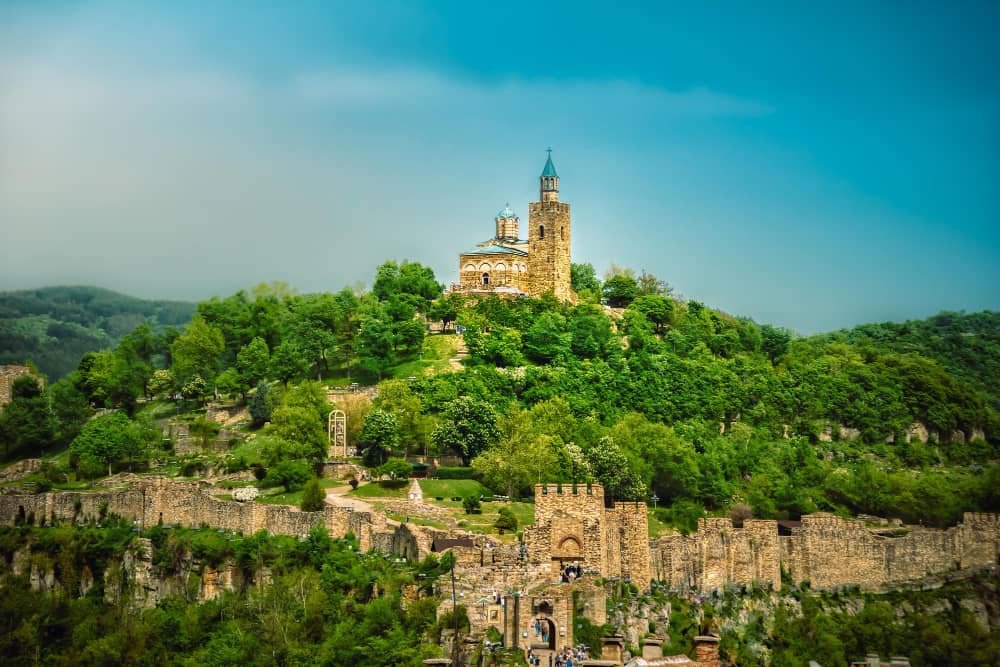
Rising above the historic city of Veliko Tarnovo, Tsarevets Fortress is one of the most important medieval historical places in Bulgaria. Its fortified hill, stone walls, towers, gates, and archaeological remains provide a fascinating glimpse into the period when Veliko Tarnovo was the political and spiritual center of the Second Bulgarian Empire.
From the late 12th through the 14th century, Tsarevets developed into the heart of medieval Tarnovo, with royal, religious, administrative, and residential buildings occupying the fortified hill.
Today, walking through the complex is one of the best ways to experience Bulgaria’s medieval history firsthand.
Explore the Medieval Stronghold
The visit begins by crossing the approach toward the fortress’s main entrance before continuing uphill through the extensive archaeological complex.
As you explore, you’ll encounter remains of defensive walls, gates, churches, residential structures, and other buildings that once formed part of the medieval capital.
The scale of Tsarevets is one of the things that makes it so impressive. Rather than visiting a single surviving castle, you’re walking through the remains of an entire fortified center that played a major role in medieval Bulgarian history.
Visit the Patriarchal Complex
At the highest point of Tsarevets stands the reconstructed Patriarchal Church, one of the fortress’s most recognizable landmarks.
The medieval patriarchal complex reflected Tarnovo’s importance as a major religious center during the Second Bulgarian Empire.
From this elevated position, visitors can also enjoy sweeping views across Veliko Tarnovo, the surrounding hills, and the winding Yantra River below.
See Baldwin’s Tower
Another well-known landmark within the fortress is Baldwin’s Tower, located along the defensive walls.
Its name is associated with Baldwin I of Constantinople, the Latin emperor captured by the forces of Bulgarian Tsar Kaloyan following the Battle of Adrianople in 1205.
Tradition connects Baldwin’s imprisonment and death with Tsarevets, although visitors should distinguish later legends and reconstructed features from what can be firmly established about the medieval site.
Learn About the Fall of Tarnovo
Tsarevets also represents one of the most consequential moments in Bulgarian medieval history.
In 1393, Tarnovo fell to Ottoman forces after a prolonged siege, marking the end of the city as the political center of the medieval Bulgarian state.
The ruins therefore tell more than the story of royal power. They also preserve the memory of the rise and eventual fall of one of medieval Bulgaria’s most important capitals.
Experience Tsarevets After Dark
Veliko Tarnovo is also known for its Sound and Light presentation at Tsarevets, which uses illumination, music, and effects to tell stories inspired by Bulgarian history.
If a performance is scheduled during your visit, seeing the fortress illuminated after dark provides a completely different perspective from exploring the ruins during the day.
Even without the show, Veliko Tarnovo is worth staying in overnight. The city’s hillside setting and views toward Tsarevets are particularly atmospheric in the evening.
For anyone interested in the medieval Bulgarian kingdoms, Tsarevets Fortress is one of the most significant historical places to visit in Bulgaria and an essential stop when exploring Veliko Tarnovo.
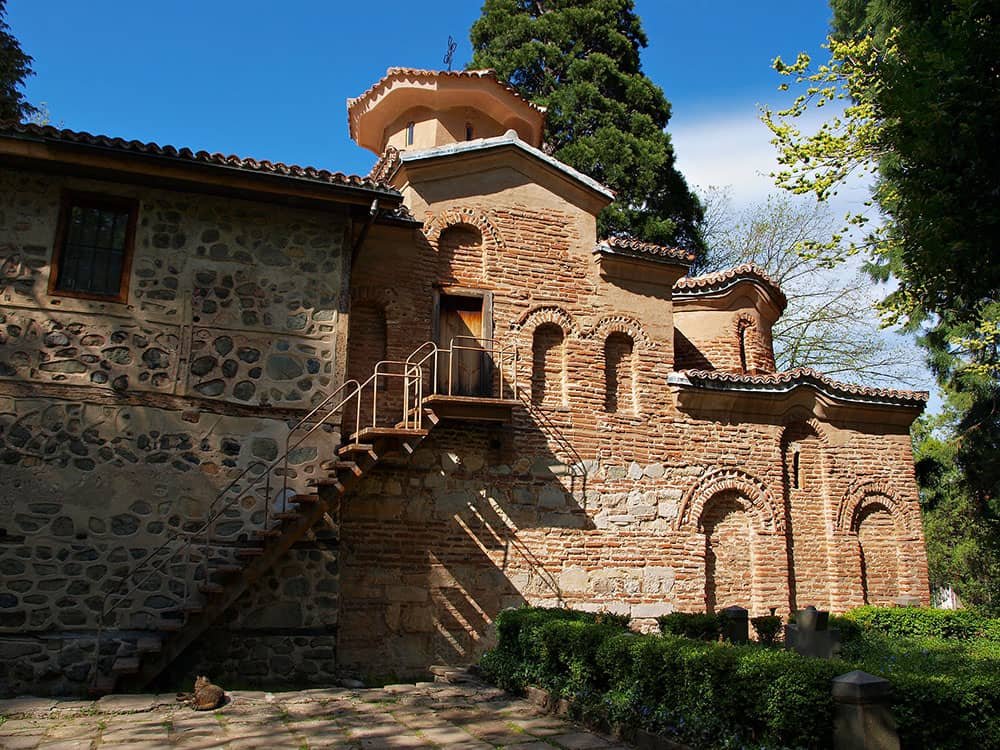
Photo: Todor Bozhinov / Wikipedia
3. Boyana Church
Located at the foot of Vitosha Mountain on the outskirts of Sofia, Boyana Church may look modest from the outside, but it contains one of Bulgaria’s greatest medieval artistic treasures.
The church developed over several centuries, with its oldest section dating from the late 10th or early 11th century. It was later enlarged during the Second Bulgarian Empire and expanded again in the 19th century, creating the three-part structure visitors see today.
Admire the Famous 1259 Frescoes
What makes Boyana Church internationally significant is its remarkable collection of medieval wall paintings.
The best-known frescoes were completed in 1259 and include biblical scenes, saints, and portraits rendered with an extraordinary degree of individuality and expression.
Among the most famous are the portraits of Sebastocrator Kaloyan and his wife Desislava, who were patrons of the church’s medieval expansion, as well as depictions of Bulgarian ruler Tsar Constantine Tikh and Tsaritsa Irina.
The faces, clothing, gestures, and expressions provide visitors with a remarkable visual connection to life and culture in medieval Bulgaria.
A UNESCO World Heritage Site
Boyana Church was inscribed on the UNESCO World Heritage List in 1979, recognizing the exceptional importance of its medieval frescoes.
Its relatively small size makes the experience very different from visiting a large cathedral or monastery. You’re entering an intimate historic space where centuries-old artwork survives only a short distance from modern Sofia.
Because preserving the interior paintings is extremely important, visitor numbers and time inside may be controlled. Photography and other rules can also change, so check the current visitor requirements before arriving.
Combine Boyana Church With Vitosha
Boyana Church’s location makes it easy to combine with other attractions around Vitosha Mountain.
Travelers can visit the church as part of a half-day excursion from central Sofia or include it alongside nearby natural and cultural attractions.
Despite being so close to the Bulgarian capital, the setting feels considerably quieter than Sofia’s busy center.
For history and art lovers, Boyana Church is one of the most important medieval historical places in Bulgaria, proving that some of the country’s greatest cultural treasures can be found inside surprisingly small buildings.
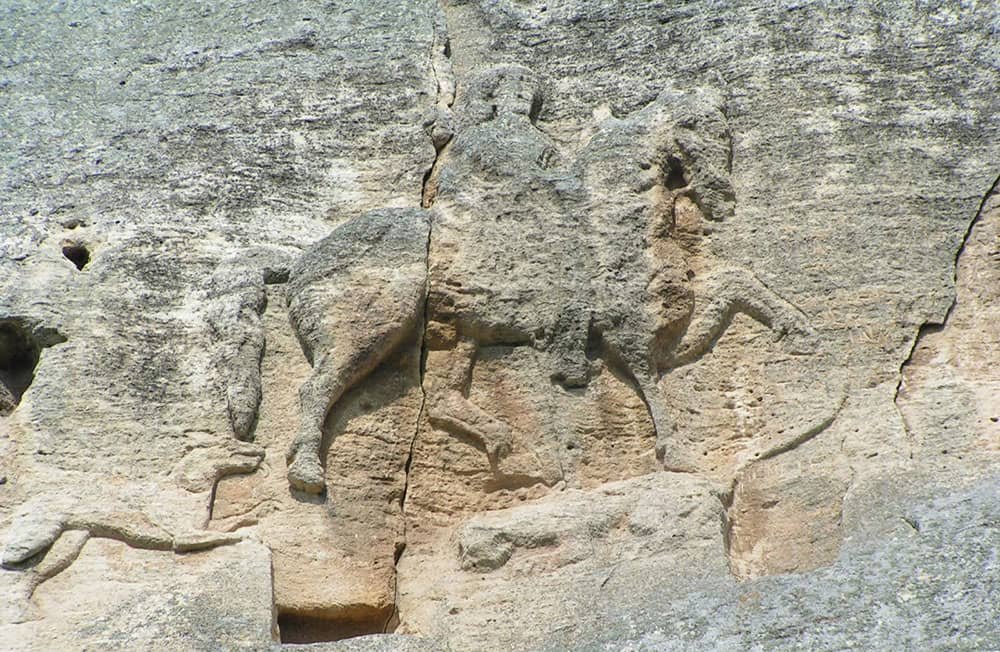
Photo: Dom2002 / Wikipedia
4. Madara Rider
Carved high into a limestone cliff in northeastern Bulgaria, the Madara Rider is one of the country’s most distinctive early medieval monuments and an important symbol of Bulgarian cultural heritage.
Located near the village of Madara, east of Shumen, the monumental rock relief depicts a horseman accompanied by a dog, with a lion beneath the horse. Unlike Bulgaria’s monasteries, fortresses, and ancient tombs, the Madara Rider was carved directly into a towering cliff face, making it unlike any other historical site on this list.
A Monument From the First Bulgarian Empire
The Madara Rider dates to the early medieval period, generally associated with the first centuries of the First Bulgarian Empire.
The exact identity of the horseman and the precise meaning of the scene remain subjects of scholarly interpretation. Rather than representing a specific ruler with certainty, the monument is best understood within the political and cultural world of early medieval Bulgaria.
Greek inscriptions carved into the rock near the relief mention important early Bulgarian rulers and events, adding considerably to the site’s historical significance.
Together, the relief and inscriptions provide valuable evidence from a formative period in Bulgarian history.
A UNESCO World Heritage Site
The Madara Rider was inscribed on the UNESCO World Heritage List in 1979.
Its importance comes not only from the scale and unusual location of the carving but also from its connection with the emergence and development of the early Bulgarian state.
The rider has since become one of Bulgaria’s most recognizable national symbols.
Explore the Madara Archaeological Reserve
A visit to Madara offers more than simply viewing the famous relief.
The surrounding archaeological reserve contains traces of human activity from different historical periods, reflecting the strategic and cultural importance of the area long before and after the carving of the rider.
The landscape itself also contributes to the experience, with dramatic cliffs, woodland, archaeological remains, and viewpoints surrounding the monument.
Because the relief is positioned high above ground level, you won’t stand directly beside the carving. Instead, it is viewed from below, where its placement in the cliff becomes part of what makes the monument so impressive.
Combine Madara With Shumen
The Madara Rider can easily become part of a broader historical journey through northeastern Bulgaria.
Nearby Shumen and the surrounding region contain several sites connected with Bulgaria’s early medieval history, making this area particularly rewarding for travelers interested in the origins of the Bulgarian state.
If your itinerary allows, consider combining Madara with other important archaeological and historical landmarks in the region rather than treating it as an isolated stop.
For travelers interested in the First Bulgarian Empire, archaeology, and unusual historic monuments, the Madara Rider is one of the most fascinating historical places in Bulgaria.
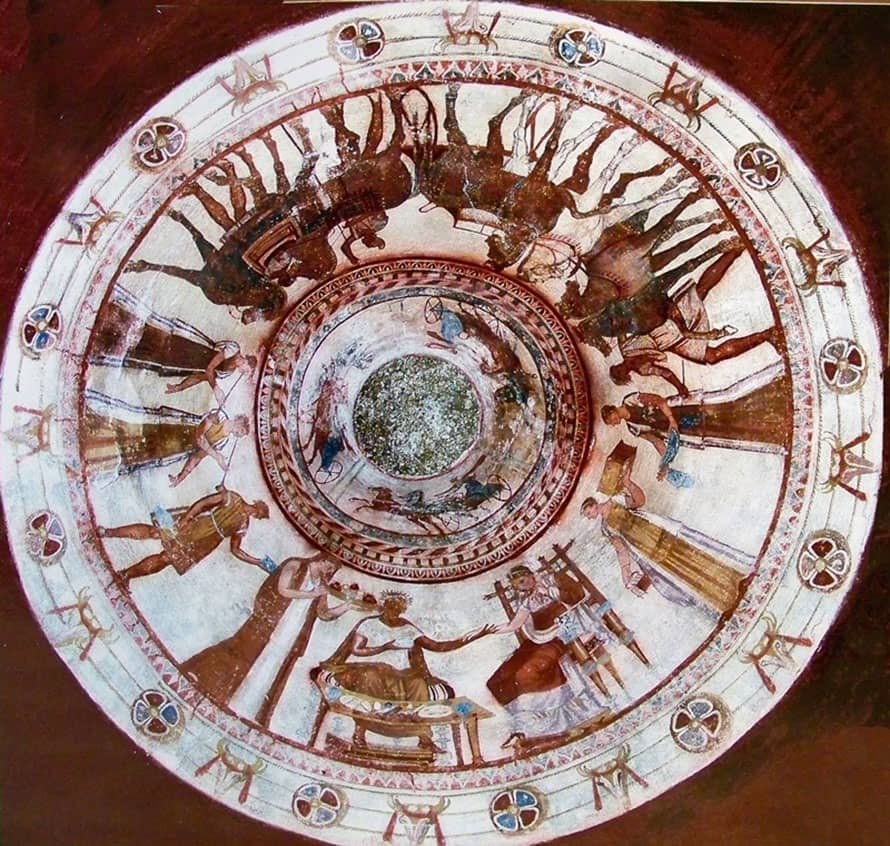
Photo: Kmrakmra / Wikipedia
5. Thracian Tomb of Kazanlak
Hidden beneath a burial mound near the town of Kazanlak, the Thracian Tomb of Kazanlak is one of Bulgaria’s most important archaeological treasures and one of the finest surviving examples of ancient Thracian funerary art.
Dating to the Hellenistic period, around the late 4th or early 3rd century BC, the tomb belonged to the world of the ancient Thracians who inhabited this part of the Balkans long before the establishment of the Bulgarian state.
Its remarkable paintings provide a rare glimpse into Thracian beliefs, ceremonies, clothing, warfare, and aristocratic life more than two thousand years ago.
Admire the Remarkable Thracian Frescoes
The tomb is particularly famous for the paintings decorating its passageway and circular burial chamber.
Among the most memorable scenes is a ceremonial banquet featuring a seated man and woman surrounded by attendants, musicians, horses, and other figures.
The paintings are extraordinary not simply because of their age, but because of the movement, expressions, clothing, and details preserved within the scenes.
Together, they provide historians and visitors with valuable insight into the artistic traditions and funerary customs of ancient Thrace.
A UNESCO World Heritage Site
The Thracian Tomb of Kazanlak was inscribed on the UNESCO World Heritage List in 1979.
Because the original paintings are extremely fragile, access to the authentic tomb is tightly restricted to protect its interior.
Visitors can instead explore a carefully created replica nearby, which reproduces the tomb’s architecture and famous frescoes while allowing the original monument to remain protected.
Although seeing a replica may initially sound less exciting, it provides a much better opportunity to examine the paintings closely without damaging one of Bulgaria’s most fragile archaeological treasures.
Explore the Valley of the Thracian Kings
The Kazanlak region contains far more Thracian heritage than this single tomb.
The surrounding area is often called the Valley of the Thracian Kings because numerous burial mounds and important archaeological discoveries have been found throughout the region.
One of the most significant nearby sites is the Golyama Kosmatka Tomb, associated with the Thracian ruler Seuthes III.
This distinction is important: the famous UNESCO-listed Kazanlak Tomb itself should not be confused with the tomb associated with Seuthes III.
Travelers with a strong interest in archaeology should therefore consider spending additional time around Kazanlak rather than visiting only the UNESCO site.
Combine History With the Rose Valley
Kazanlak is also located within Bulgaria’s famous Rose Valley, making it possible to combine archaeology with another important part of the region’s cultural identity.
Late spring and early summer are particularly associated with rose harvesting and celebrations in the area, although exact flowering conditions vary from year to year.
Even outside rose season, the surrounding mountains, Thracian sites, and museums make Kazanlak a worthwhile stop on a journey through central Bulgaria.
For anyone interested in ancient civilizations and archaeology, the Thracian Tomb of Kazanlak is one of the most significant historical places in Bulgaria and an extraordinary surviving connection to the world of ancient Thrace.
6. Ancient Plovdiv
Few places demonstrate Bulgaria’s layered history as clearly as Plovdiv. The city contains traces of Thracian settlement, impressive Roman monuments, medieval heritage, Ottoman-era architecture, and beautifully preserved buildings from the Bulgarian National Revival.
Rather than visiting a single monument, exploring historic Plovdiv allows you to walk through different periods of Bulgarian and Balkan history within a relatively compact area.
See the Ancient Roman Theatre
One of Plovdiv’s most recognizable landmarks is its Ancient Theatre, dramatically positioned on the hillside between the city’s historic neighborhoods.
Built during the Roman period, the theater once hosted public performances and other events. Today, its rows of stone seating, stage area, columns, and elevated setting make it one of Bulgaria’s most impressive surviving Roman monuments.
The theater is especially memorable because it remains part of the modern city rather than existing as an isolated archaeological site.
From the upper levels, visitors can also enjoy views across Plovdiv and toward the surrounding landscape.
Discover the Ancient Stadium of Philippopolis
Another important Roman landmark lies beneath the modern city center.
The Ancient Stadium of Philippopolis once accommodated large public spectacles and extended beneath what is now Plovdiv’s pedestrian shopping district.
Only part of the stadium is visible today, but the surviving section near Dzhumaya Square provides an excellent example of how ancient Plovdiv exists directly beneath the modern city.
Walking from a busy pedestrian street into an archaeological site dating from Roman times is one of those experiences that makes Plovdiv particularly fascinating for history lovers.
Walk Through Plovdiv’s Old Town
Continue uphill into Plovdiv’s Old Town, where cobbled streets wind between historic houses, churches, museums, galleries, and archaeological remains.
Many of the colorful houses seen today are associated with the Bulgarian National Revival, giving this part of Plovdiv a very different architectural character from the Roman monuments below.
Several historic homes have been transformed into museums and cultural spaces, allowing visitors to see decorative interiors as well as their distinctive façades.
Don’t rush through the Old Town simply to reach individual attractions. Wandering through its narrow streets is an important part of experiencing historic Plovdiv.
Explore Nebet Tepe
Above the Old Town lies Nebet Tepe, one of the hills associated with Plovdiv’s earliest settlement and long history.
Archaeological remains here reflect different periods of occupation and provide another reminder that Plovdiv’s story began long before the Roman monuments for which the city is famous.
The elevated location also offers views across parts of the city, making it an excellent place to understand Plovdiv’s geography while exploring its ancient past.
Experience Thousands of Years of History in One City
What makes Plovdiv particularly valuable for history-focused travelers is not any single monument.
It’s the combination.
You can encounter ancient archaeology, Roman architecture, historic churches, Ottoman influences, National Revival houses, and modern Bulgarian city life during the same walk.
Plovdiv also works particularly well as a base for exploring other historical attractions in southern Bulgaria, including Bachkovo Monastery, Asen’s Fortress, and archaeological sites throughout the surrounding region.
For travelers who want to experience several chapters of the country’s past without constantly moving between destinations, Plovdiv is one of the most rewarding historical places to visit in Bulgaria.
7. Ancient Nessebar
Set on a small peninsula extending into the Black Sea, Nessebar is one of Bulgaria’s most remarkable historic towns. Ancient ruins, medieval churches, traditional houses, narrow cobbled streets, and sea views are concentrated within an area that is easy to explore on foot.
The town’s history stretches back thousands of years, with Thracian settlement followed by Greek, Roman, Byzantine, medieval Bulgarian, and Ottoman periods. Each era left traces that contribute to Nessebar’s distinctive character today.
Discover Ancient Mesembria
Long before Nessebar became a popular Black Sea destination, the settlement was known in antiquity as Mesembria.
The town developed into an important Greek colony and trading center on the western Black Sea coast before later becoming part of the Roman and Byzantine worlds.
Archaeological remains scattered around the peninsula provide glimpses of these earlier periods, including sections of ancient fortifications and other structures incorporated into the historic town.
This mixture of archaeology and living streets is part of what makes Nessebar so interesting. You aren’t exploring a single fenced-off ruin but walking through a town where different historical layers remain visible side by side.
Explore Nessebar’s Medieval Churches
Nessebar is especially famous for its remarkable collection of historic churches.
Some survive largely as ruins, while others preserve significant architectural features from the Byzantine and medieval periods.
Among the best-known landmarks are the Church of Christ Pantocrator, Church of St. John the Baptist, Church of St. Stephen, and the ruins of the Church of St. Sophia, also known as the Old Metropolitan Church.
Their brickwork, decorative details, arches, and distinctive façades demonstrate why Nessebar became such an important center of Christian architecture on the Black Sea coast.
Rather than rushing between churches simply to photograph them, take time to notice how different architectural periods are represented throughout the old town.
A UNESCO World Heritage Site
The Ancient City of Nessebar was inscribed on the UNESCO World Heritage List in 1983.
Its significance comes from the extraordinary concentration of archaeological remains, religious buildings, historic architecture, and evidence of more than two millennia of settlement.
Nessebar is particularly valuable because its heritage isn’t confined to one historical era. Ancient, Byzantine, medieval, and later architectural traditions all contribute to the character of the peninsula.
Walk Through the Old Town
One of the best ways to experience Nessebar is simply to explore it on foot.
Cobbled lanes lead between churches, archaeological remains, traditional wooden houses, small squares, museums, restaurants, and viewpoints overlooking the Black Sea.
The town can become busy during the summer season because of its proximity to Bulgaria’s major coastal resorts. Visiting earlier in the morning, later in the afternoon, or outside the busiest summer weeks can provide a more relaxed experience.
If history is your priority, give yourself enough time to explore beyond the busiest restaurant and shopping streets.
Combine History With Bulgaria’s Black Sea Coast
Nessebar is an excellent example of how Bulgaria’s historical attractions can be combined with a completely different type of vacation.
You can spend part of the day exploring ancient ruins and medieval churches before enjoying the Black Sea coastline nearby.
Travelers exploring more of eastern Bulgaria can also combine Nessebar with other historic cities and archaeological attractions along the coast.
For anyone interested in archaeology, medieval architecture, or historic towns, Ancient Nessebar is one of the most important historical places in Bulgaria — and one of the few where thousands of years of history come with panoramic views of the Black Sea.
8. Explore the Ancient Rock City of Perperikon
High in the Eastern Rhodope Mountains, Perperikon is one of Bulgaria’s most fascinating archaeological sites. Instead of a single temple, tomb, or fortress, visitors explore an extensive complex of rock-cut structures, walls, stairways, chambers, religious spaces, and fortifications representing different periods of occupation.
Human activity in the area stretches back thousands of years, while the site later developed through the Thracian, Roman, Byzantine, and medieval periods.
For travelers interested in archaeology, Perperikon provides an opportunity to see how the same strategically important location was used and transformed by different cultures over centuries.
Discover Perperikon’s Thracian Past
Perperikon is particularly associated with the ancient Thracians, whose presence in the Rhodope Mountains forms an important part of the site’s story.
Archaeological discoveries have revealed rock-cut spaces and structures connected with ritual, settlement, and everyday activity.
The site’s religious significance has also generated considerable interest among historians and archaeologists, although some interpretations surrounding specific ancient rituals and sanctuaries remain debated.
For visitors, the most impressive aspect is often the scale of the rock-cut complex itself and the effort required to shape substantial portions of the hilltop landscape.
Walk Through Layers of History
Perperikon didn’t disappear with the ancient Thracians.
The location continued to develop during later historical periods, leaving evidence of Roman, Byzantine, and medieval occupation.
As you walk through the archaeological complex, you’ll encounter remains of defensive structures, buildings, passages, stairways, and other features carved into or constructed upon the rocky terrain.
This layering makes Perperikon particularly valuable for understanding how important locations in the Balkans were repeatedly occupied and adapted as political powers, religions, and societies changed.
Climb to the Archaeological Complex
Visiting Perperikon requires more walking than many of the historical places on this list.
The archaeological remains occupy elevated, uneven terrain, so comfortable footwear is important. During warmer months, bring water and sun protection, particularly if you’re exploring around the middle of the day.
The climb is part of the experience.
Once higher on the site, the surrounding Rhodope Mountain landscape helps explain why this location held such strategic and cultural importance.
Allow enough time to explore rather than treating Perperikon as a quick roadside stop.
Combine Perperikon With the Eastern Rhodopes
Perperikon’s location near Kardzhali makes it a natural addition to a longer journey through the Eastern Rhodope Mountains.
The region contains additional archaeological sites, rock formations, reservoirs, historic villages, and cultural attractions that are often overlooked by travelers following Bulgaria’s more familiar Sofia–Plovdiv–Black Sea routes.
That relative isolation is part of Perperikon’s appeal.
Instead of exploring ancient ruins surrounded by a modern city, you’re walking through a large archaeological landscape overlooking the Rhodope Mountains.
For history lovers willing to venture beyond Bulgaria’s most famous tourist route, Perperikon is one of the country’s most intriguing ancient and medieval historical sites.
9. Discover the History of Bachkovo Monastery
Set near the northern slopes of the Rhodope Mountains, Bachkovo Monastery is one of Bulgaria’s oldest and most important Orthodox monasteries. Located south of Plovdiv near Asenovgrad, it combines centuries of religious history, architecture, sacred art, and mountain scenery.
The monastery was founded in 1083 by Gregory Pakourianos, a prominent military commander of Georgian origin in the Byzantine Empire. Its history reflects the cultural connections that once linked the Balkans, Byzantium, and Georgia.
Over the centuries, Bachkovo developed into an important center of Orthodox Christianity and remains an active monastery today.
Discover the Medieval Ossuary
One of the most historically significant structures associated with Bachkovo Monastery is its medieval ossuary, which survives from the monastery’s early period.
Located a short distance from the main complex, the two-story building was constructed as a burial chapel and contains important medieval wall paintings.
Its architecture and surviving artwork provide a valuable connection to the monastery’s earliest centuries and distinguish Bachkovo from many other religious sites in Bulgaria.
Explore the Main Monastery Complex
Inside the monastery walls, visitors can explore courtyards surrounded by residential buildings, churches, arcades, and religious artwork.
The principal church, the Cathedral Church of the Dormition of the Mother of God, stands at the heart of the complex and contains richly decorated interiors.
Bachkovo is also associated with a revered icon of the Virgin Mary, which has long contributed to the monastery’s importance as a destination for Orthodox pilgrims.
Take time to look beyond the main church. Frescoes, architectural details, smaller religious spaces, and the surrounding courtyards reveal different periods in the monastery’s long history.
Remember That Bachkovo Is Still an Active Monastery
Although Bachkovo is an important historical attraction, it remains a functioning religious site.
Visitors should dress respectfully, speak quietly around places of worship, and follow posted rules regarding photography and access.
Religious services and pilgrimage activity can also affect what areas are accessible during your visit.
Approaching the monastery as both a historic landmark and a living place of faith makes the experience much more meaningful.
Combine Bachkovo With Asen’s Fortress
Bachkovo’s location makes it particularly easy to combine with another important Bulgarian landmark: Asen’s Fortress.
Perched dramatically above the surrounding landscape near Asenovgrad, the fortress preserves medieval remains and the historic Church of the Holy Mother of God of Petrich.
Visiting both sites creates an excellent history-focused day trip from Plovdiv, combining medieval fortifications, Orthodox heritage, and Rhodope Mountain scenery.
You can also spend additional time exploring Asenovgrad and the surrounding region if you’re traveling through southern Bulgaria by car.
Enjoy the Rhodope Mountain Setting
Part of Bachkovo Monastery’s appeal comes from its location.
Forested mountain slopes surround the complex, creating a very different atmosphere from Bulgaria’s urban historical sites.
Instead of rushing back to Plovdiv immediately after visiting the monastery, consider allowing some extra time to enjoy the surrounding landscape and nearby attractions.
For travelers exploring southern Bulgaria, Bachkovo Monastery is one of the country’s most significant historical and religious places and an excellent companion to the ancient heritage of nearby Plovdiv.
10. Remember Bulgaria’s Fight for Freedom at Shipka Monument
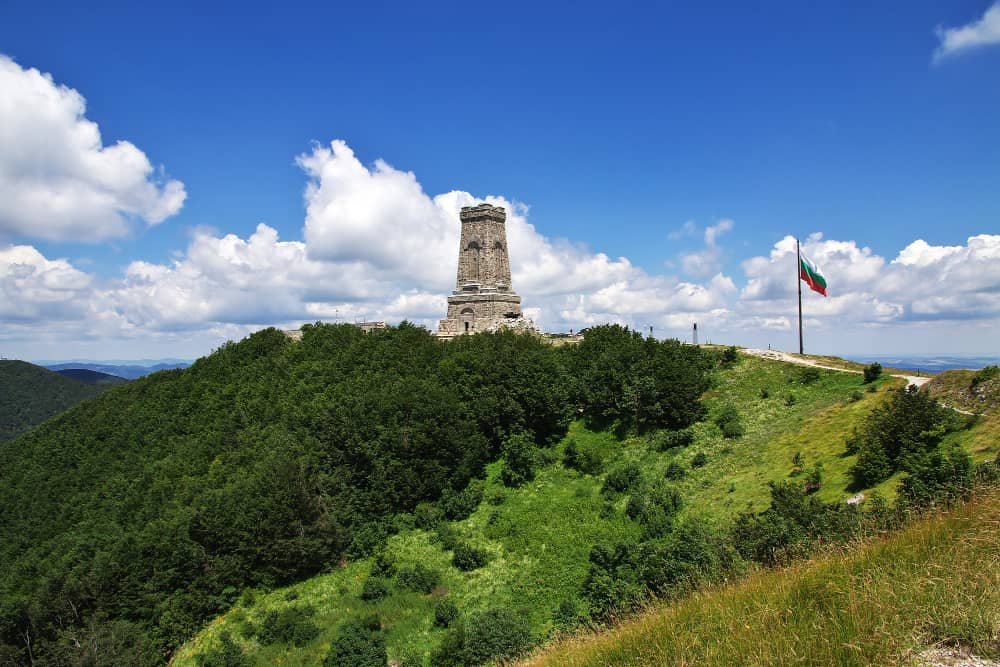
Standing high above Shipka Pass in the Balkan Mountains, the Monument to Freedom is one of Bulgaria’s most powerful historical landmarks. The monument commemorates the soldiers and Bulgarian volunteers who fought in the battles around Shipka Pass during the Russo-Turkish War of 1877–1878.
The battles fought here became deeply connected with Bulgaria’s national memory because control of the mountain pass was strategically important during the war that ultimately led to the reestablishment of Bulgarian statehood after centuries of Ottoman rule.
Today, the combination of history, mountain scenery, and panoramic views makes Shipka one of the most memorable historical places to visit in Bulgaria.
Learn About the Battles of Shipka Pass
Several major battles took place around Shipka Pass in 1877, with Russian forces and Bulgarian volunteers defending strategic positions against Ottoman troops.
The fighting was extremely difficult, taking place across steep mountain terrain under challenging conditions.
The defense of the pass became one of the best-known episodes of the war in Bulgarian historical memory, particularly because of the role played by the Bulgarian volunteers known as the Opalchentsi.
Visiting Shipka provides important geographical context that is difficult to appreciate from photographs alone. Standing high in the mountains makes it much easier to understand why controlling this route through the Balkan range was so strategically significant.
Climb to the Monument to Freedom
The imposing Monument to Freedom was officially opened in 1934 and rises prominently above the surrounding mountains.
Visitors approach the monument by climbing a long staircase leading toward the entrance.
One of its most recognizable features is the enormous stone lion positioned above the main entrance, a powerful symbol closely associated with Bulgaria.
Inside, museum displays preserve weapons, military objects, photographs, documents, and other materials connected with the battles and the Russo-Turkish War.
Climbing through the monument also leads to elevated viewpoints overlooking the surrounding landscape.
Take in the Views From Shipka Pass
The setting is one of the reasons Shipka leaves such a strong impression.
From the monument and surrounding heights, expansive views stretch across the Balkan Mountains and valleys of central Bulgaria.
Weather can change quickly at this elevation, and conditions may be significantly cooler or windier than in nearby towns.
Bring appropriate clothing and comfortable shoes, especially if you plan to spend time exploring the surrounding area rather than simply visiting the monument.
Visit Shipka Memorial Church
If you have additional time, combine the monument with the nearby Shipka Memorial Church, also known as the Church of the Nativity.
Its colorful exterior, golden domes, and historical connection with the Russo-Turkish War make it a natural addition to a visit to Shipka Pass.
Together, the church and Monument to Freedom provide different perspectives on how the events of 1877–1878 have been commemorated in Bulgaria.
Combine Shipka With Kazanlak
Shipka is also conveniently located near Kazanlak and the Valley of the Thracian Kings.
That makes it possible to experience two completely different periods of Bulgarian history within the same part of the country.
You can explore ancient Thracian tombs around Kazanlak and then travel into the Balkan Mountains to learn about events that shaped modern Bulgaria.
For travelers interested in understanding Bulgaria beyond its ancient ruins and medieval fortresses, Shipka Monument is an essential historical place to visit and a fitting final stop on this journey through thousands of years of Bulgarian history.
More Historical Places in Bulgaria Worth Visiting
Bulgaria has far more than ten historical landmarks worth exploring. If you’re planning a longer trip or have a particular interest in archaeology, medieval history, monasteries, or the First Bulgarian Empire, consider adding some of these places to your itinerary.
Pliska
History enthusiasts exploring northeastern Bulgaria should make time for Pliska, the first capital of the First Bulgarian Empire.
The archaeological reserve preserves the remains of a once-important political center, including fortifications, palace complexes, and other structures associated with the early Bulgarian state.
One of the most impressive landmarks is the Great Basilica of Pliska, a monumental early medieval Christian complex connected with the period following Bulgaria’s conversion to Christianity.
Pliska combines particularly well with the Madara Rider and nearby Preslav for travelers interested in the beginnings of medieval Bulgaria.
Veliki Preslav
After Pliska, Veliki Preslav became another major capital of the First Bulgarian Empire and developed into an important political, religious, and cultural center.
Today, visitors can explore archaeological remains associated with the medieval city and learn about a period when Bulgarian literature, art, architecture, and religious culture flourished.
The archaeological museum helps provide context for the ruins and displays objects discovered during excavations in the area.
Combining Pliska, Madara, and Veliki Preslav creates one of the best history-focused routes in northeastern Bulgaria.
Belogradchik Fortress
Built dramatically into the unusual rock formations of northwestern Bulgaria, Belogradchik Fortress combines military history with one of the country’s most recognizable landscapes.
Fortifications developed here over different historical periods, taking advantage of the naturally defensive rock formations surrounding the site.
The fortress was expanded and modified over centuries, including during Roman and Ottoman periods.
Today, visitors can climb through the fortifications while enjoying spectacular views across the surrounding Belogradchik Rocks.
Varna Archaeological Museum and Varna Necropolis
The Varna Archaeological Museum is one of the most important museums for understanding Bulgaria’s ancient past.
Its collections span multiple historical periods, but one of its greatest treasures is associated with the prehistoric Varna Necropolis.
Excavations at the necropolis uncovered extraordinary prehistoric burials and gold artifacts dating to the fifth millennium BC. The discoveries provide fascinating evidence of the sophisticated societies that developed around the western Black Sea thousands of years before the Thracian and Roman periods.
Travelers interested in archaeology should make the museum a priority when visiting Varna.
Golyama Kosmatka and the Tomb of Seuthes III
Near Kazanlak, Golyama Kosmatka is one of the most important archaeological sites in the Valley of the Thracian Kings.
The monumental tomb is associated with the Thracian ruler Seuthes III, whose kingdom flourished during the Hellenistic period.
Archaeological discoveries from the site included remarkable objects connected with Thracian royal culture.
Visiting Golyama Kosmatka alongside the UNESCO-listed Thracian Tomb of Kazanlak provides a much broader understanding of the extraordinary archaeological heritage surrounding the Rose Valley.
Asen’s Fortress
Perched high above the landscape near Asenovgrad, Asen’s Fortress occupies a strategic position overlooking the surrounding valleys and approaches to the Rhodope Mountains.
The location was used across different historical periods, but it is particularly associated with medieval Bulgaria.
Its best-known surviving structure is the Church of the Holy Mother of God of Petrich, dramatically positioned above the rocky landscape.
Asen’s Fortress is easy to combine with nearby Bachkovo Monastery, making the two sites an excellent day trip from Plovdiv.
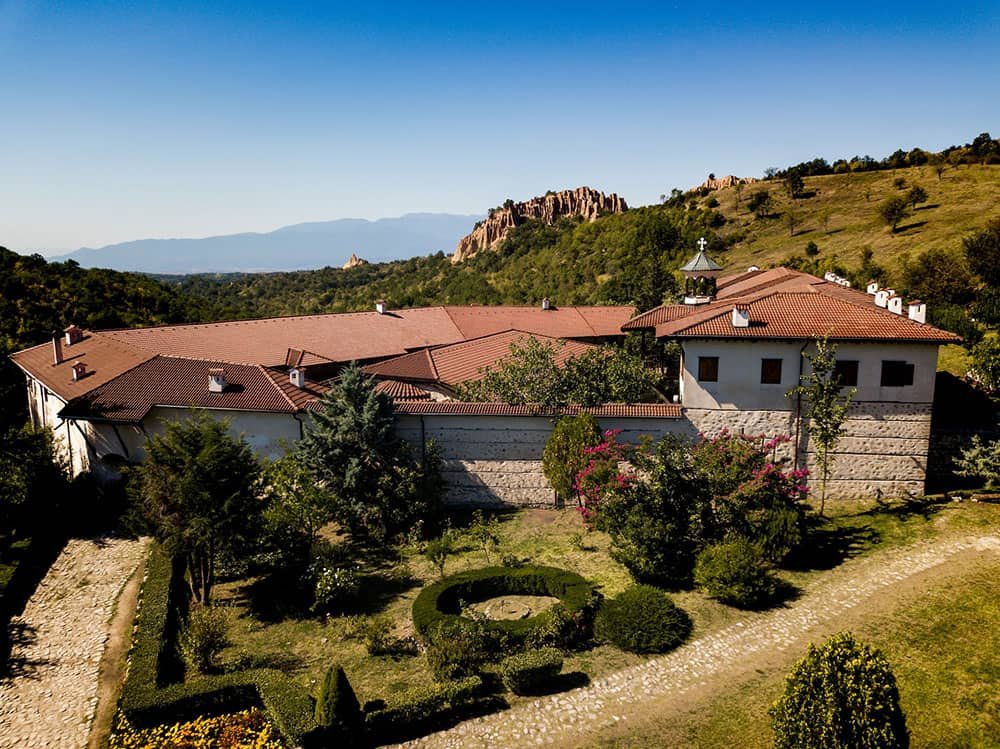
Photo by Yuliyan Grozdev on Unsplash
Rozhen Monastery
Located near Melnik in southwestern Bulgaria, Rozhen Monastery is one of the country’s important historic Orthodox monasteries.
The monastery complex developed over centuries and preserves religious architecture, woodcarving, icons, and wall paintings associated with different periods of its history.
Its peaceful location near the distinctive landscapes surrounding Melnik makes it particularly appealing as part of a longer journey through southwestern Bulgaria.
You can easily combine the monastery with the historic town of Melnik and the nearby Melnik Pyramids. This is also a much better place to mention the pyramids than including the geological formations themselves among Bulgaria’s Top 10 historical sites.
Koprivshtitsa
For a completely different chapter of Bulgarian history, visit Koprivshtitsa in the Sredna Gora Mountains.
The town is known for its colorful Bulgarian National Revival architecture and its close connection with the April Uprising of 1876, a pivotal event in Bulgaria’s struggle for liberation from Ottoman rule.
Historic houses associated with important Bulgarian revolutionaries and cultural figures now operate as museums, while cobbled streets, stone bridges, and traditional architecture give the town a remarkably distinctive character.
Koprivshtitsa is particularly rewarding for travelers who want to understand the Bulgarian National Revival and the events leading toward the restoration of Bulgarian statehood.
Don’t Limit Your Trip to the Most Famous Sites
These additional destinations show just how difficult it is to reduce Bulgaria’s historical heritage to a Top 10 list.
Travelers interested in ancient civilizations can concentrate on Thracian and prehistoric archaeology, while medieval-history enthusiasts can build an entire itinerary around Pliska, Preslav, Madara, Veliko Tarnovo, and Bulgaria’s monasteries.
Others may prefer the National Revival period, exploring towns such as Koprivshtitsa before continuing toward Shipka and other landmarks associated with Bulgaria’s struggle for liberation.
Whichever period interests you most, exploring beyond the country’s most famous attractions can reveal some of the most fascinating historical places in Bulgaria.
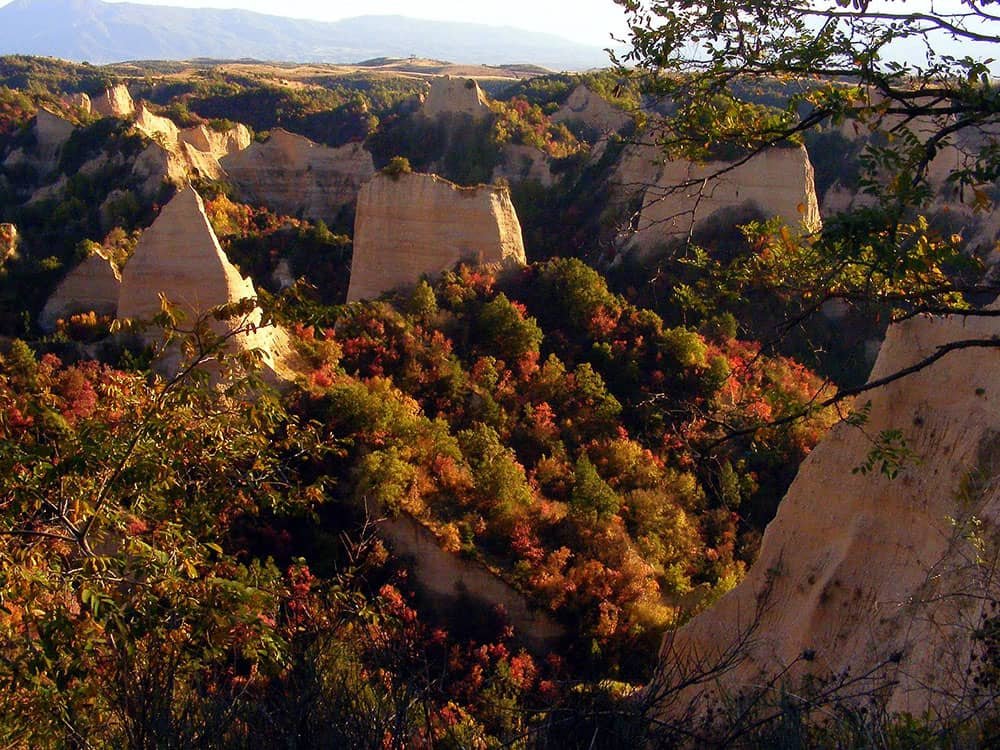
Photo: Iliana Teneva / Wikipedia
UNESCO Historical Sites in Bulgaria
Several of the historical places in this guide have been recognized by UNESCO for their outstanding cultural importance, making them especially valuable stops for travelers interested in Bulgaria’s archaeological, artistic, and architectural heritage.
The UNESCO-listed historical and cultural sites featured in this guide include:
- Rila Monastery – Recognized for its exceptional importance to Bulgarian spiritual and cultural history, as well as its architecture and religious art.
- Boyana Church – Famous for its extraordinary medieval frescoes, particularly the remarkable paintings completed in 1259.
- Madara Rider – A monumental early medieval rock relief associated with the formative centuries of the Bulgarian state.
- Thracian Tomb of Kazanlak – An ancient Thracian burial monument celebrated for its remarkably preserved funerary paintings.
- Ancient City of Nessebar – A historic Black Sea settlement preserving archaeological remains, medieval churches, and architectural evidence from multiple civilizations.
These sites demonstrate just how diverse Bulgaria’s UNESCO-recognized heritage can be. Within the same country, you can encounter an ancient Thracian tomb, an early medieval rock carving, a small church filled with exceptional frescoes, a major Orthodox monastery, and an entire historic town shaped by more than two thousand years of settlement.
Bulgaria’s UNESCO Heritage Goes Beyond This List
These aren’t the only UNESCO World Heritage Sites in Bulgaria.
Other internationally recognized cultural landmarks include the Rock-Hewn Churches of Ivanovo and the Thracian Tomb of Sveshtari, both of which are excellent additions for travelers building a more archaeology-focused itinerary.
Bulgaria also has UNESCO-recognized natural heritage, showing that the country’s international significance extends beyond archaeology and historic architecture.
If UNESCO sites are a major part of your travel plans, consider building your route around several of them rather than visiting each as an isolated attraction. Sofia, the Rila Mountains, central Bulgaria, northeastern Bulgaria, and the Black Sea coast can each reveal a very different chapter of the country’s history.
Together, Bulgaria’s UNESCO sites help tell a story spanning ancient Thrace, medieval Bulgarian culture, Orthodox Christianity, and centuries of Black Sea history.
Best Historical Places in Bulgaria by Region
Bulgaria may look relatively compact on a map, but its historical attractions are spread across several regions. Grouping nearby sites together can save considerable travel time and make it easier to experience several periods of Bulgarian history during the same trip.
Here are some of the best historical places to combine by region.
Sofia and Western Bulgaria
Sofia is a convenient starting point for exploring several important historical landmarks in western Bulgaria.
Begin with Boyana Church, located on the outskirts of the capital at the foot of Vitosha Mountain. From Sofia, you can also make a day trip south to Rila Monastery, combining one of Bulgaria’s greatest medieval artistic treasures with its most famous Orthodox monastery.
Travelers heading farther southwest can continue toward Melnik and Rozhen Monastery for a completely different combination of historic architecture, religious heritage, and mountain scenery.
Good combination: Sofia → Boyana Church → Rila Monastery
Central Bulgaria and the Rose Valley
Central Bulgaria offers an exceptional mixture of Thracian archaeology, medieval history, and landmarks connected with the country’s liberation.
Around Kazanlak, explore the Thracian Tomb of Kazanlak and other archaeological sites throughout the Valley of the Thracian Kings, including Golyama Kosmatka.
From there, continue toward Shipka Pass to visit the Monument to Freedom and nearby Shipka Memorial Church.
Travelers with additional time can continue north toward Veliko Tarnovo, where Tsarevets Fortress reveals another major chapter of Bulgarian history.
Good combination: Kazanlak → Valley of the Thracian Kings → Shipka → Veliko Tarnovo
Plovdiv and the Rhodope Mountains
Plovdiv makes an excellent base for travelers interested in combining ancient history with medieval and religious landmarks.
Spend at least a day exploring Ancient Plovdiv, including the Roman Theatre, Ancient Stadium, Old Town, and archaeological remains around the city’s historic hills.
From Plovdiv, head south toward Asen’s Fortress and Bachkovo Monastery. Both can comfortably fit into the same excursion and provide a striking contrast with Plovdiv’s Roman heritage.
Travelers willing to venture deeper into the Rhodopes can continue east toward Perperikon, one of Bulgaria’s most fascinating archaeological complexes.
Good combination: Plovdiv → Asen’s Fortress → Bachkovo Monastery → Perperikon
Northeastern Bulgaria
Northeastern Bulgaria is particularly important for understanding the First Bulgarian Empire.
The region contains Pliska, Bulgaria’s first medieval capital, along with Veliki Preslav, which later became another major political and cultural center.
Nearby, the Madara Rider provides one of the country’s most distinctive surviving monuments from the early medieval period.
These destinations work particularly well together for travelers who want to move beyond individual castles and understand the development of the early Bulgarian state.
Good combination: Pliska → Madara Rider → Veliki Preslav → Shumen
Bulgaria’s Black Sea Coast
The Black Sea coast isn’t only about beaches and summer resorts.
In the north, Varna Archaeological Museum contains extraordinary discoveries associated with the prehistoric Varna Necropolis and other periods of regional history.
Farther south, Ancient Nessebar offers one of Bulgaria’s best combinations of archaeology, medieval churches, traditional architecture, and coastal scenery.
Travelers exploring more of the coast will encounter additional museums, ancient settlements, churches, and archaeological sites that reveal the Black Sea’s importance as a cultural and trading crossroads.
Good combination: Varna → coastal historical sites → Nessebar
Build Your Route Around the History That Interests You
You don’t need to cover every region during one trip.
If medieval Bulgarian history is your main interest, focus on Veliko Tarnovo, Pliska, Preslav, Madara, and the country’s monasteries.
For ancient history and archaeology, prioritize Kazanlak, the Valley of the Thracian Kings, Plovdiv, Perperikon, and Varna’s prehistoric collections.
Travelers interested in the Bulgarian National Revival and liberation period can instead combine Koprivshtitsa, Shipka, historic towns, monasteries, and museums associated with the revolutionary movement.
Grouping historical places geographically gives you more time at each destination and less time driving across the country simply to check another landmark off your list.
Best Time to Visit Bulgaria’s Historical Sites
Bulgaria’s historical attractions can be visited throughout the year, but spring and autumn are generally the most comfortable seasons for a history-focused trip. Temperatures are usually better suited to walking through archaeological sites, climbing fortress hills, and exploring historic towns than during the hottest part of summer.
The best season also depends on which parts of Bulgaria you plan to visit.
Spring: April to May
Spring is an excellent time for exploring historical places across Bulgaria.
Temperatures become milder, landscapes turn green, and many outdoor archaeological sites are more comfortable to explore before the summer heat arrives.
This can be a particularly good season for Plovdiv, Veliko Tarnovo, Rila Monastery, Bachkovo Monastery, Boyana Church, and road trips through central and southern Bulgaria.
Mountain weather can still be unpredictable, especially earlier in spring, so bring layers when visiting higher-elevation destinations such as Rila or Shipka Pass.
Best for: Archaeological sites, monasteries, historic cities, road trips, and comfortable sightseeing
Summer: June to August
Summer provides long daylight hours and makes it easy to combine historical sightseeing with mountains or Bulgaria’s Black Sea coast.
However, exposed archaeological sites such as Perperikon, Plovdiv’s ancient monuments, and some Thracian sites can become hot during the middle of the day.
Whenever possible, visit outdoor ruins in the morning or later in the afternoon and carry water and sun protection.
Summer is also the busiest season around popular Black Sea destinations. Nessebar can become particularly crowded because of its proximity to major beach resorts.
If history is your main reason for visiting, exploring the Old Town earlier in the morning can provide a more enjoyable experience.
Best for: Long road trips, combining history with the Black Sea coast, mountain destinations, and extended sightseeing days
Autumn: September to October
Autumn is another excellent season for a historical trip through Bulgaria.
September often provides warm days without the height of the summer heat, while October can bring beautiful autumn colors to mountain regions and historic towns.
This is an especially attractive time for routes through Veliko Tarnovo, Shipka, Kazanlak, Plovdiv, the Rhodope Mountains, and Rila.
The combination of cooler temperatures and colorful landscapes can make outdoor fortresses, monasteries, and archaeological sites particularly enjoyable.
Best for: Road trips, photography, fortresses, monasteries, archaeological sites, and mountain scenery
Winter: November to March
Winter can still work well for city museums, churches, and some historic attractions, but it requires more flexibility.
Snow, ice, shorter daylight hours, and mountain weather can affect travel to higher-elevation destinations such as Rila Monastery and Shipka Pass.
Outdoor archaeological sites may also be less enjoyable during cold or wet conditions.
On the other hand, historic towns and monasteries can be atmospheric in winter, particularly when covered in snow and visited outside the busiest tourist periods.
Always check current opening hours and road conditions before traveling to remote or mountain locations.
Best for: Museums, churches, quieter city sightseeing, and winter atmosphere
What Is the Best Month for a Bulgaria History Trip?
For most travelers, May, June, September, and early October provide an excellent balance of comfortable temperatures, long enough days, and good conditions for exploring both indoor and outdoor historical attractions.
If you’re planning a road trip covering several regions, May or September would be particularly strong choices.
You’ll avoid some of the most intense summer heat while still having good opportunities to explore monasteries, ancient ruins, medieval fortresses, historic towns, and mountain landmarks.
Whatever month you choose, check the current opening hours for individual attractions before traveling. Smaller museums, archaeological sites, and religious landmarks may have seasonal schedules that differ from those of Bulgaria’s major tourist attractions.
Tips for Visiting Historical Places in Bulgaria
Exploring Bulgaria’s historical sites is relatively straightforward, but a little planning can make a major difference. Ancient ruins, mountain monasteries, medieval fortresses, and archaeological reserves all require slightly different preparation.
Consider Renting a Car
A rental car provides the greatest flexibility if you want to visit historical places across several regions of Bulgaria.
Major cities such as Sofia, Plovdiv, Varna, and Veliko Tarnovo can be reached by public transportation, but many monasteries, archaeological sites, fortresses, and rural attractions are easier to combine by car.
Driving is particularly useful for routes such as Kazanlak–Shipka, Plovdiv–Asen’s Fortress–Bachkovo Monastery, and Pliska–Madara–Veliki Preslav.
Don’t underestimate driving times simply because Bulgaria looks compact on a map. Mountain roads, traffic, construction, and stops along the way can make journeys longer than expected.
Check Opening Hours Before You Go
Opening hours can vary considerably between museums, archaeological reserves, monasteries, and seasonal attractions.
Smaller historical sites may operate reduced hours outside the main tourist season, while access to certain churches or religious spaces may change during services and holidays.
Check the official information for important attractions shortly before your visit rather than relying entirely on opening times listed in older travel articles.
Carry Some Bulgarian Lev
Cards are commonly accepted at many major attractions and businesses, but carrying some Bulgarian lev (BGN) can still be useful when visiting smaller museums, parking areas, rural attractions, local restaurants, and shops.
Entrance fees vary considerably depending on the site, and some attractions charge separately for museums, guided tours, or additional areas within a complex.
Wear Comfortable Shoes
Many of Bulgaria’s most interesting historical places weren’t designed with modern sightseeing in mind.
At Tsarevets, Perperikon, Asen’s Fortress, Madara, and other archaeological or hilltop sites, you may encounter steep paths, stone steps, uneven surfaces, and exposed terrain.
Comfortable walking shoes with good grip are much more practical than footwear chosen only for city sightseeing.
Bring Water and Sun Protection
Outdoor archaeological sites can become very hot during summer, particularly when there is little shade.
Carry water, sunscreen, and a hat when exploring places such as Perperikon, Thracian archaeological sites, fortresses, and ancient ruins.
Whenever possible, schedule exposed sites for the morning or later afternoon rather than the hottest part of the day.
Respect Monasteries and Churches
Rila Monastery, Bachkovo Monastery, Boyana Church, and Bulgaria’s many smaller religious sites aren’t simply historical attractions. Many remain active places of worship.
Dress appropriately, keep your voice low, and follow posted rules regarding photography and access.
Some sacred spaces may restrict photography entirely, while others may have different requirements for interiors, frescoes, icons, or religious services.
Consider a Guide for Archaeological Sites
Ruins can be fascinating to look at, but their significance isn’t always obvious without context.
At archaeological sites such as Perperikon, Pliska, Preslav, and the Thracian complexes around Kazanlak, a knowledgeable guide or good interpretive material can help explain what you’re actually seeing.
A guide can be especially worthwhile if Bulgarian history is one of the main reasons for your trip.
Don’t Touch Ancient Frescoes or Artifacts
Sites such as Boyana Church and Bulgaria’s Thracian tombs preserve extremely fragile artwork.
Follow barriers and visitor instructions, avoid touching historic surfaces, and never ignore photography restrictions simply to get a better picture.
These rules exist to protect cultural treasures that have survived for centuries or even thousands of years.
Leave Enough Time for Museums
Don’t overlook museums while concentrating on ruins and monuments.
Museums in Varna, Plovdiv, Sofia, Kazanlak, Veliko Tarnovo, and other historical centers can provide the context needed to understand archaeological sites you visit elsewhere in the country.
They are also particularly useful during very hot summer afternoons or poor weather.
Group Nearby Historical Sites Together
One of the easiest ways to improve a Bulgaria history itinerary is to organize attractions geographically.
Instead of driving across the country to see individual landmarks, create small historical clusters:
Sofia → Boyana Church → Rila Monastery
Plovdiv → Asen’s Fortress → Bachkovo Monastery
Kazanlak → Thracian sites → Shipka
Pliska → Madara Rider → Veliki Preslav
Grouping attractions this way reduces unnecessary travel and gives you more time to actually explore each destination.
Don’t Try to See Everything in One Trip
Bulgaria’s historical heritage spans prehistoric civilizations, ancient Thrace, the Roman world, medieval Bulgarian empires, Ottoman rule, the National Revival, and modern history.
Trying to cover every major site in a few days usually means spending too much of the trip traveling between them.
Choose the periods and regions that interest you most and explore them properly. You can always leave a few historical places in Bulgaria for another trip.
Frequently Asked Questions About Historical Places in Bulgaria
What is the most famous historical place in Bulgaria?
Rila Monastery is arguably Bulgaria’s most internationally recognized historical and cultural landmark. Founded around the spiritual legacy of St. Ivan of Rila, the monastery has played an important role in Bulgarian religious and cultural history and is recognized as a UNESCO World Heritage Site.
Other famous historical attractions include Tsarevets Fortress, Boyana Church, the Madara Rider, Ancient Nessebar, and the Thracian Tomb of Kazanlak.
What are the best historical places to visit in Bulgaria?
For a first history-focused trip, some of the best places to visit include Rila Monastery, Tsarevets Fortress, Boyana Church, Ancient Plovdiv, Ancient Nessebar, the Madara Rider, and the Thracian Tomb of Kazanlak.
Travelers with additional time should consider Perperikon, Bachkovo Monastery, Pliska, Veliki Preslav, Koprivshtitsa, and the archaeological sites throughout the Valley of the Thracian Kings.
What is the oldest historical site in Bulgaria?
There isn’t one simple answer because Bulgaria contains archaeological evidence from numerous prehistoric settlements dating back thousands of years.
One of the country’s most extraordinary prehistoric discoveries is the Varna Necropolis, dating to the fifth millennium BC and famous for exceptionally early worked gold artifacts.
Other ancient sites throughout Bulgaria preserve evidence of Thracian settlements and cultures that existed long before the Roman period and the establishment of the Bulgarian state.
What is the best place in Bulgaria for Roman history?
Plovdiv is one of the best destinations for travelers interested in Bulgaria’s Roman heritage.
The city preserves impressive remains from ancient Philippopolis, including the Ancient Theatre and portions of the Ancient Stadium, while additional archaeological remains can be found throughout the historic center.
Roman heritage can also be explored at archaeological sites elsewhere in Bulgaria, including Sofia, Hisarya, and along the former Roman frontier.
What is the best place to learn about medieval Bulgarian history?
Veliko Tarnovo and Tsarevets Fortress are essential for understanding the Second Bulgarian Empire, while northeastern Bulgaria is particularly important for the First Bulgarian Empire.
A trip combining Pliska, Madara Rider, Veliki Preslav, and Shumen provides an excellent introduction to the early medieval Bulgarian state.
Rila and Bachkovo monasteries add another perspective by showing the importance of Orthodox Christianity and monastic culture in Bulgarian history.
Which historical places in Bulgaria are UNESCO World Heritage Sites?
Several sites featured in this guide are UNESCO World Heritage properties, including Rila Monastery, Boyana Church, the Madara Rider, the Thracian Tomb of Kazanlak, and the Ancient City of Nessebar.
Other UNESCO-listed cultural sites in Bulgaria include the Thracian Tomb of Sveshtari and the Rock-Hewn Churches of Ivanovo.
Is Plovdiv worth visiting for history?
Absolutely. Plovdiv is one of Bulgaria’s best destinations for history lovers because several historical periods can be experienced within the same city.
Visitors can explore Roman monuments, archaeological remains, historic churches, Ottoman-era influences, and colorful Bulgarian National Revival houses while walking through the center and Old Town.
Plovdiv also makes an excellent base for visiting nearby Asen’s Fortress and Bachkovo Monastery.
Is Veliko Tarnovo worth visiting?
Yes. Veliko Tarnovo is one of Bulgaria’s most historically significant cities and was an important capital during the Second Bulgarian Empire.
Tsarevets Fortress is the main historical attraction, but the city’s hillside setting, historic neighborhoods, museums, churches, and views across the Yantra River make it worth spending more than a few hours there.
How many days do you need to see Bulgaria’s historical sites?
For a first trip focused on history, 7 to 10 days allows you to combine several major destinations without spending the entire vacation driving.
A route might include Sofia and Boyana Church, Rila Monastery, Plovdiv, Bachkovo Monastery, Kazanlak and Shipka, followed by Veliko Tarnovo.
With two weeks, you can add northeastern Bulgaria, the Black Sea coast, the Rhodope Mountains, or additional archaeological sites.
Can you visit Bulgaria’s historical sites without a car?
Yes, particularly if you’re concentrating on major cities such as Sofia, Plovdiv, Veliko Tarnovo, and Varna.
However, a rental car makes it considerably easier to combine rural monasteries, archaeological reserves, fortresses, and smaller historical attractions.
Organized day tours are another option for travelers who don’t want to drive, especially from Sofia and Plovdiv.
What is the best time of year for a historical trip through Bulgaria?
May, June, September, and early October are excellent choices for many travelers.
These months generally provide comfortable conditions for walking around archaeological sites, fortresses, monasteries, and historic towns without relying on the hottest part of summer.
Summer is still a good option, particularly when combining history with Bulgaria’s Black Sea coast, but exposed ruins can become hot during the middle of the day.
Is Bulgaria worth visiting for history?
Definitely. Bulgaria has an unusually diverse historical heritage spanning prehistoric cultures, ancient Thrace, Roman civilization, medieval Bulgarian empires, Orthodox Christianity, the Ottoman period, the Bulgarian National Revival, and the struggle for national liberation.
That variety means a single trip can include ancient tombs, Roman theaters, medieval fortresses, monasteries, historic towns, archaeological complexes, and monuments connected with the creation of modern Bulgaria.
For travelers interested in European and Balkan history, Bulgaria offers far more than can realistically be explored in one visit.
More Bulgaria Travel and History Guides
Bulgaria’s historical landmarks are only one part of what makes the country worth exploring. Ancient ruins, medieval cities, monasteries, mountains, traditional towns, and Black Sea destinations can easily be combined into a longer journey.
If you’re planning a trip, these guides can help you discover more of Bulgaria:
- 10 Top Attractions in Bulgaria – Explore some of the country’s most famous landmarks, natural attractions, cultural sites, and places worth adding to a first-time itinerary.
- 10 Most Popular Cities in Bulgaria – Discover Bulgaria’s major cities and what makes each one worth visiting, from Sofia and Plovdiv to Veliko Tarnovo and destinations along the Black Sea coast.
- Why Bulgaria Should Be Your Next Travel Destination – Find even more reasons to visit Bulgaria, including its history, landscapes, food, culture, mountains, and coastline.
- Explore Bulgaria: The Perfect Vacation Destination – Get more inspiration for planning a broader Bulgarian vacation beyond the historical sites covered in this guide.
- 7 High Peaks of the Balkans – If Bulgaria’s mountain scenery has inspired you to spend more time outdoors, discover some of the spectacular high peaks found throughout the Balkan Peninsula.
- 10 Best Monasteries to Visit in the Balkans – Continue exploring the region’s Orthodox heritage with historic monasteries located throughout Bulgaria and neighboring Balkan countries.
Bulgaria also rewards travelers who venture beyond its most recognizable attractions. A history-focused trip can easily become a broader journey through the Rila and Rhodope Mountains, Rose Valley, Black Sea coast, traditional villages, and historic cities.
Whether you’re planning a weekend in Sofia, a road trip through central Bulgaria, or a longer journey across the Balkans, combining historical landmarks with the country’s landscapes and local culture can provide a much richer picture of Bulgaria.
Why Bulgaria Is a Dream Destination for History Lovers
Bulgaria is one of those destinations where history isn’t confined to museums. You can walk through ancient Roman ruins in Plovdiv, climb the walls of a medieval capital in Veliko Tarnovo, step inside centuries-old monasteries, explore Thracian burial sites, and wander through an entire historic town overlooking the Black Sea.
What makes the country particularly fascinating is the extraordinary range of history found within a relatively compact area.
The historical places in Bulgaria span thousands of years, from prehistoric discoveries and ancient Thracian culture to Roman cities, the First and Second Bulgarian Empires, Orthodox monasteries, the Bulgarian National Revival, and the events surrounding the country’s liberation.
Some landmarks, such as Rila Monastery, Boyana Church, the Madara Rider, the Thracian Tomb of Kazanlak, and Ancient Nessebar, have earned international recognition through their UNESCO World Heritage status. Others, including Tsarevets Fortress, Perperikon, Pliska, Preslav, Shipka, and Koprivshtitsa, help fill in different chapters of Bulgaria’s remarkably complex past.
But you don’t need to be a dedicated historian to appreciate these places.
Part of the experience comes from the settings themselves: monasteries hidden among forested mountains, fortresses overlooking river valleys, archaeological ruins surrounded by the Rhodopes, and medieval churches standing only a short walk from the Black Sea.
If you’re visiting Bulgaria for the first time, choose a few historical sites that fit naturally into your itinerary rather than trying to see everything at once. Spend time understanding what you’re looking at, explore the surrounding towns and landscapes, and leave room for the smaller places you discover along the way.
Bulgaria’s beaches and mountains may initially attract many travelers, but its ancient ruins, medieval fortresses, monasteries, historic towns, and archaeological treasures reveal a much deeper side of the country.
And once you begin exploring that history, ten places will probably only be the beginning.
What's your reaction?