 By Bianka
Albania is a country where thousands of years of history can still be explored through ancient ruins, hilltop castles, archaeological parks, Ottoman-era towns, religious landmarks, and remnants of the communist period.
For travelers interested in history, the variety is remarkable. You can walk through the ancient streets of Butrint, explore the enormous castle overlooking Gjirokastër, discover Albania’s connection to national hero Skanderbeg in Krujë, wander among the ruins of Apollonia, or step inside former communist bunkers in Tirana.
Many of the most fascinating historical places in Albania also reveal more than one period of the country’s past. Ancient settlements were expanded by later civilizations, medieval fortresses were rebuilt under different rulers, and historic towns developed through centuries of cultural and religious change.
Albania’s location along the Adriatic and Ionian seas also placed it at an important crossroads between the Mediterranean and the interior Balkans. Ancient Illyrian communities, Greek and Roman influence, Byzantine rule, medieval Albanian principalities, centuries of Ottoman rule, independence, World War II, and communist isolation all contributed to the country visitors experience today.
Several of Albania’s historic destinations have received international recognition from UNESCO, while others remain relatively overlooked compared with famous archaeological and cultural attractions elsewhere in Europe.
Whether you’re planning a history-focused road trip or simply want to add a few cultural stops to your vacation, these 10 historical places in Albania provide an excellent introduction to the people, civilizations, and events that shaped the country.
From ancient archaeological sites to castles and communist-era landmarks, let’s explore some of the best places to experience Albania’s remarkable past.
Historical Places in Albania at a Glance
Albania’s historical landmarks span more than two thousand years, from ancient archaeological sites and Roman monuments to medieval fortresses, Ottoman-era towns, independence landmarks, and remnants of the communist period.
Here is a quick look at the 10 historical places in Albania covered in this guide:
| Historical Place | Location | Historical Period | Best Known For |
|---|---|---|---|
| Butrint National Park | Near Sarandë | Ancient to medieval | UNESCO-listed archaeological city with Greek, Roman, Byzantine, and later remains |
| Berat and Berat Castle | Berat | Ancient to Ottoman | Historic fortified city, traditional neighborhoods, churches, mosques, and UNESCO heritage |
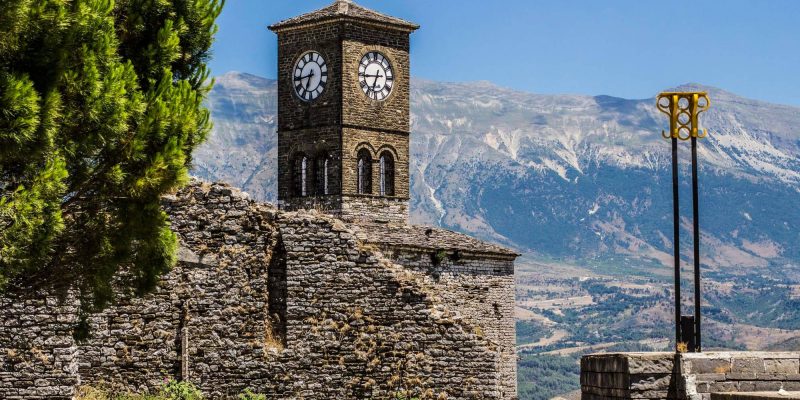
| Gjirokastër and Gjirokastër Castle | Gjirokastër | Medieval to Ottoman | Massive hilltop fortress, stone houses, and UNESCO-listed historic center |
| Krujë Castle | Krujë | Medieval | Skanderbeg and 15th-century resistance against Ottoman expansion |
| Apollonia Archaeological Park | Near Fier | Ancient Greek and Roman | Ruins of an important ancient city and center of learning |
| Durrës Amphitheatre | Durrës | Roman | One of Albania’s most significant surviving Roman monuments |
| Royal Tombs of Selca e Poshtme | Near Pogradec | Ancient | Monumental rock-cut tombs associated with the ancient Illyrian world |
| Rozafa Castle | Shkodër | Ancient to Ottoman | Strategic hilltop fortress with centuries of history and panoramic views |
| Bunk’Art and Communist-Era Tirana | Tirana | 20th century | Albania’s communist dictatorship, isolation, and bunker-building era |
| Vlorë Independence Heritage | Vlorë | Modern | Albania’s declaration of independence in 1912 |
Together, these destinations reveal just how varied Albania’s historical sites can be. Some preserve the remains of ancient cities, while others tell stories of medieval resistance, Ottoman-era urban life, national independence, or the country’s turbulent 20th century.
You don’t need to visit all ten during one trip. The best approach is to combine historical places with other attractions along your route—for example, Butrint with the Albanian Riviera, Berat with central Albania, or Gjirokastër with a journey through the country’s south.
10 Historical Places in Albania That Bring Its Past to Life
Choosing only ten historical places is difficult in a country where ancient ruins, medieval fortresses, Ottoman-era towns, and reminders of the 20th century can all appear within the same journey.
The following destinations were selected for their historical importance, cultural significance, archaeological value, and appeal to travelers. Together, they tell different parts of Albania’s story—from the ancient Mediterranean world and medieval resistance to independence and the country’s communist era.
Some are internationally famous UNESCO sites, while others receive far fewer visitors despite playing an important role in understanding Albania’s past.
Let’s begin in southern Albania with the country’s most celebrated archaeological site.
1. Butrint National Park
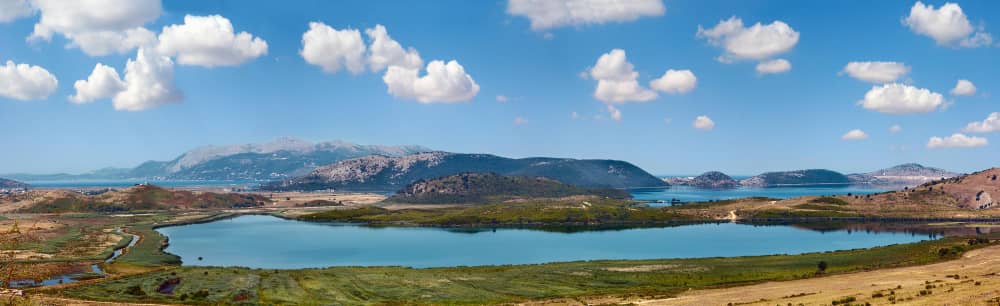
Surrounded by wetlands, forest, and the waters of southern Albania, Butrint National Park combines one of the country’s most important archaeological sites with an unusually beautiful natural setting.
Located near Sarandë and Ksamil, Butrint preserves remains from multiple civilizations and historical periods. Rather than representing a single ancient settlement frozen in time, the site developed and changed for centuries, leaving behind layers of Hellenistic, Roman, Byzantine, Venetian, and later history.
That remarkable combination makes Butrint one of the best historical places in Albania for understanding how different cultures shaped the region.
Explore Thousands of Years of History
Butrint’s history is complex, and it is better not to describe it simply as a city “founded by Greek colonists in the 7th century BC,” as older travel guides sometimes do.
Archaeological evidence demonstrates a long history of settlement and development, with Butrint becoming increasingly connected with the Greek Mediterranean world before later flourishing under Roman rule.
During the Roman period, the settlement expanded considerably, with new public buildings, infrastructure, and monuments transforming the city.
But Butrint’s story didn’t end with Rome.
The site continued to evolve during the Byzantine period and remained strategically important through later centuries, leaving visitors with an archaeological landscape representing multiple chapters of Balkan and Mediterranean history.
What to See at Butrint
Walking through Butrint feels more like exploring an ancient landscape than visiting a single monument.
Among the major sights you’ll encounter are the ancient theater, remains of Roman buildings, defensive walls and gates, an early Christian baptistery, a large basilica, and fortifications from later periods.
One of the most recognizable entrances is the Lion Gate, named for the carved stone relief incorporated above its passage.
The theater is another highlight and provides an excellent example of how structures at Butrint were developed and adapted across different periods.
The baptistery, with its celebrated mosaic pavement, reflects the importance of Butrint during the early Christian era. Access and visibility of fragile mosaics can vary for conservation reasons, so don’t assume every archaeological feature will be uncovered during your visit.
A UNESCO World Heritage Site
Butrint was inscribed on the UNESCO World Heritage List in 1992, with the protected property later expanded.
Its importance comes from the extraordinary archaeological evidence preserved across the site and the way successive civilizations contributed to its development.
The surrounding landscape is equally important to the experience. Ancient ruins emerge among trees and vegetation while nearby wetlands and waterways create an atmosphere very different from many exposed archaeological sites elsewhere in the Mediterranean.
Combine Butrint With Sarandë and Ksamil
Butrint is particularly easy to include in a southern Albania itinerary because it lies close to two of the country’s most popular coastal destinations.
Travelers staying in Sarandë or Ksamil can visit Butrint without dedicating an entire day to transportation.
If possible, arrive earlier in the day, especially during the busy summer season. This can help you avoid some of the heat and larger visitor groups while giving you more time to explore the archaeological site at a relaxed pace.
Comfortable walking shoes, water, and sun protection are useful, although parts of the site benefit from natural shade.
Don’t Rush Through Butrint
Allow enough time to look beyond the most famous ruins.
Part of what makes Butrint special is walking between monuments and gradually seeing how the archaeological remains interact with the surrounding landscape.
Reading the interpretive information—or exploring with a knowledgeable guide—also makes it much easier to distinguish the different historical periods represented throughout the site.
For travelers interested in archaeology and ancient civilizations, Butrint National Park is one of the most important historical places to visit in Albania and an excellent starting point for discovering the country’s remarkably layered past.
2. Berat and Berat Castle
Set along the Osum River and surrounded by mountains, Berat is one of Albania’s most beautiful historic cities. White Ottoman-era houses climb the hillsides beneath an enormous fortress, while churches, mosques, cobbled streets, and traditional neighborhoods reveal centuries of cultural change.
Often called the “City of a Thousand Windows,” Berat is much more than a picturesque stop. Its history stretches back to antiquity, and the city developed through Byzantine, medieval, and Ottoman periods, leaving several layers of Albania’s past visible within a relatively compact area.
Explore Berat Castle
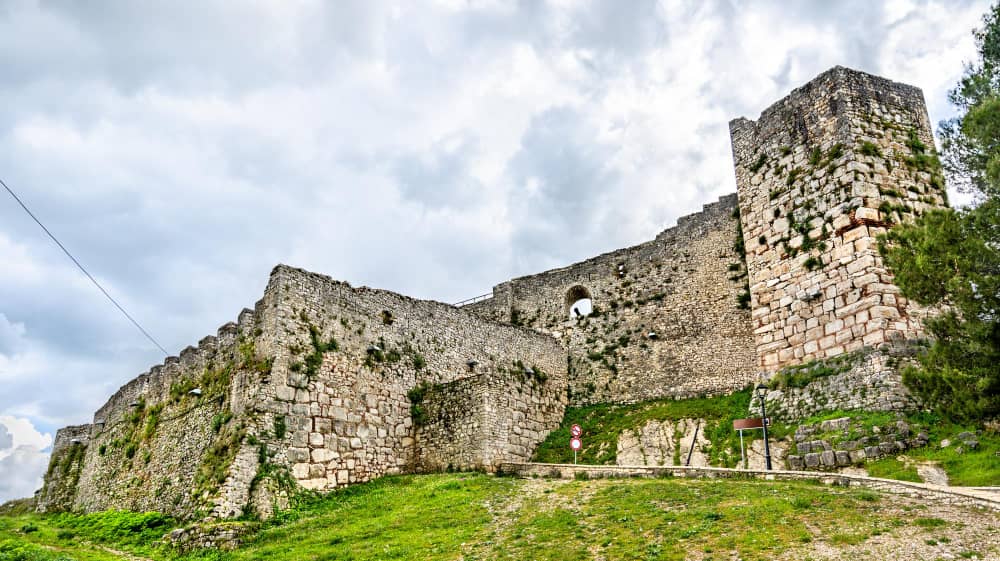
High above the modern city stands Berat Castle, also known as the Citadel of Berat.
The fortified hill has ancient origins and was repeatedly rebuilt, expanded, and adapted over many centuries. Rather than dating the castle simply to the 13th century, it is more accurate to understand it as a strategic site that evolved under different rulers and civilizations.
One of the most interesting things about Berat Castle is that it isn’t simply an abandoned fortress.
People have continued to live within the fortified area, and visitors can wander along narrow streets between houses, churches, archaeological remains, viewpoints, and small businesses.
The elevated position also provides excellent views across Berat, the Osum River, and the surrounding mountains.
Discover Berat’s Historic Churches
The castle contains several historic churches that reflect Berat’s importance as a center of Orthodox Christian culture.
One of the most important cultural attractions is the Onufri Iconographic Museum, housed within the Church of the Dormition of St. Mary.
The museum contains religious artwork associated with Onufri, one of the most celebrated painters in the Albanian Orthodox tradition, as well as works by other icon painters.
Even travelers who aren’t particularly interested in religious art may find the museum useful for understanding another side of Albania’s cultural history.
Walk Through Mangalem and Gorica
Below the fortress, the historic neighborhoods of Mangalem and Gorica create the classic image associated with Berat.
Mangalem rises along the hillside beneath the castle, with closely grouped white houses and rows of windows facing the river.
Across the Osum lies Gorica, another historic neighborhood connected to Mangalem by bridges.
Walking through both areas allows you to experience Berat beyond its major monuments. Narrow lanes, stone walls, traditional houses, religious buildings, and views across the river make simply wandering through the neighborhoods one of the best parts of visiting the city.
See Berat’s Religious Heritage
Berat’s historical importance also comes from the presence of different religious traditions.
Historic Orthodox churches and mosques survive throughout the city, reflecting the religious and cultural communities that contributed to Berat’s development over the centuries.
Among the city’s notable Islamic landmarks are historic mosques dating from the Ottoman period, while the castle and surrounding neighborhoods preserve important Christian heritage.
This combination is one reason Berat provides such a valuable introduction to Albania’s complex cultural history.
A UNESCO World Heritage City
Berat is recognized together with Gjirokastër as part of the UNESCO World Heritage property Historic Centres of Berat and Gjirokastra.
The designation recognizes the exceptional architectural character of the two cities and their importance as examples of historic urban communities shaped over centuries.
Although they’re often mentioned together, Berat and Gjirokastër shouldn’t be treated as interchangeable destinations.
Berat is defined by its riverside setting, hillside neighborhoods, castle, religious monuments, and distinctive white houses, while Gjirokastër has a very different atmosphere built around stone architecture and its enormous fortress.
If your itinerary allows, visit both.
Spend at Least One Night in Berat
Berat can be visited on a day trip, but staying overnight gives you more time to experience the historic center after many daytime visitors have left.
Explore the castle, walk through Mangalem and Gorica, cross the river, visit the city’s religious and cultural landmarks, and leave some time simply to enjoy the views.
Berat also makes a useful stop when traveling between Tirana and southern Albania, so it can fit naturally into a longer road trip.
For travelers interested in architecture, religion, historic towns, and Albania’s Ottoman and medieval heritage, Berat is one of the most rewarding historical places in Albania.
3. Gjirokastër and Gjirokastër Castle
Built across the steep slopes of the Drino Valley in southern Albania, Gjirokastër is one of the country’s most distinctive historic cities. Stone-roofed houses climb the hillside beneath an enormous fortress, while narrow streets, traditional residences, museums, and an old bazaar preserve different chapters of the city’s past.
Known as the “Stone City,” Gjirokastër is particularly famous for its architecture and Ottoman-era urban character. But like many of Albania’s oldest cities, its history extends beyond a single period.
For travelers exploring southern Albania, Gjirokastër is one of the best places to experience history as part of a living city rather than at an isolated archaeological site.
Explore Gjirokastër Castle
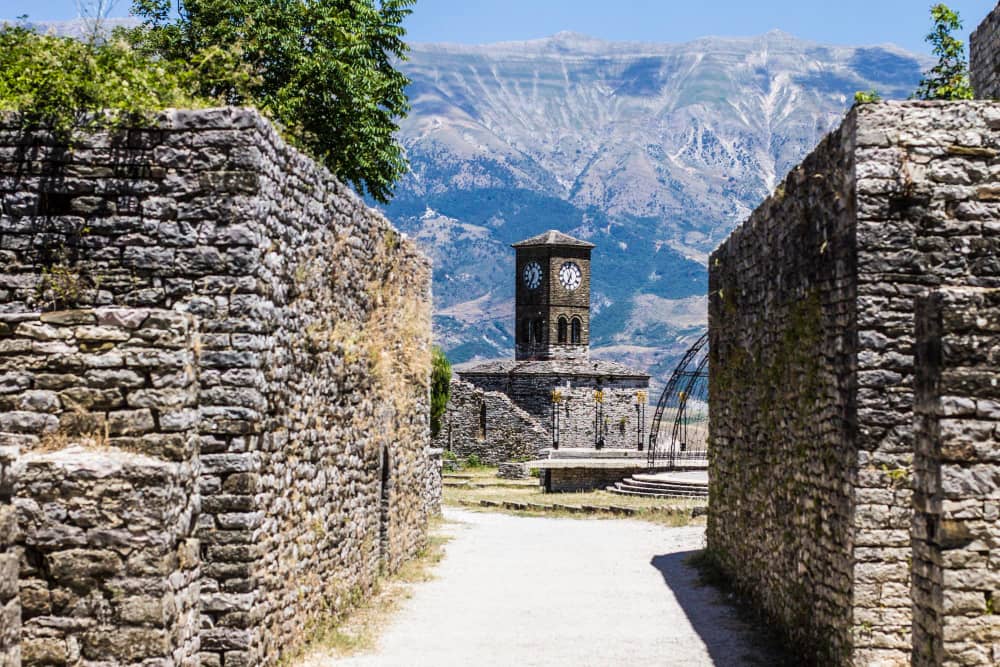
Dominating the skyline is Gjirokastër Castle, a massive fortress overlooking the historic neighborhoods and surrounding valley.
The fortified site developed over different historical periods and was repeatedly modified and expanded. For this reason, it shouldn’t be assigned to a single medieval ruler or construction date, as some older descriptions of the castle do.
Today, visitors can walk through large sections of the fortress, explore its courtyards and passages, see historical exhibits, and enjoy sweeping views across Gjirokastër and the mountains beyond.
Its elevated position also makes it easy to understand why this location held such strategic importance.
Step Inside Gjirokastër’s Historic Houses
Some of Gjirokastër’s greatest historical treasures aren’t inside the castle at all.
The city is known for its impressive Ottoman-era tower houses, built for wealthy families and designed with both domestic life and defense in mind.
Several historic houses can be visited, giving travelers an opportunity to see traditional interiors, fireplaces, guest rooms, woodwork, stone construction, and architectural details that aren’t visible from the street.
Exploring at least one traditional house adds considerably more context to a visit than simply photographing the city’s famous rooftops.
Wander Through the Old Bazaar
Below the castle lies Gjirokastër’s historic Old Bazaar, where stone-paved streets are lined with shops, cafés, restaurants, and traditional-style buildings.
The area has evolved over time and today serves both residents and visitors, but it remains one of the most atmospheric parts of the historic center.
Instead of rushing straight from the castle back to your car, spend some time exploring the surrounding streets. The combination of steep lanes, stone architecture, mountain views, and historic buildings is a major part of Gjirokastër’s appeal.
Discover Albania’s More Recent History
Gjirokastër also provides connections to Albania’s complicated 20th-century history.
The city was the birthplace of Enver Hoxha, the communist leader who ruled Albania for decades after World War II.
Today, the site associated with his birthplace houses the Ethnographic Museum, shifting the focus from Hoxha himself toward traditional culture, clothing, household objects, and everyday life.
This creates an interesting contrast: Gjirokastër is strongly associated with Albania’s Ottoman architectural heritage while also having connections with one of the country’s most consequential modern political figures.
A UNESCO World Heritage City
Gjirokastër and Berat are jointly recognized by UNESCO as the Historic Centres of Berat and Gjirokastra.
Gjirokastër is particularly significant for the preservation of its historic urban landscape and distinctive residential architecture.
The UNESCO recognition applies to the historic city rather than simply to Gjirokastër Castle, an important distinction from the wording in the old article.
Although Berat and Gjirokastër are frequently grouped together, each deserves its own visit. Berat is characterized by white hillside houses and its riverside setting, while Gjirokastër feels more rugged, with stone architecture rising dramatically beneath the fortress.
Stay Overnight if Your Itinerary Allows
Gjirokastër can be explored as a day trip, but staying overnight allows you to experience the historic center at a slower pace.
Visit the fortress, explore traditional houses, walk through the bazaar, stop at museums, and wander the steep streets without trying to fit everything into a few hours.
The city also fits naturally into a southern Albania route connecting Berat, Gjirokastër, Sarandë, Butrint, and the Albanian Riviera.
For travelers interested in historic architecture, castles, Ottoman heritage, and Albania’s layered past, Gjirokastër is one of the most fascinating historical places to visit in Albania.
4. Krujë Castle
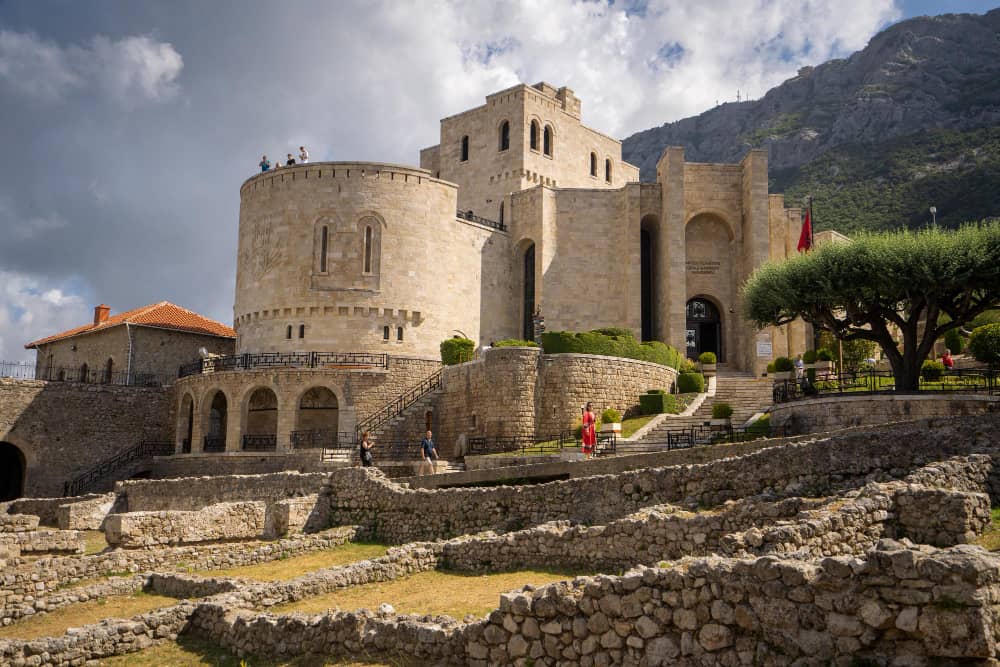
Perched above the historic town of Krujë, Krujë Castle is one of Albania’s most symbolic historical landmarks. The fortress is closely associated with Gjergj Kastrioti Skanderbeg, the 15th-century military leader who became Albania’s most celebrated national hero.
Located north of Tirana, Krujë combines a medieval fortress, museums, traditional architecture, mountain views, and a historic bazaar within a relatively compact area. This makes it one of the easiest places to experience several aspects of Albanian history and culture during a single visit.
Discover the Story of Skanderbeg
Krujë became particularly important during the 15th century, when Skanderbeg led resistance against the expanding Ottoman Empire.
Born Gjergj Kastrioti, Skanderbeg had spent part of his earlier life within the Ottoman system before returning to Albania in 1443 and taking control of Krujë.
The fortress subsequently became closely associated with his resistance and endured major Ottoman sieges during this period.
Skanderbeg’s campaigns continued until his death in 1468, and his legacy eventually became a central part of Albanian national identity.
Today, monuments and references to Skanderbeg appear throughout Albania, but Krujë remains one of the most important places for understanding his historical significance.
Explore Krujë Castle
The fortified site at Krujë has a history extending beyond Skanderbeg’s lifetime and changed over different periods.
Rather than thinking of Krujë Castle as a single preserved medieval building, visitors should expect a historic fortified area containing surviving structures, reconstructed elements, museums, viewpoints, and other features.
Walking around the castle grounds provides impressive views across the surrounding landscape and toward the Adriatic lowlands on clear days.
The setting also helps explain why Krujë held such strategic value. Its elevated position provided extensive visibility over important routes and territory below.
Visit the Skanderbeg Museum
One of the main attractions inside the castle complex is the Gjergj Kastrioti Skanderbeg Museum.
The museum explores Skanderbeg’s life, military campaigns, political alliances, and historical legacy through exhibits, artwork, reproductions, documents, and objects connected with the period.
Its distinctive building was constructed in the 20th century rather than surviving from Skanderbeg’s era, so visitors shouldn’t mistake the museum itself for a medieval palace.
Even so, it provides useful context for understanding why Krujë occupies such an important place in Albanian historical memory.
Explore the Ethnographic Museum
Krujë also offers an opportunity to learn about traditional Albanian life beyond military and political history.
The town’s Ethnographic Museum presents aspects of domestic life, crafts, clothing, tools, household traditions, and architecture associated with earlier generations.
Combining the ethnographic collection with the Skanderbeg Museum provides a broader picture of Albanian heritage than visiting the fortress alone.
Check current opening information before your visit, as access to individual museums can change because of restoration or other work.
Walk Through Krujë’s Old Bazaar
Below the castle lies Krujë’s famous Old Bazaar, one of the most recognizable traditional shopping streets in Albania.
Its cobbled lane is lined with shops selling carpets, textiles, woodwork, metal objects, antiques, souvenirs, and other handicrafts.
Today the bazaar naturally caters heavily to tourism, but it remains an enjoyable part of the historic town and creates a natural walking route toward the castle.
Take time to look beyond mass-produced souvenirs if you’re interested in locally made crafts.
Visit Krujë as a Day Trip From Tirana
Krujë’s proximity to Tirana makes it one of the easiest historical excursions from the Albanian capital.
A half-day visit can cover the main attractions, but allowing more time gives you the opportunity to explore the museums, castle grounds, bazaar, and viewpoints without rushing.
Krujë also combines well with other destinations in northern or central Albania if you’re traveling by car.
For anyone interested in Skanderbeg, medieval history, or Albanian national identity, Krujë Castle is one of the most important historical places to visit in Albania and one of the best destinations for connecting the country’s past with the story of its national hero.
5. Apollonia Archaeological Park
Set among rolling hills near Fier, Apollonia Archaeological Park preserves the remains of one of the most important ancient cities in what is now Albania.
Founded as a Greek colony in antiquity, Apollonia later flourished under Roman rule and became an important center of trade, culture, and learning. Its location connected the Adriatic coast with routes leading deeper into the Balkans, helping the city prosper for centuries.
Today, visitors can walk through an expansive archaeological landscape containing ancient monuments, foundations, columns, fortifications, and religious buildings from later periods.
Discover Ancient Apollonia
Apollonia was established by Greek settlers in the 7th century BC in a region already inhabited by local populations.
The settlement developed into an important city and maintained connections with both the Greek world and communities throughout the surrounding region.
After coming under Roman control, Apollonia continued to prosper. Its position near the Adriatic and important transportation routes helped make it a significant center within the Roman Balkans.
Unlike a reconstructed historical attraction, much of Apollonia survives as an archaeological landscape. Understanding what you’re seeing is easier if you use the site’s interpretive information or visit with a knowledgeable guide.
See Apollonia’s Most Recognizable Monument
One of the archaeological park’s most photographed structures is the reconstructed façade associated with the Monument of the Agonothetes, sometimes called the Bouleuterion.
Its surviving columns and architectural elements have become a symbol of ancient Apollonia.
As you continue through the site, you’ll encounter remains of other public buildings, temples, fortifications, streets, and structures that help reveal the scale of the ancient city.
Only part of Apollonia has been uncovered, which adds another dimension to the experience: much of the ancient settlement’s story remains beneath the surrounding landscape.
Learn About Apollonia and Augustus
Apollonia also has a fascinating connection with one of the most famous figures in Roman history.
The future emperor Augustus, then known as Octavian, was studying at Apollonia when news arrived of the assassination of his great-uncle and adoptive father Julius Caesar in 44 BC.
Octavian subsequently returned to Italy and became one of the central figures in the political struggles that transformed the Roman Republic and ultimately led to the Roman Empire.
That connection provides a striking reminder of Apollonia’s importance within the wider Roman world.
Visit the Monastery and Archaeological Museum
The archaeological park isn’t limited to ancient ruins.
The medieval Monastery of St. Mary stands within the site, adding another historical layer to Apollonia.
Parts of the monastery complex are used to display archaeological finds discovered in and around the ancient city. Visiting the museum helps put the scattered ruins into context and gives you a closer look at artifacts connected with life in ancient Apollonia.
The combination of classical archaeology and medieval religious architecture makes this part of the site particularly interesting.
Apollonia or Butrint?
If your Albania itinerary allows, visit both.
Butrint offers exceptionally varied archaeological remains surrounded by wetlands and dense vegetation near the Ionian coast.
Apollonia feels different. Its ruins spread across a more open landscape, and the site is particularly valuable for understanding Albania’s connections with the ancient Greek and Roman worlds.
Apollonia can also receive fewer visitors than some of southern Albania’s best-known attractions, which can make exploring the ruins feel more relaxed.
Combine Apollonia With Central Albania
Apollonia’s location near Fier makes it relatively easy to incorporate into a road trip between Tirana, Berat, Vlorë, and southern Albania.
Allow enough time to explore both the archaeological remains and museum rather than treating the park as a quick photo stop.
Bring comfortable footwear, water, and sun protection during warmer months because much of the archaeological area is outdoors.
The Ancient City of Apollonia is also included on Albania’s UNESCO Tentative List, reflecting its potential international heritage significance.
For travelers fascinated by classical civilization, Apollonia Archaeological Park is one of the most important historical places in Albania and a compelling reminder of the country’s deep connections with the ancient Mediterranean world.
6. Durrës Amphitheatre
In the heart of modern Durrës, only a short distance from the Adriatic Sea, stands one of Albania’s most significant Roman monuments: the Durrës Amphitheatre.
Ancient Durrës, known to the Romans as Dyrrachium, occupied an important position on the Adriatic coast and developed into a major port connecting the Italian Peninsula with the interior of the Balkans.
Today, the amphitheatre provides one of the clearest reminders that beneath the busy streets and seaside atmosphere of modern Durrës lies a city with more than two thousand years of history.
Discover Roman Dyrrachium
Durrës had already developed into an important settlement long before Roman rule, but its strategic location helped it become particularly significant within the Roman world.
Ships crossing the Adriatic could reach Dyrrachium from Italy, while roads continued eastward through the Balkan Peninsula.
The city consequently became an important commercial, military, and transportation center.
That importance is reflected in the monumental structures once constructed here, with the amphitheatre being the most impressive surviving example.
Explore the Durrës Amphitheatre
The amphitheatre was constructed during the Roman imperial period and was used for public spectacles and entertainment.
Although only part of the original structure survives today, its size provides a sense of the importance of ancient Dyrrachium.
Visitors can explore surviving sections of the seating area, corridors, chambers, arches, and underground spaces associated with the monument.
Its location among modern buildings is particularly striking. Rather than standing in an isolated archaeological park, the amphitheatre is embedded directly within today’s city.
Discover the Early Christian Chapel
One of the amphitheatre’s most fascinating features comes from a much later period in its history.
After the structure was no longer being used for Roman entertainment, part of the amphitheatre was adapted for Christian religious use.
A small chapel was created within the complex, preserving religious mosaics and other evidence of the changing role of the monument.
This transformation makes the amphitheatre particularly interesting because the same structure reflects both the Roman city and the spread of Christianity during late antiquity.
Follow the Route of the Via Egnatia
Dyrrachium was closely connected with one of the Roman Empire’s most important roads in the Balkans: the Via Egnatia.
The route linked the Adriatic coast with major settlements farther east, eventually continuing toward Byzantium, later Constantinople.
This made the area around Durrës an important western gateway between Italy, the Adriatic, and the eastern Balkans.
Understanding this connection helps explain why Durrës became much more than simply a coastal settlement.
Explore More of Historic Durrës
The amphitheatre shouldn’t be the only historical stop during your visit.
Durrës contains additional archaeological remains and cultural attractions that reveal different stages of the city’s long history.
The Archaeological Museum of Durrës is particularly useful for travelers who want more context about ancient Dyrrachium and discoveries from the surrounding region.
Sections of historic fortifications and other archaeological remains can also be encountered around the city.
Together, these sites make Durrës one of Albania’s most interesting destinations for combining ancient history with a modern coastal city.
Combine History With the Adriatic Coast
Durrës is easy to reach from Tirana, making it a convenient historical excursion for travelers based in the capital.
It can also fit naturally into a longer journey along Albania’s Adriatic coast.
Unlike Butrint or Apollonia, where archaeology dominates the visitor experience, Durrës allows you to explore Roman history while remaining in the middle of a busy contemporary city.
For travelers interested in Roman archaeology, Durrës Amphitheatre is one of the most important historical places in Albania and an excellent example of how the country’s ancient past remains woven into everyday modern life.
7. Royal Tombs of Selca e Poshtme
Hidden in the hills of southeastern Albania, the Royal Tombs of Selca e Poshtme are among the country’s most fascinating ancient archaeological sites. Far less visited than Butrint or Apollonia, the monumental rock-cut tombs provide a glimpse into the powerful communities that inhabited this part of the Balkans more than two thousand years ago.
The site is located near the village of Selca e Poshtme in the Pogradec region, making it an intriguing addition for travelers exploring southeastern Albania and the area around Lake Ohrid.
The Royal Tombs of Selca e Poshtme are also included on Albania’s UNESCO Tentative List.
Discover the Ancient Settlement of Selca
The tombs are associated with an important ancient settlement that developed on the hillside above the surrounding valley.
The site is commonly connected with Pelion, an ancient fortified settlement mentioned in historical sources, although archaeological and historical interpretations of ancient place names should be approached carefully.
What is clear is that this was an important regional center during antiquity.
Archaeological remains indicate occupation across different periods, while the monumental tombs demonstrate the wealth and status of members of the local elite.
See the Monumental Rock-Cut Tombs
The most remarkable features at Selca e Poshtme are a group of monumental tombs carved directly into the rock.
Dating primarily to the Hellenistic period, the tombs display sophisticated construction techniques and architectural influences that reflect connections between local Illyrian communities and the wider Mediterranean world.
Rather than simple burial chambers, some were designed with architectural façades, entrances, chambers, and carefully carved details.
Their scale makes it clear that these weren’t ordinary burials. They were created for members of an elite society capable of commissioning substantial funerary monuments.
Discover Albania’s Illyrian Heritage
The Royal Tombs of Selca e Poshtme are particularly valuable for travelers interested in the Illyrian history of Albania.
Ancient Illyria wasn’t a single unified state occupying exactly the borders of modern Albania. Different Illyrian tribes, communities, and kingdoms inhabited portions of the western Balkans, interacting with Greek colonies, Macedonian rulers, and eventually Rome.
Sites such as Selca help turn that complicated ancient history into something tangible.
Instead of encountering the Illyrians only as a name in a museum or history book, visitors can stand beside monumental structures created by communities living in the region during antiquity.
A Lesser-Known Archaeological Experience
Selca e Poshtme receives considerably less attention than Albania’s most famous historical attractions.
That’s part of its appeal, but it also means visitors shouldn’t expect the same tourism infrastructure found at Butrint or in major historic cities.
Road conditions, signage, access, and visitor facilities can change, so checking current local information before making the journey is particularly important.
Good footwear is also recommended because exploring archaeological sites in rural and rocky terrain can involve uneven surfaces.
Combine Selca With Southeastern Albania
The tombs fit naturally into a trip through southeastern Albania, particularly for travelers visiting Pogradec and the Albanian side of Lake Ohrid.
This part of the country feels very different from the Albanian Riviera or the historic cities farther south, making it worthwhile for travelers who want to explore beyond Albania’s most familiar tourist route.
History enthusiasts can also use the journey to better understand how ancient communities developed in Albania’s mountainous interior rather than concentrating exclusively on coastal Greek and Roman cities.
For travelers interested in archaeology and the ancient Illyrian world, the Royal Tombs of Selca e Poshtme are one of Albania’s most intriguing lesser-known historical places and an excellent reminder that some of the country’s greatest archaeological treasures lie well beyond its most famous destinations.
8. Rozafa Castle
Rising dramatically above Shkodër in northern Albania, Rozafa Castle occupies one of the most impressive defensive positions in the country. From its hilltop walls, visitors can look across rivers, mountains, the surrounding plains, and toward Lake Shkodër.
The strategic location has been important for centuries, and the fortified hill reflects several periods of Albania’s past. Ancient settlement, medieval rulers, Venetian influence, and Ottoman control all contributed to the long history of the site.
For travelers exploring northern Albania, Rozafa Castle is one of the best places to combine history with spectacular scenery.
Discover the Castle’s Ancient Origins
The history of the fortified hill stretches back to antiquity and is associated with the ancient settlement of Scodra, an important center in the region before Roman rule.
Scodra became connected with the Illyrian kingdom, making the area particularly significant for travelers interested in Albania’s ancient heritage.
The fortress visible today, however, shouldn’t be attributed to one civilization.
Like many strategic castles throughout the Balkans, Rozafa was repeatedly modified, expanded, damaged, and rebuilt as different powers competed for control of the region.
Walking through the ruins therefore means exploring a site shaped by many centuries rather than a fortress preserved from one specific period.
Explore the Medieval and Venetian Fortress
Shkodër remained strategically important throughout the medieval period.
The fortress eventually came under Venetian control, becoming an important defensive position as Ottoman power expanded through the Balkans.
One of the most significant events associated with Rozafa was the Ottoman siege of Shkodër in 1478–1479.
After prolonged resistance, Venetian control ended and Shkodër became part of the Ottoman Empire.
This history places Rozafa within the broader story of political and military competition that transformed Albania during the late medieval period.
Hear the Legend of Rozafa
The castle is also connected with one of the best-known legends in Albanian folklore.
According to the traditional story, three brothers attempted to build a fortress, but the walls they constructed during the day repeatedly collapsed at night.
They were told that one of their wives would have to be sacrificed within the walls for the fortress to stand.
The woman ultimately associated with the sacrifice was Rozafa, whose name became attached to the castle.
Different versions of the legend exist, and it should be understood as folklore rather than documented history.
Even so, the story has become an important part of the castle’s cultural identity and remains one of Albania’s most recognizable traditional legends.
Walk Through the Castle Ruins
Today, visitors can explore extensive sections of the fortress, including walls, gateways, courtyards, foundations, and remains of buildings from different historical periods.
Among the structures within the castle are the remains of a building that originally served as the Church of St. Stephen and was later converted into a mosque during the Ottoman period.
That transformation is a particularly interesting example of how the same historical site could acquire different functions as political and religious circumstances changed.
Allow enough time to wander beyond the main viewpoints. The scale of the fortress is easier to appreciate when you explore the different sections rather than simply climbing to the top for photographs.
Enjoy Some of the Best Views Around Shkodër
Rozafa’s location is as memorable as its history.
From the fortress, expansive views stretch across the surrounding landscape, including the Buna and Drin river systems, the plains around Shkodër, distant mountains, and areas toward Lake Shkodër.
The elevated position immediately explains why people fortified this hill for centuries.
The site is largely outdoors, so summer visitors should bring water and sun protection. Comfortable shoes are also important because the castle contains stone paths, slopes, steps, and uneven surfaces.
Combine Rozafa Castle With Shkodër
Don’t visit the fortress and immediately leave northern Albania.
Shkodër is one of the country’s most historically and culturally important cities and makes an excellent base for exploring the region.
Spend time in the city center, visit museums and religious landmarks, and explore the surrounding lake before continuing toward the Albanian Alps or other destinations in northern Albania.
Rozafa Castle can therefore fit naturally into an itinerary that combines history, culture, mountains, and outdoor experiences.
For travelers heading north, Rozafa Castle is one of the most impressive historical places in Albania, combining ancient heritage, medieval conflict, folklore, and extraordinary views from one strategic hilltop.
9. Bunk’Art and Communist-Era Tirana
Not all of Albania’s most important historical places are ancient ruins or medieval castles. In Tirana, several museums and landmarks preserve the much more recent—and often difficult—history of Albania under communist rule.
From the end of World War II until the early 1990s, Albania was governed by a communist regime that became increasingly authoritarian and isolated. Under longtime leader Enver Hoxha, the country experienced political repression, restrictions on religion, tight state control, and an extraordinary program of military bunker construction.
Today, some of the most fascinating places for understanding this period are found in and around the Albanian capital.
Step Inside Bunk’Art 1
Bunk’Art 1 is housed inside a huge underground bunker complex constructed during the communist period to protect Albania’s political and military leadership in the event of an attack.
Instead of functioning as a military shelter today, the complex has been transformed into a museum and exhibition space exploring Albania’s 20th-century history.
Walking through its underground corridors, rooms, command spaces, and reinforced chambers provides an unusually immersive way to experience the atmosphere of Cold War-era Albania.
The setting itself is part of what makes the museum memorable. You’re not simply looking at objects inside a conventional gallery—you are exploring one of the structures created as a result of the regime’s fear of foreign invasion.
Visit Bunk’Art 2 in Central Tirana
Travelers who don’t have time to visit Bunk’Art 1 can explore Bunk’Art 2, located much closer to the center of Tirana.
This underground museum focuses particularly on the communist state’s security apparatus, political persecution, surveillance, and the experiences of people targeted by the regime.
The subject matter can be disturbing, but it provides important context for understanding Albania’s recent history and the enormous changes the country has experienced since the end of communist rule.
If you’re especially interested in this period, visiting both Bunk’Art locations provides a broader perspective than choosing only one.
Understand Albania’s Famous Bunkers
Concrete bunkers are among the most recognizable physical remnants of communist Albania.
Under Hoxha, large numbers of defensive bunkers were constructed throughout the country because the regime feared invasion and increasingly viewed Albania as surrounded by potential enemies.
They appeared along beaches, roads, mountain passes, fields, towns, and strategically important locations.
Many remain visible today.
Some have been abandoned, while others have been repurposed as museums, cafés, storage spaces, memorials, or unusual reminders of Albania’s Cold War past.
The bunkers travelers see across Albania therefore belong primarily to the communist-era defense program, rather than simply being World War II bomb shelters as the old version of this article suggested.
Visit the House of Leaves
Another important place for understanding communist Albania is the House of Leaves in central Tirana.
The building is associated with Albania’s state security and surveillance apparatus and today operates as a museum examining methods used to monitor and control the population.
Exhibits explore surveillance equipment, communications interception, files, photographs, and other aspects of state security.
Combined with Bunk’Art 2, the museum provides a sobering look at everyday life under an authoritarian system where surveillance and political persecution affected many people.
Look for Communist-Era History Around Tirana
Evidence of the communist period extends beyond museums.
As you explore Tirana, you’ll encounter buildings, monuments, public spaces, and architectural remnants associated with different stages of Albania’s 20th-century history.
The Pyramid of Tirana, for example, was originally opened in the late 1980s as a museum dedicated to Enver Hoxha. It has since been dramatically transformed and given an entirely new purpose, making it a striking example of how modern Albania is reinterpreting structures inherited from the communist period.
Nearby Skanderbeg Square also provides an interesting contrast between different chapters of Albanian history, with landmarks representing religious heritage, national identity, communist-era urban planning, and post-communist Tirana all within the surrounding city center.
Allow Time for the Museums
Bunk’Art and the House of Leaves aren’t attractions to rush through simply to check them off a sightseeing list.
The exhibitions deal with political repression, isolation, surveillance, imprisonment, and other difficult aspects of Albania’s recent past.
Allowing enough time to read the exhibits makes the experience considerably more meaningful.
These museums also provide valuable context for something you’ll notice throughout Albania: the extraordinary contrast between the country’s decades of isolation and the energetic, outward-looking destination travelers encounter today.
For anyone interested in 20th-century European history, Bunk’Art and communist-era Tirana are among the most thought-provoking historical places to visit in Albania, showing a chapter of the country’s past that ancient ruins and medieval castles cannot tell.
10. Vlorë and Albania’s Independence Heritage
Known today for its waterfront, beaches, and position near the beginning of the Albanian Riviera, Vlorë also occupies one of the most important places in modern Albanian history.
It was here on November 28, 1912, that Albanian representatives declared the country’s independence from the Ottoman Empire.
For travelers interested in understanding how modern Albania emerged, Vlorë provides an important historical contrast with the ancient ruins, medieval castles, and Ottoman-era cities found elsewhere in the country.
Discover the Story of Albanian Independence
By the beginning of the 20th century, the Ottoman Empire was losing control across much of the Balkans, while Albanian political and cultural movements had become increasingly focused on national identity and political autonomy.
During the turmoil of the Balkan Wars, Albanian representatives gathered in Vlorë.
On November 28, 1912, independence was proclaimed under the leadership of Ismail Qemali, one of the central figures in the creation of the modern Albanian state.
A provisional government was subsequently established in Vlorë.
The date remains deeply important in Albania and is celebrated every year as the country’s Independence Day.
See the Independence Monument
One of Vlorë’s most recognizable historical landmarks is the Independence Monument, located in Flag Square.
The large monument commemorates the declaration of independence and the people involved in Albania’s national movement.
Its prominent position makes it an easy historical stop while exploring central Vlorë.
Rather than viewing it simply as another city monument, understanding the events of 1912 gives the site considerably more meaning.
Learn About Ismail Qemali
The story of Albanian independence is closely connected with Ismail Qemali, who became the head of Albania’s first provisional government.
His role in the events of 1912 made him one of the most important political figures in modern Albanian history.
Travelers interested in this period should look for museums, monuments, and historical displays in Vlorë associated with independence and the formation of the Albanian state.
Check current museum information before visiting, particularly if a specific historical museum or building is an important part of your itinerary, as exhibitions and access can change.
Explore Historic Vlorë
Vlorë’s historical importance extends beyond a single monument.
Spend some time walking through the city’s older areas rather than limiting your visit to the modern waterfront.
Historic streets, religious buildings, public squares, and architectural remnants reveal a different side of a destination that many travelers primarily associate with the coast.
The city also provides an opportunity to see how modern Albania has developed around places associated with its national history.
Combine History With the Albanian Riviera
One of the advantages of visiting Vlorë is that you don’t have to choose between history and the coast.
The city is an excellent base or stopping point for travelers continuing south toward the Albanian Riviera, where mountain roads, beaches, villages, and Ionian Sea views create one of the country’s most famous travel routes.
This makes Vlorë particularly easy to include in a broader Albania itinerary.
You can spend part of your visit exploring the city’s independence heritage before continuing toward coastal destinations farther south.
Why Vlorë Belongs on a Historical Albania Itinerary
Many of the places in this guide tell stories from civilizations that existed centuries or millennia before modern Albania.
Vlorë represents something different.
It connects travelers directly with the creation of the independent Albanian state in 1912, making it an essential destination for understanding the country’s modern national story.
From the ancient ruins of Butrint and Apollonia to the castles of Krujë and Rozafa, Albania’s historical landmarks reveal how different civilizations and rulers shaped the region over thousands of years.
Vlorë brings that journey closer to the present.
For travelers who want to understand Albania beyond its beaches and mountain scenery, Vlorë is one of the country’s most important modern historical destinations and a fitting final stop on this journey through ten remarkable historical places in Albania.
More Historical Places in Albania Worth Visiting
Albania’s historical heritage extends far beyond the ten places above. Ancient cities, medieval fortresses, religious landmarks, traditional towns, and archaeological sites can be found throughout the country, and many receive considerably fewer visitors than Butrint, Berat, or Gjirokastër.
If you have more time, consider adding some of these historical places to your Albania itinerary.
Byllis Archaeological Park
Located in southern Albania, Byllis Archaeological Park preserves the remains of an important ancient settlement overlooking the surrounding countryside.
The archaeological site includes substantial fortification walls and remains of public, residential, and religious structures representing different periods of its history.
Byllis is particularly appealing for travelers who enjoy archaeological sites but want an experience that can feel much quieter than Albania’s most famous ancient attractions.
It can fit naturally into a journey through the Fier and Vlorë regions, particularly for travelers already visiting Apollonia.
Lezhë and the Skanderbeg Memorial
The northern city of Lezhë holds an important place in the story of Albania’s national hero, Skanderbeg.
In 1444, Albanian nobles gathered in Lezhë in the alliance commonly known as the League of Lezhë, an important moment in the organized resistance associated with Skanderbeg.
The city is also closely connected with Skanderbeg’s death and burial.
Today, visitors interested in this chapter of Albanian history can explore the Skanderbeg Memorial and other historical remains around Lezhë.
Lezhë combines particularly well with Krujë and Shkodër on a history-focused journey through northern Albania.
Bashtovë Castle
Located near the mouth of the Shkumbin River, Bashtovë Castle is one of Albania’s more unusual surviving fortifications.
Its position in relatively flat terrain distinguishes it from the dramatic hilltop castles found at Krujë, Gjirokastër, and Shkodër.
The fortress is generally associated with the late medieval period and reflects the strategic importance of routes and trade connections near Albania’s Adriatic coast.
Bashtovë is a worthwhile detour for travelers who enjoy lesser-known fortresses and want to venture beyond the country’s most heavily visited historical attractions.
Petrelë Castle
Just outside Tirana, Petrelë Castle occupies a rocky hill with commanding views across the surrounding landscape.
The strategic position has a long history, while the surviving fortress is particularly associated with Albania’s medieval past.
Its proximity to Tirana makes Petrelë an easy addition for travelers who want to see a historical site without committing to a long journey from the capital.
It can also be combined with other attractions around central Albania as part of a half-day excursion.
Himarë Castle
High above the modern coastal town of Himarë, the old fortified settlement known as Himarë Castle offers a very different experience from Albania’s better-preserved monumental fortresses.
Rather than one enormous castle building, visitors encounter the remains of an old settlement containing stone houses, narrow paths, churches, walls, and structures representing different historical periods.
The elevated position provides spectacular views toward the Ionian Sea, making this one of the easiest places to combine Albania’s history with the scenery of the Riviera.
Porto Palermo Castle
Farther along the Albanian Riviera, Porto Palermo Castle occupies a striking position beside a sheltered bay.
The fortress is often associated with Ali Pasha of Tepelena, the powerful Ottoman-era ruler who controlled extensive territories in the region around the beginning of the 19th century.
Its compact design and dramatic coastal setting make Porto Palermo an easy historical stop when traveling between Himarë and other destinations along the Riviera.
The combination of fortress walls, mountains, and blue Ionian water also makes it one of Albania’s most photogenic historical locations.
Korçë
The southeastern city of Korçë provides a different perspective on Albanian heritage.
Rather than being dominated by one major archaeological site or fortress, Korçë rewards visitors through its historic streets, religious buildings, museums, architecture, and connections with Albanian education and culture.
The city played an important role during the Albanian National Awakening, particularly in the development of Albanian-language education.
Korçë is therefore an excellent addition for travelers interested in Albania’s cultural history rather than only its ancient and medieval monuments.
Ardenica Monastery
Near Fier, Ardenica Monastery provides another opportunity to explore Albania’s Orthodox Christian heritage.
The hilltop monastery complex contains a church, religious artwork, and architecture associated with different periods of its history.
It is also traditionally connected with Skanderbeg, adding another historical dimension for travelers following places associated with Albania’s national hero.
Its location makes Ardenica relatively easy to combine with Apollonia Archaeological Park during a journey through central Albania.
Explore Beyond Albania’s Famous Historical Sites
The advantage of adding lesser-known places to your itinerary is that they reveal parts of Albania’s history that can be missed when concentrating only on UNESCO sites and famous castles.
An ancient archaeological park such as Byllis tells a very different story from communist-era Tirana, while Himarë and Porto Palermo show how historical landmarks can be incorporated naturally into a coastal road trip.
You don’t need to visit every site.
Choose additional destinations based on the route you’re already traveling and the periods of Albanian history that interest you most. In many cases, the historical places you weren’t originally planning to visit can become some of the most memorable stops of the trip.
UNESCO Historical Sites in Albania
Several of Albania’s most important historical destinations have received recognition from UNESCO, highlighting the country’s archaeological heritage and remarkably preserved historic cities.
For history-focused travelers, three destinations in this guide are particularly important.
Butrint
Butrint was inscribed on the UNESCO World Heritage List in 1992 and is Albania’s most famous archaeological site.
Its ruins preserve evidence from multiple historical periods, including Hellenistic, Roman, early Christian, Byzantine, and later phases of occupation.
What makes Butrint particularly memorable is the combination of archaeology and landscape. Ancient theaters, fortifications, religious buildings, gates, and other remains are surrounded by wetlands and vegetation near Albania’s Ionian coast.
If you visit only one major archaeological site during your trip, Butrint is an excellent choice.
Berat and Gjirokastër
Berat and Gjirokastër are recognized together as the UNESCO World Heritage property Historic Centres of Berat and Gjirokastra.
Both cities preserve exceptional examples of historic architecture and urban development, but they offer noticeably different experiences.
Berat is known for its hillside neighborhoods, white houses, religious monuments, castle, and setting along the Osum River.
Gjirokastër is characterized by stone-roofed houses, steep streets, monumental residences, an old bazaar, and its imposing hilltop fortress.
Visiting both provides a much broader understanding of Albania’s historic urban heritage than choosing only one.
Natural and Cultural Heritage of the Ohrid Region
Travelers exploring southeastern Albania should also know about the Natural and Cultural Heritage of the Ohrid Region, a transnational UNESCO World Heritage property shared with North Macedonia.
The Albanian portion includes areas around Lake Ohrid and the Pogradec region, combining exceptional natural heritage with archaeological, architectural, and cultural significance.
This makes the Lake Ohrid region particularly interesting for travelers combining southeastern Albania with the Royal Tombs of Selca e Poshtme, Pogradec, and Korçë.
Albania’s UNESCO Heritage Goes Beyond Ancient Ruins
Albania’s connections with UNESCO aren’t limited to archaeological sites and historic cities.
The country also participates in UNESCO properties connected with natural heritage and shares transnational heritage sites with other European countries.
Albanian traditions and cultural practices have also received recognition through UNESCO’s Intangible Cultural Heritage framework.
For travelers, this is a useful reminder that Albania’s heritage isn’t represented only by castles and ruins. Traditional music, craftsmanship, cultural practices, historic landscapes, religious heritage, and living communities are all part of the country’s story.
Include UNESCO Sites in a Longer Albania Itinerary
You don’t need to build your entire trip around UNESCO designations, but the major cultural sites fit naturally into popular travel routes.
Butrint can be combined with Sarandë, Ksamil, and the Albanian Riviera, while Berat and Gjirokastër can become major stops on a road trip through central and southern Albania.
Together, these UNESCO-recognized historical places provide an excellent introduction to Albania’s ancient civilizations, historic architecture, religious traditions, and centuries of cultural change.
Best Historical Places in Albania by Region
Albania’s historical attractions are spread across the country, but many can be grouped into convenient regional routes. Planning your itinerary this way means less time driving and more time exploring castles, archaeological sites, historic cities, and museums.
Here are some of the best historical places to combine by region.
Tirana and Central Albania
Tirana is the best base for exploring Albania’s modern and communist-era history, while several important castles and archaeological destinations can be reached from the capital.
Start with Bunk’Art 1 or Bunk’Art 2 and the House of Leaves to learn about Albania under communist rule.
From Tirana, head north to Krujë, where the castle, Skanderbeg Museum, and Old Bazaar provide an introduction to medieval Albanian history and the legacy of Skanderbeg.
Durrës is another easy addition, particularly for travelers interested in Roman history.
Good combination: Tirana → Krujë Castle → Durrës Amphitheatre
Northern Albania
The main historical destination in northern Albania is Shkodër, one of the country’s oldest and most culturally important cities.
Begin with Rozafa Castle, where ancient, medieval, Venetian, and Ottoman history can be explored from one strategically positioned fortress.
From Shkodër, travelers heading south can stop in Lezhë to explore sites associated with Skanderbeg and the League of Lezhë.
This route works particularly well if you’re combining historical sightseeing with a journey toward the Albanian Alps.
Good combination: Shkodër → Rozafa Castle → Lezhë → Krujë
Berat and Central-Southern Albania
Berat deserves at least a full day and preferably an overnight stay.
Explore Berat Castle before walking through the historic neighborhoods of Mangalem and Gorica, visiting religious landmarks, and spending time along the Osum River.
From Berat, history enthusiasts can continue toward Apollonia Archaeological Park near Fier.
The nearby Ardenica Monastery can also be incorporated into the route, particularly if you’re interested in Albania’s Orthodox heritage.
Travelers continuing toward the coast can finish in Vlorë, connecting ancient and religious heritage with the birthplace of modern Albanian independence.
Good combination: Berat → Ardenica Monastery → Apollonia → Vlorë
Southern Albania and the Albanian Riviera
Southern Albania contains one of the country’s richest concentrations of historical attractions.
Start with Gjirokastër, exploring its enormous fortress, traditional stone houses, Old Bazaar, and museums.
Continue toward the Ionian coast, where Himarë Castle and Porto Palermo Castle can easily be incorporated into an Albanian Riviera road trip.
Farther south, Butrint National Park is the essential archaeological destination.
Because Butrint lies close to Sarandë and Ksamil, you can combine one of Albania’s greatest ancient sites with some of its most popular coastal destinations.
Good combination: Gjirokastër → Himarë → Porto Palermo → Sarandë → Butrint
Southeastern Albania
Southeastern Albania receives fewer international visitors than the Riviera but offers fascinating historical and cultural attractions.
Korçë makes a useful base for exploring the region’s architecture, museums, religious heritage, and connections with Albanian-language education and the National Awakening.
Farther north toward Pogradec, travelers interested in ancient history can seek out the Royal Tombs of Selca e Poshtme.
The Lake Ohrid region also provides opportunities to combine Albanian history with beautiful landscapes and cross-border Balkan heritage.
Good combination: Korçë → Pogradec → Selca e Poshtme → Lake Ohrid region
Build Your Albania Route Around Your Interests
You don’t need to cover every historical region during a single trip.
For ancient history, prioritize Butrint, Apollonia, Durrës, Byllis, and Selca e Poshtme.
For castles and medieval history, focus on Krujë, Rozafa, Berat, Gjirokastër, and Lezhë.
Travelers interested in Ottoman-era architecture and historic towns should make Berat and Gjirokastër priorities.
For modern Albanian history, combine Vlorë’s independence heritage with Tirana’s Bunk’Art museums, House of Leaves, and other 20th-century landmarks.
The best Albania history itinerary often combines several periods rather than concentrating on only one. Within a relatively short journey, you can move from an ancient Greek and Roman city to a medieval fortress, walk through an Ottoman-era neighborhood, and finish inside a Cold War bunker.
That’s what makes exploring the historical places in Albania such an interesting part of traveling through the country.
Best Time to Visit Albania’s Historical Sites
Albania’s historical sites can be visited throughout the year, but spring and early autumn are generally the best seasons for a history-focused trip. Temperatures are more comfortable for exploring outdoor ruins and castles, while popular destinations tend to be less crowded than during the height of summer.
The ideal time also depends on which parts of Albania you’re planning to explore.
Spring: April to May
Spring is one of the best times to explore historical places across Albania.
Temperatures are generally comfortable for walking through archaeological parks, climbing fortress hills, and exploring historic cities. The surrounding landscapes are also particularly attractive as vegetation becomes greener and wildflowers appear in many areas.
This is an excellent season for Berat, Gjirokastër, Krujë, Apollonia, Durrës, and Rozafa Castle.
Southern archaeological sites such as Butrint can also be especially enjoyable before the busiest coastal season begins.
Best for: Archaeological sites, castles, historic cities, road trips, and comfortable sightseeing
Summer: June to August
Summer brings long daylight hours and makes it easy to combine historical sightseeing with Albania’s beaches and mountains.
However, outdoor archaeological sites can become very hot during the middle of the day.
At places such as Butrint, Apollonia, Byllis, and exposed hilltop castles, plan your visit for the morning or later afternoon whenever possible. Bring water, sunscreen, a hat, and comfortable footwear.
Summer is also the busiest period along the Albanian Riviera. Butrint, Sarandë, Ksamil, and other southern destinations can receive significantly more visitors during July and August.
If you’re traveling during peak season, arriving at major attractions earlier in the day can make the experience much more enjoyable.
Best for: Combining history with beaches, long sightseeing days, and extended Albania road trips
Autumn: September to October
Autumn is another excellent time for exploring Albania’s historical attractions.
September often retains warm weather while bringing fewer crowds than July and August. By October, temperatures generally become cooler and more comfortable for long days of walking.
This can be an especially good season for road trips connecting Berat, Gjirokastër, Tirana, Krujë, Shkodër, and southern Albania.
The combination of comfortable sightseeing temperatures and reduced coastal crowds makes September one of the strongest months for a history-focused Albania trip.
Best for: Road trips, photography, archaeological sites, historic cities, and fewer crowds
Winter: November to March
Winter can still be a rewarding time to explore Albania’s museums and historic cities, particularly if avoiding crowds is a priority.
Tirana’s Bunk’Art museums and House of Leaves are good options regardless of outdoor sightseeing conditions, while cities such as Berat, Gjirokastër, Korçë, and Shkodër can have a very different atmosphere outside the main tourism season.
However, rain, colder temperatures, shorter daylight hours, and occasional winter weather can make outdoor archaeological sites and hilltop castles less convenient.
Conditions can be particularly variable in mountainous and inland regions.
Some attractions may also operate reduced seasonal schedules, so checking current opening hours before traveling becomes especially important during winter.
Best for: Museums, cultural attractions, quieter historic cities, and travelers avoiding peak-season crowds
What Is the Best Month for a Historical Trip to Albania?
For most travelers, May, June, September, and early October offer an excellent balance of comfortable weather and good sightseeing conditions.
If your itinerary combines historical attractions with the Albanian Riviera, June or September can be particularly appealing. You’ll still have opportunities to enjoy the coast while avoiding some of the intense heat and crowds associated with July and August.
For a trip focused primarily on archaeological sites, castles, and historic cities, May and September are especially strong choices.
Whatever season you choose, check current opening hours and access conditions before visiting individual sites. Smaller museums, remote archaeological areas, and lesser-known historical attractions may have schedules or access conditions that change throughout the year.
Tips for Visiting Historical Places in Albania
Exploring Albania’s historical sites is one of the best ways to understand the country, but some advance planning can make the experience considerably easier. Ancient ruins, remote archaeological sites, hilltop castles, historic cities, and museums all require slightly different preparation.
Consider Renting a Car
A rental car provides the most flexibility if you want to visit historical places across several regions of Albania.
Major cities and popular destinations can be reached by buses and minibuses, but public transportation isn’t always the most convenient option for archaeological sites and castles outside urban centers.
Having a car is particularly useful for combining places such as:
Berat → Apollonia → Vlorë
Gjirokastër → Albanian Riviera → Butrint
Shkodër → Lezhë → Krujë
Korçë → Pogradec → Selca e Poshtme
Don’t judge travel times by distance alone. Mountain roads, traffic, road conditions, and slower routes through towns can make journeys take longer than expected.
Group Historical Sites by Region
Avoid crossing the country repeatedly just to reach individual attractions.
Instead, build your itinerary around geographic clusters. Butrint fits naturally into a southern coastal trip, Rozafa Castle works well with Shkodër and northern Albania, while Apollonia can be combined with Berat or Vlorë.
This approach reduces driving and gives you more time to actually explore each destination.
Check Opening Hours Before Traveling
Opening hours for archaeological parks, museums, castles, and cultural attractions can change according to season, restoration work, holidays, or local conditions.
Always check current information shortly before visiting, particularly if you’re making a long detour specifically for one attraction.
This is especially important for lesser-known museums and archaeological sites where visitor services may be more limited.
Carry Some Cash
Cards are increasingly common throughout Albania, especially in larger cities and tourist destinations, but carrying some Albanian lek remains useful.
Smaller museums, parking areas, cafés, local shops, rural attractions, and other services may prefer or require cash.
Avoid relying on a single payment method when exploring remote historical sites.
Wear Shoes Suitable for Uneven Ground
Many of Albania’s castles and archaeological sites involve stone paths, steep hills, stairs, loose surfaces, or uneven terrain.
Comfortable footwear with good grip is particularly useful at Gjirokastër Castle, Rozafa Castle, Krujë Castle, Butrint, Apollonia, and more remote archaeological sites.
Historic streets in Berat and Gjirokastër can also be steep and slippery, particularly when wet.
Prepare for the Summer Heat
Albanian summers can be hot, and many archaeological sites have exposed areas with limited shade.
Carry water, sunscreen, and a hat, and consider visiting outdoor ruins earlier in the morning or later in the afternoon.
Butrint benefits from more vegetation and shade than some archaeological sites, but places such as Apollonia and exposed fortress areas can still become uncomfortable during the hottest hours.
Consider a Guide at Major Archaeological Sites
A pile of ancient stones becomes considerably more interesting when you understand what once stood there.
At sites such as Butrint and Apollonia, a knowledgeable guide or good interpretive material can help distinguish between different historical periods and explain how individual structures were used.
This is particularly valuable in Albania because many archaeological sites contain layers from several civilizations.
Respect Churches and Mosques
Many historical religious buildings in Albania remain places of worship rather than functioning solely as tourist attractions.
Dress respectfully, keep noise to a reasonable level, and follow posted instructions concerning photography and access.
Rules may differ between individual churches, mosques, monasteries, and museums, so don’t assume that photography is permitted simply because it was allowed at another site.
Don’t Touch Archaeological Remains or Historic Artwork
Ancient mosaics, frescoes, stone carvings, icons, and archaeological structures can be extremely fragile.
Respect barriers and conservation rules, and never climb on ruins unless the site clearly permits access.
At places such as Butrint, certain mosaics may remain covered for protection. Their temporary concealment is part of preserving the site rather than something visitors should attempt to bypass.
Leave Enough Time for Museums
Castles and ruins may provide the dramatic photographs, but museums often explain what you’re actually looking at.
The Skanderbeg Museum in Krujë, museums in Berat and Gjirokastër, archaeological collections, Bunk’Art, and the House of Leaves can provide valuable context for the places and historical periods covered in this guide.
Museums are also useful during extremely hot afternoons or poor weather.
Don’t Try to See Everything
Albania may be relatively small, but trying to visit Butrint, Gjirokastër, Berat, Tirana, Krujë, Shkodër, Durrës, and several archaeological parks in just a few days will leave much of your trip spent in transit.
Choose the historical places that fit naturally into your route.
A slower itinerary gives you time to explore old streets, museums, castles, archaeological ruins, and local communities rather than simply taking a photograph and immediately moving on.
The best way to discover the historical places in Albania is to treat them as part of the journey rather than a checklist.
Frequently Asked Questions About Historical Places in Albania
What is the most famous historical place in Albania?
Butrint National Park is arguably Albania’s most internationally recognized historical site. The UNESCO World Heritage Site preserves archaeological remains from multiple periods, including Hellenistic, Roman, early Christian, Byzantine, and later history.
Berat, Gjirokastër, Krujë Castle, and Rozafa Castle are also among the country’s best-known historical destinations.
What are the best historical places to visit in Albania?
Some of the best historical places in Albania include Butrint, Berat, Gjirokastër, Krujë Castle, Apollonia Archaeological Park, Durrës Amphitheatre, Rozafa Castle, and the Royal Tombs of Selca e Poshtme.
For more recent history, visit Bunk’Art and other communist-era museums in Tirana or explore Vlorë’s connections with Albania’s declaration of independence.
The best choices depend on which part of the country you’re visiting and which historical periods interest you most.
What is the oldest historical site in Albania?
There isn’t one simple answer because Albania contains prehistoric and ancient archaeological sites dating back thousands of years.
Sites such as Butrint, Apollonia, and Selca e Poshtme preserve important evidence from antiquity, while archaeological discoveries elsewhere in the country document human settlement extending much further into prehistory.
Rather than searching for one definitive “oldest” attraction, travelers interested in ancient Albania should consider visiting several archaeological sites representing different civilizations and periods.
Is Butrint worth visiting?
Yes. Butrint is one of the most important archaeological sites in the Balkans and is particularly worthwhile because it preserves evidence from several historical periods within one beautiful landscape.
Visitors can explore an ancient theater, fortifications, gates, religious buildings, Roman remains, and early Christian monuments surrounded by wetlands and vegetation.
Its location near Ksamil and Sarandë also makes Butrint relatively easy to incorporate into a southern Albania itinerary.
Which is better, Berat or Gjirokastër?
Both are worth visiting, and they offer noticeably different experiences.
Berat is known for its white hillside houses, Osum River setting, castle, historic churches, mosques, and the neighborhoods of Mangalem and Gorica.
Gjirokastër has a more dramatic stone-built appearance, with steep streets, traditional tower houses, an old bazaar, and an enormous fortress overlooking the Drino Valley.
If your itinerary allows, visit both. Together, they provide a much richer introduction to Albania’s historic architecture and urban heritage.
What are Albania’s main UNESCO historical sites?
Two of Albania’s UNESCO World Heritage properties are particularly important for travelers interested in historical sites: Butrint and the Historic Centres of Berat and Gjirokastra.
These sites represent very different parts of Albania’s heritage. Butrint is primarily an archaeological landscape containing remains from numerous civilizations, while Berat and Gjirokastër preserve historic urban environments and distinctive architectural traditions.
Where can I learn about Skanderbeg in Albania?
Krujë is one of the best places to learn about Gjergj Kastrioti Skanderbeg.
Krujë Castle is closely associated with his 15th-century resistance against Ottoman expansion, while the Skanderbeg Museum explores his life and historical legacy.
Lezhë is another important destination because of its connection with the League of Lezhë and Skanderbeg’s final years.
Where can I learn about communist Albania?
Tirana is the best starting point for travelers interested in Albania’s communist period.
Bunk’Art 1, Bunk’Art 2, and the House of Leaves explore different aspects of the communist regime, including political repression, surveillance, military preparations, and Albania’s isolation during the Cold War.
Communist-era bunkers can also still be seen throughout many parts of the country.
How many days do you need for a historical trip through Albania?
A 7- to 10-day trip provides enough time to experience several major historical destinations without rushing excessively.
A possible route could include Tirana, Krujë, Berat, Gjirokastër, Butrint, and Vlorë.
With around two weeks, you can expand the journey to include Shkodër, Rozafa Castle, Durrës, Apollonia, Korçë, Pogradec, and lesser-known archaeological sites.
Travel times can be longer than distances on a map suggest, so avoid packing too many destinations into each day.
Can you visit Albania’s historical sites without a car?
Yes, especially if you’re concentrating on major destinations such as Tirana, Durrës, Berat, Gjirokastër, Shkodër, and Sarandë.
Buses and minibuses connect many Albanian cities, and organized tours are available for some popular attractions.
However, renting a car provides considerably more flexibility for visiting remote archaeological sites, smaller castles, monasteries, and multiple attractions within the same day.
What is the best time to visit Albania’s historical sites?
May, June, September, and early October are excellent months for many travelers.
These periods generally provide comfortable conditions for exploring archaeological sites, castles, and historic cities while avoiding some of the intense heat and crowds of July and August.
If you’re combining history with the Albanian Riviera, June and September can be particularly appealing.
Is Albania worth visiting for history?
Absolutely. Albania’s historical heritage includes ancient Illyrian sites, Greek and Roman cities, medieval castles, Ottoman-era towns, religious monuments, independence landmarks, and remnants of the communist period.
What makes the country especially interesting is how closely these different periods exist alongside one another.
During a single trip, you can walk through an ancient Mediterranean city, climb a medieval fortress, sleep inside a UNESCO-listed historic town, learn about Skanderbeg, and explore an underground Cold War bunker.
For travelers interested in Balkan and European history, Albania offers far more than its beaches and mountain scenery might initially suggest.
More Albania Travel Guides
Albania’s historical sites are only one part of what makes the country such an interesting Balkan destination. Ancient ruins and castles can easily be combined with mountain landscapes, traditional towns, beaches, and the spectacular Ionian coastline.
If you’re planning a longer trip, continue exploring Albania with these guides:
- Discover the Most Beautiful Places in Albania – Explore some of the country’s most impressive destinations, from historic cities and mountain landscapes to coastal towns and natural attractions.
- Top-Rated Beaches to Visit in Albania – Discover beautiful beaches along Albania’s Adriatic and Ionian coasts, including destinations that can easily be combined with Butrint and other southern historical sites.
- Albania Travel Guides – Browse more destination guides, travel ideas, attractions, and practical inspiration for planning your journey through Albania.
Albania is particularly well suited to travelers who want more than one type of experience from the same trip. You can spend the morning exploring an archaeological site or medieval fortress and finish the day beside the Adriatic or Ionian Sea.
A route through Berat, Gjirokastër, Butrint, and the Albanian Riviera, for example, combines some of the country’s greatest historical attractions with mountain scenery, traditional architecture, and beautiful coastal destinations.
The more of Albania you explore, the easier it becomes to see how its history, landscapes, culture, and communities are connected.
Why Albania Is a Fascinating Destination for History Lovers
Albania may be increasingly famous for its beaches, mountains, and dramatic coastline, but exploring its historical sites reveals an entirely different side of the country.
Within a relatively compact destination, you can walk through the ancient ruins of Butrint, explore Roman remains in Durrës, wander among the monuments of Apollonia, climb medieval fortresses, discover the legacy of Skanderbeg in Krujë, and explore centuries-old neighborhoods in Berat and Gjirokastër.
The variety is what makes the historical places in Albania so fascinating.
Some sites take you back to the ancient Illyrian, Greek, and Roman worlds. Others reveal Albania’s medieval and Ottoman heritage, the struggle for independence, or the country’s much more recent experience under communist rule.
And many of these places contain several historical periods within the same walls.
At Rozafa Castle, centuries of conflict and cultural change are layered across one strategic hilltop. In Berat and Gjirokastër, historic neighborhoods remain living parts of modern cities. At Butrint, archaeological remains from different civilizations appear throughout a landscape that has been inhabited and transformed for generations.
Then there are places such as Bunk’Art in Tirana, where history suddenly feels much closer to the present.
You don’t need to visit every historical attraction during one trip. Choose the places that fit naturally into your route and give yourself enough time to understand what you’re seeing rather than simply moving from one landmark to another.
Combine Butrint with the Albanian Riviera, explore Berat on the way south, spend a night among the stone streets of Gjirokastër, visit Krujë from Tirana, or head north to experience Shkodër and Rozafa Castle.
However you plan your journey, Albania’s ancient ruins, castles, archaeological sites, historic cities, museums, and communist-era landmarks add remarkable depth to a country already known for its natural beauty.
The beaches may bring you to Albania, but its history might become one of the parts of the journey you remember most.
What's your reaction?