
Croatia may be famous for its Adriatic coastline and beautiful islands, but some of the country’s most spectacular scenery is found inland, where rivers tumble over limestone barriers to create turquoise pools, rushing cascades, and dramatic waterfalls.
The waterfalls in Croatia range from the famous cascades of Plitvice Lakes National Park to the powerful falls of the Krka River and the picturesque waterways surrounding the historic village of Rastoke.
Some are enormous natural landmarks. Others form long sequences of smaller cascades flowing between lakes, forests, canyons, and centuries-old watermills.
What makes Croatia’s waterfalls particularly fascinating is the country’s karst landscape. Water interacting with limestone has helped create an extraordinary environment of lakes, rivers, caves, travertine barriers, gorges, and constantly evolving cascades.
Two destinations dominate most waterfall itineraries: Plitvice Lakes National Park and Krka National Park. Both are extraordinary, but they’re far from the only places worth exploring.
You can stand beneath viewpoints overlooking Veliki Slap, follow wooden walkways past countless cascades at Plitvice, explore Skradinski Buk and Roški Slap along the Krka River, discover the dramatic Manojlovac waterfall, or wander through Rastoke, where water flows between traditional houses and old mills.
And while photographs make these places look inviting for swimming, don’t assume you can enter the water. Swimming is prohibited in many protected waterfall areas, and regulations can change depending on the location and conservation requirements.
Whether you’re planning a Croatia road trip, looking for a nature-filled day trip from the coast, or simply want to discover landscapes beyond the beaches, these are some of the most beautiful waterfalls in Croatia to add to your itinerary.
Croatia Waterfalls at a Glance
Croatia’s waterfalls are concentrated primarily around its karst rivers and national parks, with Plitvice Lakes and the Krka River offering some of the country’s most spectacular examples.
Some waterfalls are easy to reach by established walking trails, while others require more planning or are best appreciated from designated viewpoints. Here’s a quick look at the waterfalls and cascading landscapes covered in this guide:
| Waterfall | Location | Park or Region | Best For |
|---|---|---|---|
| Veliki Slap | Plitvice Lakes | Plitvice Lakes National Park | Croatia’s most iconic large waterfall |
| Sastavci Waterfalls | Plitvice Lakes | Plitvice Lakes National Park | Dramatic cascades near the Lower Lakes |
| Skradinski Buk | Near Skradin | Krka National Park | Famous travertine cascades and walking trails |
| Roški Slap | Krka River | Krka National Park | Cascades, scenery, and a quieter Krka experience |
| Manojlovac Waterfall | Near Kistanje | Krka National Park | Dramatic height and canyon scenery |
| Bilušića Buk | Krka River | Krka National Park | Less-visited Krka waterfall |
| Brljan Waterfall | Krka River | Krka National Park | Scenic upper Krka landscape |
| Rošnjak Waterfall | Krka River | Krka National Park | Remote natural setting |
| Rastoke Cascades | Slunj | Rastoke | Watermills, waterfalls, and historic village scenery |
| Zrmanja River Cascades | Northern Dalmatia | Zrmanja region | River canyons, cascades, and outdoor adventure |
The two essential destinations for first-time visitors are Plitvice Lakes National Park and Krka National Park.
Plitvice is best known for its interconnected lakes, wooden walkways, forests, and countless cascades, with Veliki Slap providing the park’s most dramatic individual waterfall.
Krka offers a different experience. Its river system contains several major waterfalls spread across a much larger area, including Skradinski Buk, Roški Slap, Manojlovac, Bilušića Buk, Brljan, and Rošnjak.
Travelers driving between Zagreb and the Adriatic can also stop at Rastoke, while those exploring northern Dalmatia can discover the rugged river scenery of the Zrmanja region.
You don’t need to visit all ten. Choosing one or two waterfall regions and allowing enough time to explore them is usually far more rewarding than trying to rush between every location.
10 Most Beautiful Waterfalls in Croatia
From enormous drops plunging beside limestone cliffs to long chains of turquoise cascades flowing through forested river valleys, Croatia’s waterfalls are remarkably diverse.
The following 10 waterfalls in Croatia were selected for their natural beauty, distinctive landscapes, accessibility, and value as part of a wider Croatia itinerary. Some are famous landmarks within Plitvice Lakes and Krka national parks, while others offer a quieter experience away from the country’s busiest natural attractions.
Many of these waterfalls are shaped by Croatia’s karst geology and continually evolving travertine formations. Water levels and the appearance of individual cascades can also change considerably depending on rainfall and the season, meaning the same waterfall may look very different throughout the year.
Most importantly, remember that these are protected natural environments. Stay on marked paths, respect barriers, and follow current national park rules concerning swimming and access.
Let’s begin with Croatia’s most recognizable individual waterfall: Veliki Slap at Plitvice Lakes National Park.

Photo by Danijel Latin on Unsplash
1. Veliki Slap – Plitvice Lakes National Park
If there is one waterfall that belongs at the top of a Croatia waterfall itinerary, it’s Veliki Slap at Plitvice Lakes National Park.
Its name translates simply as “Great Waterfall,” and it is the most famous individual waterfall within the park. Veliki Slap drops approximately 78 meters, creating a dramatic curtain of water against the limestone cliffs near the Lower Lakes.
Unlike many of Plitvice’s smaller cascades, which form as lake water flows over travertine barriers from one level to another, Veliki Slap is fed by the Plitvica stream as it descends into the canyon below.
Where Is Veliki Slap?
Veliki Slap is located in the Lower Lakes area of Plitvice Lakes National Park, one of Croatia’s most visited natural attractions.
The park is famous for its interconnected lakes, turquoise water, forested landscapes, limestone canyons, and numerous waterfalls and cascades.
Wooden walkways and established hiking routes allow visitors to explore much of this landscape without leaving designated trails.
Veliki Slap is one of the highlights of these routes and can be viewed from several perspectives depending on which park itinerary you follow.
How Tall Is Veliki Slap?
Veliki Slap is commonly listed at approximately 78 meters high and is widely described as Croatia’s highest waterfall.
However, claims about the “highest waterfall in Croatia” can become complicated when seasonal waterfalls and different measurement methods are included.
For a travel guide, the most useful description is that Veliki Slap is the tallest and most famous major waterfall within Plitvice Lakes National Park and one of Croatia’s most impressive permanent waterfall attractions.
When Does Veliki Slap Look Its Best?
The appearance of Veliki Slap changes considerably with rainfall and seasonal water levels.
Spring can bring stronger water flow following winter precipitation and snowmelt, while the surrounding vegetation becomes lush and green.
During summer, the park is beautiful but considerably busier, particularly in July and August.
Autumn brings colorful foliage and can be one of the most photogenic times to visit.
Winter occasionally transforms the surrounding landscape with snow and ice, although trail conditions and access can vary considerably.
There isn’t really one universally “best” season—the experience depends on whether you prioritize stronger water flow, greenery, autumn colors, snow, or fewer visitors.
Explore More Than the Great Waterfall
Don’t visit Plitvice Lakes simply to photograph Veliki Slap and leave.
The waterfall is only one part of a much larger interconnected landscape of 16 named lakes, travertine barriers, forest trails, boardwalks, caves, and cascades.
Some of the park’s most memorable scenery comes from walking beside smaller waterfalls where water spills directly between the lakes.
Depending on the route you choose, exploring Plitvice can take several hours or most of the day.
Give yourself enough time to experience both the Upper and Lower Lakes if your schedule and current park conditions allow.
Plitvice Lakes Is a UNESCO World Heritage Site
Plitvice Lakes National Park was inscribed on the UNESCO World Heritage List in 1979.
Its significance extends beyond beautiful scenery. The park is particularly important for the ongoing natural processes that create and reshape its travertine barriers, which in turn form the lakes and waterfalls visitors see today.
This means Plitvice isn’t a static landscape. Water, limestone, vegetation, and geological processes continue to influence how the system develops.
That natural complexity is a major reason the park deserves more than a quick sightseeing stop.
Tips for Visiting Veliki Slap
Plitvice Lakes can become extremely busy during Croatia’s peak summer season, so arriving early is one of the best ways to improve your experience.
Wear comfortable shoes suitable for several hours of walking, bring water, and check current park routes and conditions before entering.
Stay on designated paths and boardwalks, and don’t enter the lakes or waterfalls. Swimming is prohibited throughout Plitvice Lakes National Park, helping protect its sensitive aquatic ecosystem and travertine formations.
If photography is important to you, allow extra time for viewpoints rather than trying to rush through a predetermined route.
Veliki Slap may be the headline attraction, but the combination of waterfalls, turquoise lakes, forests, cliffs, and constantly changing perspectives is what makes Plitvice Lakes one of the most extraordinary natural destinations in Croatia.

Photo by Joe Green on Unsplash
2. Sastavci Waterfalls – Plitvice Lakes National Park
Just below the Lower Lakes of Plitvice Lakes National Park, Sastavci is one of the most photogenic waterfall areas in Croatia.
The cascades form where water from Novakovića Brod, the lowest of Plitvice’s lakes, flows over travertine barriers toward the Korana River. Nearby, the much taller Veliki Slap descends from the Plitvica stream, creating one of the park’s most recognizable landscapes.
Because the two waterfalls appear close together from several viewpoints, Sastavci and Veliki Slap are sometimes confused in photographs. They are separate waterfalls formed by different watercourses.
What Makes Sastavci Special?
Sastavci doesn’t rely on one enormous vertical drop.
Instead, water spreads across a series of limestone and travertine formations, creating multiple white cascades surrounded by dense vegetation and steep canyon walls.
This layered appearance is characteristic of Plitvice.
The park’s waterfalls are shaped by an ongoing natural process in which calcium carbonate is deposited around mosses, algae, and other organic material, gradually forming and changing the travertine barriers separating the lakes.
As a result, Plitvice’s waterfall landscape continues to evolve naturally over time.
See Sastavci From Above
Some of the most impressive views of Sastavci come from elevated viewpoints above the Lower Lakes canyon.
From higher ground, you can appreciate how the waterfalls fit into the larger landscape, with turquoise water, limestone cliffs, forest, and Veliki Slap appearing within the same panorama.
These viewpoints are particularly worthwhile for photographers because they reveal a perspective that isn’t always obvious when walking directly beside the lakes.
Conditions and trail access can change, so follow the park’s current marked routes rather than attempting to reach unofficial viewpoints.
Walk Through the Lower Lakes
Sastavci is best experienced as part of a longer exploration of the Lower Lakes rather than as an isolated waterfall stop.
Wooden boardwalks and trails lead visitors beside clear water, beneath limestone cliffs, and past numerous smaller cascades.
Depending on the route you choose, you can combine Sastavci with Veliki Slap, Milanovac, Gavanovac, Kaluđerovac, and Novakovića Brod before continuing through other sections of the national park.
The constantly changing views are a major part of the experience.
One moment you’re walking directly beside the water; a short time later, you may be looking down over the same lakes and waterfalls from high above the canyon.
Visit When Water Levels Are Strong
Like other waterfalls at Plitvice, Sastavci changes with seasonal water conditions.
Periods with higher water levels can produce broader and more powerful cascades, while lower-water periods reveal more of the underlying travertine formations.
Spring can be particularly attractive for strong flow and fresh greenery, while autumn adds colorful foliage to the surrounding forest.
Summer remains beautiful but brings the largest crowds, making an early start especially worthwhile.
Don’t Swim at Sastavci
The turquoise pools and clear water can look incredibly inviting, particularly during Croatia’s hot summers.
However, swimming is prohibited in Plitvice Lakes National Park.
The restriction protects the sensitive aquatic environment and the natural processes responsible for creating the park’s lakes and travertine barriers.
Stay on designated paths and boardwalks and enjoy the waterfalls from approved viewing areas.
See Veliki Slap and Sastavci Together
You don’t need to choose between these two waterfalls.
Their proximity means visitors exploring the Lower Lakes can experience both as part of the same route.
Veliki Slap provides the dramatic height, while Sastavci provides the classic multi-level cascade scenery for which Plitvice is famous.
Together with the surrounding lakes and canyon, they create one of the most memorable natural landscapes in Croatia and demonstrate why Plitvice deserves far more than a quick stop for a single waterfall.
3. Skradinski Buk – Krka National Park
Skradinski Buk is the best-known waterfall in Krka National Park and one of the most recognizable waterfalls in Croatia.
Rather than a single vertical drop, Skradinski Buk is a spectacular series of travertine barriers, cascades, pools, and small waterfalls created as the Krka River flows through a lush landscape near Skradin.
The combination of rushing water, vegetation, wooden walkways, historic watermills, and turquoise pools makes this one of the highlights of any nature-focused trip through Dalmatia.
What Makes Skradinski Buk Special?
Skradinski Buk consists of a long sequence of cascades formed across natural travertine barriers.
Water spreads through multiple channels before tumbling from one level to another, producing the broad, layered waterfall landscape seen in photographs.
Like Plitvice Lakes, the Krka River is shaped by karst geology and travertine formation.
This ongoing natural process has helped create the barriers, pools, and waterfalls that characterize the national park.
Skradinski Buk therefore isn’t simply one waterfall to photograph from a viewpoint. The surrounding river landscape is an important part of the attraction.
Walk the Skradinski Buk Trail
One of the best ways to experience Skradinski Buk is by following the established walking route through the surrounding landscape.
Boardwalks and paths lead past streams, vegetation, viewpoints, historic structures, and different sections of the cascading river.
Instead of seeing the waterfall only from its most famous viewpoint, the trail allows you to observe how water moves through the wider travertine system.
Allow time to stop at viewpoints rather than rushing around the loop.
Discover the Historic Watermills
The Krka River wasn’t important only for its natural beauty.
For generations, people used the power of the flowing water to operate traditional watermills and support communities living along the river.
Historic mill structures around Skradinski Buk add a cultural dimension to the visit and demonstrate how local residents adapted to the river environment.
This combination of natural and cultural heritage makes Skradinski Buk particularly interesting compared with waterfalls that are experienced only as scenic viewpoints.
Can You Swim at Skradinski Buk?
No. Swimming at Skradinski Buk is prohibited.
Older Croatia travel guides often recommend swimming beneath the falls because it was once permitted in designated areas. However, swimming at Skradinski Buk has been prohibited as part of efforts to protect the national park’s sensitive ecosystem.
Don’t rely on old photographs showing visitors in the water as evidence that swimming is still allowed.
Krka National Park determines where swimming may or may not be permitted, so always follow the current park rules and designated areas during your visit.
How to Visit Skradinski Buk
Skradinski Buk is located near Skradin and Šibenik, making it relatively easy to include in a Dalmatian road trip.
Depending on the season, entrance point, and current park operations, visitors may reach the waterfall area using walking routes, park transportation, or boat connections.
Because transportation arrangements and entrance procedures can change seasonally, check the official national park information before your visit rather than relying entirely on older travel blogs.
During summer, arriving earlier in the day can also help you avoid some of the largest crowds and hottest temperatures.
Explore More of Krka National Park
One of the biggest mistakes visitors make is assuming that Skradinski Buk is Krka National Park.
It’s only one part of a much larger protected landscape.
The Krka River contains several significant waterfalls and cascades, including Roški Slap, Manojlovac, Bilušića Buk, Brljan, and Rošnjak, along with monasteries, archaeological remains, viewpoints, trails, and other natural attractions.
If you have enough time, explore beyond Skradinski Buk.
Doing so reveals a quieter and more varied side of Krka that many day-trip visitors never experience.
For first-time visitors, however, Skradinski Buk remains one of the essential waterfalls to see in Croatia, combining spectacular cascades, accessible walking routes, historic watermills, and one of Dalmatia’s most beautiful river landscapes.
4. Roški Slap – Krka National Park
Farther upstream from Skradinski Buk, Roški Slap reveals another side of Krka National Park. Instead of concentrating entirely on one dramatic waterfall, this section of the Krka River features a broad landscape of cascades, travertine barriers, pools, vegetation, and historic watermills.
Roški Slap is generally quieter than Skradinski Buk, making it particularly appealing to travelers who want to explore more of the national park beyond its busiest attraction.
See the Famous “Necklaces”
One of the most distinctive features of Roški Slap is the series of small cascades above the main waterfall.
These formations are often referred to as the “necklaces” because the water flows over a sequence of low travertine barriers before continuing downstream.
Seen together, the cascades create a completely different appearance from a tall, single-drop waterfall.
They also provide another excellent example of how the Krka River’s travertine formations shape the landscape throughout the national park.
Explore the Main Waterfall
After passing through the smaller cascades, the Krka River reaches the main section of Roški Slap.
The waterfall is broad rather than exceptionally tall, with water spreading across the river before descending toward the lake-like section below.
Its setting is part of the attraction.
Green hills, cliffs, vegetation, and the widening river surround the waterfall, creating a more expansive landscape than visitors encounter at some of Croatia’s compact waterfall sites.
Discover the Historic Watermills
Like Skradinski Buk, Roški Slap has a long connection with traditional water-powered industry.
Historic watermills survive along the river, demonstrating how local communities once used the Krka’s powerful flow for everyday work.
These structures add cultural history to what might otherwise seem like a purely natural attraction.
Take time to explore the surrounding area rather than visiting only the main waterfall viewpoint.
Climb to the Oziđana Pećina Viewpoint
Travelers prepared for a more strenuous walk can explore the trail and stairs leading toward Oziđana Pećina, a cave above the Roški Slap area that contains evidence of prehistoric human activity.
The climb involves a substantial number of steps, so it isn’t necessary for everyone visiting the waterfall.
However, the elevated route provides impressive perspectives over the Krka River canyon and surrounding landscape.
Wear appropriate footwear, carry water, and avoid attempting a demanding climb during the hottest part of a summer afternoon.
Combine Roški Slap With Visovac
One of the advantages of exploring this part of Krka National Park is the opportunity to combine waterfalls with other cultural landmarks.
The famous Visovac Monastery sits on a small island in Visovac Lake along the Krka River and is one of the park’s most recognizable cultural sights.
Depending on current seasonal schedules and transportation options, boat excursions may connect different attractions within the park.
Check official Krka National Park information before your trip because boat routes, operating periods, and access arrangements can change.
Is Roški Slap Worth Visiting?
Yes, particularly if you have more than a few hours available for Krka National Park.
Travelers on a very short visit often concentrate entirely on Skradinski Buk. But if you’re spending a full day—or exploring Krka over a longer period—Roški Slap provides a noticeably different experience.
The smaller travertine cascades, historic mills, hiking opportunities, and surrounding river scenery make the area worth exploring in its own right.
It can also feel less hectic than the park’s most famous waterfall during busy periods.
For travelers who want to experience more than just Skradinski Buk, Roški Slap is one of the best waterfalls in Croatia to add to a Krka National Park itinerary.
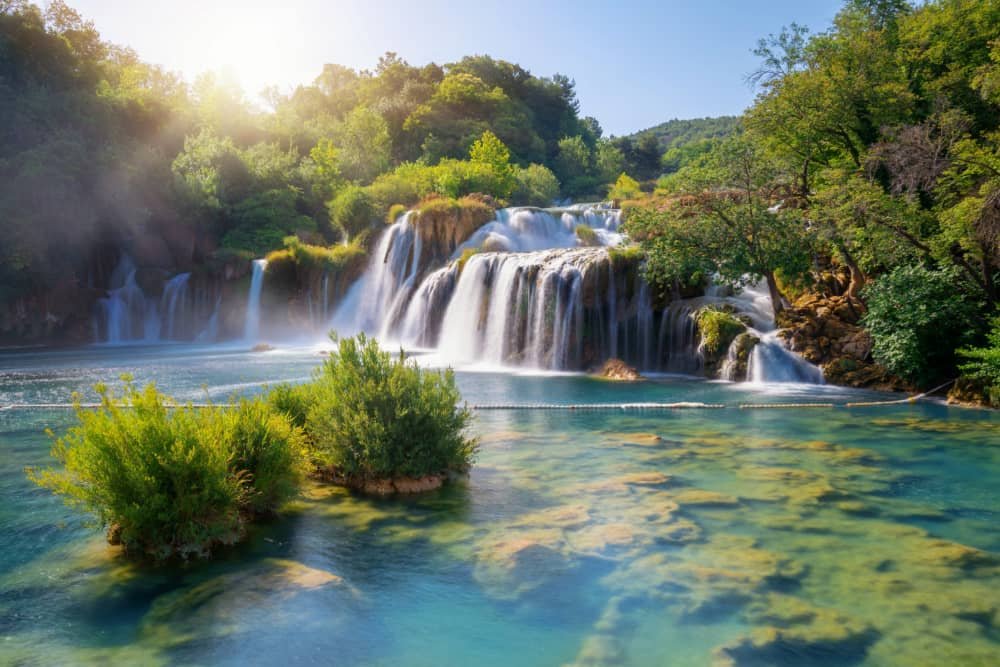
5. Manojlovac Waterfall – Krka National Park
If Skradinski Buk is Krka National Park’s most famous waterfall, Manojlovac is one of its most dramatic.
Located along the upper section of the Krka River near Kistanje and Burnum, Manojlovac is surrounded by rugged canyon scenery and feels noticeably wilder than the heavily visited area around Skradinski Buk.
The waterfall descends through a series of cascades, with the largest drop creating an impressive sight when water levels are strong.
See a Different Side of Krka National Park
Many visitors associate Krka almost entirely with turquoise pools and broad travertine cascades.
Manojlovac looks different.
Here, the river cuts through a more rugged landscape, with the waterfall descending into a canyon surrounded by rocky slopes and Mediterranean vegetation.
This makes Manojlovac particularly appealing to photographers and travelers who want to experience the quieter sections of Krka National Park.
Visit the Manojlovac Viewpoint
One of the best ways to appreciate Manojlovac is from the designated viewpoint overlooking the waterfall and canyon.
From above, you can see how the different sections of the waterfall descend through the landscape before the Krka continues downstream.
The viewpoint also has an interesting historical connection.
Emperor Franz Joseph I and Empress Elisabeth of Austria visited this area in 1875, and a commemorative plaque marks the occasion.
It’s a small historical detail, but it adds another layer to a destination visited primarily for its natural scenery.
Combine Manojlovac With Burnum
One of the best reasons to explore this part of Krka National Park is the nearby Burnum archaeological site.
Burnum was a Roman military camp positioned above the Krka River, and surviving archaeological remains include arches associated with the former military complex and an amphitheater.
Combining Burnum with Manojlovac creates an excellent half-day experience for travelers interested in both Croatia’s natural landscapes and Roman history.
It’s also a good example of why exploring beyond Skradinski Buk can make a visit to Krka much more rewarding.
Water Flow Changes With the Season
Manojlovac’s appearance can vary significantly depending on rainfall and river conditions.
During periods of stronger flow, the waterfall becomes considerably more powerful and photogenic.
In drier periods, particularly after extended summer heat, the amount of visible water may be reduced.
This seasonal variation is worth considering if Manojlovac is one of the main reasons you’re visiting this part of the park.
Expect Fewer Visitors
Manojlovac generally receives fewer visitors than Skradinski Buk.
That doesn’t mean you’ll necessarily have the viewpoint to yourself, but the experience can feel much quieter than the busiest sections of Krka National Park.
The surrounding landscape is also less developed for mass tourism, which is part of its appeal.
Bring water, wear comfortable footwear, and check current access information before traveling to this section of the park.
Is Manojlovac Worth the Detour?
For travelers spending only a few hours at Krka, Skradinski Buk will probably remain the priority.
But if you’re exploring the park more thoroughly, Manojlovac is absolutely worth considering.
Its dramatic canyon setting, changing seasonal flow, quieter atmosphere, and proximity to the Roman ruins at Burnum make it one of the most interesting waterfalls along the Krka River.
For photographers and travelers who prefer less crowded natural attractions, Manojlovac Waterfall may become one of the highlights of Krka National Park.
6. Bilušića Buk – Krka National Park
For travelers willing to venture beyond Krka National Park’s busiest areas, Bilušića Buk offers a quieter look at the river’s remarkable waterfall system.
Located along the upper Krka, Bilušića Buk is one of the waterfalls formed as the river passes over natural travertine barriers. Instead of the developed visitor experience surrounding Skradinski Buk, this part of the park feels considerably more secluded.
That makes it particularly appealing to travelers who enjoy discovering lesser-known natural attractions.
Experience a Quieter Krka Waterfall
Bilušića Buk demonstrates just how varied the Krka River becomes along its course.
Water spreads across rocky and travertine formations before descending through a series of cascades surrounded by vegetation and rugged terrain.
The appearance of the waterfall changes with water levels. After wetter periods, the flow can become substantially more powerful, while drier conditions reveal more of the underlying formations.
Its relatively remote setting also means the experience is quite different from walking the busy boardwalks around Skradinski Buk.
Discover Krka Beyond the Main Tourist Route
Many day visitors to Krka National Park never reach its upper waterfalls.
That’s understandable—Skradinski Buk is easier to incorporate into a short itinerary and offers extensive visitor infrastructure.
But travelers with additional time can discover a very different landscape farther upstream.
Bilušića Buk, Manojlovac, Brljan, and Rošnjak reveal how the Krka River repeatedly changes character, moving through canyons and widening river sections before encountering new travertine barriers and waterfalls.
Exploring these locations can make Krka feel less like a single attraction and more like the extensive river ecosystem it actually is.
Look for Traces of Traditional River Life
As elsewhere along the Krka, the landscape around Bilušića Buk has a history of human interaction with the river.
Waterfalls along the Krka were historically valuable sources of energy, and watermills operated at several locations along the river.
These remnants help explain why the waterfalls mattered to local communities long before Krka became one of Croatia’s most famous national parks.
They also add cultural interest to a visit otherwise dominated by natural scenery.
Plan Ahead Before Visiting
Bilušića Buk requires more planning than Croatia’s most heavily visited waterfalls.
Don’t expect the same transportation options, extensive boardwalks, restaurants, or visitor facilities found around Skradinski Buk.
Before making the trip, check current Krka National Park information regarding access, trails, entrances, and any seasonal restrictions.
Wear sturdy footwear and bring water, particularly during warmer months.
Because access conditions at lesser-visited areas can change, avoid relying solely on directions or advice from older travel blogs.
Is Bilušića Buk Worth Visiting?
Bilušića Buk probably shouldn’t replace Skradinski Buk for a first-time visitor with only a few hours at Krka.
But that’s not really its purpose.
It’s best suited to travelers spending more time in the national park, returning for a second visit, or specifically looking for less-crowded waterfalls in Croatia.
Pair it with other attractions along the upper Krka rather than driving a long distance simply to photograph one waterfall.
For adventurous travelers who want to see a quieter side of the national park, Bilušića Buk is a rewarding reminder that some of Krka’s most interesting landscapes lie well beyond its famous lower cascades.
7. Brljan Waterfall – Krka National Park
Another lesser-known waterfall along the upper Krka River is Brljan, a scenic cascade surrounded by the rugged karst landscape of Krka National Park.
Located upstream from some of the park’s busiest attractions, Brljan provides another opportunity to see how the Krka River changes as it moves through canyons, wider river sections, and natural travertine barriers.
For travelers exploring the upper reaches of the national park, it can be combined with other nearby historical and natural attractions rather than treated as a standalone day trip.
See Brljan and the Surrounding River Landscape
Brljan is formed where the Krka flows over a travertine barrier, creating a broad waterfall before continuing through the surrounding landscape.
The waterfall’s appearance can change considerably depending on water levels and seasonal conditions. During periods of stronger flow, the cascade becomes much more dramatic.
The surrounding scenery is equally important.
Rather than concentrating only on the waterfall itself, take time to appreciate the cliffs, vegetation, river, and karst formations that characterize this quieter section of Krka National Park.
Combine Brljan With the Upper Krka
Brljan makes the most sense for travelers already planning to explore upper Krka National Park.
It can be incorporated into an itinerary that includes Manojlovac Waterfall, Burnum archaeological site, and other attractions away from Skradinski Buk.
This approach gives you a much better understanding of the size and diversity of Krka National Park.
Instead of seeing only its most photographed waterfall, you’ll experience different sections of the river and landscapes that many short-term visitors never reach.
Expect a Quieter Experience
One of Brljan’s biggest advantages is its relative lack of crowds compared with Skradinski Buk.
The experience is more about exploring a quieter river landscape than finding extensive tourist facilities or a perfectly positioned photo platform.
That also means you should plan ahead.
Check current access information before visiting, wear appropriate footwear, and carry water during warmer weather. Conditions around lesser-visited sections of national parks can change, so follow current signs and official guidance.
Is Brljan Worth Visiting?
For a first visit to Krka with limited time, prioritize Skradinski Buk and perhaps Roški Slap.
But if you’re spending longer in the park or specifically searching for lesser-known waterfalls in Croatia, Brljan is a worthwhile addition to an upper Krka itinerary.
Its quieter setting also provides a useful contrast with the highly developed visitor experience surrounding Croatia’s most famous waterfalls.
Rather than making a special journey solely for Brljan, combine it with Manojlovac, Burnum, and other attractions in this part of Krka National Park for a more rewarding day of exploration.
8. Rošnjak Waterfall – Krka National Park
Rošnjak Waterfall is one of the smaller and lesser-known waterfalls along the Krka River, offering a much quieter experience than famous Skradinski Buk.
Located in a rugged section of Krka National Park, Rošnjak is surrounded by steep canyon scenery and relatively little development. Its secluded setting is one of the main reasons to appreciate it.
Rather than expecting restaurants, extensive boardwalks, or large visitor areas, think of Rošnjak as part of the wider natural landscape of the upper Krka.
A Small Waterfall in a Dramatic Setting
Rošnjak isn’t among Krka’s largest waterfalls.
Its appeal comes instead from the combination of flowing water, travertine formations, rocky canyon walls, and relative isolation.
The waterfall forms where the Krka crosses another natural barrier before continuing through the canyon.
As with other waterfalls along the river, its appearance can vary depending on rainfall, seasonal conditions, and water levels.
One of Krka’s Quieter Waterfalls
Visitors who see only Skradinski Buk can easily come away thinking of Krka National Park as a busy collection of boardwalks and popular viewpoints.
Rošnjak demonstrates how different the upper river can feel.
This part of the park is considerably more rugged, and the limited development around the waterfall helps preserve its natural character.
That makes it interesting for travelers who have already visited Krka’s major attractions and want to understand the river beyond its most photographed locations.
Combine Rošnjak With Other Upper Krka Attractions
Rošnjak makes the most sense as part of a broader exploration of upper Krka National Park rather than as a destination requiring an entire day.
Depending on current access and your route, combine this area with attractions such as Manojlovac Waterfall, Burnum, Brljan, and other viewpoints along the Krka River.
This creates a much more rewarding itinerary than driving specifically to see one relatively small waterfall.
Check Access Before You Go
Rošnjak isn’t designed for the same volume of tourism as Skradinski Buk.
Access, trails, viewing opportunities, and conditions can change, so check current Krka National Park information before including it in your itinerary.
This is especially important if you’re visiting specifically to photograph the waterfall or traveling during periods of particularly high or low water.
For travelers exploring Krka in depth, Rošnjak Waterfall offers a peaceful glimpse of the national park’s wilder side and provides a sharp contrast with its famous lower cascades.
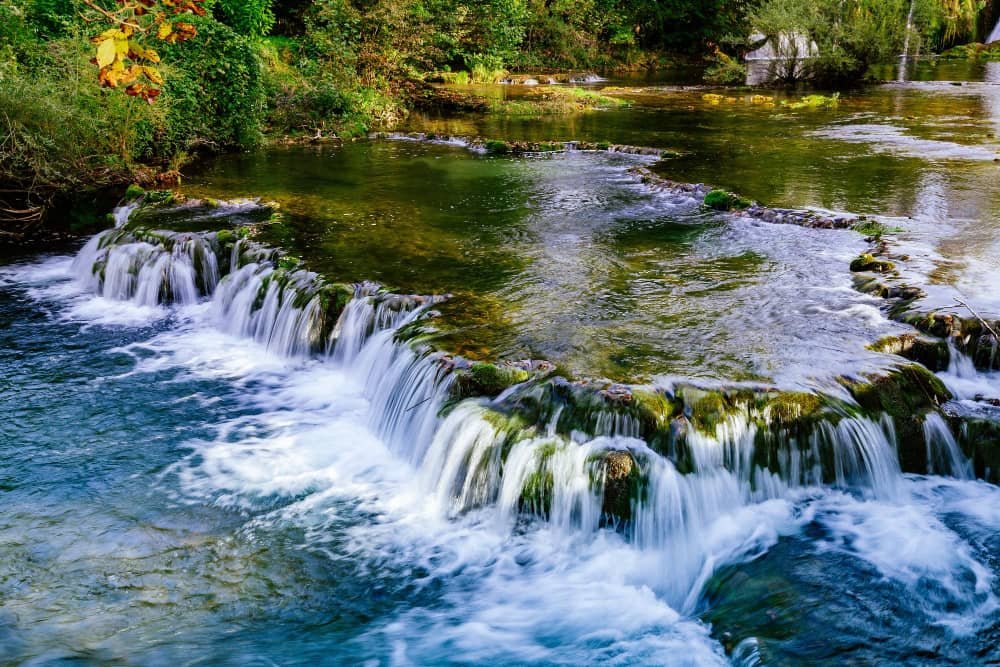
9. Rastoke Waterfalls – Slunj
Where the Slunjčica River meets the Korana River, water flows through and around the historic village of Rastoke, creating one of the most picturesque waterfall landscapes in Croatia.
Located in the town of Slunj, Rastoke isn’t centered around one enormous waterfall. Instead, the area features numerous cascades, channels, pools, traditional houses, and old watermills woven together into a remarkably scenic riverside settlement.
Its location between Zagreb and Plitvice Lakes National Park also makes Rastoke one of the easiest waterfall destinations to add to a Croatia road trip.
Discover the Watermill Village of Rastoke
For generations, residents of Rastoke used the flowing water of the Slunjčica River to power traditional mills.
Channels directed water toward buildings where its energy could be used for milling grain and other everyday activities.
This relationship between the village and the river created the distinctive landscape visitors see today.
Rather than separating nature from human settlement, waterfalls, houses, bridges, gardens, and mills appear together, giving Rastoke a character unlike Croatia’s national park waterfall systems.
See Rastoke’s Cascades
As the Slunjčica approaches the Korana, the river divides into multiple channels and spills over natural barriers through a series of waterfalls and smaller cascades.
Some sections are more dramatic than others, and the appearance of the waterfalls changes according to water levels.
Part of the pleasure of visiting Rastoke is simply walking around and discovering different views.
From one angle, you may see water rushing beneath a traditional building. From another, a cascade appears between trees and old wooden structures before disappearing toward the river below.
Rather than searching for one definitive “Rastoke Waterfall,” think of the entire village as a waterfall landscape.
Walk Through the Historic Village
Rastoke is best explored slowly.
Walk through the village, stop at viewpoints, look for traditional mill buildings, and take time to appreciate how closely the architecture is connected with the surrounding waterways.
Some areas and viewpoints may involve privately operated properties or paid access, while other views can be enjoyed from public streets and surrounding areas.
Follow posted signs and respect private property rather than attempting to reach waterfalls through residential land.
Rastoke vs. Plitvice Lakes
Rastoke is sometimes called a smaller version of Plitvice because both landscapes are shaped by flowing water, limestone, and cascading river systems.
But the experiences are quite different.
Plitvice Lakes is an expansive protected national park built around lakes, forests, boardwalks, and natural travertine barriers.
Rastoke is a historic settlement where waterfalls and river channels flow directly among houses and traditional watermills.
Don’t treat Rastoke as a substitute for Plitvice.
Instead, visit both if your route allows. Their differences are precisely what make combining them worthwhile.
Stop at Rastoke on the Way to Plitvice
Rastoke’s location makes it particularly convenient for travelers driving from Zagreb toward Plitvice Lakes National Park.
Instead of rushing directly to Plitvice, consider stopping in Slunj for a walk through Rastoke.
Depending on your schedule, you can spend an hour or two exploring the village or stay longer for a meal and a more relaxed visit.
Rastoke can also make an attractive overnight stop for travelers who prefer smaller towns to staying directly around the busiest entrances to Plitvice.
Visit in Different Seasons
Rastoke changes noticeably throughout the year.
Spring often brings greenery and stronger water flow, while summer creates a lush landscape that pairs easily with a wider Croatia road trip.
Autumn adds colorful foliage around the rivers and traditional buildings.
Winter can occasionally transform the cascades and village into an atmospheric landscape of snow and ice, although weather and walking conditions may be more challenging.
Whenever you visit, water levels will influence how powerful individual cascades appear.
For travelers who enjoy photography, historic villages, rivers, and waterfalls, Rastoke is one of the most charming natural and cultural stops in Croatia and an easy addition to a journey between Zagreb and Plitvice Lakes.
10. Zrmanja River Waterfalls and Cascades – Northern Dalmatia
Flowing through the rugged karst landscape of northern Dalmatia, the Zrmanja River offers a completely different waterfall experience from the famous boardwalks of Plitvice or the heavily visited cascades of Krka National Park.
The river is known for its turquoise water, steep canyons, waterfalls, rapids, and rocky landscapes, making it particularly popular with travelers interested in rafting, kayaking, hiking, and outdoor adventure.
Rather than visiting one enormous waterfall, exploring the Zrmanja is about experiencing an entire river landscape shaped by cascades and dramatic limestone scenery.
Discover Berberov Buk
One of the best-known waterfall areas along the Zrmanja is Berberov Buk, near the village of Muškovci.
Here, the river flows over natural barriers, creating broad cascades surrounded by vegetation and rocky terrain.
The setting feels noticeably different from Croatia’s major national parks. Traditional buildings, riverfront accommodations, restaurants, swimming areas, and outdoor activities can all be found around parts of the upper Zrmanja.
Access and conditions can vary, so check current local information before visiting.
Explore the Zrmanja Canyon
The Zrmanja River becomes especially dramatic as it passes through deep limestone canyons.
Steep cliffs rise above clear blue-green water, creating one of the most impressive river landscapes in Croatia.
Some sections can be appreciated from viewpoints, while others are best experienced from the water.
This combination of canyons, waterfalls, rapids, and turquoise pools makes the Zrmanja particularly appealing to travelers who prefer active outdoor experiences rather than conventional sightseeing.
Go Rafting or Kayaking
The Zrmanja is one of Croatia’s popular destinations for rafting and kayaking.
Depending on water levels and the season, organized trips travel through sections of the river containing rapids, smaller waterfalls, pools, and canyon scenery.
Conditions vary throughout the year, and different stretches of river may be suitable for different activities.
If you’re planning to raft or kayak, use an established local operator and choose an excursion appropriate for current river conditions and your experience level.
Can You Swim in the Zrmanja River?
Unlike Plitvice Lakes and Skradinski Buk, where swimming restrictions protect sensitive national park environments, recreational swimming is possible in some accessible areas along the Zrmanja.
However, that doesn’t mean every waterfall, rapid, or section of the river is safe for swimming.
Currents, slippery rocks, changing water levels, and local access restrictions can create hazards.
Use established swimming areas and follow local signs and guidance rather than entering the water directly beside an unfamiliar waterfall or rapid.
Combine the Zrmanja With a Northern Dalmatia Road Trip
The Zrmanja region works particularly well for travelers exploring Zadar and northern Dalmatia.
It can also be incorporated into a longer road trip connecting Croatia’s coast with inland national parks and mountain landscapes.
Because the river covers a substantial area, decide what you actually want from your visit before setting out.
If waterfalls are your priority, concentrate on accessible cascade areas such as Berberov Buk. If adventure is the goal, consider an organized rafting or kayaking excursion. For photography, seek out established canyon viewpoints.
A Different Kind of Croatian Waterfall Destination
The Zrmanja doesn’t offer the same experience as Veliki Slap or Skradinski Buk—and that’s exactly why it belongs on this list.
Here, waterfalls are part of a broader wild river environment filled with rapids, limestone cliffs, clear pools, and dramatic canyons.
It’s an excellent choice for travelers who have already experienced Croatia’s famous national parks or simply want to combine waterfall sightseeing with outdoor adventure.
From the towering Veliki Slap at Plitvice to the cascading waters of Krka, the historic mills of Rastoke, and the rugged Zrmanja River, these 10 beautiful waterfalls in Croatia reveal just how diverse the country’s inland landscapes can be.
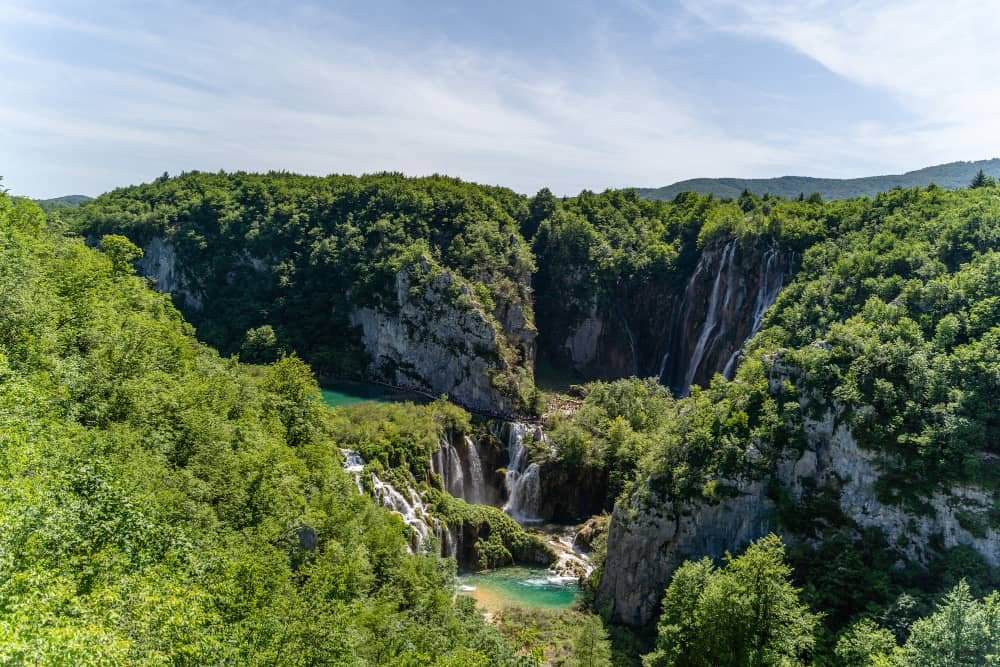
Plitvice Lakes vs. Krka National Park: Which Is Better for Waterfalls?
If you’re planning a Croatia itinerary, you may find yourself choosing between Plitvice Lakes National Park and Krka National Park. Both are famous for waterfalls, turquoise water, and beautiful karst landscapes, but the experience is quite different.
For pure lake-and-waterfall scenery, Plitvice Lakes is usually the stronger choice. If you’re staying along the Dalmatian coast and want waterfalls that are easier to incorporate into your itinerary, Krka may be more convenient.
| Feature | Plitvice Lakes | Krka National Park |
|---|---|---|
| Most famous waterfall | Veliki Slap | Skradinski Buk |
| Landscape | Lakes, forests, canyons and cascades | River, waterfalls, canyons and travertine barriers |
| Best for | Immersive waterfall scenery | Waterfalls plus cultural attractions |
| Walking experience | Extensive trails and wooden boardwalks | Trails vary by attraction |
| Swimming at main waterfalls | Not permitted | Not permitted at Skradinski Buk |
| Easy from | Zagreb, Zadar and central Croatia routes | Šibenik, Split and northern/central Dalmatia |
| Time needed | Ideally most of a day | Half day to full day, depending on areas visited |
| UNESCO World Heritage Site | Yes | No |
Choose Plitvice Lakes for the Most Immersive Waterfall Experience
If waterfalls are one of the main reasons for your trip, Plitvice Lakes National Park would be my first choice.
The combination of 16 named lakes, countless cascades, forest trails, elevated viewpoints, and wooden walkways creates an experience that extends far beyond one famous waterfall.
Veliki Slap provides the dramatic centerpiece, but much of Plitvice’s beauty comes from smaller waterfalls constantly appearing between the lakes.
You can spend hours walking through scenery where water seems to surround you in almost every direction.
Choose Krka for Variety
Krka National Park is particularly appealing if you want to combine waterfalls with other attractions.
Skradinski Buk is the headline waterfall, but the park also contains Roški Slap, Manojlovac, Bilušića Buk, Brljan, Rošnjak, historic watermills, monasteries, archaeological remains, caves, and impressive river canyons.
Krka is also convenient for travelers based around Šibenik or Split and can fit naturally into a Dalmatian coastal itinerary.
The important thing is to remember that Krka is geographically extensive. Seeing Skradinski Buk doesn’t mean you’ve explored the entire national park.
Which Park Is Better for Photography?
Both are excellent.
Plitvice offers the classic combination of turquoise lakes, waterfalls, forests, boardwalks, and elevated canyon views.
Krka provides more varied waterfall environments, from the broad cascades of Skradinski Buk to the rugged canyon landscape surrounding Manojlovac.
For the greatest concentration of iconic waterfall scenery, I’d give Plitvice the advantage.
For variety across several separate locations, Krka wins.
Which Is Better With Limited Time?
Your location should influence the decision.
If you’re traveling through inland Croatia or between Zagreb and the Adriatic, Plitvice can fit naturally into the journey.
If you’re staying around Šibenik, Split, or central Dalmatia, Krka will often be easier to incorporate without spending as much time traveling.
Don’t choose a park solely because one is supposedly “better.” A spectacular waterfall isn’t worth spending most of your limited vacation day driving if another excellent national park is much closer.
Can You Swim at Plitvice or Krka?
This is where older Croatia travel articles can cause confusion.
Swimming is prohibited throughout Plitvice Lakes National Park.
At Krka, the famous swimming area at Skradinski Buk is also no longer open for swimming. Older photographs showing crowds swimming beneath the cascades reflect previous regulations.
Swimming rules elsewhere within Krka National Park depend on designated locations and current park regulations, so always check official information before entering the water.
Should You Visit Both?
If you have enough time, absolutely.
Despite frequent comparisons, Plitvice and Krka don’t feel like duplicate attractions.
Plitvice provides an immersive landscape of interconnected lakes and waterfalls, while Krka follows a major river through waterfalls, canyons, historic sites, monasteries, and traditional watermill areas.
Visiting both gives you a much better appreciation for Croatia‘s remarkable karst landscapes.
If you can visit only one specifically for waterfalls, choose Plitvice Lakes. If you’re already traveling through Dalmatia and want waterfalls combined with history and other attractions, Krka National Park is an excellent choice.
Best Time to Visit Waterfalls in Croatia
Croatia’s waterfalls can be beautiful throughout the year, but spring and early autumn are generally the best times to visit. Water levels are often stronger than during the driest part of summer, temperatures are more comfortable for hiking, and major attractions such as Plitvice and Krka tend to be less crowded than during peak season.
However, every season offers a different experience.
Spring: March to May
Spring is one of the best seasons for seeing waterfalls in Croatia at their most powerful.
Rainfall and seasonal runoff can increase river flow, creating stronger cascades at places such as Veliki Slap, Skradinski Buk, Manojlovac, and Rastoke.
The surrounding landscapes also become increasingly green as the season progresses.
April and May are particularly appealing because temperatures are usually more comfortable for walking than during midsummer, while visitor numbers can be lower than in July and August.
Best for: Stronger water flow, green landscapes, hiking, photography, and fewer crowds
Summer: June to August
Summer is Croatia’s busiest travel season.
Long days and generally favorable weather make it easy to combine waterfalls with beaches, islands, historic cities, and road trips along the Adriatic coast.
The disadvantage is heat and crowds.
Plitvice Lakes and Skradinski Buk can become extremely busy, particularly during July and August. Arriving early can make a significant difference.
Some waterfalls may also have reduced flow after prolonged periods of hot, dry weather, especially those where seasonal conditions strongly influence water levels.
Don’t forget that swimming is not permitted at Plitvice Lakes or at Skradinski Buk, despite older photographs and travel guides showing visitors in the water.
Best for: Combining waterfalls with a Croatian coastal vacation and maximizing daylight
Autumn: September to November
Autumn can be spectacular at Croatia’s waterfalls.
September often provides an excellent balance of warm weather and fewer visitors after the peak summer season.
As autumn progresses, increased rainfall can strengthen waterfall flow, while changing leaves create beautiful scenery around forested destinations such as Plitvice Lakes and Rastoke.
October can be especially attractive for photographers, although weather becomes less predictable later in the season.
Best for: Autumn colors, photography, fewer crowds, road trips, and comfortable walking temperatures
Winter: December to February
Winter offers a completely different waterfall experience.
Cold conditions can transform parts of Plitvice Lakes into a landscape of snow, ice, and partially frozen cascades.
Rastoke can also be particularly atmospheric during snowy weather.
However, winter travel requires considerably more flexibility.
Snow, ice, flooding, weather conditions, and maintenance can affect trails, entrances, transportation, and access to certain sections of national parks.
Daylight hours are also much shorter.
Always check current conditions before traveling specifically to see a waterfall during winter.
Best for: Snowy landscapes, fewer visitors, winter photography, and a completely different view of Croatia’s waterfalls
When Are Croatia’s Waterfalls Most Powerful?
There isn’t one guaranteed month when every waterfall will have maximum flow.
Water volume depends on recent rainfall, snowmelt, river levels, and local hydrological conditions.
Generally, spring and wetter periods of autumn offer a better chance of seeing stronger waterfalls than the driest weeks of midsummer.
This matters particularly for waterfalls such as Manojlovac and some of the lesser-visited Krka cascades, whose appearance can change noticeably with water conditions.
What Is the Best Month to Visit?
For most travelers, May, June, September, and October provide the best balance.
Choose May if waterfalls and hiking are your priorities.
Choose June if you want to combine waterfalls with the Adriatic coast before the busiest part of summer.
Choose September for warm weather with generally fewer crowds than peak season.
Choose October for autumn scenery and potentially stronger water flow, while accepting a greater chance of unsettled weather.
If your main goal is photographing Croatia’s waterfalls rather than spending time at the beach, May and October are particularly appealing months to consider.
Whatever season you choose, check current conditions and official park information shortly before your visit. Croatia’s waterfalls are dynamic natural environments, and water levels, trails, transportation, and visitor access can change throughout the year.
Tips for Visiting Waterfalls in Croatia
Croatia’s most famous waterfalls are relatively easy to visit, but a little planning can make a major difference—especially at Plitvice Lakes and Krka National Park during the busy summer months.
Book National Park Tickets in Advance
If you’re visiting Plitvice Lakes or Krka National Park during peak season, check ticket availability and entrance information before arriving.
Visitor procedures, entrance points, transportation options, and ticket policies can change, so use the official national park websites for current information.
Booking ahead is particularly worthwhile during July and August, when Croatia receives its largest number of visitors.
Arrive Early
An early start is one of the easiest ways to improve your waterfall experience.
Popular areas such as Veliki Slap and Skradinski Buk become much busier as the day progresses.
Morning visits can mean cooler temperatures, less congestion on trails and boardwalks, and better opportunities to stop at viewpoints without feeling rushed.
Wear Comfortable Walking Shoes
Don’t underestimate how much walking can be involved.
Plitvice Lakes includes extensive trails and wooden boardwalks, while Krka’s attractions can involve stone paths, stairs, uneven terrain, and longer walks.
Shoes with good grip are particularly useful after rain when surfaces may become slippery.
Don’t Assume Swimming Is Allowed
This is one of the most important things to know before visiting Croatia’s waterfalls.
Older photographs frequently show people swimming at Skradinski Buk, but swimming at the famous waterfall is no longer permitted.
Swimming is also prohibited throughout Plitvice Lakes National Park.
Rules elsewhere can vary by location, season, and conservation requirements. Never enter a waterfall pool simply because other travelers have done so in old photographs.
Always follow current signs and official regulations.
Stay on Marked Trails and Boardwalks
Croatia’s waterfall environments can be surprisingly fragile.
At Plitvice and Krka, the same natural processes responsible for creating beautiful travertine barriers can be damaged by inappropriate visitor access.
Stay on designated paths, respect barriers, and don’t climb onto waterfall formations for photographs.
This protects both the landscape and you—wet limestone, currents, cliffs, and slippery surfaces can create serious hazards.
Bring Water and Sun Protection
Croatian summers can become extremely hot, particularly around exposed archaeological sites, viewpoints, and hiking trails.
Bring water, sunscreen, sunglasses, and a hat, especially if you’re spending most of the day outdoors.
Some major visitor areas have restaurants, cafés, or kiosks, but don’t assume food and water will be available beside every waterfall.
This is particularly important when exploring lesser-visited areas of the upper Krka or the Zrmanja region.
Check Water Levels and Weather Conditions
Waterfalls are dynamic.
A waterfall photographed during a rainy spring may look dramatically different after several weeks of dry summer weather.
Recent rainfall can also affect trails, river levels, and accessibility.
If you’re making a significant detour specifically to see Manojlovac, Bilušića Buk, Brljan, Rošnjak, or another less-visited waterfall, check current conditions before traveling.
Don’t Underestimate Driving Times
Croatia looks relatively compact on a map, but you shouldn’t try to visit Plitvice, Krka, Rastoke, and Zrmanja in one rushed waterfall marathon.
Instead, group attractions geographically.
Combine Rastoke with Plitvice Lakes, explore several Krka waterfalls together, and visit the Zrmanja River while traveling through northern Dalmatia.
You’ll spend less time driving and considerably more time enjoying the destinations.
Give Plitvice Enough Time
One common mistake is treating Plitvice Lakes as a quick stop to photograph Veliki Slap.
The national park is much more than one waterfall.
Its interconnected lakes, forests, boardwalks, viewpoints, and smaller cascades are the real reason to visit.
If possible, allow most of a day rather than trying to squeeze Plitvice between several other attractions.
Explore Beyond Skradinski Buk at Krka
Skradinski Buk deserves its reputation, but it represents only one part of Krka National Park.
Travelers with additional time can explore Roški Slap, Manojlovac, archaeological sites, monasteries, viewpoints, and quieter sections of the Krka River.
You don’t need to see every waterfall, but exploring one additional area can provide a much better sense of the national park.
Follow Drone Regulations
Don’t assume you can launch a drone simply because you’re outdoors.
National parks and other protected areas may restrict or require authorization for drone use, and Croatia also has aviation regulations governing where and how drones can be operated.
Check current rules before bringing a drone to Plitvice, Krka, or another protected waterfall area.
Never launch a drone from a restricted location or fly in a way that disturbs wildlife or other visitors.
Protect Your Camera and Phone
Waterfall photography often means spray, mist, wet surfaces, and changing weather.
A small waterproof cover or dry bag can help protect cameras, phones, and other electronics.
If you’re rafting or kayaking on the Zrmanja River, waterproof protection becomes even more important.
Slow Down and Enjoy the Landscape
It’s easy to become focused on reaching the famous viewpoint, taking a photograph, and moving immediately to the next attraction.
But Croatia’s best waterfall destinations reward slower exploration.
Walk the trails around Plitvice, explore the traditional mills at Rastoke, discover quieter sections of Krka, or spend time beside the Zrmanja River.
The waterfall itself may be what brought you there, but the forests, lakes, canyons, rivers, wildlife, historic structures, and surrounding landscapes are often what make the experience memorable.
Frequently Asked Questions About Waterfalls in Croatia
What is the most famous waterfall in Croatia?
Veliki Slap in Plitvice Lakes National Park is arguably the most famous individual waterfall in Croatia.
It drops approximately 78 meters beside the Lower Lakes and is one of the signature sights of the UNESCO-listed national park.
Skradinski Buk in Krka National Park is another internationally recognized Croatian waterfall, although it consists of a broad series of cascades rather than one tall vertical drop.
What is the highest waterfall in Croatia?
Veliki Slap, or the Great Waterfall, is commonly described as Croatia’s highest waterfall and reaches approximately 78 meters.
It is located in Plitvice Lakes National Park and is fed by the Plitvica stream.
You may encounter different claims when seasonal waterfalls or alternative measurement methods are considered, so for travelers, it’s safest to describe Veliki Slap as Croatia’s best-known major high waterfall and the tallest waterfall at Plitvice Lakes.
Which is better for waterfalls, Plitvice or Krka?
For the most immersive waterfall scenery, Plitvice Lakes National Park generally has the advantage.
Its interconnected lakes, numerous cascades, wooden walkways, forests, and Veliki Slap create an extraordinary landscape that can easily fill most of a day.
Krka National Park is better if you want greater variety across a larger river system. In addition to Skradinski Buk, you can explore Roški Slap, Manojlovac, historic watermills, monasteries, archaeological sites, and river canyons.
If waterfalls are your main priority, choose Plitvice. If you’re already staying along the Dalmatian coast, Krka may fit more naturally into your itinerary.
Can you swim at the waterfalls in Croatia?
It depends on the location, and you should never assume swimming is permitted.
Swimming is prohibited throughout Plitvice Lakes National Park, and swimming at Skradinski Buk in Krka National Park is also prohibited.
Older photographs showing visitors swimming beneath Skradinski Buk are outdated and reflect previous regulations.
Other Croatian rivers and recreational areas may have designated places where swimming is permitted, but always follow current local signs and official regulations.
Can you swim at Plitvice Lakes?
No. Swimming is prohibited in Plitvice Lakes National Park.
The restrictions help protect the lakes, water quality, aquatic ecosystems, and sensitive travertine formations responsible for creating Plitvice’s distinctive landscape.
Visitors should remain on designated trails and boardwalks.
Can you swim at Skradinski Buk?
No. Swimming at Skradinski Buk is no longer permitted.
This is particularly important because many older Croatia travel guides, photographs, and videos show people swimming beneath the waterfall.
Current visitors should follow Krka National Park‘s designated swimming rules and check official information because regulations elsewhere within the park may differ.
What waterfalls are near Split?
Krka National Park is one of the best waterfall destinations to consider from Split.
Skradinski Buk is the park’s most famous waterfall, while travelers with more time can explore additional sections of Krka containing waterfalls such as Roški Slap and Manojlovac.
Krka works particularly well as part of a longer road trip through central and northern Dalmatia.
What waterfalls are near Zagreb?
For travelers starting in Zagreb, Rastoke and Plitvice Lakes National Park are two of the best options.
Rastoke is located in Slunj and makes an excellent stop while traveling toward Plitvice.
Continue south to Plitvice Lakes to see Veliki Slap, Sastavci, and the park’s extensive network of lakes and cascades.
Combining Rastoke and Plitvice is one of the best waterfall-focused routes from Zagreb.
Are Croatia’s waterfalls free to visit?
Some are, but many of the most famous waterfalls are located within national parks that charge admission.
Plitvice Lakes National Park and Krka National Park require entrance tickets, with prices and ticket arrangements varying according to season and visitor options.
Other waterfall areas may have free public viewpoints, parking charges, privately operated visitor areas, activity fees, or other costs.
Check current prices before traveling rather than relying on older articles, as entrance fees can change.
How many days do you need to see Croatia’s waterfalls?
You can visit one major waterfall destination in a day, but seeing several regions requires more time.
For a waterfall-focused Croatia road trip, consider at least three to five days.
One possible route could include Rastoke and Plitvice Lakes, followed by Krka National Park and then the Zrmanja River region.
However, don’t try to see every waterfall simply to complete a list. Spending most of a day at Plitvice or exploring multiple areas of Krka is usually more rewarding than rushing between distant locations.
Is Plitvice Lakes worth visiting?
Absolutely. Plitvice Lakes National Park is one of Croatia’s most spectacular natural attractions and offers much more than a single famous waterfall.
Its 16 named lakes are connected through a remarkable landscape of cascades, travertine barriers, forests, canyons, and clear water.
Even if you’ve already visited Krka, Plitvice provides a sufficiently different experience to justify seeing both.
Is Krka National Park worth visiting?
Yes, especially if you’re traveling through Dalmatia.
Skradinski Buk is the best-known attraction, but Krka National Park extends far beyond this waterfall.
Travelers with more time can explore Roški Slap, Manojlovac, historic watermills, monasteries, archaeological remains, caves, and quieter stretches of the Krka River.
This combination of waterfalls, nature, and cultural heritage makes Krka one of Croatia’s most varied national parks.
Which Croatian waterfall is best for photography?
For a classic dramatic waterfall, Veliki Slap is difficult to beat.
For layered turquoise cascades, explore Skradinski Buk and the wider Plitvice Lakes landscape.
Rastoke is particularly photogenic if you want waterfalls combined with traditional architecture, while Manojlovac offers a more rugged canyon setting.
Autumn can be especially beautiful at Plitvice and Rastoke when colorful foliage surrounds the water.
Are Croatia’s waterfalls worth visiting if you’re going mainly for the beaches?
Yes. In fact, Croatia’s inland waterfalls provide an excellent contrast to the Adriatic coast.
A trip that combines Split or Šibenik with Krka, or Zagreb with Rastoke and Plitvice, lets you experience dramatically different landscapes without leaving Croatia.
The coast may be the country’s most famous attraction, but its turquoise rivers, forested lakes, limestone canyons, and waterfalls are among the strongest reasons to explore farther inland.
More Croatia Travel Guides
Croatia’s waterfalls are only one part of the country’s extraordinary natural and cultural landscape. A waterfall-focused road trip can easily be combined with historic cities, UNESCO World Heritage Sites, Adriatic beaches, islands, and some of the most impressive coastal scenery in the Balkans.
If you’re planning a longer Croatia trip, continue exploring with these guides:
- UNESCO World Heritage Sites in Croatia – Discover Croatia’s UNESCO-listed cultural and natural treasures, including Plitvice Lakes National Park, Dubrovnik, Split, Trogir, and other remarkable destinations.
- Most Popular Historical Places in Croatia – Explore ancient Roman landmarks, medieval fortresses, historic old towns, archaeological sites, and centuries of Croatian heritage.
- Best Beaches in Croatia – Combine your inland waterfall adventures with some of the country’s most beautiful beaches and crystal-clear Adriatic water.
- Croatia Travel Guides – Browse more destination ideas, attractions, road-trip inspiration, and practical advice for exploring Croatia.
One of the best things about traveling through Croatia is how easily very different experiences can fit into the same itinerary.
You might spend the morning walking beside turquoise waterfalls at Plitvice Lakes, explore the historic streets of a centuries-old town in the afternoon, and reach the Adriatic coast the following day.
In Dalmatia, Krka National Park can be combined with Šibenik, Split, Zadar, or nearby coastal destinations, while Rastoke and Plitvice fit naturally into a road trip between Zagreb and the Adriatic.
Whether your trip focuses on nature, history, beaches, or a combination of all three, exploring beyond Croatia’s coastline reveals just how diverse the country really is.
Why Croatia’s Waterfalls Are Worth Exploring
Croatia’s Adriatic coastline may receive most of the attention, but travel inland and you’ll discover some of the country’s most extraordinary natural landscapes.
The waterfalls in Croatia aren’t all alike, either.
At Plitvice Lakes National Park, waterfalls connect turquoise lakes surrounded by forests and limestone canyons. Veliki Slap provides the dramatic centerpiece, while Sastavci and countless smaller cascades reveal why the entire landscape deserves time to explore.
Along the Krka River, the experience changes again. Skradinski Buk spreads across a remarkable sequence of travertine barriers, Roški Slap combines cascades with historic watermills, and Manojlovac plunges through a much more rugged canyon environment.
Then there are places that feel completely different.
At Rastoke, waterfalls flow between traditional houses and historic watermills, turning an entire village into a landscape shaped by water. Along the Zrmanja River, waterfalls and rapids become part of a wilder setting of turquoise pools, limestone cliffs, and dramatic canyons.
You don’t need to visit every waterfall in Croatia to appreciate what makes them special.
For a first trip, Plitvice Lakes and Krka National Park are the obvious priorities. Add Rastoke if you’re traveling between Zagreb and Plitvice, or explore the Zrmanja if your itinerary takes you through northern Dalmatia.
Travelers with more time can venture deeper into Krka National Park to discover quieter waterfalls such as Manojlovac, Bilušića Buk, Brljan, and Rošnjak.
Whichever destinations you choose, allow enough time to experience the surrounding landscape rather than simply reaching a viewpoint, taking a photograph, and leaving.
Walk the boardwalks. Follow the river. Explore the canyons. Stop at the old watermills. Watch how the landscape changes as water moves across limestone and travertine formations.
And most importantly, respect the regulations protecting these fragile environments so that Croatia’s rivers, lakes, and waterfalls remain just as remarkable for future visitors.
The beaches may introduce you to Croatia’s beauty, but its waterfalls, turquoise rivers, forested lakes, and hidden inland landscapes provide some of the strongest reasons to explore beyond the Adriatic coast.
What's your reaction?