 By
By 7 High Peaks of the Balkans
The Balkans are home to several distinct mountain ranges, from Bulgaria’s Rila and Pirin Mountains to the Dinaric Alps and the Šar Mountains. If you’re planning a mountain-focused trip, start with our guide to traveling in the Balkan Mountains. Their high points offer very different experiences: some have popular marked approaches, while others are remote alpine objectives that call for strong navigation skills and mountain experience.
This guide introduces seven notable peaks across the region. It is not a ranking of the seven highest mountains, and the peaks span several countries rather than forming a single hiking route. Elevations are commonly published figures; maps and sources may differ slightly.
First, what is the “Peaks of the Balkans” trail?
The Peaks of the Balkans Trail is a specific, waymarked 192-kilometre hiking circuit through Albania, Kosovo and Montenegro. It is not a route that climbs every mountain in this article. The trail’s official description puts its highest point at about 2,290 metres, while several of the peaks below rise higher and require separate plans.
For the multi-day trail, check the current stage descriptions, border-crossing procedures, local information offices and weather before setting out. Some stages cross remote terrain, and the trail’s official guidance recommends carrying navigation and emergency equipment and hiking with a group or a knowledgeable guide.
High Peaks of the Balkans
These seven peaks show how varied the Balkan mountains are. Musala’s route passes huts and lakes, Vihren rises above the pale marble slopes of Pirin, and the mountains farther west take you into more remote terrain. The difference between these trips is about more than height: where you start, how you reach the trail and what the route demands all matter.
Each peak below is a separate trip. Use the descriptions to see what draws you to a particular mountain, then check the current route and access information before making plans.
1. Musala, Bulgaria — 2,925 metres
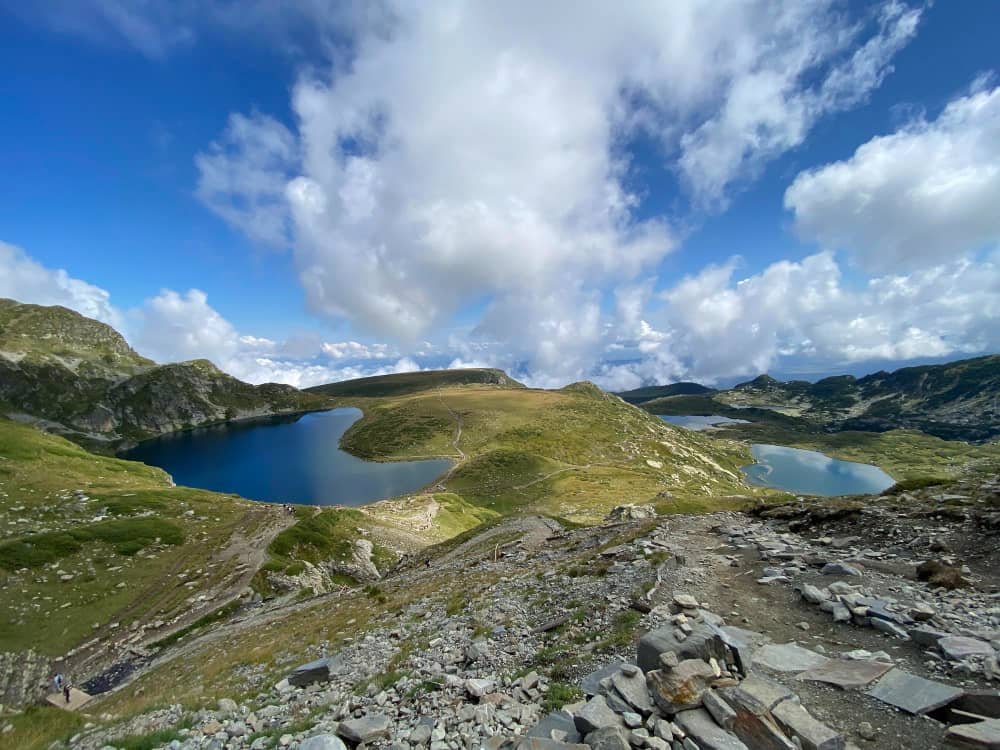
Musala is the highest peak in Bulgaria and on the Balkan Peninsula. It is also one of the highlights of Bulgaria’s mountain landscapes. It rises in the eastern part of the Rila Mountains, with the resort of Borovets serving as a common base for the climb. The popular approach uses the Yastrebets gondola, when operating, then continues past Musala Hut and a chain of high-altitude lakes toward the peak. The scenery changes along the way: forested slopes give way to open alpine terrain, rocky ground and broad views across Rila.
The lift can shorten the approach, but it does not turn Musala into a casual walk. The final climb is steeper and more exposed and more exposed than the lower trail, and the weather can feel very different from Borovets. Check the current route information and lift schedule before choosing your start time.
Good to know: If your plan depends on the gondola, confirm its operating status before travelling. Allow time for the full return hike and carry layers for changing conditions above the lakes.
2. Vihren, Bulgaria — 2,914 metres
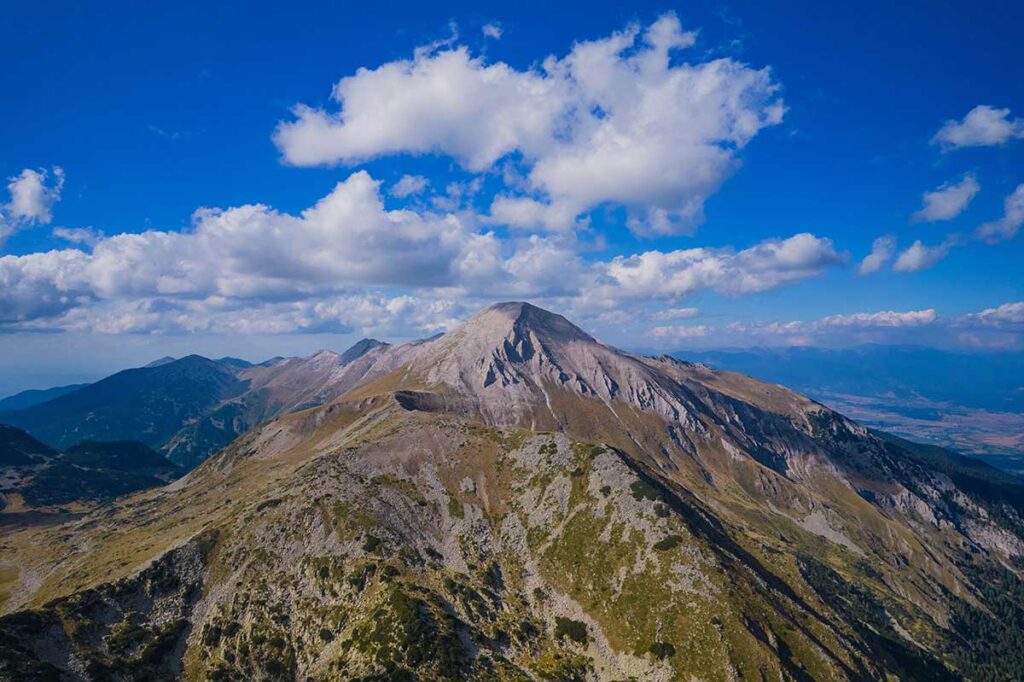
Vihren is the highest peak in the Pirin Mountains and Bulgaria’s second-highest peak. Its pale marble slopes give it a sharper, more barren appearance than Musala. From Bansko, the mountain has a distinctive pyramid shape; from other angles, its ridges and neighboring peaks create a very different profile. The high ground is rocky and exposed, with little shelter once you are above the lower slopes.
The usual hiking approach begins near Vihren Hut and climbs toward the Kabata saddle before the steep climb to the top. That final section is steep and requires sure footing. More exposed options, including the Jamdzhievi Skali ridge, are mountaineering routes for experienced climbers, not shortcuts for ordinary hikers. Bansko’s mountain information describes the standard approach and the more demanding alternatives; check local conditions before choosing a route.
Good to know: Do not judge conditions by the weather in Bansko alone. Snow and ice can remain near the peak after the valley warms up, and the exposed marble terrain offers limited shelter if conditions change.
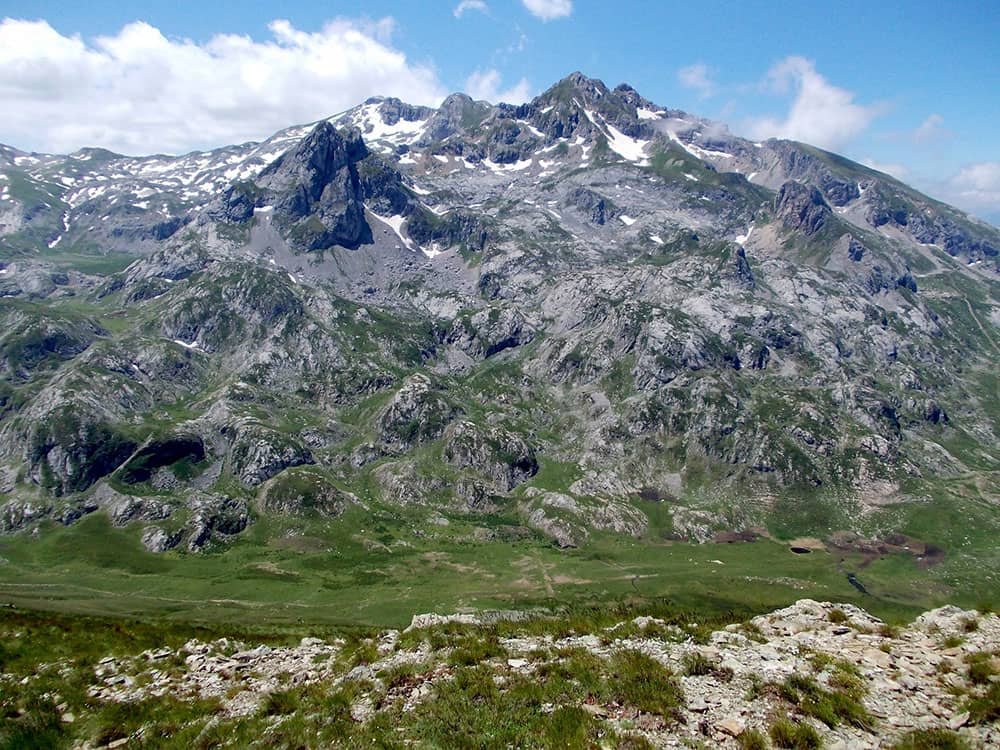
Photo: Pavouk / Wikimedia Commons
3. Mount Korab, Albania and North Macedonia — about 2,764 metres
Mount Korab stands on the border between Albania and North Macedonia and is North Macedonia’s highest point. It is also Albania’s highest peak. Unlike the pointed profile of Vihren, Korab has broad high slopes and a long ridge near the top. It sits within the wider Korab range, surrounded by remote villages and protected mountain landscapes.
The approach you choose matters because the peak lies on an international boundary. Routes from different sides involve different trailheads, transport and local arrangements, and a mountain ridge should not be assumed to be an authorized border crossing. The Mavrovo National Park information describes the Korab area and its hiking terrain. Check current access rules with the relevant local authorities or a qualified guide before setting out.
Good to know: Choose your approach country first, then confirm the trailhead, access requirements and transport. Build extra time into the plan; the remote setting can make last-minute changes difficult.
4. Titov Vrv, North Macedonia — 2,747 metres
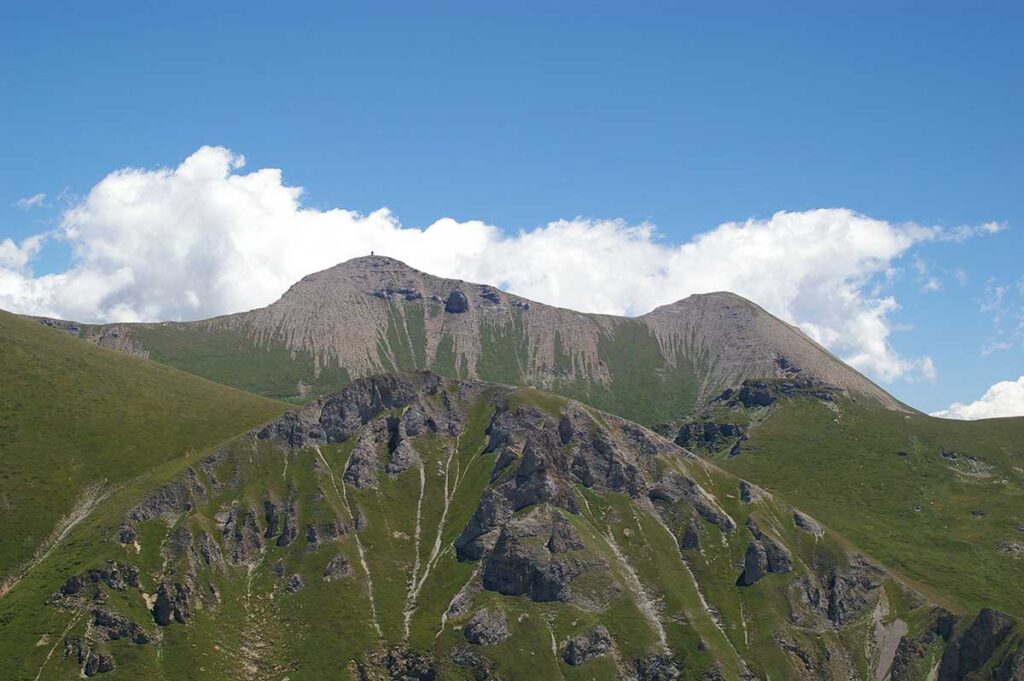
Titov Vrv is the highest peak of the Šar Mountains and one of North Macedonia’s best-known high-mountain objectives. A common starting area is Popova Šapka, above the city of Tetovo. From there, routes climb through open mountain terrain toward the peak. Some approaches take a more direct line, while ridge routes pass additional high points and make for a longer, more demanding day.
On a clear day, the views stretch across the Šar Mountains and give you a real sense of how vast this range is. But the open terrain can make navigation harder in cloud or poor visibility, and a route that feels straightforward in good conditions can become difficult when the weather turns. Review the route description for the summer trail from Popova Šapka and make sure it matches your experience.
Good to know: Treat Titov Vrv as a full mountain day. Check the route and forecast locally, and do not start a long ridge hike unless you have enough daylight and a reliable way to navigate.
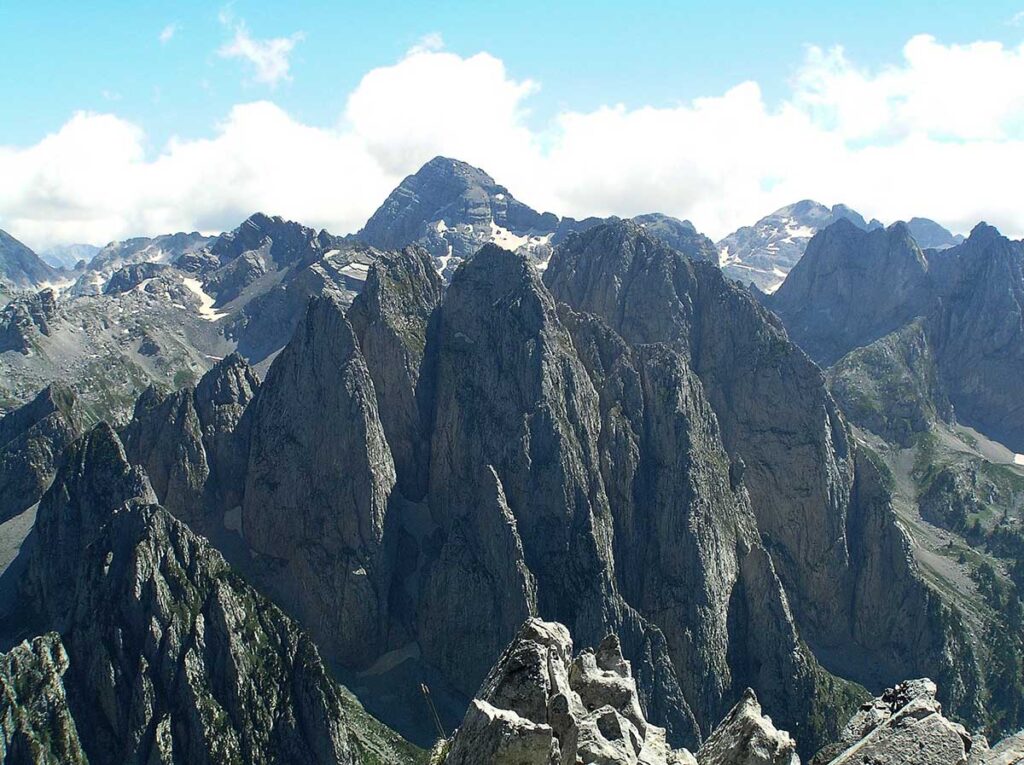
5. Maja Jezercë, Albania — 2,694 metres
Maja Jezercë is the highest peak of the Albanian Alps and a major peak in the rugged Prokletije range. It lies between the valleys of Valbona and Theth, where steep limestone mountains rise above forested slopes and small settlements. This part of Albania is also surrounded by some of the best national parks and protected landscapes in the Balkans. The setting is one of the most dramatic in Albania, but reaching the top of Jezercë is a serious mountain hike that requires experience and preparation.
Visitors can experience the surrounding landscape without attempting Jezercë. The well-known crossing between Theth and Valbona, for example, is a separate mountain hike and does not climb the peak. If you want to climb Jezercë itself, research the route carefully and be realistic about your experience, the weather and any remaining snow. Albania’s official tourism site describes Jezercë as a destination for advanced hiking and alpine climbing.
Good to know: Decide whether your goal is to explore the Albanian Alps or to climb Jezercë specifically. The valleys offer memorable mountain scenery on their own; the peak requires a more specialized plan.
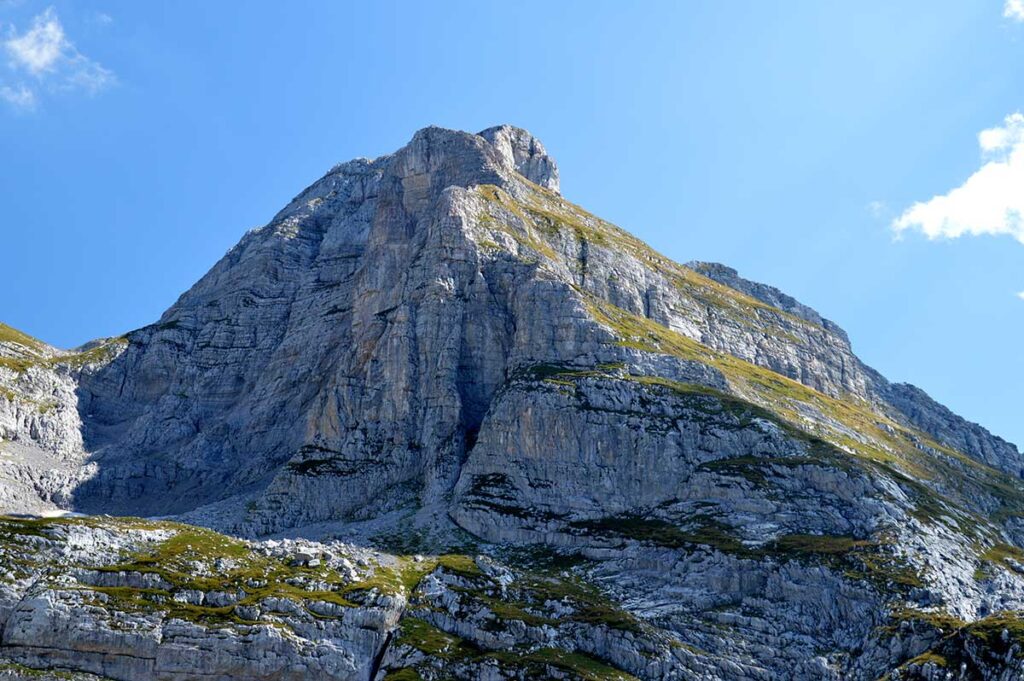
6. Zla Kolata, Montenegro and Albania — about 2,534 metres
Zla Kolata is a peak in the Prokletije range on the Montenegro–Albania border. It is commonly identified as Montenegro’s highest peak, though published elevations vary slightly. The surrounding mountains are steep and rugged, and the area feels more remote than the approaches to Musala or Vihren. There isn’t one obvious route for every visitor. Your plans will depend on whether you approach from Montenegro or Albania and what access is currently available.
The Montenegro side is associated with the Gusinje and Vusanje area, while the wider Prokletije region extends into Albania and Kosovo. Some trails in this mountain region are part of longer cross-border trekking routes, but that does not mean every path across the border is an authorized crossing. The Montenegro National Tourism Organisation’s Prokletije guide identifies Zla Kolata as a major peak in the park.
Good to know: Confirm your route and any border procedures before travelling to the trailhead. Ask locally about current conditions, and consider a qualified guide if you are unfamiliar with the Prokletije terrain.
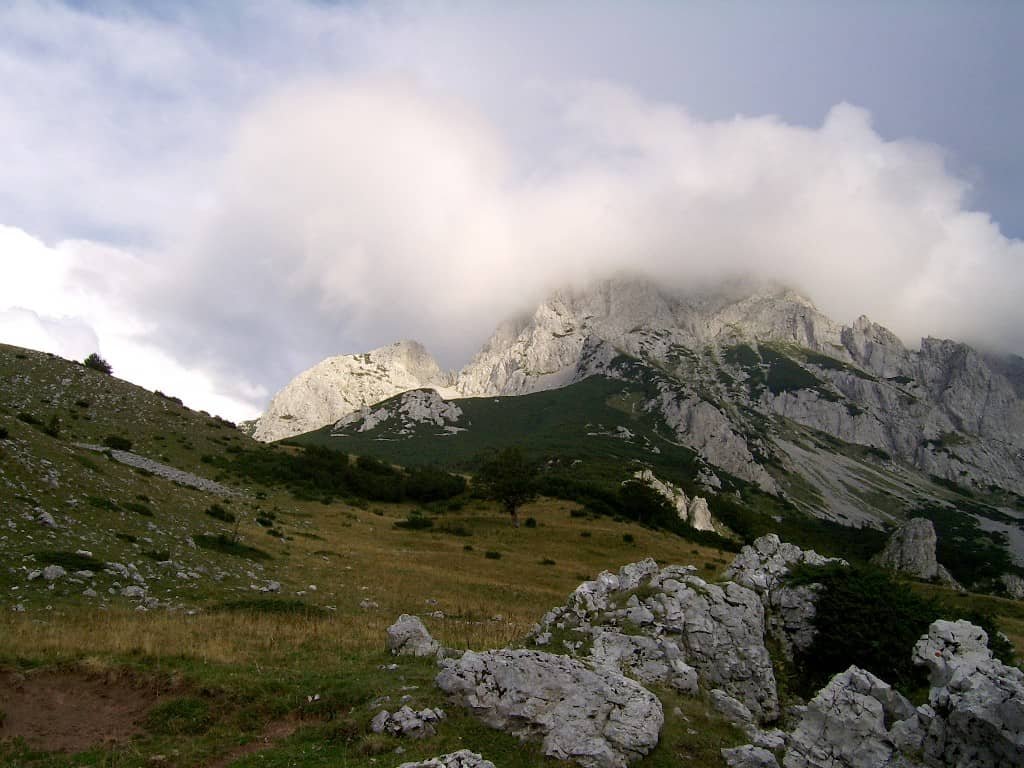
Photo: Radosław Botev / Wikimedia Commons
7. Maglić, Bosnia and Herzegovina — 2,386 metres
Bosanski Maglić is the highest point in Bosnia and Herzegovina. It rises near Sutjeska National Park and the Montenegrin border, amid forested valleys, steep slopes, and rugged high ground. The contrast between the wooded approach and the rocky upper slopes makes the climb feel like a journey through several different mountain environments.
Prijevor is one of the areas used to approach Maglić, but the route still requires a full mountain plan. Terrain and weather can make the ascent challenging, and fog can reduce visibility on the high ground. Nearby attractions, including Perućica Forest and Trnovačko Lake, can make the wider area worth exploring even if you decide not to climb the peak. If mountain lakes are your thing, explore our guide to the most popular lakes in the Balkans. Check current information with Sutjeska National Park before setting out.
Good to know: Ask the park or local tourism staff about access and trail conditions, then choose an approach that fits your experience. Do not rely on an old route description if visibility or weather has changed.
Planning a Trip to These Peaks
These mountains are spread across several countries, so choose the peak before arranging your travel. Borovets is a useful base for Musala and Bansko for Vihren. Titov Vrv is commonly approached from Popova Šapka, while Korab requires a separate plan for either the North Macedonian or Albanian side.
In the Albanian Alps, a visit to Theth or Valbona gives you ways to enjoy the scenery around Maja Jezercë without climbing it. Zla Kolata needs its own planning in the Montenegro–Albania border region. Maglić fits naturally into a visit to the Sutjeska area, where there are other park landscapes to explore. If you’re building a longer itinerary around nature rather than a single mountain, our guide to the best national parks in the Balkans can help you find other places to add along the way.
Once you’ve picked a mountain, start with the trailhead. Find out how you’ll get there, whether you need to arrange transport, and whether the route goes anywhere near an international border. Give yourself some flexibility too. Two mountains may look surprisingly close on a map but require completely different road journeys and travel plans.
FAQs About High Peaks of the Balkans
What is the highest peak in the Balkans?
Musala, at 2,925 metres in Bulgaria’s Rila Mountains, is commonly identified as the highest peak on the Balkan Peninsula. Some lists define the Balkans differently, so rankings can depend on the geographic boundary being used.
Is the Peaks of the Balkans Trail the same as these seven peaks?
No. The Peaks of the Balkans is a 192-kilometre circuit through Albania, Kosovo and Montenegro. It is distinct from this guide’s selection of seven individual peaks, which are spread across several mountain ranges and countries.
Which Balkan peak is easiest for first-time hikers?
Musala is generally one of the more approachable peaks on this list when the gondola is running, the trail is clear and the weather is good. That doesn’t make it an easy walk, though. You’re still climbing to 2,925 metres, so proper footwear, layers, water and a weather check are essential.
When is the best time to hike in the Balkan high mountains?
The warmer months generally offer the most practical hiking window, but the safe season varies by mountain, route and year. Snow can remain at high elevations after summer begins, and storms can develop quickly. Check local forecasts and trail information shortly before your hike.
Final Thoughts: Choose the Peak That Fits Your Adventure
The Balkans’ high peaks offer very different experiences. Musala is a popular choice for a first climb above 2,900 metres when conditions are good, while remote mountains such as Maja Jezercë and Zla Kolata require more experience and careful planning. There’s no need to tackle the hardest mountain first—choose one that matches your fitness, experience and the kind of trip you want.
Whichever mountain you choose, check the weather, trail conditions and current access information before you leave. And remember, reaching the top isn’t the only reason to come. Some of the best experiences in the Balkan mountains are found along the way—in the alpine lakes, forests, mountain villages and views you pass before you ever reach the highest point.
Explore More Balkan Nature and Travel Guides
- 10 Reasons to Travel in the Balkan Mountains — Get ideas for mountain scenery, outdoor activities and nearby destinations.
- The Best National Parks in the Balkans — Explore more protected landscapes and outdoor destinations across the region.
- Top 10 Most Popular Lakes in the Balkans — Discover lakes surrounded by the region’s mountain scenery.
Sources and Further Planning
- Musala route from the Yastrebets gondola
- Pirin National Park
- Korab and Titov Vrv — Tourism Macedonia
- Mavrovo National Park: Golem Korab
- Maja Jezercë — Albania’s official tourism website
- Zla Kolata and Prokletije National Park — Montenegro National Tourism Organisation
- Maglić — Tourist Organization of Republika Srpska
- Peaks of the Balkans Trail: route description
- Peaks of the Balkans: travel advice
- Peaks of the Balkans: cross-border procedures
What's your reaction?