 By
By Best Beaches Destinations in the Balkans
The Balkans are home to some of Europe’s most spectacular coastlines, where turquoise Adriatic coves, golden Black Sea beaches, Greek islands, dramatic cliffs, and lively seaside towns create an incredible variety of summer escapes. The best beach destinations in the Balkans range from famous Mediterranean resorts to quiet stretches of coastline that still feel wonderfully undiscovered.
Croatia’s islands offer crystal-clear Adriatic waters and historic coastal towns, while the Albanian Riviera has become one of the region’s most exciting destinations for travelers searching for beautiful beaches and dramatic scenery. Montenegro combines medieval towns with mountainous coastlines, Greece delivers everything from secluded coves to island resorts, and Bulgaria offers long sandy beaches along the Black Sea.
What makes the Balkans particularly appealing for a beach vacation is the variety. You can spend your morning wandering through a centuries-old Old Town, swim in transparent blue water during the afternoon, and finish the day enjoying fresh seafood beside the sea.
Some destinations are perfect for nightlife and resort vacations, while others are better suited to couples, families, road trips, outdoor adventures, or travelers simply looking for a peaceful place beside the water.
And because many Balkan countries are relatively close together, it’s possible to combine several coastlines during a longer road trip through Southeastern Europe.
Below, we’ll explore 10 of the best beach destinations in the Balkans, including the beaches worth visiting, what makes each destination special, and useful tips for planning your trip.
Best Beach Destinations in the Balkans at a Glance
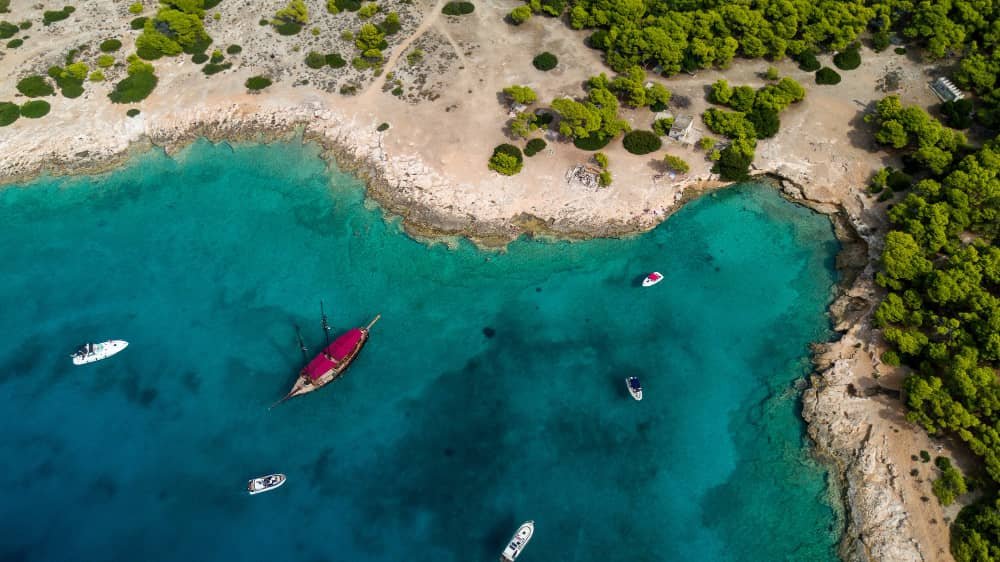
From the turquoise waters of the Adriatic and Ionian Seas to the long sandy shores of the Black Sea, the Balkans offer an impressive variety of coastal escapes. Here’s a quick look at the 10 beach destinations featured in this guide.
| Beach Destination | Country | Best For |
|---|---|---|
| Budva Riviera | Montenegro | Beaches, nightlife, coastal scenery |
| Veleka Beach & Sinemorets | Bulgaria | Nature, quiet beaches, river scenery |
| Halkidiki | Greece | Turquoise water, families, beach hopping |
| Albanian Riviera | Albania | Scenic beaches, road trips, dramatic coastline |
| Croatian Islands | Croatia | Island hopping, clear water, historic towns |
| Dubrovnik Riviera | Croatia | Beaches, history, Adriatic scenery |
| Sunny Beach & Nessebar | Bulgaria | Resorts, nightlife, families, history |
| Corfu | Greece | Island beaches, villages, sightseeing |
| Ölüdeniz & the Turquoise Coast | Turkey | Blue Lagoon, scenery, paragliding |
| Saranda & Ksamil | Albania | Turquoise water, islands, restaurants, nightlife |
These destinations offer very different beach experiences. Travelers looking for nightlife may prefer Budva, Sunny Beach, or Saranda, while Halkidiki, Corfu, and the Croatian islands are excellent choices for exploring multiple beaches during one trip. For a quieter connection with nature, Veleka Beach and the southern Bulgarian Black Sea coast offer a completely different atmosphere.
1. Budva Riviera, Montenegro
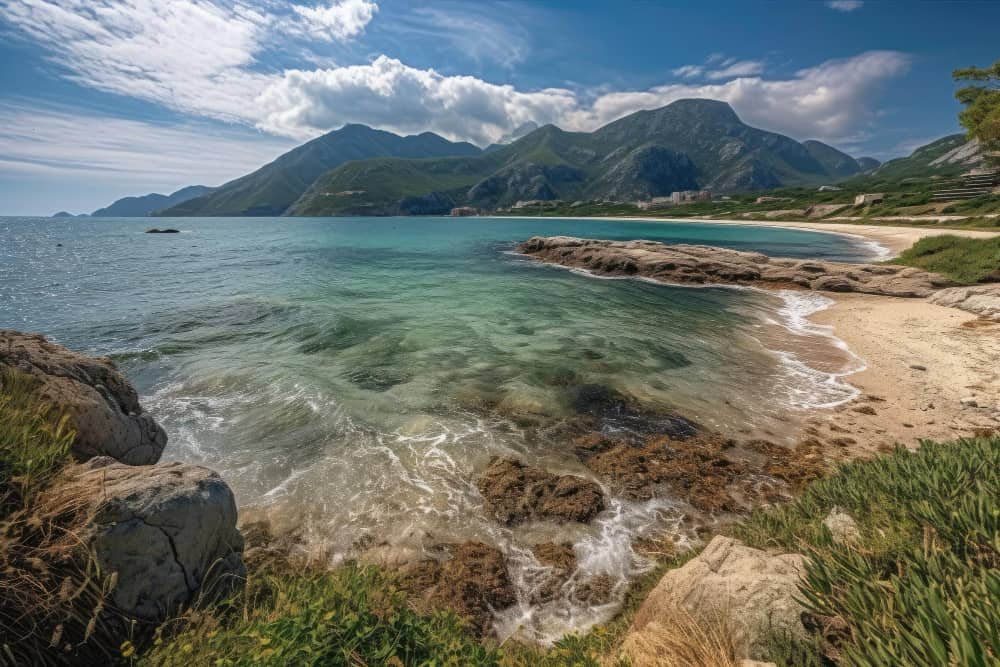
With dramatic mountains rising behind the Adriatic Sea, historic coastal towns, lively resorts, and a string of beautiful beaches, the Budva Riviera is one of Montenegro’s most popular summer destinations. Stretching along the country’s central coastline, the region offers everything from energetic beach clubs and nightlife to quieter coves surrounded by rocky scenery.
Budva makes an excellent base for exploring the coastline because you can combine swimming and sunbathing with restaurants, nightlife, boat trips, and walks through the atmospheric streets of Budva Old Town.
Best Beaches on the Budva Riviera
One of the area’s most recognizable coastal scenes is Sveti Stefan, where a fortified historic village sits on a small island connected to the mainland by a narrow causeway. The surrounding coastline and viewpoints make it one of Montenegro’s most photographed destinations.
Jaz Beach, west of Budva, is another popular choice. Its spacious shoreline and clear Adriatic water make it suitable for swimming, relaxing, and spending a full day beside the sea.
Closer to Budva Old Town, Mogren Beach offers a particularly scenic setting beneath rocky cliffs. Its convenient location makes it easy to combine a morning of sightseeing in Budva with an afternoon at the beach.
Other beaches worth exploring along the wider riviera include Bečići, Pržno, and stretches of coastline around Petrovac.
What Makes the Budva Riviera Special?
The biggest advantage of staying on the Budva Riviera is variety. You don’t have to choose between a traditional beach vacation and sightseeing.
One day can be spent exploring Budva’s medieval Old Town and waterfront, while the next can involve beach hopping, swimming in the Adriatic, taking a boat trip, or driving south along Montenegro‘s spectacular coastline.
The region is also well positioned for day trips to other parts of Montenegro, including the Bay of Kotor, Lake Skadar, and destinations farther south along the Adriatic coast.
Visiting the Budva Riviera
July and August bring the warmest beach weather but also the largest crowds and highest demand for accommodation.
Travelers who prefer a more relaxed atmosphere should consider June or September, when the sea is generally inviting for swimming and the coastline can be considerably less crowded.
If you’re traveling by car during peak summer, parking and coastal traffic around Budva can take additional time, so staying within walking distance of the beach or Old Town can be particularly convenient.
With its combination of clear Adriatic water, beaches, historic architecture, nightlife, restaurants, and spectacular coastal scenery, the Budva Riviera easily earns its place among the best beach destinations in the Balkans.
Country: Montenegro
Best base: Budva
Best for: Beach hopping, nightlife, couples, coastal scenery, and sightseeing
Best time to visit: June through September
2. Veleka Beach & Sinemorets, Bulgaria
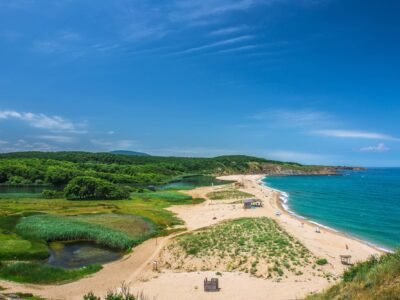
At the southern end of Bulgaria’s Black Sea coast, Sinemorets and Veleka Beach offer a quieter, more nature-focused alternative to the country’s large seaside resorts. Here, forested hills, rugged coastline, sandy beaches, and the Veleka River come together to create one of Bulgaria’s most distinctive coastal landscapes.
The small village of Sinemorets makes an excellent base for travelers who prefer natural scenery and relaxed beach days over large hotels, crowded promenades, and busy nightlife.
What Makes Veleka Beach Special?
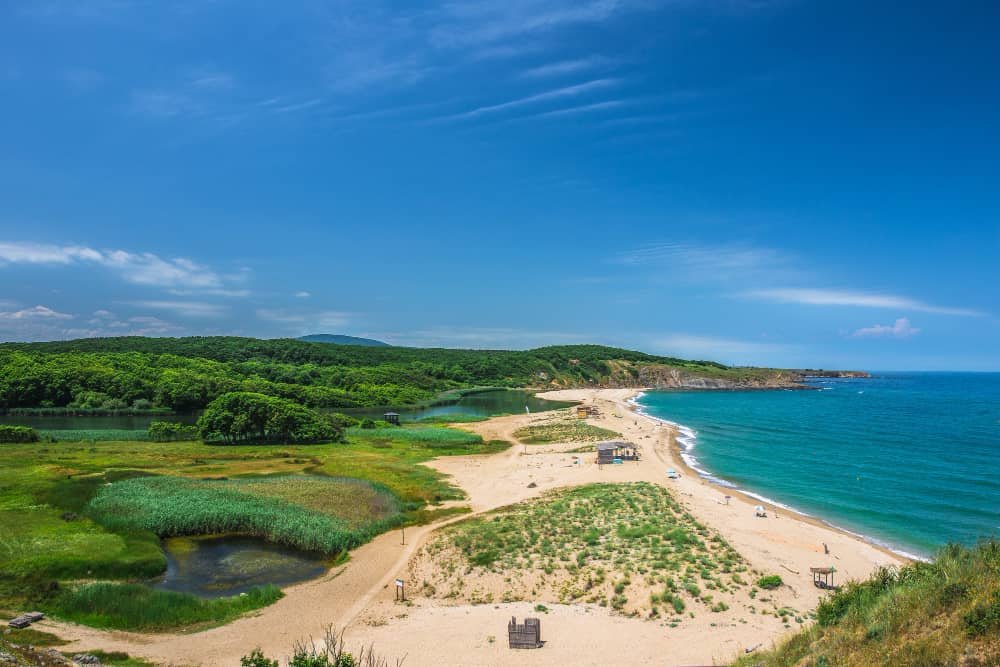
Veleka Beach is famous for its unusual location at the mouth of the Veleka River. A long strip of sand separates the river from the Black Sea, creating a beautiful landscape where freshwater, beach, forest, and sea meet within a relatively compact area.
From viewpoints above the coast, visitors can appreciate the distinctive curve of the beach and the Veleka River winding through the surrounding greenery before reaching the sea.
The area forms part of the wider Strandzha Nature Park region, helping give this stretch of Bulgaria’s southern coastline a much less developed atmosphere than many of the country’s major Black Sea resorts.
More Beaches Around Sinemorets
Veleka isn’t the only reason to stay in Sinemorets.
On the opposite side of the village, Butamyata Beach provides another popular place for swimming and relaxing beside the Black Sea. Travelers willing to explore farther along the coastline can discover additional rocky coves and less-developed stretches of shore.
This makes Sinemorets particularly appealing for visitors who enjoy combining beach time with walking, nature, photography, and exploring rather than spending an entire vacation at one resort.
Things to Do Beyond the Beach
The Veleka River adds another dimension to the destination. Depending on local conditions and available operators, visitors can explore the river and surrounding landscape by kayak or boat.
The wider Strandzha region is also known for forests, small villages, hiking opportunities, and distinctive local traditions, making Sinemorets a good base for travelers who want to experience more than Bulgaria’s coastline.
Visiting Sinemorets and Veleka Beach
Summer provides the warmest conditions for swimming, with July and August being the busiest months.
For a quieter trip, consider June or September, when the southern Black Sea coast is generally less crowded while still offering excellent opportunities for beach days and outdoor exploration.
Sinemorets is considerably smaller and less developed than resorts such as Sunny Beach, so travelers looking for extensive nightlife and large resort complexes may prefer another destination. But for nature, beautiful scenery, and a slower pace, it’s one of the most rewarding coastal escapes in Bulgaria.
Country: Bulgaria
Best base: Sinemorets
Best for: Nature, couples, quiet beaches, photography, and outdoor activities
Best time to visit: June through September
3. Halkidiki, Greece
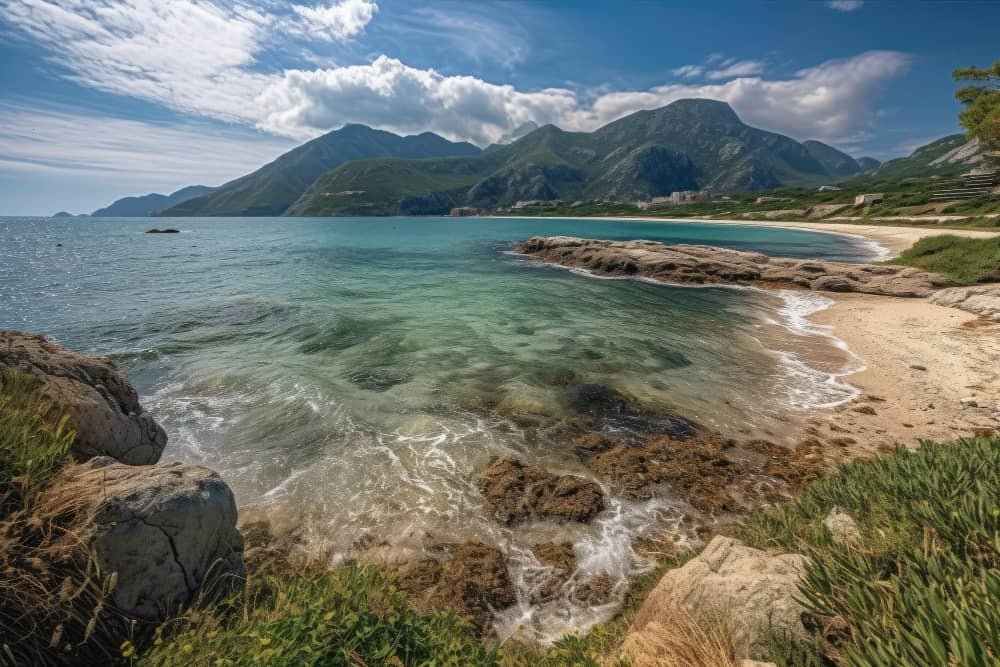
With turquoise water, pine-covered hills, sandy beaches, and hundreds of small coves, Halkidiki is one of northern Greece’s premier seaside destinations. Located southeast of Thessaloniki, the region is famous for its distinctive three-pronged peninsula extending into the Aegean Sea.
Each of Halkidiki’s three peninsulas — Kassandra, Sithonia, and Mount Athos — has a very different character, giving travelers plenty of options when deciding where to stay.
Kassandra: Resorts, Beaches, and Nightlife
Kassandra is the westernmost peninsula and generally the liveliest of the three. It’s a good choice for travelers looking for organized beaches, resorts, restaurants, beach bars, and nightlife.
Popular destinations include Sani, Pefkohori, Hanioti, Kallithea, and several smaller coastal villages.
Sani is particularly well known for its upscale resort atmosphere and marina, while other parts of Kassandra offer everything from family-friendly beaches to lively summer nightlife.
Sithonia: Turquoise Water and Beach Hopping
Travelers looking for a quieter and more nature-focused experience may prefer Sithonia, the middle peninsula.
This part of Halkidiki is known for beautiful coves, clear water, pine forests, and a coastline that rewards travelers willing to explore by car.
Karidi Beach, near Vourvourou, is one of Sithonia’s best-known beaches, with shallow turquoise water and a picturesque setting surrounded by pine trees.
The coastline around Kavourotrypes, sometimes called Orange Beach, is another highlight, featuring striking blue water, pale rocks, and small coves.
Rather than staying at one beach for your entire vacation, Sithonia is particularly well suited to beach hopping.
Mount Athos: A Different Side of Halkidiki
The eastern peninsula is home to Mount Athos, one of the world’s most important Orthodox monastic communities.
Access to the monastic territory is highly restricted, and women are not permitted to enter under the longstanding avaton rule. However, the surrounding region and nearby coastal communities still offer beautiful scenery, beaches, and opportunities for boat trips that provide views toward parts of the peninsula.
For a traditional beach vacation, most travelers will find Kassandra or Sithonia easier and more practical bases.
Visiting Halkidiki
Halkidiki is easily combined with Thessaloniki, making it particularly convenient for travelers flying into northern Greece.
A rental car can be extremely useful, especially in Sithonia, where some of the most appealing beaches and viewpoints are spread along the coastline.
July and August offer classic Greek summer conditions but also bring the largest crowds. June and September are excellent alternatives for travelers who want warm weather and beach time with a somewhat more relaxed atmosphere.
With its extraordinary variety of beaches, clear Aegean water, coastal villages, resorts, and natural scenery, Halkidiki easily ranks among the best beach destinations in the Balkans.
Country: Greece
Best areas: Kassandra and Sithonia
Best for: Beach hopping, families, couples, turquoise water, resorts, and road trips
Best time to visit: June through September
4. Albanian Riviera, Albania
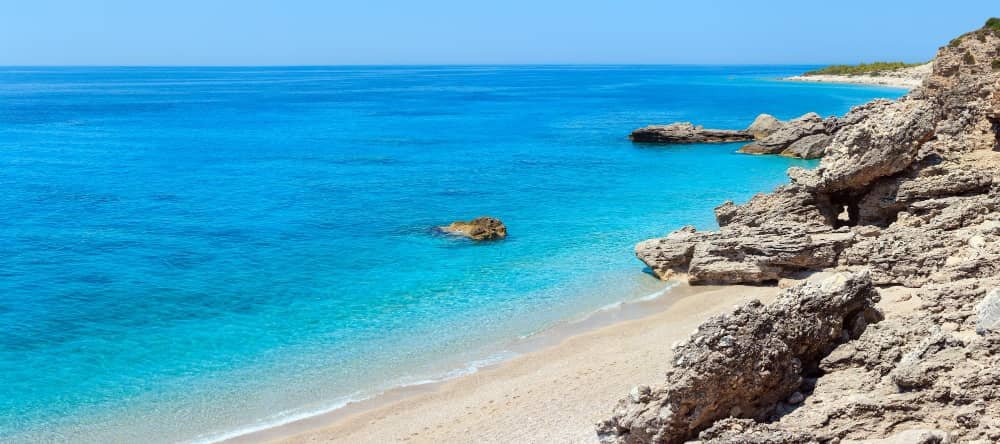
Stretching along Albania’s spectacular southern coastline, the Albanian Riviera has become one of the most exciting beach destinations in the Balkans. Dramatic mountains descend toward turquoise Ionian waters, while beaches, hidden coves, traditional villages, and increasingly lively seaside towns line the coast.
The Riviera is ideal for a coastal road trip because every part of the shoreline feels slightly different. Travelers can move between popular beach towns such as Dhërmi and Himarë, discover secluded stretches of coast, and stop in traditional hillside villages overlooking the Ionian Sea.
Best Beaches on the Albanian Riviera
Dhërmi is one of the Riviera’s best-known destinations, combining clear water and a long shoreline with restaurants, accommodation, beach bars, and a lively summer atmosphere.
Farther south, Himarë makes an excellent base for exploring multiple beaches. The town combines a relaxed seaside atmosphere with easy access to beautiful stretches of coastline and nearby villages.
For something more adventurous, Gjipe Beach sits between dramatic cliffs and is reached by boat or by hiking down toward the coast. Its relatively isolated setting makes it one of the most memorable beaches along the Albanian Riviera.
Other places worth exploring include Jalë, Livadhi, Borsh, and the coastline around Qeparo.
What Makes the Albanian Riviera Special?
The scenery is one of the Riviera’s greatest attractions. The Ceraunian Mountains rise dramatically behind parts of the coastline, creating spectacular views as roads wind between mountain passes and the Ionian Sea.
The famous Llogara Pass provides one of the most impressive approaches to the Riviera, with viewpoints overlooking the coastline from high above the sea.
The region also offers more than beaches. Historic villages, castles, hiking opportunities, traditional food, archaeological sites, and scenic drives make it easy to combine swimming with cultural and outdoor experiences.
Where Should You Stay?
Himarë is one of the best choices for travelers who want a central base for exploring several beaches and nearby attractions.
Dhërmi works particularly well for visitors looking for beautiful beaches combined with a more energetic summer atmosphere.
Travelers seeking something quieter can consider smaller communities such as Qeparo or Borsh, where the pace is generally more relaxed.
Visiting the Albanian Riviera
July and August are the busiest months, when beaches, restaurants, and accommodations can become crowded.
For many travelers, June and September provide an excellent balance of warm weather, inviting sea temperatures, and fewer visitors.
Having a car gives you considerably more freedom to explore smaller beaches and villages, although summer traffic and parking can be challenging around the most popular coastal areas.
With its turquoise Ionian water, mountain scenery, diverse beaches, and excellent road-trip possibilities, the Albanian Riviera has firmly established itself as one of the best beach destinations in the Balkans.
Country: Albania
Best bases: Himarë and Dhërmi
Best for: Road trips, beach hopping, couples, scenery, swimming, and coastal villages
Best time to visit: June through September
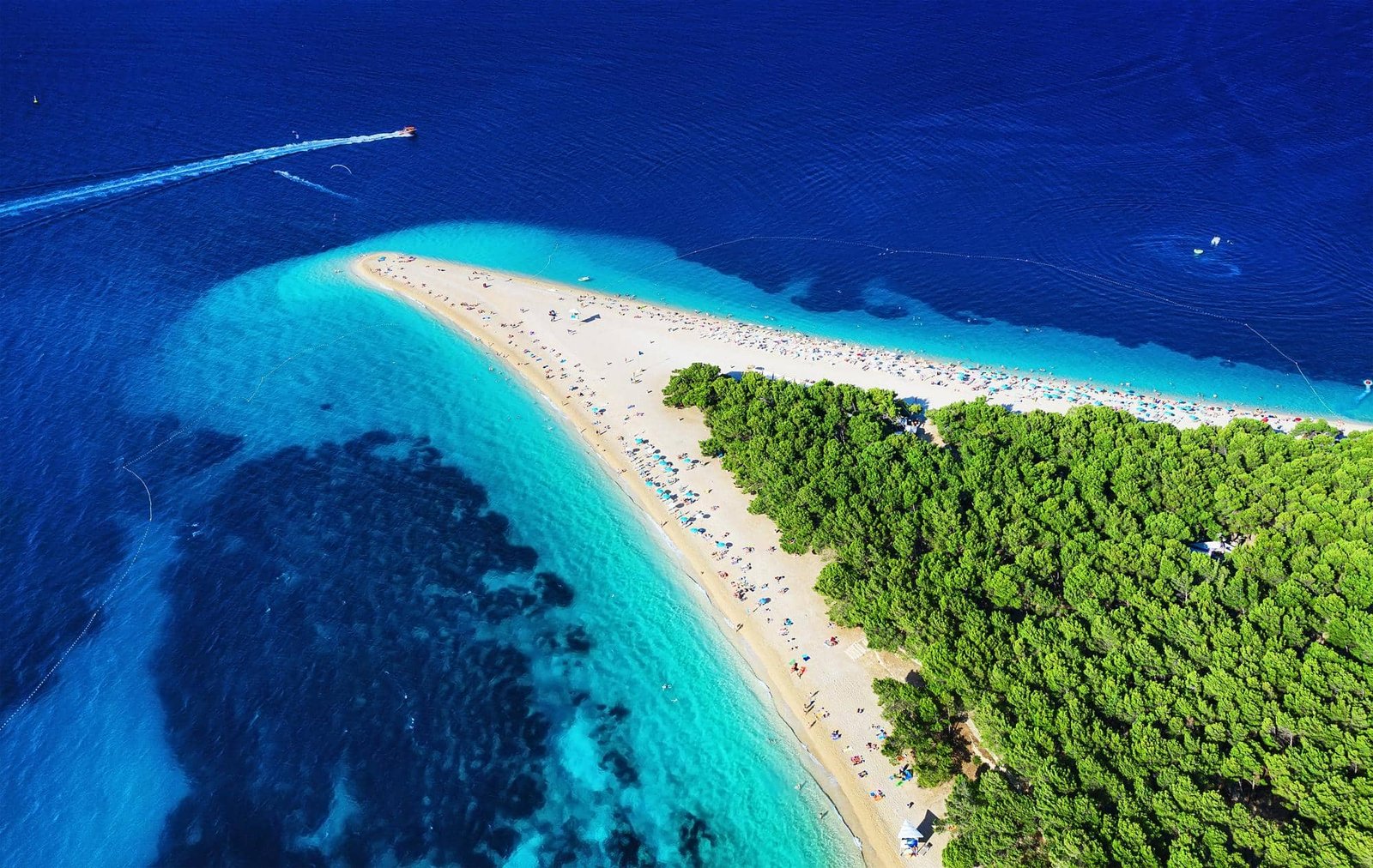
5. Croatian Islands
Scattered across the crystal-clear waters of the Adriatic, the Croatian islands offer some of the most beautiful coastal escapes in the Balkans. From lively Hvar and iconic Brač to historic Korčula and more relaxed Vis, travelers can choose between beaches, nightlife, medieval towns, secluded coves, sailing, and island-hopping adventures.
Rather than having one single beach experience, Croatia’s islands are best explored for their variety. Each has its own atmosphere, making this an excellent destination for travelers who want to combine swimming and sunbathing with sightseeing and exploring.
Hvar: Beaches, Nightlife, and Historic Towns
Hvar is one of Croatia’s most famous islands, particularly popular with travelers looking for beautiful Adriatic scenery combined with restaurants, nightlife, historic architecture, and boat trips.
Hvar Town provides an atmospheric base filled with stone streets, historic buildings, waterfront restaurants, and views from the fortress above town.
For beach lovers, the nearby Pakleni Islands are a major attraction. Boat trips and water taxis make it easy to spend the day exploring small bays and swimming in exceptionally clear Adriatic water.
Brač: Iconic Beaches and Outdoor Adventures
Brač is best known for Zlatni Rat, the distinctive pebble beach near Bol whose narrow shape extends into the Adriatic.
But there’s much more to Brač than its most famous beach. The island offers coastal villages, hiking, cycling, water sports, secluded swimming spots, and excellent viewpoints.
Bol is a particularly convenient base for travelers who want easy beach access combined with restaurants and outdoor activities.
Vis: A Quieter Island Escape
Located farther from the mainland, Vis has traditionally felt more secluded than some of Croatia’s busiest islands.
Its rugged coastline is filled with small bays, coves, and beautiful swimming locations, making it particularly appealing to couples and travelers looking for a slower island experience.
One of its best-known coastal attractions is Stiniva Cove, surrounded by towering cliffs with a narrow opening toward the sea.
Vis is also an excellent base for boat excursions around the surrounding islands and caves.
Korčula: Beaches Meet History
Korčula is a great choice for travelers who want to combine beach time with history and traditional Adriatic atmosphere.
The beautifully preserved Korčula Old Town features narrow stone streets, historic churches, fortified architecture, restaurants, and waterfront views.
Around the island, visitors can find small beaches, quiet coves, vineyards, villages, and scenic roads ideal for exploring at a relaxed pace.
Which Croatian Island Should You Choose?
Choose Hvar for nightlife, restaurants, and a lively summer atmosphere.
Choose Brač for Zlatni Rat, water sports, and outdoor activities.
Choose Vis for a quieter escape, secluded coves, and boat trips.
Choose Korčula for the best combination of beaches, history, traditional towns, and relaxed island travel.
Travelers with more time don’t necessarily have to choose just one. Croatia’s ferry network makes it possible to incorporate multiple islands into a longer Adriatic itinerary.
Visiting the Croatian Islands
July and August bring warm weather and excellent swimming conditions but are also the busiest and generally most expensive months.
For many travelers, June and September are particularly attractive, offering warm weather and beautiful sea conditions with somewhat smaller crowds.
Ferry schedules vary by route and season, so check connections when planning an island-hopping itinerary rather than assuming every island has a direct connection to the next.
With their transparent Adriatic waters, historic towns, beautiful coves, and enormous variety, the Croatian islands easily rank among the best beach destinations in the Balkans.
Country: Croatia
Best islands: Hvar, Brač, Vis, and Korčula
Best for: Island hopping, swimming, sailing, couples, nightlife, history, and beaches
Best time to visit: June through September
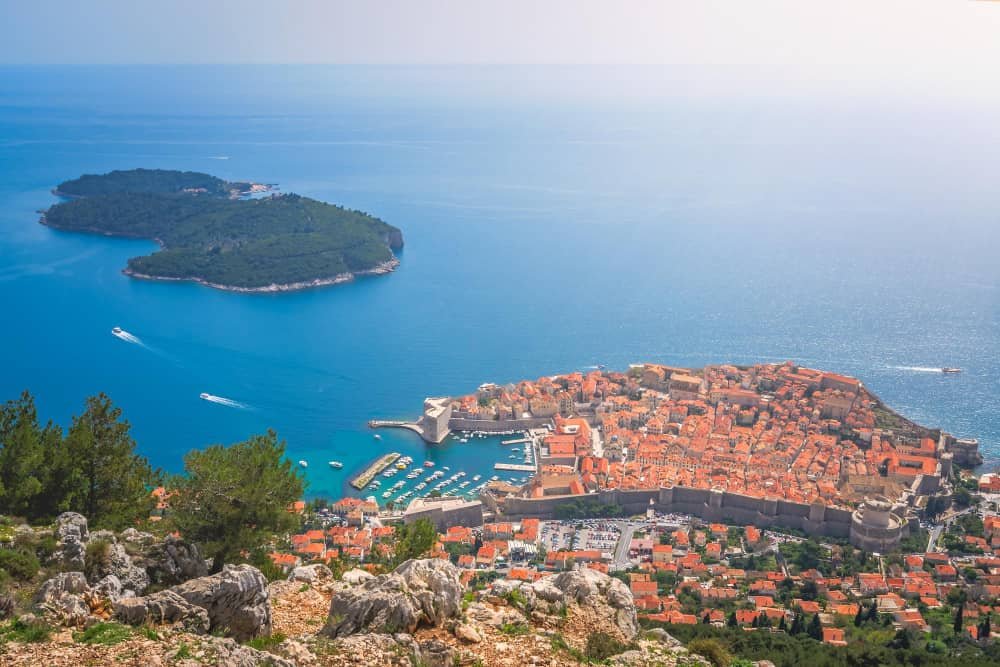
6. Dubrovnik Riviera, Croatia
Few places in the Balkans combine historic sightseeing and beach time as effortlessly as the Dubrovnik Riviera. Along this spectacular stretch of southern Croatia, clear Adriatic water, pebble beaches, rocky coves, islands, and Mediterranean vegetation surround one of Europe’s most famous historic cities.
Staying around Dubrovnik means you can spend the morning walking along centuries-old city walls and exploring narrow stone streets before cooling off in the Adriatic Sea later the same day.
Best Beaches in Dubrovnik
Banje Beach is one of Dubrovnik’s most recognizable beaches thanks to its location just outside the historic center. From the shore, you’ll have memorable views toward the Old Town walls and the island of Lokrum.
Its convenient location also makes Banje one of the busiest beaches during summer, so arriving earlier in the day can provide a more relaxed experience.
For travelers looking for a quieter setting, Sveti Jakov Beach is an excellent alternative. Located southeast of the Old Town, it offers beautiful Adriatic water and impressive views back toward Dubrovnik’s historic skyline.
The Lapad Peninsula provides several additional swimming areas and is particularly convenient for travelers staying outside the Old Town. Beaches and waterfront promenades around Lapad make it easy to combine swimming with restaurants, cafés, and evening walks.
Farther around the peninsula, the Babin Kuk area offers additional beaches and resort-style accommodations.
Beaches Beyond Dubrovnik
The wider Dubrovnik Riviera extends beyond the city itself.
South of Dubrovnik, Mlini and Cavtat provide attractive alternatives for travelers who want easier access to the coast while staying outside the busiest parts of the city.
Cavtat is particularly appealing for its waterfront promenade, historic atmosphere, small beaches, and relaxed setting.
Another excellent option is a boat trip to Lokrum Island, just offshore from Dubrovnik. The island offers rocky swimming areas, walking trails, gardens, and beautiful views back toward the city.
What Makes the Dubrovnik Riviera Special?
The biggest advantage is the combination of beaches and cultural sightseeing.
Dubrovnik’s Old Town is renowned for its historic walls, churches, palaces, stone streets, and spectacular position beside the Adriatic. This means a beach vacation here doesn’t have to revolve entirely around sunbathing.
You can explore historic landmarks, take boat trips, kayak along the coastline, visit nearby islands, enjoy seafood beside the water, and still have plenty of opportunities for swimming.
Visiting the Dubrovnik Riviera
Dubrovnik becomes extremely busy during July and August, particularly when multiple cruise ships and summer visitors arrive at the same time.
For a better balance of warm weather and smaller crowds, consider June or September. September can be particularly attractive because the Adriatic often remains warm enough for swimming after the peak summer season begins to ease.
Accommodation near the Old Town provides convenient sightseeing access, while staying in Lapad, Mlini, or Cavtat can provide a more relaxed base for travelers whose priority is the beach.
With historic Dubrovnik, beautiful Adriatic swimming spots, nearby islands, and easy opportunities for coastal exploration, the Dubrovnik Riviera is one of the best beach destinations in the Balkans for travelers who want much more than a traditional resort vacation.
Country: Croatia
Best bases: Dubrovnik, Lapad, Mlini, or Cavtat
Best for: Beaches, history, couples, sightseeing, kayaking, and island trips
Best time to visit: June through September
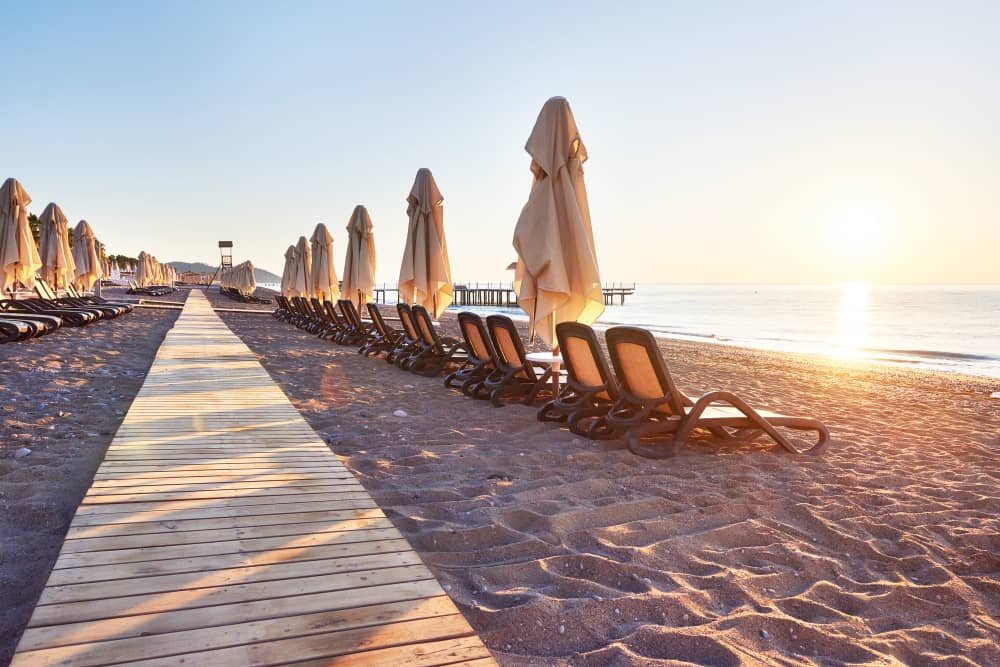
7. Sunny Beach & Nessebar, Bulgaria
For travelers looking for long sandy beaches, extensive resort facilities, nightlife, and easy access to history, Sunny Beach and Nessebar offer one of the most varied seaside experiences on Bulgaria’s Black Sea coast.
Sunny Beach is the energetic half of the destination, with a broad sandy shoreline, hotels, restaurants, bars, entertainment, and water activities. Just a short distance away, Nessebar provides an entirely different atmosphere with centuries-old churches, traditional architecture, cobbled streets, and beautiful views across the Black Sea.
Together, they make it easy to combine a classic beach vacation with cultural sightseeing.
Sunny Beach: Sand, Resorts, and Nightlife
Sunny Beach is Bulgaria’s largest and best-known seaside resort. Its long stretch of sandy coastline provides plenty of room for swimming, sunbathing, and beach activities throughout the summer.
The resort is particularly well suited to travelers who want everything within easy reach. Hotels, restaurants, cafés, shops, entertainment venues, and beach facilities are concentrated throughout the area.
Sunny Beach is also famous for its summer nightlife, with numerous bars and clubs attracting younger travelers during July and August.
Families can enjoy the destination as well, particularly when choosing accommodation away from the busiest nightlife areas.
Nessebar: History Beside the Black Sea
A short distance from Sunny Beach lies Nessebar, one of Bulgaria’s most fascinating historic coastal towns.
The Ancient City of Nessebar is recognized as a UNESCO World Heritage Site and preserves layers of history stretching back thousands of years. Its compact Old Town sits on a rocky peninsula connected to the mainland by a narrow causeway.
Visitors can wander through narrow streets lined with traditional houses, explore historic churches and archaeological remains, browse small shops, and stop at waterfront restaurants overlooking the sea.
Nessebar also has beaches of its own, making it possible to stay closer to the historic town while still enjoying a traditional Black Sea vacation.
Which Is Better: Sunny Beach or Nessebar?
Choose Sunny Beach if your priorities are a large sandy beach, extensive resort facilities, entertainment, and nightlife.
Choose Nessebar if you prefer history, traditional architecture, romantic streets, restaurants, and a more atmospheric setting.
For many travelers, the best option is simply to experience both. The two destinations are close enough that you can stay in one and easily visit the other.
Visiting Sunny Beach and Nessebar
The main beach season runs through the summer, with July and August bringing the warmest weather, busiest nightlife, and largest crowds.
For travelers who want beach weather without the height of the summer rush, June and September can be excellent alternatives.
If you’re primarily interested in sightseeing around Nessebar, visiting outside the hottest part of the afternoon can make walking through the historic streets much more comfortable.
Combining one of Bulgaria’s most popular sandy beaches with one of its most important historic towns makes Sunny Beach and Nessebar one of the best beach destinations in the Balkans for travelers who want both relaxation and sightseeing.
Country: Bulgaria
Best bases: Sunny Beach or Nessebar
Best for: Sandy beaches, families, nightlife, history, resorts, and sightseeing
Best time to visit: June through September
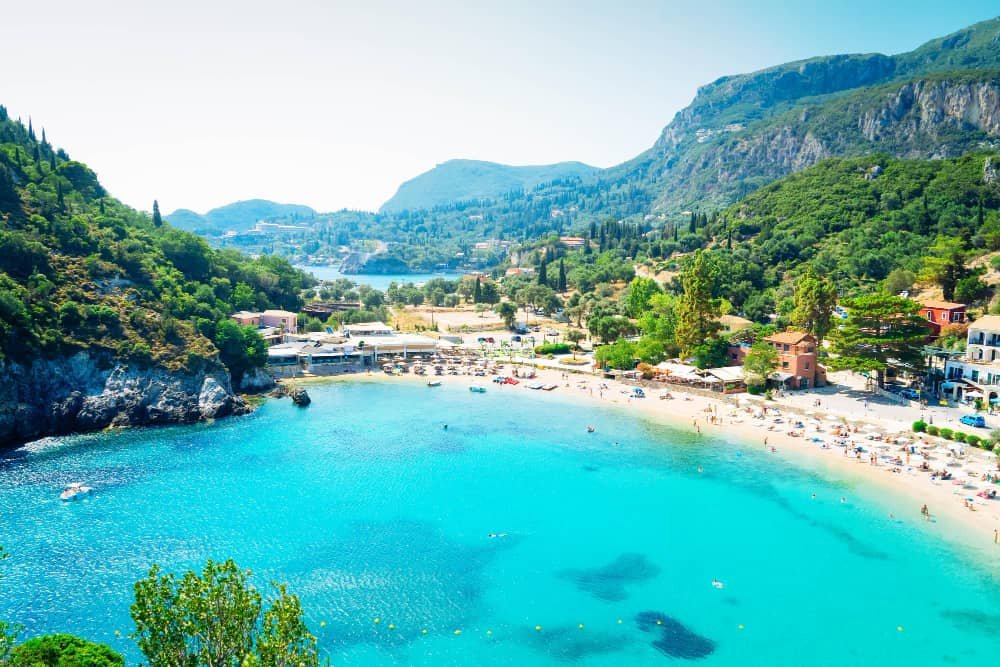
8. Corfu, Greece
Lush green hills, turquoise Ionian waters, picturesque villages, and beaches ranging from long sandy stretches to secluded rocky coves make Corfu one of Greece’s most appealing island destinations. Located in the Ionian Sea off Greece’s northwestern coast, the island offers an excellent combination of beach time, history, traditional villages, food, and scenic road trips.
Corfu is particularly rewarding for travelers who like to explore. Rather than spending an entire vacation at one beach, you can drive across the island and discover dramatically different coastlines, viewpoints, villages, and swimming spots.
Best Beaches in Corfu
Paleokastritsa is one of Corfu’s most famous coastal areas. Surrounded by steep green hills, rocky headlands, and clear blue-green water, it consists of several bays and beaches rather than one continuous stretch of coastline.
Swimming, snorkeling, and boat trips are popular here, and small boats can take visitors to nearby coves and sea caves.
On Corfu’s western coast, Glyfada Beach offers a different experience with a broad stretch of sand surrounded by green hills. Its combination of beach facilities, swimming, and scenic surroundings makes it a popular choice for a full day beside the sea.
Another spectacular destination is Porto Timoni, where two beaches sit on opposite sides of a narrow strip of land below the village of Afionas. Reaching the beaches requires a hike, but the unusual landscape and views have made Porto Timoni one of Corfu’s most recognizable coastal locations.
More Than a Beach Destination
One of Corfu’s greatest strengths is how easily a beach vacation can be combined with sightseeing.
Corfu Old Town is filled with narrow streets, historic squares, churches, fortifications, cafés, and architecture shaped by centuries of Venetian and other European influence.
Away from Corfu Town, traditional villages and winding roads lead through olive-covered hills toward viewpoints and smaller coastal communities.
This makes the island an excellent choice for travelers who want to alternate relaxing beach days with exploring.
Where Should You Stay in Corfu?
Travelers primarily interested in sightseeing, restaurants, and nightlife may prefer staying in or near Corfu Town and taking day trips to beaches around the island.
For a more beach-focused vacation, areas around Paleokastritsa, Glyfada, or other coastal resorts provide easier access to the water.
Renting a car can be particularly useful if you want to explore several parts of the island, although roads can be narrow and winding in some areas.
Visiting Corfu
July and August offer classic Greek island weather but also bring the largest crowds and highest demand for accommodation.
For many travelers, June and September are excellent months to visit, providing warm weather and excellent swimming conditions with a somewhat more relaxed atmosphere.
Allow several days if possible. Corfu is large enough that trying to see the Old Town, Paleokastritsa, Porto Timoni, villages, viewpoints, and multiple beaches in a day or two can feel rushed.
With its beautiful Ionian coastline, historic Old Town, lush landscapes, and enormous variety of beaches, Corfu easily earns a place among the best beach destinations in the Balkans.
Country: Greece
Best areas: Corfu Town, Paleokastritsa, Glyfada, and the west coast
Best for: Couples, families, beach hopping, sightseeing, road trips, and Greek island scenery
Best time to visit: June through September
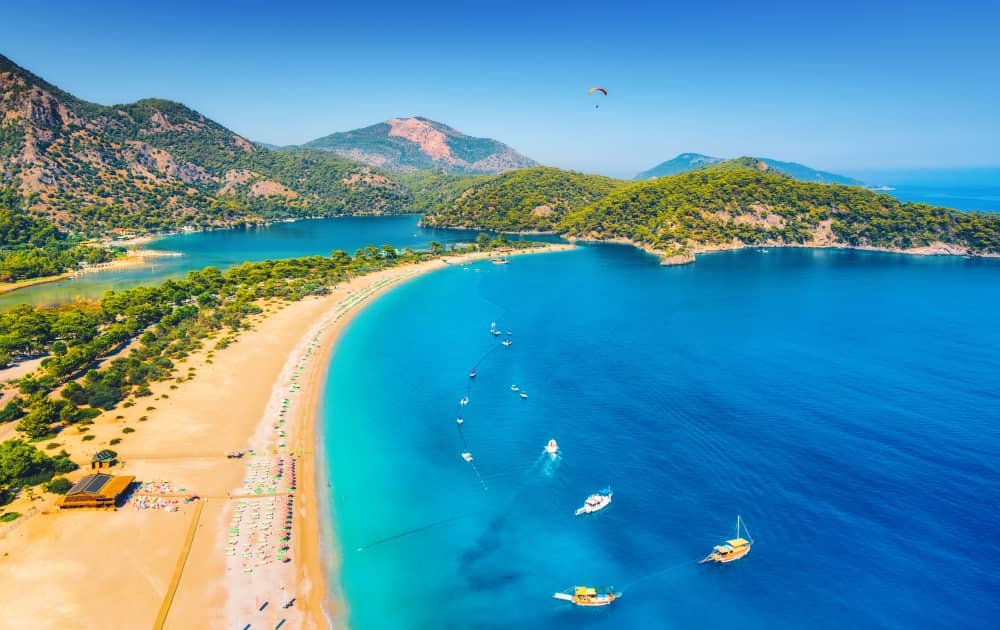
9. Ölüdeniz & the Turquoise Coast, Turkey
Backed by dramatic mountains and surrounded by brilliant blue water, Ölüdeniz is one of Turkey’s most recognizable coastal destinations. Located near Fethiye on the country’s southwestern coast, the area combines beautiful beaches, boat trips, mountain scenery, hiking, and some of the most famous paragliding views in the Mediterranean.
At the heart of the destination is the celebrated Blue Lagoon, where calm turquoise water and a sheltered shoreline create an almost postcard-perfect setting.
Blue Lagoon and Ölüdeniz Beach
The Blue Lagoon at Ölüdeniz is protected from the open sea by a curving natural barrier, creating unusually calm water that is popular for swimming and relaxing.
Nearby Belcekız Beach, often simply called Ölüdeniz Beach, faces the open sea and provides a longer stretch of coastline with impressive views toward the surrounding mountains.
Together, the lagoon and main beach give visitors a choice between calmer protected water and a more traditional seaside setting.
Paragliding Over Ölüdeniz
Ölüdeniz is internationally famous for paragliding from Babadağ Mountain.
Flights descend from high above the coastline, providing spectacular aerial views of the Blue Lagoon, beaches, mountains, and Mediterranean landscape below.
Even travelers who have no interest in paragliding can head toward Babadağ for panoramic scenery and a completely different perspective over the coast.
Butterfly Valley and Boat Trips
Another highlight of the area is Butterfly Valley, a dramatic coastal canyon surrounded by steep cliffs.
The valley is commonly reached by boat from Ölüdeniz, making it a popular stop on day cruises along the coastline.
Boat excursions also provide access to smaller bays, islands, swimming stops, and stretches of the coast that are difficult to reach by road.
Travelers with more time can use nearby Fethiye as a base for exploring an even larger section of southwestern Turkey’s spectacular coastline.
Hiking the Lycian Way
Ölüdeniz is also connected with the Lycian Way, one of Turkey’s best-known long-distance hiking routes.
You don’t have to complete the entire trail to enjoy the landscape. Shorter sections and viewpoints around the region provide opportunities to experience the mountains and coastline away from the busiest beaches.
This combination of swimming and outdoor adventure makes Ölüdeniz particularly appealing to travelers who want more than a resort vacation.
Visiting Ölüdeniz
The peak summer months of July and August bring hot weather and large numbers of visitors.
For a more comfortable combination of beaches, sightseeing, hiking, and outdoor activities, May, June, September, and early October can be particularly attractive.
Ölüdeniz itself can feel busy and resort-oriented during summer, so travelers seeking a broader experience should consider exploring Fethiye and other parts of the surrounding coast rather than remaining exclusively around the lagoon.
With its famous Blue Lagoon, soaring mountains, boat trips, hiking, and extraordinary aerial scenery, Ölüdeniz is one of the most memorable beach destinations in the Balkans and surrounding Southeastern European region.
Country: Turkey
Best bases: Ölüdeniz or Fethiye
Best for: Beaches, paragliding, couples, boat trips, hiking, and dramatic scenery
Best time to visit: May through October

PHOTO BY Karol Chomka ON Unsplash
10. Saranda & Ksamil, Albania
At the southern end of Albania’s Ionian coastline, Saranda and Ksamil have become two of the country’s most popular summer destinations. Turquoise water, small islands, lively waterfront restaurants, and easy access to one of Albania’s most important archaeological sites make this area an excellent choice for travelers who want to combine beach days with sightseeing.
Saranda works particularly well as a lively coastal base, while nearby Ksamil is the better choice for travelers whose main priority is spending as much time as possible beside the water.
Ksamil: Turquoise Water and Small Islands
Located south of Saranda, Ksamil is famous for its bright blue-green water, small beaches, and offshore islets.
The calm, clear water is the main attraction, and visitors can swim, kayak, or take small boats toward the nearby islands. Restaurants and beach facilities are available throughout much of the area, making it easy to spend an entire day along the coast.
Ksamil has become extremely popular in recent years, however, and the atmosphere during July and August can be very different from the quiet beach escape some older photographs suggest.
Travelers looking for a more relaxed experience should consider visiting in June or September.
Saranda: Beaches, Restaurants, and Nightlife
Saranda offers a more urban seaside experience.
Its waterfront promenade is lined with restaurants, cafés, hotels, and bars, while beaches and swimming areas are found throughout the town and surrounding coastline.
The city becomes lively on summer evenings, making Saranda a good choice for travelers who want restaurants and nightlife within walking distance of their accommodation.
Saranda is also a useful transportation base for exploring southern Albania, with road connections toward the Albanian Riviera and ferry connections across the Ionian Sea to Corfu.
Visit Butrint National Park
One of the greatest advantages of staying around Saranda or Ksamil is the opportunity to visit Butrint, located just south of Ksamil.
The archaeological site preserves evidence of civilizations and historical periods spanning many centuries, including Greek, Roman, Byzantine, and Venetian influences.
Walking through Butrint provides a fascinating contrast to the surrounding beaches, allowing travelers to combine a morning of archaeology and history with an afternoon beside the Ionian Sea.
The site is recognized as a UNESCO World Heritage Site, making it one of Albania’s most important cultural attractions.
Saranda or Ksamil: Where Should You Stay?
Choose Ksamil if beautiful water and easy beach access are your main priorities.
Choose Saranda if you prefer a larger selection of restaurants, hotels, nightlife, transportation options, and a more active waterfront atmosphere.
Another option is to stay in Saranda and visit Ksamil as a day trip, although summer road traffic and parking can make this less convenient during the busiest weeks.
Travelers with more time can combine both with a road trip north through Himarë, Dhërmi, and the rest of the Albanian Riviera.
Visiting Saranda and Ksamil
The busiest period is July and August, when accommodation demand rises and the most popular beaches around Ksamil can become crowded.
For many travelers, June and September offer a better balance of warm weather, swimming conditions, open restaurants, and manageable visitor numbers.
If you’re visiting during peak summer, arriving at popular beaches earlier in the day can make finding parking and beach space easier.
With turquoise Ionian water, lively Saranda, the beautiful coastline around Ksamil, and ancient Butrint nearby, this corner of Albania deserves its place among the best beach destinations in the Balkans.
Country: Albania
Best bases: Saranda or Ksamil
Best for: Swimming, couples, nightlife, restaurants, island views, and history
Best time to visit: June through September
How to Plan a Balkan Beach Vacation
One of the biggest advantages of exploring the best beach destinations in the Balkans is the variety packed into a relatively compact region. A single trip can include Adriatic islands, Ionian coves, Black Sea beaches, historic coastal towns, and spectacular mountain-backed shorelines.
However, trying to visit too many countries in one vacation can quickly turn a relaxing beach trip into a rushed driving itinerary. For most travelers, choosing one coastline or combining two neighboring countries provides a much better experience.
Choose Your Coastline
For crystal-clear water, historic towns, islands, and dramatic coastal scenery, the Adriatic coast of Croatia and Montenegro is difficult to beat.
The Ionian coastline of Albania and Greece offers turquoise water, beautiful coves, islands, and some excellent opportunities for beach hopping.
Travelers who prefer long sandy beaches and larger seaside resorts should also consider Bulgaria’s Black Sea coast, where destinations range from lively Sunny Beach to the much quieter natural surroundings of Sinemorets.
Combine Neighboring Countries
A road trip can make it relatively easy to experience more than one Balkan coastline.
Croatia and Montenegro work particularly well together, allowing travelers to combine Dubrovnik with the Bay of Kotor and Budva Riviera.
Another excellent combination is Montenegro and Albania, continuing south from the Montenegrin coast toward the Albanian Riviera.
Travelers exploring southern Albania can also combine Saranda and Ksamil with Corfu, using the seasonal ferry connections across the Ionian Sea.
If you have only a week, however, staying primarily within one country will usually provide more actual beach time.
Rental Car or Public Transportation?
A rental car provides the greatest flexibility for destinations such as the Albanian Riviera, Halkidiki, Corfu, Montenegro, and the southern Bulgarian coast.
Having your own transportation makes it much easier to reach smaller beaches, viewpoints, villages, and coastal areas outside major resort towns.
For the Croatian islands, ferries and catamarans are often more important than driving. Depending on your itinerary, traveling without a car can sometimes be easier when moving between popular island destinations.
Always check whether your rental agreement permits international border crossings and ferry transport before taking a rental vehicle into another country or onto an island.
Expect Both Sandy and Pebble Beaches
Not every beautiful Balkan beach has soft sand.
Many of the most spectacular beaches along the Croatian, Montenegrin, Albanian, and Greek coastlines consist partly or entirely of pebbles, rocks, or coarse gravel.
A pair of water shoes can make swimming and walking considerably more comfortable, especially on rocky beaches.
The clear water found around many pebble beaches is part of their appeal, so don’t dismiss a destination simply because it doesn’t have traditional golden sand.
Plan for Summer Crowds
July and August are peak season across much of the Balkan coastline. Popular destinations such as Dubrovnik, Budva, Hvar, Ksamil, Corfu, Sunny Beach, and Halkidiki can become extremely busy.
Accommodation prices are generally higher, parking becomes more difficult, and famous beaches can feel crowded by late morning.
If you’re traveling during peak season, booking accommodation in advance and arriving at popular beaches earlier in the day can make a significant difference.
Carry More Than Just a Credit Card
Cards are widely accepted in many tourist areas, but carrying some local currency is still useful for smaller beach facilities, parking, local cafés, markets, transportation, and businesses in less-developed coastal areas.
Remember that not every Balkan country uses the same currency, particularly if you’re planning a multi-country road trip.
Don’t Try to See Everything
A common mistake is planning a Balkan beach vacation like a sightseeing checklist.
Instead of changing hotels every night, consider spending three or four nights in each main destination and using it as a base for beaches, villages, islands, and day trips nearby.
The Balkans are particularly rewarding when you leave enough time for spontaneous stops — whether that’s discovering a small cove, lingering over lunch beside the sea, or watching the sunset from a coastal village.
A slower itinerary will usually give you a much better beach vacation than trying to cross five countries simply because they’re close together on the map.
Best Time to Visit the Beaches in the Balkans
The best time for a Balkan beach vacation depends on whether you prioritize hot weather, warm sea temperatures, nightlife, lower prices, or fewer crowds. Across much of the Adriatic, Ionian, Aegean, and Black Sea coastlines, the main beach season runs from late May through September.
For most travelers, June and September offer the best overall balance of warm weather, comfortable swimming conditions, and fewer crowds than the peak months of July and August.
Late Spring: May to Early June
Late May and early June can be an excellent time to explore the Balkan coastline, particularly if sightseeing and road trips are as important to you as swimming.
Temperatures are generally more comfortable for walking through destinations such as Dubrovnik, Budva, Nessebar, Corfu Town, and the coastal villages of Albania.
Beaches are also considerably quieter than during midsummer.
The main trade-off is the sea temperature. Water can still feel cool in some destinations, particularly earlier in May and along the northern Adriatic and Black Sea coasts.
By June, conditions become much more reliable for a traditional beach vacation.
Peak Summer: July and August
July and August bring the hottest weather, warm sea temperatures, long days, and the liveliest atmosphere across most Balkan beach destinations.
This is the best period for travelers whose priorities are swimming, nightlife, beach clubs, boat trips, and a classic summer resort experience.
It’s also the busiest and generally most expensive period.
Destinations such as Dubrovnik, Hvar, Budva, Ksamil, Corfu, Halkidiki, and Sunny Beach can become extremely crowded. Hotels and popular restaurants may require advance reservations, while parking near famous beaches can become difficult.
If you’re visiting during peak summer, consider exploring popular beaches early in the morning and saving towns, restaurants, and less-crowded swimming spots for later in the day.
September: One of the Best Months
For many travelers, September is one of the best months to visit the beaches in the Balkans.
The sea has had the entire summer to warm up, daytime temperatures are generally more comfortable, and crowds begin decreasing as the European summer holiday season winds down.
September works particularly well for destinations along the Croatian, Montenegrin, Albanian, and Greek coasts, where swimming conditions can remain excellent well beyond the end of August.
It’s also a great month for combining beaches with hiking, road trips, archaeological sites, and historic towns.
October: Good for the Southern Balkans
Early October can still provide beautiful coastal weather in parts of Greece, southern Albania, Montenegro, and southwestern Turkey, although conditions become increasingly unpredictable as the month progresses.
This period is better suited to travelers who enjoy sightseeing, hiking, food, and quiet coastal towns rather than those planning a vacation entirely around swimming.
Seasonal restaurants, beach facilities, ferry services, and accommodations may also begin reducing operations after the main summer season.
When Is the Sea Warmest?
Sea temperatures generally peak during July, August, and early September, although exact conditions vary considerably by coastline and year.
The southern Adriatic and Ionian coasts often remain pleasantly warm into September, making destinations such as Montenegro, Albania, Corfu, and parts of southern Croatia particularly attractive for a late-summer vacation.
The Black Sea around Bulgaria also becomes warm during summer, although weather conditions can become less predictable as autumn approaches.
Best Months for Lower Prices and Fewer Crowds
If avoiding peak-season prices and crowds is important, look at June and September first.
You’ll generally find a more relaxed atmosphere than in July and August while still having access to most restaurants, accommodations, excursions, and seasonal attractions.
May and October can offer additional savings, but they’re less dependable if swimming and consistently warm beach weather are essential to your trip.
Best Overall Time for a Balkan Beach Vacation
For most travelers, I recommend June or September.
Choose June for long days, green landscapes, and the beginning of the summer atmosphere.
Choose September for warmer sea temperatures, fewer peak-season crowds, and an excellent combination of beaches and sightseeing.
Choose July or August if your priority is maximum heat, nightlife, warm water, and the full summer resort experience and you don’t mind larger crowds or higher prices.
FAQs About Beach Destinations in the Balkans
Which Balkan country has the best beaches?
Croatia, Greece, Albania, and Montenegro are among the strongest choices for a Balkan beach vacation, but each offers a different experience.
Croatia is excellent for island hopping, historic coastal towns, and clear Adriatic water. Greece offers enormous variety, from sandy beaches and secluded coves to full-service island resorts. Albania combines beautiful Ionian beaches with dramatic scenery and road-trip possibilities, while Montenegro packs beaches, mountains, historic towns, and nightlife into a relatively small coastline.
Where are the clearest beaches in the Balkans?
Exceptionally clear water can be found throughout the Adriatic and Ionian Seas, particularly around the Croatian islands, Montenegro, southern Albania, and Greece.
Destinations such as Hvar, Vis, Brač, the Budva Riviera, Ksamil, the Albanian Riviera, Corfu, and Halkidiki are all known for beautiful blue or turquoise water.
Water clarity varies with weather, waves, currents, and local conditions, so no single beach can always be considered the clearest.
Are beaches in the Balkans sandy or pebbly?
You’ll find both.
Bulgaria’s Black Sea coast is particularly well known for long sandy beaches, while Greece also offers many sandy options.
Much of the Croatian, Montenegrin, and Albanian coastline features combinations of pebbles, gravel, rocks, and sand. These rocky shorelines are often accompanied by exceptionally clear water.
Packing water shoes is a good idea if you’re planning to explore several countries.
Is Croatia or Albania better for beaches?
Choose Croatia if you want extensive island-hopping possibilities, established tourism infrastructure, historic coastal cities, sailing, and easy access to numerous Adriatic islands.
Choose Albania if you prefer a coastal road trip, dramatic mountain scenery, lively emerging destinations, and beaches along the Ionian Sea.
Both countries have beautiful coastlines, so the better choice depends on the style of vacation you’re planning.
Which Balkan beach destinations are best for families?
Halkidiki, Corfu, Sunny Beach and Nessebar, Brač, and parts of the Dubrovnik Riviera can all work well for families.
Look beyond the destination name when booking, however. Individual beaches vary in water depth, waves, shade, facilities, and accessibility, while some resorts have much livelier nightlife than others.
Families with young children may prefer accommodation within walking distance of a beach with calm water, restaurants, and essential facilities.
Where should couples go for a Balkan beach vacation?
Couples looking for beautiful scenery and a more romantic atmosphere have plenty of options.
Corfu, Vis, Hvar, the Albanian Riviera, Budva Riviera, Dubrovnik Riviera, and quieter parts of Halkidiki all offer excellent combinations of beaches, restaurants, sunsets, historic towns, and day trips.
For a quieter vacation, consider traveling in June or September rather than during peak summer.
What are the best Balkan beach destinations for nightlife?
Budva, Hvar, Sunny Beach, Saranda, and some resort areas of Halkidiki are among the better choices for travelers who want nightlife alongside their beach vacation.
The atmosphere varies considerably, from upscale bars and waterfront restaurants to large clubs and energetic beach parties.
What are the most affordable beach destinations in the Balkans?
Costs change considerably by season, location, and accommodation type, but Albania and Bulgaria can often provide good value compared with some of the most famous Croatian and Greek island destinations.
However, highly popular places such as Ksamil or major resorts can become significantly more expensive during July and August.
Traveling in June or September and staying slightly outside the most famous beachfront areas can help reduce costs throughout the region.
When is the best time for a Balkan beach vacation?
For most travelers, June and September are the best months for exploring the best beach destinations in the Balkans.
June offers long days and the beginning of the main summer season, while September often combines warm sea temperatures with fewer visitors.
July and August are best for travelers who want the hottest weather, busiest nightlife, and peak summer atmosphere and don’t mind larger crowds.
Can you visit several Balkan countries on one beach trip?
Yes. The region is particularly well suited to multi-country travel, but it’s better not to pack too many destinations into one itinerary.
Croatia and Montenegro make a natural combination, as do Montenegro and Albania. Travelers exploring southern Albania can also connect Saranda with Corfu by ferry when seasonal services are operating.
For a one-week vacation, focusing primarily on one country usually provides more time to actually enjoy the beaches. With two weeks or longer, combining two or three neighboring coastal regions becomes much more practical.
More Beach and Travel Guides for the Balkans
The beaches featured in this guide are only a starting point. The Balkans have thousands of kilometers of coastline stretching along the Adriatic, Ionian, Aegean, and Black Seas, with everything from famous resort towns to secluded coves and lesser-known coastal villages.
If you’re planning a longer trip, explore more of our Balkan beach and travel guides to find individual beaches, destinations, and attractions worth adding to your itinerary.
- 10 Most Beautiful Beaches in the Balkans – Discover spectacular individual beaches across Croatia, Albania, Greece, Montenegro, and Bulgaria, including famous landmarks and lesser-known coastal escapes.
- Top-Rated Beaches to Visit in Albania – Explore some of Albania’s best swimming spots, from the turquoise waters of the south to beautiful beaches along the Albanian Riviera.
- Best Places to Visit in Albania – Go beyond the coastline with historic towns, archaeological sites, mountain landscapes, and cultural attractions throughout Albania.
- Best Places to Visit in Croatia – Combine Croatia’s famous Adriatic beaches and islands with medieval cities, national parks, historic landmarks, and beautiful coastal towns.
- Best Places to Visit in Montenegro – Discover the Bay of Kotor, mountain landscapes, historic towns, national parks, and coastal attractions beyond the Budva Riviera.
- UNESCO World Heritage Sites in Montenegro – Explore Kotor, Durmitor National Park, medieval tombstone graveyards, and Montenegro’s remarkable cultural heritage.
- Greece Travel Tips: Things to Know Before You Go – Get practical advice for planning a trip to Greece, whether you’re visiting the mainland, islands, beaches, or historic destinations.
Whether you’re planning a relaxing week beside the sea or a multi-country Balkan road trip, combining beach destinations with historic towns, national parks, UNESCO sites, and local cultural experiences can turn a simple summer vacation into a much more memorable journey.
Find Your Perfect Balkan Beach Destination
From the island-dotted Adriatic coast to the turquoise waters of the Ionian Sea and the long sandy shores of the Black Sea, the best beach destinations in the Balkans offer an incredible variety of summer experiences within a relatively compact part of Europe.
Croatia is hard to beat for island hopping, historic coastal towns, and crystal-clear Adriatic water, while Montenegro combines dramatic mountains, medieval towns, and beautiful beaches along a much smaller coastline. Albania’s Riviera continues to attract travelers with its turquoise water, spectacular scenery, and coastal road-trip possibilities.
Greece offers seemingly endless variety, from the pine-covered shores of Halkidiki to the beaches and villages of Corfu. Bulgaria provides another side of the Balkan beach experience, whether you prefer the energetic atmosphere of Sunny Beach or the quieter natural surroundings of Sinemorets and Veleka Beach.
The best destination ultimately depends on the type of vacation you want. Couples may prefer a Greek island or quieter Croatian escape, families can find excellent resort areas throughout the region, and travelers looking for nightlife have plenty of choices in Budva, Hvar, Saranda, and Sunny Beach.
You also don’t need to visit every destination in a single trip. Choose one coastline or combine two neighboring countries, slow down, and leave enough time to discover beaches and coastal towns beyond the most famous names.
Whether you’re planning a relaxing week beside the sea, an island-hopping adventure, or an extended road trip through Southeastern Europe, the Balkans offer some of the most memorable coastal experiences in Europe.
Pack your swimsuit, leave some room in your itinerary for unexpected stops, and start exploring this remarkable corner of the Mediterranean and Black Sea.
What's your reaction?