 By
By 15 Top Historical Places in Croatia
Croatia may be famous for its beautiful Adriatic coastline and islands, but some of the country’s greatest treasures were built centuries—or even thousands of years—before modern beach resorts appeared.
The best historical places in Croatia reveal an extraordinary past shaped by ancient Greeks and Romans, medieval Croatian rulers, the Republic of Ragusa, Venice, the Habsburg Monarchy, and many other cultures that influenced this part of Europe.
You can walk through the remains of a Roman emperor’s palace in Split, circle an ancient Roman amphitheater in Pula, explore the medieval walls of Dubrovnik, or wander through stone streets in towns that have been inhabited for centuries.
History isn’t hidden away inside museums here. It’s built directly into Croatia’s cities and landscapes. Roman columns stand beside busy cafés, medieval fortresses overlook the Adriatic, and centuries-old churches rise above historic squares.
Several of these landmarks are also protected as UNESCO World Heritage Sites, reflecting their cultural importance far beyond Croatia itself.
Whether you’re fascinated by Roman archaeology, medieval architecture, castles, fortresses, historic churches, or ancient coastal towns, these remarkable places provide an unforgettable way to discover Croatia beyond its beaches.
Here are 15 of the best historical places in Croatia to visit, along with what makes each one special and what you shouldn’t miss while you’re there.
15 Best Historical Places in Croatia
Croatia’s history stretches back thousands of years, and traces of its past can be found throughout the country. Ancient Roman monuments, medieval walled cities, Venetian architecture, archaeological sites, castles, cathedrals, and fortresses reveal how different civilizations shaped the Croatia we see today.
Many of the top historical places in Croatia are concentrated along the Adriatic coast, where important trading cities developed over centuries. Others are found inland around Zagreb and northern Croatia, making it possible to experience very different periods of Croatian history during the same trip.
Some landmarks can be explored in only an hour or two, while destinations such as Dubrovnik, Split, Trogir, and Zadar deserve considerably more time.
Here are 15 historical places in Croatia worth adding to your itinerary, beginning with one of the country’s most extraordinary medieval cities.
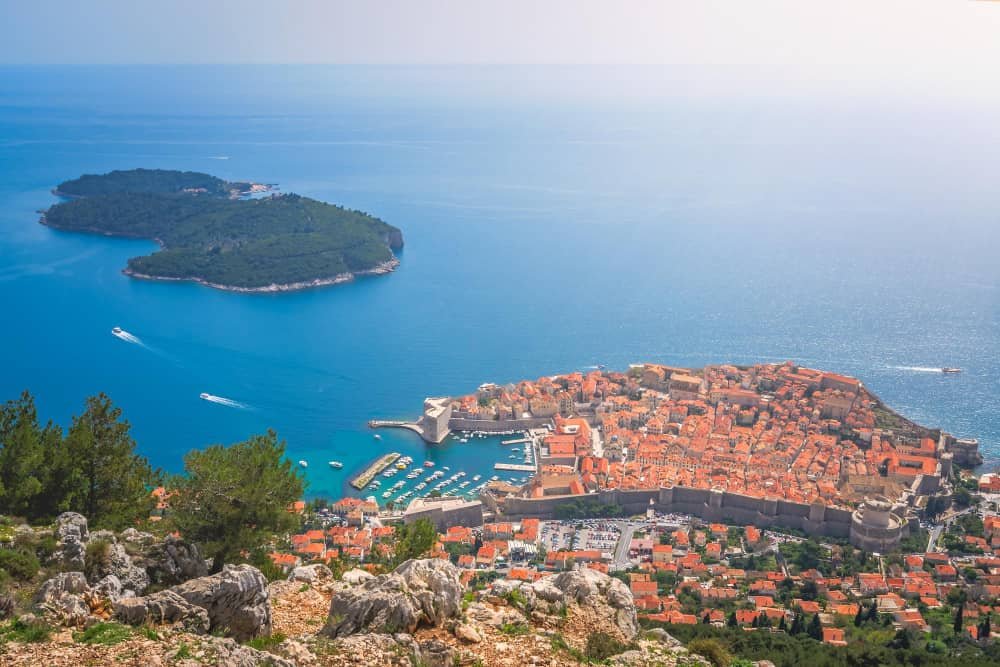
1. Dubrovnik Old Town – Best for Medieval History
Few historical places in Croatia are as instantly recognizable as Dubrovnik Old Town.
Surrounded by massive stone walls overlooking the Adriatic Sea, Dubrovnik developed into an important maritime and trading center. For centuries, it was the heart of the Republic of Ragusa, an independent maritime republic known for commerce, diplomacy, and its connections throughout the Mediterranean.
Today, the historic center is protected as a UNESCO World Heritage Site and remains remarkably rich in medieval, Renaissance, and Baroque architecture.
Walk the Dubrovnik City Walls
The famous city walls are one of the best places to begin exploring Dubrovnik’s history.
Walking along the fortifications provides views across terracotta rooftops, church towers, defensive forts, the Old Port, and the Adriatic Sea.
Along the route, you can appreciate just how extensively Dubrovnik was fortified and why its defenses became such an important part of the city’s identity.
Explore Stradun and the Old Town
Inside the walls, Stradun forms the main pedestrian street through the historic center.
From here, narrow lanes lead toward landmarks including Onofrio’s Fountain, Sponza Palace, Rector’s Palace, Orlando’s Column, the Church of St. Blaise, and Dubrovnik Cathedral.
Rector’s Palace is particularly worthwhile for travelers interested in the Republic of Ragusa, as it once served as the seat of government and residence of the republic’s rector.
Visit Fort Lovrijenac
Just outside the western walls, Fort Lovrijenac rises dramatically above the Adriatic.
Its strategic position helped protect Dubrovnik from attacks approaching by land and sea, while today it provides one of the best views back toward the fortified city.
Why Dubrovnik Is Historically Important
What makes Dubrovnik special isn’t simply the age of individual buildings. The entire Old Town provides a remarkably complete glimpse into the political, religious, commercial, and everyday life of a historic Mediterranean city.
Rather than rushing through Dubrovnik as a quick sightseeing stop, spend time walking the walls, exploring the quieter side streets, visiting its historic buildings, and learning about the Republic of Ragusa.
For anyone interested in medieval cities, maritime history, fortifications, and historic architecture, Dubrovnik is easily one of the most important historical places to visit in Croatia.
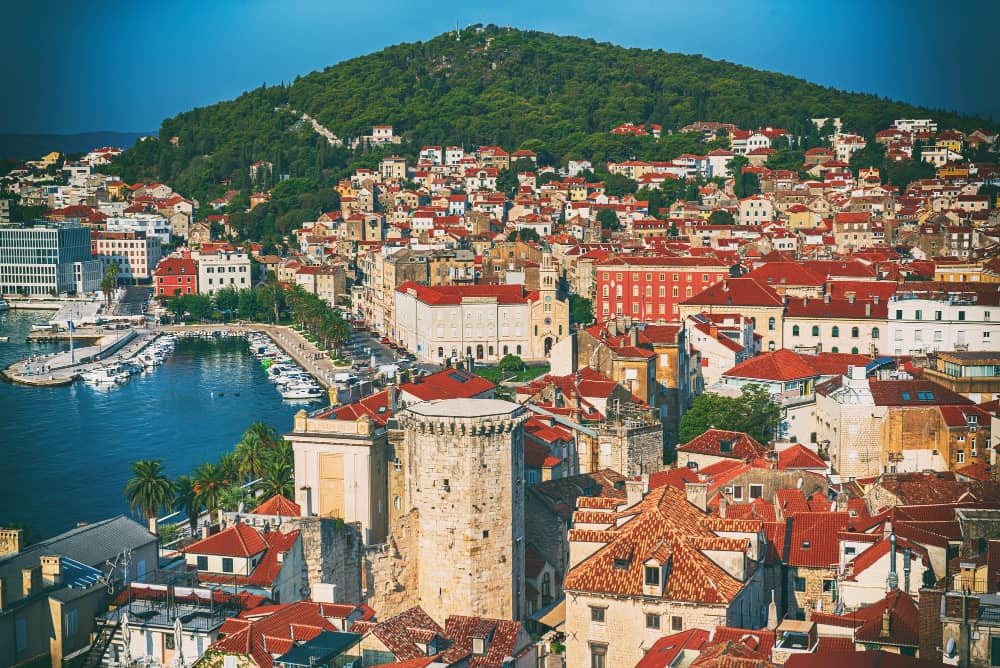
2. Diocletian’s Palace, Split – Best for Roman History
At the heart of modern Split stands one of Croatia’s most extraordinary Roman landmarks: Diocletian’s Palace.
Built around the beginning of the 4th century AD for Roman Emperor Diocletian, the enormous complex was intended as his retirement residence. Over the centuries, however, the palace evolved into something much more unusual.
Rather than surviving simply as an archaeological ruin, its ancient walls became part of a living city.
Today, homes, cafés, restaurants, shops, churches, and narrow streets occupy spaces within and around the original Roman complex, making Diocletian’s Palace one of the most fascinating historical places in Croatia to explore on foot.
See the Peristyle
The Peristyle was the ceremonial heart of Diocletian’s Palace and remains one of Split’s most impressive historic spaces.
Surrounded by ancient columns and monumental architecture, the square provides an excellent starting point for understanding the scale and design of the original palace.
Nearby stands the Cathedral of Saint Domnius, created partly from Diocletian’s former mausoleum—an extraordinary example of how the complex changed after the Roman period.
Explore the Palace Cellars
Beneath the southern section of the palace are the famous substructures, often called Diocletian’s Cellars.
These remarkably preserved underground spaces once supported the emperor’s residential quarters above and have helped historians understand the original layout of the palace.
Walking through the stone chambers provides a completely different perspective on the enormous Roman complex above.
Find the Ancient Gates
Four principal gates once provided access to the palace: the Golden Gate, Silver Gate, Iron Gate, and Bronze Gate.
The Golden Gate on the northern side was particularly important and remains one of the most recognizable entrances today.
As you explore Split’s historic center, look for surviving sections of Roman walls, columns, arches, and structures incorporated into buildings from later centuries.
Why Diocletian’s Palace Is Historically Important
Diocletian’s Palace isn’t simply one preserved Roman monument. It’s an extraordinary example of an ancient imperial complex that continued evolving for more than 1,700 years.
Roman architecture, medieval buildings, churches, Renaissance additions, and modern city life now exist within the same historic space.
Together with Split’s historic center, the palace forms part of a UNESCO World Heritage Site and remains one of the most significant surviving examples of Roman architecture along the Adriatic.
For travelers fascinated by Ancient Rome, archaeology, architecture, and living historic cities, Diocletian’s Palace should be near the top of any Croatia itinerary.
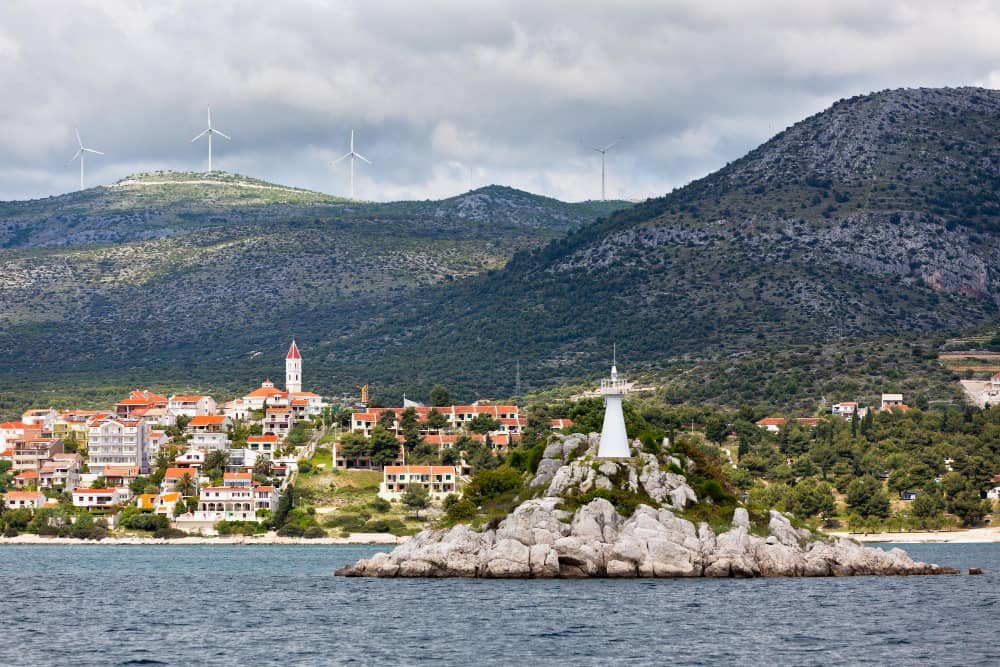
3. Historic City of Trogir – Best for Medieval and Renaissance Architecture
Just a short distance from Split, Trogir is one of the best-preserved historic towns on Croatia’s Adriatic coast.
Its compact Old Town occupies a small island between the mainland and Čiovo and contains an extraordinary concentration of Romanesque, Gothic, Renaissance, and Baroque architecture.
Trogir’s historic center is recognized as a UNESCO World Heritage Site, and because most major landmarks are within walking distance, it’s an excellent place to explore slowly on foot.
Visit the Cathedral of St. Lawrence
The centerpiece of historic Trogir is the Cathedral of St. Lawrence, one of the city’s most important architectural landmarks.
Its most celebrated feature is Radovan’s Portal, an intricately carved Romanesque entrance completed in the 13th century.
Inside and around the cathedral, centuries of architectural additions reveal how Trogir evolved through different historical periods.
Explore Kamerlengo Fortress
At the western end of the Old Town stands Kamerlengo Fortress, constructed during the period of Venetian rule.
The fortress once formed an important part of Trogir’s defensive system and remains one of the most recognizable structures along the waterfront.
Nearby historic walls, towers, churches, palaces, and narrow stone lanes add to the feeling that much of the medieval city remains intact.
Wander Through the Old Town
You don’t need a complicated itinerary to appreciate Trogir.
Walk through its maze of stone-paved streets and small squares, looking for historic residences, courtyards, churches, carved doorways, and architectural details that are easy to miss when moving quickly.
The waterfront promenade provides another perspective on the historic center and its relationship with the Adriatic.
Why Trogir Is Historically Important
Trogir is particularly valuable because its historic urban layout reflects centuries of continuous development.
Its street plan has roots stretching back to the ancient settlement established here, while later Romanesque, Gothic, Renaissance, and Baroque buildings created the architectural character visitors experience today.
Despite its relatively small size, Trogir contains an exceptional amount of Croatian and Mediterranean history within a very compact area.
For travelers staying in Split, it’s also one of the easiest historical destinations to add as a half-day or full-day trip.
If you enjoy medieval streets, historic churches, Venetian architecture, fortifications, and atmospheric coastal towns, Trogir deserves a place among the best historical places in Croatia.
4. Pula Arena – Best for Ancient Roman Architecture
At the southern tip of Croatia’s Istrian Peninsula, Pula Arena is one of the country’s most impressive reminders of Roman rule.
Constructed during the Roman imperial period, the enormous amphitheater once hosted public spectacles for thousands of spectators. Today, its surviving outer walls, arches, and underground spaces make it one of the most remarkable historical places in Croatia.
Unlike many ancient amphitheaters that survive only as partial ruins, Pula Arena retains much of its monumental exterior, allowing visitors to appreciate the scale of Roman engineering nearly two thousand years later.
Walk Inside the Amphitheater
The best way to appreciate Pula Arena is to enter the structure and walk across the open interior.
From inside, you can examine the rows of arches and imagine the crowds that once gathered here during the Roman period.
Below the arena are underground passages that were once connected with the operation of spectacles held above. Today, parts of these spaces contain exhibits related to life and commerce in ancient Istria.
Discover More Roman Pula
The amphitheater may be Pula’s most famous landmark, but it shouldn’t be the only Roman site you visit in the city.
Walk into the historic center to see the Temple of Augustus, standing beside the Forum, as well as the Arch of the Sergii, another impressive survivor from ancient Pula.
Remains of Roman gates, streets, mosaics, and archaeological features can also be found around the city.
Together, these sites reveal the importance of ancient Pula—known as Pola during the Roman era.
Why Pula Arena Is Historically Important
Pula Arena demonstrates how deeply Roman history is woven into Croatia’s Adriatic coast.
Its monumental architecture provides a striking connection with the period when Istria formed part of the Roman world, while the surrounding city contains additional evidence of nearly two millennia of continuous settlement.
The amphitheater is still used for selected cultural events today, adding another chapter to a structure that has already survived for centuries.
For travelers interested in Ancient Rome, archaeology, engineering, and monumental architecture, Pula Arena is one of the historical sites in Croatia that shouldn’t be missed.
5. Euphrasian Basilica, Poreč – Best for Early Christian Art
In the historic center of Poreč on the Istrian Peninsula, the Episcopal Complex of the Euphrasian Basilica preserves one of Croatia’s most remarkable collections of early Christian architecture and art.
The present basilica dates largely from the 6th century, when Bishop Euphrasius transformed an earlier Christian complex into the impressive church visitors see today.
Recognized as a UNESCO World Heritage Site, the complex is especially famous for its beautifully preserved Byzantine-style mosaics.
Admire the Basilica’s Mosaics
The highlight of the interior is the glittering mosaic decoration covering the apse.
Richly detailed religious scenes created from countless pieces of colored glass and stone demonstrate the artistic sophistication of the early Byzantine period.
Take time to look closely at the mosaics rather than simply walking through the church. Their figures, patterns, colors, and gold backgrounds are among the finest historic artworks you’ll encounter in Croatia.
Explore the Entire Episcopal Complex
There’s more here than the basilica itself.
The historic complex includes the atrium, baptistery, episcopal palace, archaeological remains, and other structures representing different stages in the development of Christianity in Poreč.
These layers are particularly fascinating because they reveal how the religious center changed over many centuries.
Depending on current visitor access, climbing the bell tower can also provide excellent views over Poreč’s terracotta rooftops and the Adriatic.
Walk Through Historic Poreč
After visiting the basilica, spend some time exploring the surrounding Old Town.
Poreč traces its urban origins to the Roman period, and elements of the ancient street plan remain visible today. Decumanus Street, one of the historic center’s principal streets, follows the route of an ancient Roman thoroughfare.
Roman remains, medieval buildings, Venetian-influenced architecture, narrow lanes, and waterfront views make the wider historic center worth exploring alongside the basilica.
Why the Euphrasian Basilica Is Historically Important
The Euphrasian Basilica provides an exceptional window into the development of early Christianity and Byzantine art along the Adriatic.
Rather than representing only one historical period, the complex preserves archaeological and architectural layers accumulated over centuries.
For travelers interested in religious history, early Christian architecture, mosaics, Byzantine art, and historic Adriatic towns, the Euphrasian Basilica is one of the most distinctive historical places in Croatia.
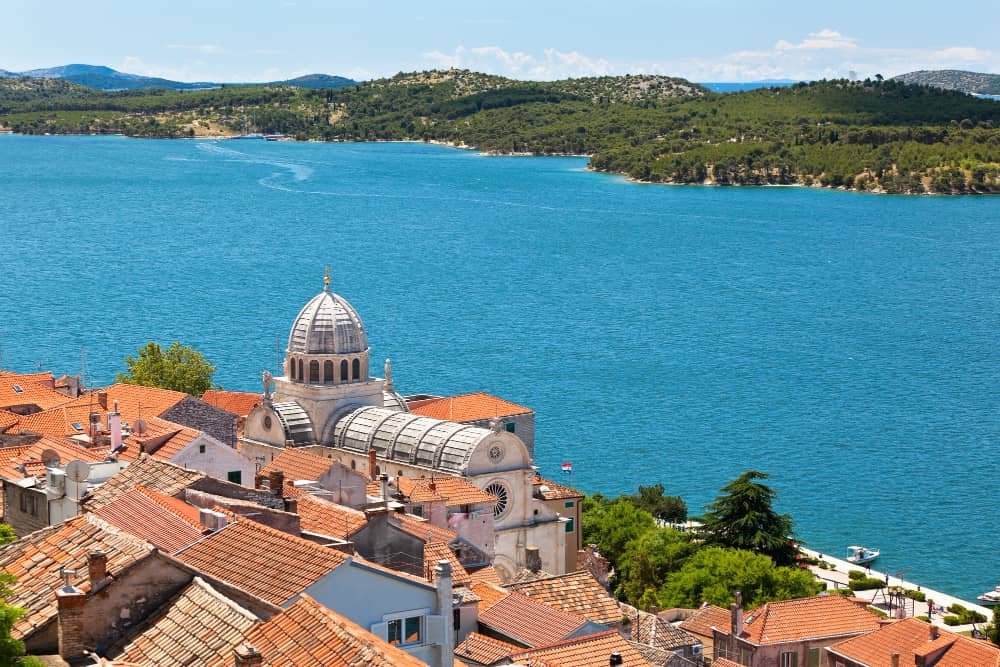
6. Cathedral of St. James, Šibenik – Best for Renaissance Architecture
Standing in the historic center of Šibenik, the Cathedral of St. James is one of Croatia’s most distinctive architectural landmarks.
Constructed during the 15th and 16th centuries, the cathedral reflects the transition from Gothic to Renaissance architecture and the work of several important builders and artists, most notably Juraj Dalmatinac (Giorgio da Sebenico).
Its unusual construction, elaborate stonework, and importance to the development of Dalmatian architecture earned the cathedral recognition as a UNESCO World Heritage Site.
Look for the Famous Stone Heads
One of the cathedral’s most recognizable features is the series of sculpted human heads decorating the exterior.
More than 70 individually carved faces appear around the building, each with distinctive expressions and features.
Their identities remain uncertain, but they have become one of the most fascinating details of the cathedral and are easy to overlook if you don’t know to look for them.
Admire the Stone Construction
The cathedral is particularly remarkable for the way it was constructed.
Large sections were assembled from precisely cut stone elements, demonstrating extraordinary craftsmanship and engineering for the period.
Its impressive dome, sculptural decoration, portals, and harmonious combination of Gothic and Renaissance elements make the building rewarding to examine from several angles.
Inside, visitors can appreciate the cathedral’s religious artwork, architectural details, and the sense of scale created by its stone interior.
Explore Historic Šibenik
Don’t leave immediately after visiting the cathedral.
Šibenik’s historic center is filled with stone lanes, stairways, churches, small squares, traditional houses, and remnants of its defensive architecture.
Walking uphill through the Old Town eventually leads toward several fortifications overlooking the city and surrounding Adriatic islands.
This makes Šibenik particularly appealing for travelers who want to experience multiple historical periods within a compact coastal destination.
Why the Cathedral of St. James Is Historically Important
The Cathedral of St. James represents an exceptional achievement in Dalmatian architecture and stone construction.
Its combination of Gothic and Renaissance influences reflects a period when artistic ideas circulated across the Adriatic between Dalmatia and Italy, while local craftsmen developed architectural techniques with a distinctive regional character.
For travelers interested in Renaissance architecture, religious history, stone carving, UNESCO landmarks, and historic Croatian cities, the Cathedral of St. James is one of the country’s essential historical sites.
7. St. Michael’s Fortress, Šibenik – Best for Medieval Fortifications
Rising above the historic center of Šibenik, St. Michael’s Fortress is one of the city’s most important historical landmarks and an excellent place to understand its medieval origins.
Unlike the old version of this article, which described the fortress as a 16th-century Venetian construction at the entrance to the harbor, St. Michael’s Fortress is considerably older. The hilltop fortification played a central role in the development and defense of medieval Šibenik.
Its elevated position also provides spectacular views over the Old Town, the Adriatic Sea, and the islands beyond.
Explore the Medieval Fortress
The fortress occupies a strategically important hill overlooking Šibenik.
Fortifications existed here for centuries, with the structure repeatedly modified, damaged, and rebuilt as the city developed.
Walking through the surviving walls and defensive spaces gives you a better sense of why this location was so important. From the top, you can see much of historic Šibenik below and understand how the fortress helped protect the settlement and surrounding waterways.
Today, the restored fortress also contains an open-air venue used for cultural performances and events.
Discover Šibenik’s Fortress System
St. Michael’s isn’t the only fortress worth seeing in Šibenik.
The city developed an impressive defensive network that also includes Barone Fortress, St. John’s Fortress, and the UNESCO-listed St. Nicholas’ Fortress at the entrance to the St. Anthony Channel.
Together, these fortifications reveal how strategically important Šibenik became along the Dalmatian coast.
If you have enough time, combining several of them provides a much better understanding of the city’s military history than visiting St. Michael’s alone.
Combine the Fortress With Šibenik Old Town
One of the advantages of visiting St. Michael’s Fortress is its proximity to Šibenik’s historic center.
You can explore the Cathedral of St. James, wander through narrow stone streets and stairways, and then climb toward the fortress for panoramic views over the city.
Allow time for the walk uphill, particularly during hot summer afternoons.
Why St. Michael’s Fortress Is Historically Important
St. Michael’s Fortress is closely connected with the origins and development of Šibenik and provides an important link to the city’s medieval past.
Its strategic location, surviving defensive architecture, and relationship with Šibenik’s wider fortress system make it much more than simply a scenic viewpoint.
For travelers interested in medieval Croatia, military architecture, fortifications, and historic coastal cities, St. Michael’s Fortress is one of the most rewarding historical places to explore in Croatia.
8. Stari Grad Plain, Hvar – Best for Ancient Greek Heritage
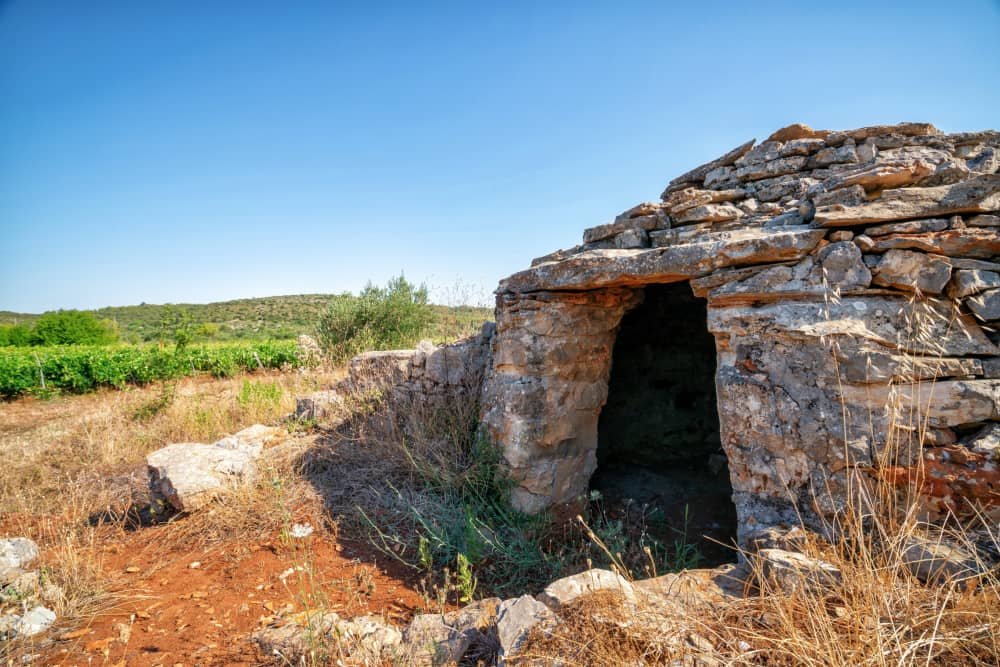
On the island of Hvar, the Stari Grad Plain preserves a remarkable agricultural landscape whose origins stretch back more than two thousand years.
Ancient Greek settlers from the island of Paros established the colony of Pharos in the 4th century BC and divided the surrounding fertile plain into agricultural plots.
What makes the site extraordinary is that the basic organization of this ancient landscape has survived for centuries. Traditional stone walls, pathways, fields, and agricultural practices continue to reflect a system established during the Greek period.
Today, the Stari Grad Plain is a UNESCO World Heritage Site and one of the most unusual historical places in Croatia.
Explore an Ancient Agricultural Landscape
Unlike Dubrovnik’s walls or Pula’s amphitheater, Stari Grad Plain isn’t centered around one monumental building.
The historical treasure is the landscape itself.
Dry-stone walls divide fields where grapes, olives, and other Mediterranean crops have traditionally been cultivated. Ancient roads and boundaries preserve elements of the geometric land division introduced by Greek colonists.
Exploring the area on foot or by bicycle allows you to appreciate details that are easy to miss when simply driving across Hvar.
Visit Historic Stari Grad
Combine the plain with time in nearby Stari Grad, one of the oldest settlements in Croatia.
Its narrow streets, stone houses, churches, small squares, and waterfront reveal additional layers of Hvar’s long history.
One particularly interesting landmark is Tvrdalj Castle, the fortified Renaissance residence associated with Croatian poet Petar Hektorović. Its courtyard, fishpond, stone inscriptions, and architecture provide a very different historical experience from the ancient agricultural landscape outside town.
Why Stari Grad Plain Is Historically Important
Stari Grad Plain is significant because it preserves evidence not only of where ancient people lived, but how they organized and cultivated the land.
The agricultural pattern established by Greek settlers endured through Roman, medieval, Venetian, and modern periods while the landscape continued to be used for farming.
That continuity makes Stari Grad Plain different from almost every other destination on this list.
For travelers interested in Ancient Greek history, archaeology, traditional agriculture, cultural landscapes, and quieter historical destinations, Stari Grad Plain offers a fascinating reason to explore beyond Hvar’s famous beaches and nightlife.
9. Zadar Old Town – Best for Roman and Venetian History
Set on a peninsula along Croatia’s Dalmatian coast, Zadar Old Town contains more than two thousand years of history within a remarkably walkable area.
The city has roots stretching back to antiquity and later developed under Roman, Byzantine, Croatian, Venetian, and Habsburg influence. Those different periods left behind an unusual mixture of Roman ruins, medieval churches, defensive walls, historic gates, and elegant stone streets.
For travelers interested in seeing several layers of Croatian history in one destination, Zadar is one of the most rewarding historical places in Croatia.
Explore the Roman Forum
At the heart of the historic center are the remains of the Roman Forum, established during the Roman period as the center of public life in ancient Zadar.
Columns, stone foundations, and archaeological remains survive beside later churches and buildings, creating one of the city’s most interesting historical spaces.
The nearby Church of St. Donatus, with its distinctive circular form, is another symbol of Zadar’s past. Dating from the early medieval period, it stands directly beside the Roman Forum and even incorporates ancient Roman material into its structure.
See St. Anastasia’s Cathedral
A short walk away, St. Anastasia’s Cathedral is another major landmark in Zadar’s historic center.
The cathedral is particularly notable for its Romanesque architecture and richly detailed façade.
Together with the surrounding churches, archaeological remains, and historic streets, it demonstrates how Zadar continued evolving long after the Roman period.
Walk Through the Historic City Gates
Zadar’s fortifications provide another important connection with its past.
The impressive Land Gate, constructed during the Venetian period in the 16th century, remains one of the most recognizable entrances to the historic city.
Sections of Zadar’s defensive system are included within the UNESCO-listed Venetian Works of Defence, which protected important territories and maritime routes around the Adriatic.
As you walk through the Old Town, look for surviving walls, gates, towers, and other remnants incorporated into the modern city.
Why Zadar Is Historically Important
Zadar’s appeal comes from the way different historical periods overlap within such a small area.
You can stand among Roman ruins, walk a few steps to an early medieval church, continue toward a Romanesque cathedral, and then pass through monumental Venetian fortifications.
Modern attractions such as the Sea Organ and Greeting to the Sun may receive plenty of attention today, but Zadar’s historical heritage is equally impressive.
For travelers interested in Roman archaeology, medieval churches, Venetian fortifications, and historic Adriatic cities, Zadar Old Town deserves a place on any Croatia history itinerary.
10. Varaždin Old Town – Best for Baroque History
Northern Croatia offers a very different historical experience from the Roman ruins and medieval coastal cities of Dalmatia and Istria.
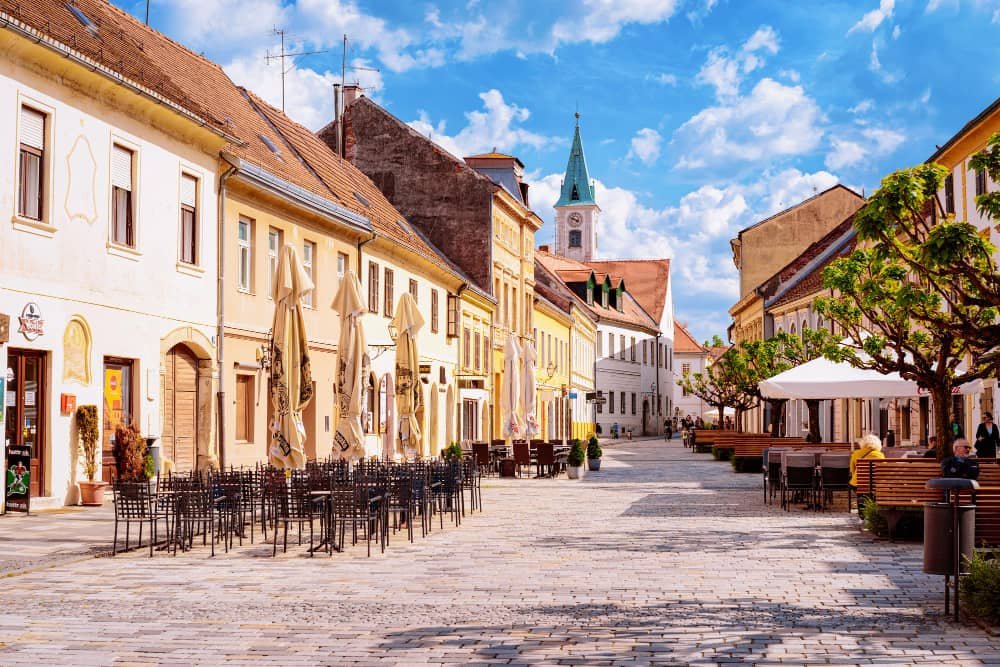
One of its highlights is Varaždin, an elegant historic city known for its Baroque architecture, colorful façades, churches, palaces, and beautifully preserved Old Town.
Varaždin became particularly important during the 18th century, when it briefly served as Croatia’s administrative center. Today, its compact historic center makes it an excellent destination for travelers interested in architecture and the history of continental Croatia.
Visit Varaždin’s Old Town Fortress
The city’s most recognizable landmark is Stari Grad, or Varaždin Old Town.
Despite its name, this isn’t an entire old-city district. Stari Grad is the historic fortress and castle complex near the center of Varaždin.
Its origins stretch back to the Middle Ages, although the fortress was expanded and transformed over subsequent centuries.
Surrounded partly by former defensive earthworks and green spaces, its white walls and distinctive towers make it one of the most photogenic castles in northern Croatia.
Today, the complex houses the Varaždin City Museum, where visitors can learn more about the city’s cultural and historical development.
Walk Through the Baroque Center
After visiting Stari Grad, continue into Varaždin’s historic streets.
The center is filled with Baroque and Rococo palaces, churches, pastel-colored buildings, courtyards, and pedestrian squares that give Varaždin a character quite different from Croatia’s stone-built Adriatic towns.
Spend some time around King Tomislav Square, where historic buildings and outdoor cafés create one of the city’s most attractive gathering places.
The Cathedral of the Assumption of the Virgin Mary and several other churches add another layer to Varaždin’s architectural heritage.
Why Varaždin Is Historically Important
Varaždin provides an important reminder that Croatia’s historical heritage extends far beyond the Adriatic coast.
Its medieval fortress, later Baroque development, aristocratic palaces, religious architecture, and former political importance reveal the history of continental Croatia and its Central European connections.
It’s also relatively compact, making the historic center easy to explore during a day trip or overnight stay.
For travelers interested in castles, Baroque architecture, historic towns, museums, and lesser-known Croatian destinations, Varaždin is one of the best historical places to visit in northern Croatia.
11. Trakošćan Castle – Best for a Romantic Medieval Castle
Surrounded by forested hills in northern Croatia, Trakošćan Castle looks very different from the ancient ruins and stone fortresses found along the Adriatic coast.
Its origins date to the 13th century, when a defensive fortress was established at this strategic location. Over the centuries, the property changed owners and underwent numerous modifications, eventually developing into the picturesque castle visitors see today.
Much of its present romantic appearance resulted from extensive 19th-century restoration, when the medieval fortress was transformed into a more comfortable aristocratic residence.
Explore the Castle Interior
Today, Trakošćan operates as a museum, allowing visitors to explore furnished rooms that provide insight into the lives of the noble families associated with the estate.
Inside you’ll find historic furniture, paintings, weapons, decorative objects, books, and period interiors representing different stages of the castle’s history.
Rather than being an empty fortress, Trakošćan provides a glimpse into how members of Croatia’s aristocracy lived over the centuries.
Walk Around Trakošćan Lake
The surrounding landscape is an important part of the experience.
A lake lies below the castle, surrounded by forests and walking paths that provide some of the best views back toward the hilltop structure.
Allow extra time to walk around the grounds rather than visiting only the museum. The combination of castle, lake, woodland, and landscaped surroundings makes Trakošćan particularly beautiful during spring and autumn.
Why Trakošćan Castle Is Historically Important
Trakošćan is fascinating because it demonstrates how a medieval defensive structure could evolve over centuries into an aristocratic residence.
Its architecture and collections reflect different periods of Croatian history, while its location provides a very different perspective from the country’s famous coastal heritage.
It’s also easy to combine Trakošćan with Varaždin when exploring northern Croatia.
For travelers interested in Croatian castles, medieval history, aristocratic residences, museums, and historic architecture, Trakošćan Castle is one of the most memorable historical places in Croatia.
12. Klis Fortress – Best for Dalmatian Military History
Perched dramatically on a rocky ridge above Split, Klis Fortress is one of Croatia’s most impressive historic fortifications.
Its strategic location between the mountains and the Adriatic made Klis an important defensive stronghold for centuries. Control of the fortress meant control of an important passage between coastal Dalmatia and the interior, placing it at the center of numerous conflicts throughout Croatian history.
Today, visitors can explore its walls, gates, defensive structures, and elevated viewpoints while enjoying spectacular panoramas across Split and the surrounding coastline.
Explore the Fortress Walls
Klis developed gradually rather than being constructed during a single historical period.
Different rulers strengthened and expanded the fortress over the centuries, creating the complex collection of walls, bastions, gates, courtyards, and defensive positions visible today.
Walking through the fortress makes its strategic importance immediately obvious. The narrow ridge provided defenders with extensive views across the surrounding approaches while making the position difficult to attack.
Wear comfortable shoes, as much of the site involves uneven stone surfaces, stairs, and exposed outdoor areas.
Learn About Petar Kružić and the Ottoman Sieges
One of the most important chapters in Klis history occurred during the 16th century, when Croatian captain Petar Kružić and his defenders resisted repeated Ottoman attacks.
Klis became an important frontier stronghold during the struggle between Ottoman forces and territories along the Adriatic.
The fortress eventually fell to the Ottomans in 1537 and later passed under Venetian control, adding further layers to its long military history.
Understanding these conflicts makes exploring Klis considerably more meaningful than simply treating the fortress as a scenic viewpoint.
Enjoy the Views Toward Split
The fortress’s location provides some of the best panoramic views in the Split region.
From its elevated position, you can look across Split, the surrounding mountains, the Adriatic, and nearby islands on clear days.
Its proximity to Split also makes Klis relatively easy to incorporate into a Croatia itinerary without requiring an entire day.
Why Klis Fortress Is Historically Important
Klis Fortress represents centuries of Croatian military and political history.
Its strategic position brought it under the control of different powers and placed it at the center of conflicts that shaped Dalmatia and the surrounding region.
While Dubrovnik’s walls demonstrate the defenses of a wealthy maritime republic, Klis offers a different perspective: a rugged frontier fortress built to control one of the most strategically important passages in the area.
For travelers interested in medieval fortresses, Croatian military history, Ottoman-European conflicts, archaeology, and panoramic landscapes, Klis is one of the most fascinating historical places in Croatia.
13. Salona Archaeological Park – Best for Exploring a Roman City
Just outside modern-day Solin, a short distance from Split, lie the extensive ruins of Salona, once one of the most important Roman cities on the eastern Adriatic.
Salona served as the capital of the Roman province of Dalmatia and developed into a major administrative, commercial, and religious center.
Today, its archaeological remains provide a fascinating contrast to nearby Diocletian’s Palace. While Split allows you to experience Roman architecture incorporated into a living city, Salona lets you walk through the ruins of an ancient urban center that was eventually abandoned.
Explore the Roman Amphitheater
One of Salona’s most impressive surviving structures is its amphitheater.
Although only portions remain today, the ruins reveal the scale of public entertainment in the Roman city and provide insight into Salona’s importance during the imperial period.
The archaeological area also contains remnants of city walls, gates, streets, baths, bridges, residential structures, and early Christian buildings.
Because the ruins are spread across a relatively large area, allow yourself time to explore rather than expecting a single concentrated monument.
Discover Salona’s Early Christian Heritage
Salona later became an important center of early Christianity.
The archaeological site preserves remains associated with churches, cemeteries, and Christian communities that developed during the final centuries of Roman rule.
Among the most important areas is Manastirine, an early Christian cemetery complex associated with martyrs and the religious history of ancient Salona.
These remains make the site particularly interesting because they demonstrate the transition from the Roman pagan world to the increasingly Christian society of Late Antiquity.
Combine Salona With Split and Klis
Salona’s location makes it easy to combine with several other major historical places in Croatia.
You can explore Diocletian’s Palace in Split, visit the ruins of Salona, and continue toward Klis Fortress to experience three very different periods of Dalmatian history within the same region.
This combination works particularly well for travelers who want to go deeper into Croatian history without spending hours driving between destinations.
Why Salona Is Historically Important
Salona provides essential context for understanding Roman Dalmatia.
Before medieval Split developed into one of Croatia’s most important cities, Salona was the dominant urban center of the surrounding region.
Walking among its ruins reveals a world of Roman administration, public entertainment, commerce, religion, and early Christianity that shaped this part of the Adriatic for centuries.
For travelers interested in Roman archaeology, ancient cities, early Christianity, and lesser-known historical sites, Salona Archaeological Park is one of the most rewarding places to explore in Croatia.
14. St. Mark’s Church and Zagreb Upper Town – Best for Historic Zagreb
Croatia’s capital deserves a place on any list of the country’s historical destinations, and one of the best areas to begin exploring is Zagreb’s Upper Town.
Known as Gornji Grad, this historic district developed from medieval settlements and today contains churches, government buildings, museums, narrow streets, historic squares, and some of Zagreb’s most recognizable landmarks.
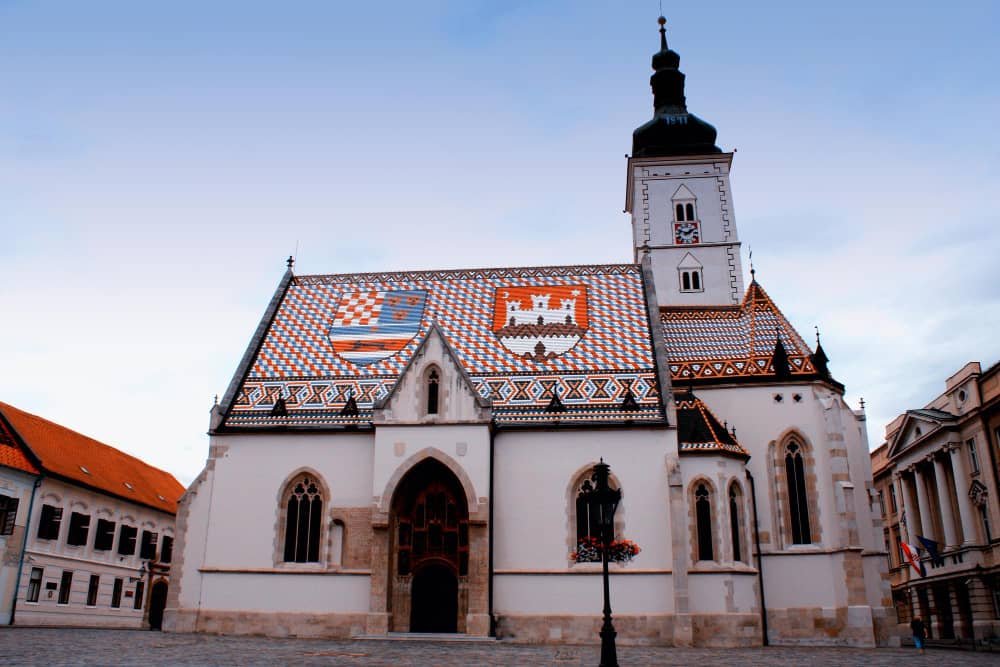
At its heart stands St. Mark’s Church, famous for the colorful tiled roof that has become one of the symbols of the Croatian capital.
See St. Mark’s Church
The church has medieval origins and underwent significant changes over the centuries.
Its distinctive roof displays the coats of arms of Croatia, Dalmatia and Slavonia, as well as the emblem of Zagreb, creating one of the most photographed architectural details in the city.
The Gothic southern portal is another feature worth examining closely, with sculptural decoration representing religious figures.
Because access and security arrangements around St. Mark’s Square can change, check current visitor information before your trip.
Walk Through Zagreb’s Upper Town
St. Mark’s Church is only one part of the experience.
Spend time walking through the surrounding historic streets, where you’ll encounter landmarks such as the Stone Gate, Lotrščak Tower, and additional churches, museums, and government buildings.
The Stone Gate is particularly interesting because it survives from Zagreb’s medieval defensive system and remains an important local religious site.
From several viewpoints around the Upper Town, you can also look across the rooftops toward Zagreb’s Lower Town.
Discover Zagreb’s Medieval Origins
Modern Zagreb developed from two neighboring medieval settlements: Gradec and Kaptol.
Gradec occupied much of today’s Upper Town, while Kaptol developed around Zagreb Cathedral.
Exploring both areas provides a better understanding of how the Croatian capital grew from separate medieval communities into the city visitors experience today.
Rather than visiting St. Mark’s Church as an isolated photo stop, give yourself a few hours to wander through both historic districts.
Why Zagreb Upper Town Is Historically Important
Zagreb’s Upper Town provides a different perspective on Croatian history from the Roman and Venetian heritage found along the Adriatic.
Its medieval streets, churches, surviving defensive structures, political institutions, and later architecture reflect the development of continental Croatia and its Central European connections.
For travelers interested in medieval cities, Croatian political history, historic churches, architecture, and urban culture, St. Mark’s Church and Zagreb Upper Town belong among the best historical places in Croatia.
15. Veliki Tabor Castle – Best for a Historic Hilltop Castle
Rising above the rolling hills of Croatian Zagorje, Veliki Tabor Castle is one of the most distinctive historic castles in northern Croatia.
The fortified complex developed primarily during the late medieval and Renaissance periods, with its imposing towers and walls reflecting a time when noble residences also needed to provide protection.
Its hilltop setting, preserved architecture, and connection with the noble Rattkay family make Veliki Tabor an excellent destination for travelers who want to explore Croatia beyond the better-known historical sites along the Adriatic.
Explore the Castle Interior
The castle’s architecture immediately reveals its defensive character.
A central fortified structure is surrounded by prominent semicircular towers, creating the compact appearance that makes Veliki Tabor so recognizable.
Inside, museum exhibitions introduce visitors to the history of the castle, archaeological discoveries, weapons, artwork, everyday objects, and the families associated with the estate.
Walking through the rooms, courtyards, and defensive spaces provides a good sense of how the complex changed from a fortified residence into the historic monument preserved today.
Discover the Legend of Veronika of Desinić
Veliki Tabor is also associated with one of northern Croatia’s best-known legends.
The story centers on Veronika of Desinić and her relationship with Frederick II of Celje. Over generations, historical events surrounding the pair became intertwined with folklore, including dramatic stories connecting Veronika with Veliki Tabor.
The legend adds an intriguing layer to a visit, but it’s best understood as a mixture of documented medieval history and later storytelling, rather than treating every detail as established fact.
Explore the Zagorje Region
Veliki Tabor’s location makes it especially useful for a historical road trip through Croatian Zagorje.
The region is characterized by green hills, villages, vineyards, churches, manor houses, and castles, creating a landscape very different from coastal Croatia.
It can also be combined with other northern Croatian destinations depending on your route, making it worthwhile to spend more than a few hours in the region.
Why Veliki Tabor Is Historically Important
Veliki Tabor provides another perspective on Croatia’s medieval and Renaissance heritage.
Instead of Roman cities or Adriatic fortifications, visitors encounter the world of noble families, fortified residences, regional conflicts, and continental Croatian architecture.
Together with Varaždin and Trakošćan Castle, it helps demonstrate just how geographically and historically diverse Croatia really is.
For travelers interested in castles, medieval history, legends, architecture, and quieter destinations away from the coast, Veliki Tabor is an excellent final addition to our list of the best historical places in Croatia.
Best Historical Places in Croatia by Region
With historical landmarks spread from Istria and northern Croatia to Dalmatia and the Adriatic islands, it helps to organize your trip geographically rather than trying to visit places in the order they appear on a list.
Here are some of the best areas to focus on depending on your Croatia itinerary.
Dubrovnik and Southern Dalmatia
Best for: Medieval history, fortifications, maritime heritage
The highlight of southern Croatia is Dubrovnik Old Town, where the city walls, Rector’s Palace, historic churches, forts, and narrow stone streets preserve the legacy of the former Republic of Ragusa.
If Dubrovnik is your main base, give yourself enough time to explore the historic center beyond its busiest streets rather than treating it as a quick photo stop.
Split and Central Dalmatia
Best for: Roman ruins, medieval towns, fortresses
This is arguably the strongest region for travelers interested in Croatian history because several major sites are located relatively close together.
Start with Diocletian’s Palace in Split, then add Salona Archaeological Park, Klis Fortress, and the historic city of Trogir.
Together, these destinations reveal very different periods—from Roman Dalmatia and early Christianity to medieval cities and military fortifications.
Šibenik and the Central Adriatic
Best for: Renaissance architecture and defensive history
Šibenik is particularly rewarding because you can experience several important historical landmarks within one destination.
Visit the Cathedral of St. James, climb to St. Michael’s Fortress, and explore the city’s stone streets before discovering more of Šibenik’s historic fortress system.
Istria
Best for: Roman and early Christian heritage
The Istrian Peninsula contains some of Croatia’s finest ancient landmarks.
In Pula, explore the Roman amphitheater, Temple of Augustus, and other surviving Roman monuments.
Continue north to Poreč for the UNESCO-listed Euphrasian Basilica and its remarkable early Christian mosaics.
Zadar and Northern Dalmatia
Best for: Layers of Roman, medieval, and Venetian history
Zadar Old Town is particularly interesting because several historical periods can be experienced within a compact area.
Roman Forum ruins, the Church of St. Donatus, St. Anastasia’s Cathedral, and Venetian defensive architecture make the city an excellent stop on a historical journey along the Adriatic.
Hvar Island
Best for: Ancient Greek heritage and cultural landscapes
The Stari Grad Plain offers something completely different from Croatia’s monumental churches and fortresses.
Its ancient agricultural organization provides a rare connection with Greek settlement on the Adriatic, while nearby Stari Grad adds historic streets, architecture, and centuries of island culture.
Zagreb and Northern Croatia
Best for: Castles, Baroque architecture and continental Croatian history
Travel inland to discover another side of Croatia’s past.
Explore Zagreb’s Upper Town and St. Mark’s Church, continue to the Baroque streets and fortress of Varaždin, and add Trakošćan Castle or Veliki Tabor Castle for a road trip through northern Croatia.
If history is one of the main reasons for your trip, don’t limit yourself to the coast. Combining Dalmatia or Istria with Zagreb and northern Croatia provides a much broader picture of the cultures, empires, and historical periods that shaped the country.
UNESCO Historical Sites in Croatia
Several of the best historical places in Croatia have also been recognized by UNESCO for their outstanding cultural significance.
While UNESCO status isn’t necessary for a place to be historically important, these protected sites provide an excellent starting point for travelers interested in Croatia’s architecture, archaeology, and cultural heritage.
Historical Complex of Split with Diocletian’s Palace
The historic center of Split and Diocletian’s Palace combines monumental Roman architecture with centuries of later urban development.
What began as an imperial residence eventually became part of a living city, where Roman walls, medieval buildings, churches, homes, shops, and public spaces continue to exist side by side.
Old City of Dubrovnik
Dubrovnik is one of Croatia’s most celebrated UNESCO destinations.
Its monumental walls, forts, churches, palaces, squares, and historic streets preserve the legacy of a powerful maritime city and the former Republic of Ragusa.
Historic City of Trogir
The UNESCO-listed center of Trogir preserves an exceptional collection of Romanesque, Gothic, Renaissance, and Baroque architecture.
Its compact network of stone streets makes it one of the easiest historic Croatian cities to explore on foot.
Episcopal Complex of the Euphrasian Basilica in Poreč
The Euphrasian Basilica is especially important for its early Christian architecture and extraordinary 6th-century mosaics.
The wider episcopal complex preserves evidence of religious development in Poreč over many centuries.
Cathedral of St. James in Šibenik
The Cathedral of St. James represents one of Croatia’s great achievements in Gothic and Renaissance architecture.
Its innovative stone construction and distinctive sculptural decoration make it unlike any other cathedral in the country.
Stari Grad Plain
On Hvar, the Stari Grad Plain preserves an agricultural landscape whose organization dates back to Greek colonization in the 4th century BC.
Ancient land divisions remain visible through the network of fields, paths, and dry-stone walls.
Venetian Works of Defence in Zadar and Šibenik
Croatia also contains components of the transnational UNESCO property known as the Venetian Works of Defence between the 16th and 17th Centuries.
These include defensive structures in Zadar and St. Nicholas’ Fortress near Šibenik, illustrating the sophisticated fortification systems developed to protect important Adriatic territories and maritime routes.
If UNESCO heritage is a major part of your trip, several of these destinations can easily be combined. Split, Trogir, and Šibenik work particularly well together, while Poreč and other historical destinations can form part of a longer journey through Istria.
For a deeper look at the country’s protected heritage, see our complete guide to the UNESCO World Heritage Sites in Croatia.
7-Day Croatia History Itinerary
If historical places are one of the main reasons you’re visiting Croatia, a 7-day itinerary can combine several of the country’s most important Roman, medieval, Renaissance, and maritime landmarks without trying to cover the entire country.
For a first trip, Split and Dubrovnik make excellent anchors, with Trogir, Salona, Klis, and Šibenik fitting naturally between them.
Days 1–2: Split and Diocletian’s Palace
Begin in Split, where you can spend your first day exploring Diocletian’s Palace and the surrounding historic center.
Don’t limit your visit to the Peristyle. Explore the palace cellars, ancient gates, Cathedral of Saint Domnius, narrow streets, and surviving Roman architectural details incorporated into later buildings.
Use your second day to visit two nearby historical sites:
Salona Archaeological Park → Klis Fortress
Salona introduces you to Roman Dalmatia, while Klis provides a completely different perspective through centuries of Croatian military history.
Day 3: Trogir
Travel to the UNESCO-listed Historic City of Trogir.
Visit the Cathedral of St. Lawrence and Radovan’s Portal, explore Kamerlengo Fortress, and spend time wandering through the Old Town’s stone streets and waterfront.
Because Trogir is compact, you don’t need to rush from attraction to attraction. Much of its appeal comes from simply exploring the historic urban landscape.
Day 4: Šibenik
Continue north to Šibenik.
Start with the Cathedral of St. James before walking through the historic center toward St. Michael’s Fortress.
If you have additional time, explore more of Šibenik’s fortress system or simply enjoy the views across the Adriatic from the upper parts of the city.
Day 5: Travel Toward Dubrovnik
Head south toward Dubrovnik, allowing time for stops along the journey rather than treating the day only as transportation.
Depending on your route, schedule, and interests, this can also be a more relaxed day after several days of intensive sightseeing.
Arrive in Dubrovnik with enough time for an evening walk through the Old Town.
Days 6–7: Dubrovnik
Give Dubrovnik at least two days.
On your first full day, walk the Dubrovnik city walls and explore Stradun, Rector’s Palace, Sponza Palace, the Church of St. Blaise, and other landmarks within the historic center.
On your final day, visit Fort Lovrijenac, explore quieter streets away from the busiest routes, and spend more time learning about the history of the Republic of Ragusa.
If possible, experience Dubrovnik early in the morning or later in the evening, when its historic streets can feel very different from the busiest hours of the day.
7-Day Route at a Glance
Split → Salona → Klis → Trogir → Šibenik → Dubrovnik
This itinerary works particularly well because it isn’t simply a collection of famous attractions.
Over one week, you’ll encounter Roman imperial history, ancient urban ruins, medieval fortifications, Gothic and Renaissance architecture, Venetian influence, and the extraordinary maritime heritage of Dubrovnik.
If you have 10 days, however, don’t simply add more stops to the same route. Use the extra time to introduce another side of Croatian history—either Zadar and northern Dalmatia or Istria and its Roman heritage.
10-Day Croatia History Itinerary
With 10 days in Croatia, you can build a more complete historical journey through Dalmatia, combining Roman ruins, medieval cities, UNESCO landmarks, Venetian fortifications, and the maritime heritage of Dubrovnik.
Rather than trying to include every historical place in Croatia, this route follows the Adriatic coast in a logical direction:
Zadar → Šibenik → Trogir → Split → Salona → Klis → Dubrovnik
Days 1–2: Zadar
Begin your trip in Zadar, where more than two thousand years of history are concentrated within the Old Town.
Explore the Roman Forum, Church of St. Donatus, St. Anastasia’s Cathedral, Land Gate, and surviving sections of the city’s historic fortifications.
Spend your second day exploring the Old Town at a slower pace. Zadar is particularly interesting because Roman, medieval, and Venetian landmarks sit within easy walking distance of one another.
Day 3: Šibenik
Travel south to Šibenik and begin at the UNESCO-listed Cathedral of St. James.
After exploring the cathedral and surrounding stone streets, climb toward St. Michael’s Fortress for panoramic views over the city and Adriatic.
If time allows, add another part of Šibenik’s historic fortress system before continuing your journey.
Day 4: Trogir
Continue to the Historic City of Trogir.
Visit the Cathedral of St. Lawrence and its famous Radovan’s Portal, walk through the maze of medieval streets, and explore Kamerlengo Fortress near the waterfront.
Trogir is compact enough to explore comfortably in one day, but staying into the evening lets you experience its historic center after many daytime visitors have left.
Days 5–6: Split and Diocletian’s Palace
Spend the next two days in Split.
Begin with Diocletian’s Palace, including the Peristyle, palace substructures, ancient gates, and Cathedral of Saint Domnius.
Then wander beyond the best-known landmarks. Part of what makes Split fascinating is seeing how nearly 1,700 years of architecture and everyday life developed within and around the Roman palace.
Use your second day to explore additional museums, archaeological remains, historic neighborhoods, and the wider center at a more relaxed pace.
Day 7: Salona and Klis Fortress
Take a day trip from Split to two very different historical sites.
Begin at Salona Archaeological Park, once the capital of the Roman province of Dalmatia. Explore the remains of its amphitheater, early Christian complexes, walls, streets, and other archaeological structures.
Then continue to Klis Fortress.
Its dramatic hilltop location and centuries of military history provide a striking contrast to the Roman city below.
Together, Salona and Klis take you from Roman Dalmatia to medieval and early modern military history within a single day.
Day 8: Travel to Dubrovnik
Continue south toward Dubrovnik.
Rather than filling every hour with sightseeing, use this as a slower travel day and arrive with enough time for an evening walk through the Old Town.
Seeing Dubrovnik after sunset provides a very different atmosphere from exploring its busiest streets during the middle of the day.
Days 9–10: Dubrovnik
Finish your historical journey with two days in the Old City of Dubrovnik.
Walk the famous city walls and explore Rector’s Palace, Sponza Palace, Stradun, Onofrio’s Fountain, the Church of St. Blaise, and Dubrovnik’s historic harbor.
On your final day, visit Fort Lovrijenac and spend time wandering through the smaller streets away from the main pedestrian routes.
Learning about the former Republic of Ragusa will also help put Dubrovnik’s architecture, fortifications, and maritime importance into context.
10-Day Route at a Glance
Days 1–2: Zadar
Day 3: Šibenik
Day 4: Trogir
Days 5–6: Split
Day 7: Salona + Klis
Day 8: Travel to Dubrovnik
Days 9–10: Dubrovnik
This route works particularly well for history lovers because the destinations aren’t repetitive. You’ll move through Roman cities, early Christian heritage, medieval streets, Renaissance architecture, Venetian defenses, Croatian fortresses, and the maritime world of the Republic of Ragusa.
If you have two weeks or more, that’s when I’d consider adding Istria, Pula, Poreč, Zagreb, Varaždin, and the castles of northern Croatia rather than squeezing them into this already full 10-day route.
Tips for Visiting Historical Places in Croatia
Croatia’s historical sites range from busy UNESCO-listed cities to archaeological ruins and remote hilltop castles. A little planning can make exploring them considerably easier, especially during the popular summer months.
Visit Popular Old Towns Early
Places such as Dubrovnik, Split, Trogir, and Šibenik can become busy during the middle of the day in peak season.
If possible, explore major historic centers early in the morning. You’ll encounter fewer crowds, cooler temperatures, and often better conditions for photography.
Evenings can also be an excellent time to wander through historic streets after many day-trippers have left.
Wear Comfortable Shoes
Cobblestones, polished limestone, fortress staircases, archaeological ruins, and uneven stone paths are common at many historical places in Croatia.
Comfortable walking shoes with good grip are far more practical than footwear chosen purely for appearance.
This is particularly important at places such as Dubrovnik’s walls, Klis Fortress, Salona, and Šibenik’s hilltop fortifications.
Don’t Try to See Everything
Croatia has enough historical attractions to fill several vacations.
Instead of racing between landmarks, choose destinations that fit naturally into your route. Split, Trogir, Salona, and Klis, for example, form an excellent historical cluster without requiring long travel days.
Likewise, Pula and Poreč work naturally together when exploring Istria.
Check Opening Hours Before Visiting
Opening hours, admission policies, restoration work, and visitor access can change throughout the year.
Always check the official website for important attractions before traveling, particularly during the off-season, holidays, or periods of restoration.
This is especially important for castles, museums, churches, archaeological sites, and attractions with seasonal schedules.
Allow More Time Than You Think
Some historical places appear compact on a map but contain much more than a single landmark.
Dubrovnik isn’t only its walls. Split isn’t only the Peristyle. Zadar isn’t only its Roman Forum.
Leave enough time to wander through side streets, enter smaller churches or museums, examine architectural details, and stop at viewpoints along the way.
Often, these unplanned moments become just as memorable as the famous attractions.
Combine History With Other Experiences
You don’t need to spend every day moving between museums and monuments.
Many of Croatia’s historical destinations are surrounded by beaches, islands, national parks, vineyards, mountains, restaurants, and scenic coastal landscapes.
Spend the morning exploring Roman ruins and the afternoon beside the Adriatic. Visit a medieval fortress before enjoying dinner in an Old Town square. Combine a castle in northern Croatia with a drive through the surrounding countryside.
This balance can make a history-focused Croatia itinerary much more enjoyable.
Learn a Little Before You Arrive
Understanding the basic historical context dramatically improves many of these places.
Knowing something about Roman Dalmatia, medieval Croatia, the Republic of Ragusa, Venetian influence, the Ottoman frontier, and the Habsburg period helps explain why Croatia contains such an unusual mixture of architectural styles and fortifications.
You don’t need to become an expert before your vacation. Even a basic timeline makes it easier to recognize the different historical layers you’ll encounter throughout the country.
Respect Historic and Religious Sites
Many churches, cathedrals, monasteries, and other heritage buildings remain active places of worship.
Follow posted rules regarding clothing, photography, restricted areas, noise, and religious services.
At archaeological sites and ruins, stay on designated paths and avoid climbing on structures unless access is specifically permitted.
Croatia’s historical places have survived for centuries. Exploring them responsibly helps ensure they remain preserved for future visitors.
FAQs About Historical Places in Croatia
What are the best historical places in Croatia?
Some of the best historical places in Croatia include Dubrovnik Old Town, Diocletian’s Palace in Split, Trogir, Pula Arena, the Euphrasian Basilica in Poreč, Zadar Old Town, the Cathedral of St. James in Šibenik, Stari Grad Plain, Klis Fortress, and Salona Archaeological Park.
Northern Croatia also has excellent historical destinations, including Zagreb’s Upper Town, Varaždin, Trakošćan Castle, and Veliki Tabor Castle.
What is the best historical city to visit in Croatia?
Dubrovnik and Split are two of the strongest choices for first-time visitors.
Dubrovnik is particularly impressive for medieval and maritime history, monumental fortifications, and the legacy of the Republic of Ragusa.
Split is the better choice if you’re especially interested in Ancient Rome, because Diocletian’s Palace forms the heart of the modern city and nearby Salona provides even more Roman archaeology.
Where can you see Roman ruins in Croatia?
Croatia has excellent Roman heritage.
Pula Arena is its most spectacular surviving Roman amphitheater, while Split contains Diocletian’s Palace. Nearby Salona preserves extensive remains of what was once the capital of the Roman province of Dalmatia.
You can also see Roman remains in Zadar, Poreč, and several other Croatian destinations.
What are the best medieval towns in Croatia?
Dubrovnik and Trogir are among the most impressive destinations for travelers interested in medieval urban history.
Šibenik and Zagreb’s Upper Town also preserve important medieval heritage, while many smaller settlements throughout Croatia contain historic churches, defensive structures, and traditional stone architecture.
What are the best castles and fortresses in Croatia?
For dramatic military architecture, visit Klis Fortress, St. Michael’s Fortress, and Dubrovnik’s extensive fortifications.
In northern Croatia, Trakošćan Castle and Veliki Tabor Castle offer a different experience, with historic noble residences surrounded by the landscapes of continental Croatia.
Which historical places in Croatia are UNESCO World Heritage Sites?
Croatia’s UNESCO-listed historical and cultural sites include the Old City of Dubrovnik, Historical Complex of Split with Diocletian’s Palace, Historic City of Trogir, Euphrasian Basilica in Poreč, Cathedral of St. James in Šibenik, and Stari Grad Plain.
Croatia also contains components of the UNESCO-listed Venetian Works of Defence, including sites associated with Zadar and Šibenik.
Is Dubrovnik or Split better for history?
Both are exceptional, but they represent different periods of Croatian history.
Choose Split if you’re most interested in Roman history, archaeology, and a historic city that developed within the remains of an ancient imperial palace.
Choose Dubrovnik if you’re more interested in medieval and early modern history, maritime trade, monumental city walls, fortresses, and the Republic of Ragusa.
If your itinerary allows, visit both.
What is the oldest historical place in Croatia?
There isn’t one simple answer because Croatia contains archaeological evidence and settlements dating back thousands of years.
Among the destinations in this guide, Stari Grad on Hvar has ancient Greek origins, while Pula, Zadar, Salona, and other locations preserve significant remains from antiquity.
Rather than focusing on a single “oldest” attraction, Croatia is especially fascinating because traces of Greek, Roman, early Christian, medieval, Renaissance, Venetian, and later European history survive across the country.
How many days do you need for a historical trip through Croatia?
A 7-day trip can cover several major historical destinations around Split, Trogir, Šibenik, and Dubrovnik.
With 10 days, you can add Zadar and travel through much of historic Dalmatia at a more comfortable pace.
Two weeks or longer gives you enough time to incorporate Istria, Zagreb, Varaždin, and northern Croatia’s castles without rushing between regions.
Can you visit Croatia’s historical sites without a car?
Yes, particularly if you’re concentrating on major cities such as Zagreb, Split, Dubrovnik, Zadar, Šibenik, Pula, and Trogir.
However, renting a car provides more flexibility for places such as Klis Fortress, Trakošćan Castle, Veliki Tabor, and other attractions outside major city centers.
For a longer historical road trip, combining public transportation with a rental car for selected regions can work particularly well.
More Croatia Travel Guides
Croatia’s historical landmarks are only one part of what makes the country such a fascinating destination. Once you’ve explored its Roman ruins, medieval cities, fortresses, and castles, you can easily combine them with islands, beaches, waterfalls, national parks, and other Adriatic destinations.
Continue planning your trip with these Discover Balkania guides:
- UNESCO World Heritage Sites in Croatia – Discover Croatia’s protected cultural and natural landmarks, including Dubrovnik, Diocletian’s Palace, Plitvice Lakes, Trogir, Šibenik, and Stari Grad Plain.
- Most Popular Cities in Croatia – Compare Dubrovnik, Split, Zagreb, Zadar, Pula, Šibenik, and other cities to decide which ones belong on your itinerary.
- Best Beaches in Croatia – Combine historical sightseeing with some of the country’s most beautiful beaches and swimming spots along the Adriatic.
- Best Waterfalls in Croatia – Discover spectacular waterfalls and natural landscapes that provide a completely different experience from Croatia’s historic cities.
- Croatia Travel Guides – Browse more destination guides, itineraries, attractions, and practical ideas for exploring different regions of Croatia.
If history is the main focus of your trip, our UNESCO World Heritage Sites in Croatia guide is the best place to continue. If you’re still deciding where to stay, the Most Popular Cities in Croatia guide can help you compare Croatia’s major destinations before building your itinerary.
A well-planned Croatia vacation doesn’t have to be exclusively about history or beaches. Some of the best itineraries combine ancient ruins in the morning, medieval streets in the afternoon, and the Adriatic Sea before sunset.
Discover Croatia Through Its History
Croatia’s beaches and islands may receive much of the attention, but exploring the country’s history reveals an entirely different side of this remarkable destination.
The best historical places in Croatia span more than two thousand years. You can walk through Roman ruins in Pula and Salona, explore Diocletian’s extraordinary palace in Split, wander through the medieval streets of Trogir, climb centuries-old fortresses in Šibenik and Klis, and discover the maritime legacy of Dubrovnik.
Travel inland and the experience changes again.
Zagreb’s Upper Town, the Baroque streets of Varaždin, and castles such as Trakošćan and Veliki Tabor reveal the Central European influences and aristocratic heritage of northern Croatia.
You don’t need to visit all 15 places during one trip.
Choose destinations that fit naturally into your itinerary and take enough time to understand what you’re seeing. Reading about the Romans before visiting Split, learning about the Republic of Ragusa before walking Dubrovnik’s walls, or understanding Venetian influence before exploring Dalmatia can transform a beautiful landmark into a much more meaningful experience.
And that’s one of the greatest pleasures of traveling through Croatia: history isn’t confined to museums. It surrounds you in ancient streets, churches, city walls, archaeological ruins, castles, public squares, and landscapes that have been shaped by generations of people.
Whether you’re planning your first Croatia vacation or returning to explore more deeply, these historical places offer an unforgettable journey through the civilizations, cultures, and events that helped shape the country you see today.
What's your reaction?