 By
By 10 UNESCO World Heritage Sites in Croatia
Croatia is home to some of Europe’s most remarkable cultural landmarks and natural wonders. With 10 UNESCO World Heritage Sites, including eight cultural sites and two transnational properties shared with neighboring countries, Croatia offers an incredible journey through more than 1,700 years of history. From the ancient Roman streets of Split and the medieval walls of Dubrovnik to the breathtaking waterfalls of Plitvice Lakes National Park, each UNESCO site tells a unique story about the country’s rich heritage.
Whether you are passionate about history, architecture, archaeology, or nature, exploring the UNESCO World Heritage Sites in Croatia is one of the best ways to experience the country’s diverse landscapes and fascinating past. These internationally recognized landmarks preserve Roman palaces, Venetian fortifications, medieval cathedrals, ancient agricultural landscapes, and one of Europe’s most spectacular national parks.
In this guide, you’ll discover every UNESCO World Heritage Site in Croatia, learn what makes each one unique, and find practical travel tips to help you plan an unforgettable Croatian adventure.
Quick Facts About Croatia’s UNESCO World Heritage Sites
| Fact | Information |
|---|---|
| Total UNESCO World Heritage Sites | 10 |
| Cultural Sites | 8 |
| Natural Sites | 1 |
| Transnational Sites | 2 |
| First UNESCO Listings | 1979 |
| Latest UNESCO Listing | 2017 |
| Most Famous Site | Dubrovnik Old Town |
| Most Visited Natural Site | Plitvice Lakes National Park |
(The Stećci Medieval Tombstones and the Venetian Works of Defence are transnational UNESCO properties that include locations in Croatia.)
What Makes Croatia’s UNESCO World Heritage Sites Special?
Croatia may be a relatively small country, but it has one of the highest concentrations of UNESCO World Heritage Sites in Europe. These remarkable landmarks reflect thousands of years of history, where Roman emperors, medieval kingdoms, the Venetian Republic, and coastal trading cities all left their mark. Together, they showcase Croatia’s unique position as a meeting point between Central Europe, the Mediterranean, and the Balkans.
Unlike many destinations where UNESCO sites are concentrated in one region, Croatia’s World Heritage Sites are spread across the country. You can explore Roman ruins along the Adriatic coast, walk through perfectly preserved medieval towns, admire Renaissance architecture, discover ancient agricultural landscapes on the islands, and experience one of Europe’s most beautiful national parks—all within a single trip.
A Rich Blend of History and Culture
Croatia’s UNESCO sites span more than two millennia of human history. Visitors can wander through the remarkably preserved Palace of Diocletian in Split, built for a Roman emperor around AD 305, before traveling to Dubrovnik to explore one of the world’s best-preserved medieval walled cities. Throughout the country, historic cathedrals, basilicas, and defensive fortifications reveal the influence of the Roman, Byzantine, Venetian, Hungarian, and Austro-Hungarian civilizations.
Extraordinary Natural Beauty
While Croatia is famous for its historic cities, its natural heritage is equally impressive. Plitvice Lakes National Park, Croatia’s only standalone natural UNESCO World Heritage Site, features a breathtaking series of turquoise lakes connected by cascading waterfalls, surrounded by dense forests and abundant wildlife. It remains one of the country’s most iconic attractions and a highlight for nature lovers.
Living Heritage That Continues Today
Many Croatian UNESCO sites are not simply preserved monuments—they remain vibrant places where people live, work, and celebrate local traditions. Historic city centers such as Split, Trogir, and Dubrovnik are filled with cafés, restaurants, museums, festivals, and local markets, allowing visitors to experience history as part of everyday life rather than behind museum walls.
Easy to Combine in One Trip
One of Croatia’s greatest advantages is how accessible its UNESCO sites are. Many are located along the Adriatic coast and can easily be connected by car, ferry, or guided tour. Travelers can visit several World Heritage Sites within a week, making Croatia one of Europe’s best destinations for combining history, culture, beaches, and outdoor adventures.
Whether you are planning your first visit or returning to discover more of the country, Croatia’s UNESCO World Heritage Sites offer unforgettable experiences that showcase the very best of its history, architecture, and natural landscapes.
What are UNESCO World Heritage Sites?
UNESCO World Heritage Sites are cultural or natural places recognized by the United Nations Educational, Scientific and Cultural Organization (UNESCO) as having outstanding universal value. They include historic cities, archaeological sites, monuments, cultural landscapes, national parks, and other exceptional places considered important to humanity as a whole.
To be added to the UNESCO World Heritage List, a nominated property must meet at least one of UNESCO’s ten selection criteria. These criteria recognize achievements such as exceptional architecture and human creativity, important evidence of past civilizations, significant cultural traditions, extraordinary natural beauty, and important geological or ecological processes.
Once a site is inscribed on the World Heritage List, protecting its authenticity, integrity, and long-term preservation becomes an ongoing responsibility. UNESCO works with participating countries and heritage organizations to monitor threats and encourage appropriate conservation.
Croatia’s UNESCO World Heritage Sites are particularly diverse, ranging from the Roman architecture of Diocletian’s Palace in Split and the medieval streets of Dubrovnik to the extraordinary lakes and waterfalls of Plitvice Lakes National Park.
What are the UNESCO World Heritage Sites in Croatia?
Croatia is home to 10 UNESCO World Heritage properties, ranging from ancient Roman architecture and medieval cities to protected cultural landscapes and spectacular natural scenery. The country’s first UNESCO inscriptions came in 1979, when the Old City of Dubrovnik, the Historic Complex of Split with the Palace of Diocletian, and Plitvice Lakes National Park were added to the World Heritage List.
Today, Croatia’s UNESCO-listed heritage also includes the Episcopal Complex of the Euphrasian Basilica in Poreč, the Historic City of Trogir, the Cathedral of St. James in Šibenik, and the Stari Grad Plain on Hvar Island. Croatia also participates in the transnational Stećci Medieval Tombstone Graveyards, Venetian Works of Defence, and Ancient and Primeval Beech Forests of the Carpathians and Other Regions of Europe World Heritage properties.
Together, these UNESCO World Heritage Sites in Croatia showcase more than two thousand years of history alongside some of the country’s most extraordinary natural landscapes.
Plitvice Lakes National Park
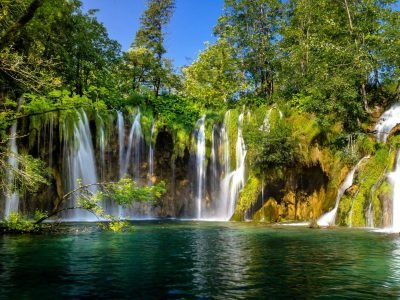
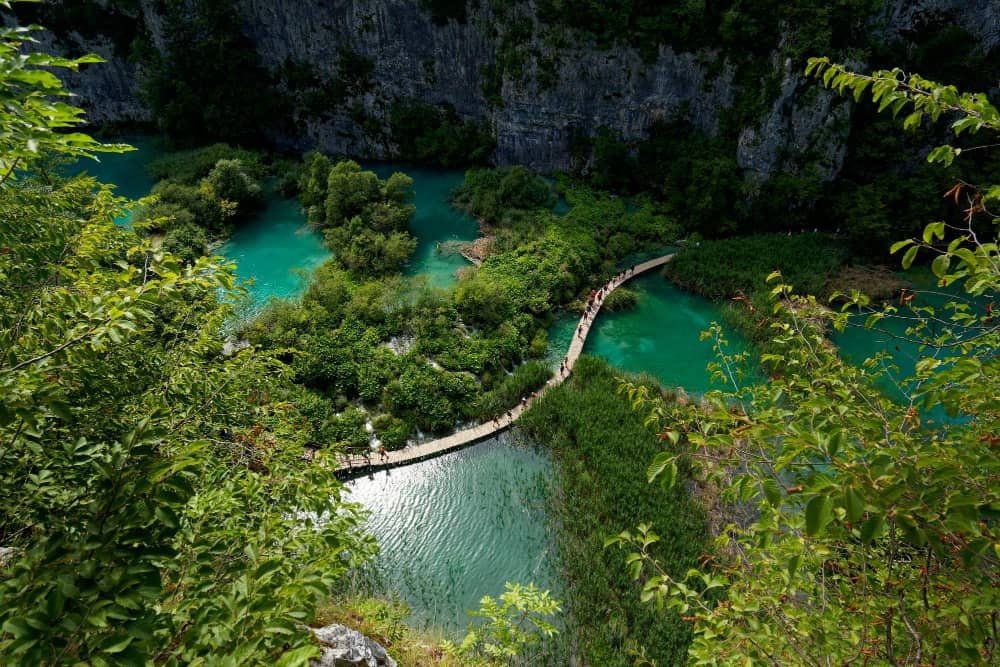
Plitvice Lakes National Park is Croatia’s oldest and largest national park and one of the country’s most recognizable natural attractions. Famous for its turquoise lakes, cascading waterfalls, forested hills, and wooden boardwalks, Plitvice offers a completely different experience from Croatia’s historic coastal cities.
The area was declared a national park in 1949 and inscribed on the UNESCO World Heritage List in 1979. At the heart of the park is an extraordinary system of lakes separated by naturally formed travertine barriers. Water continuously flows across and through these formations, creating the waterfalls, cascades, and changing waterways that define the Plitvice landscape.
A Natural Wonder of Sixteen Lakes
Plitvice is famous for its system of 16 named lakes, traditionally divided into the Upper and Lower Lakes.
- Upper Lakes (Gornja Jezera) – Set primarily within a forested landscape, the Upper Lakes feature a series of lakes connected by numerous cascades and waterfalls.
- Lower Lakes (Donja Jezera) – Surrounded by steep limestone canyon walls, the Lower Lakes create a more dramatic landscape before the water continues toward the Korana River.
One of the most striking things about Plitvice is the color of the water. Depending on the weather, sunlight, minerals, organisms in the water, and viewing angle, the lakes can appear turquoise, emerald green, blue, or even gray.
The result is a landscape that can look noticeably different from one visit—or even one hour—to the next.
Must-See Highlights
There is far more to Plitvice than a single viewpoint. Some of the highlights include:
- Veliki Slap (Great Waterfall) – The park’s most famous waterfall and one of its signature sights, dropping approximately 78 meters (256 feet).
- Kozjak Lake – The largest of Plitvice’s lakes and an important connection point between different parts of the visitor route.
- Wooden Boardwalks – Perhaps the park’s most recognizable feature, these pathways lead visitors remarkably close to the lakes and cascades.
- Upper Lakes – A beautiful area for experiencing smaller waterfalls surrounded by dense vegetation.
- Lower Lakes – Known for their canyon scenery, striking viewpoints, and access toward Veliki Slap.
- Panoramic Viewpoints – Elevated viewpoints reveal the extraordinary arrangement of lakes, waterfalls, cliffs, and forest from above.
Don’t experience Plitvice only through the most famous photo spots. Some of the quieter sections of the walking routes can be just as memorable.
Wildlife and Biodiversity
The lakes receive most of the attention, but Plitvice also protects extensive forests and an exceptionally rich natural ecosystem.
Wildlife found within the wider national park includes species such as:
- Brown bears
- Wolves
- Eurasian lynx
- Red deer
- Wild boar
- Numerous species of birds, butterflies, amphibians, and other wildlife
The surrounding forests are an essential part of the UNESCO landscape, providing habitat for wildlife while helping protect the water systems that feed the lakes.
Visitors are unlikely to encounter the park’s large mammals along the busy tourist routes, but knowing that these animals inhabit the surrounding wilderness gives a better sense of how much larger Plitvice is than the boardwalk area most travelers see.
How the Plitvice Lakes Were Formed
The beauty of Plitvice is closely connected to an ongoing natural process.
Water flowing through the region contains dissolved calcium carbonate. Under the right biological and chemical conditions, calcium carbonate is deposited and gradually forms travertine barriers.
Over time, these natural barriers influence the flow of water, helping create lakes, cascades, and waterfalls. The process continues today, meaning Plitvice isn’t a completely static landscape.
This active formation of travertine is one of the key reasons the area has such exceptional geological and ecological importance.
UNESCO Recognition
Plitvice Lakes National Park was inscribed on the UNESCO World Heritage List in 1979 for its outstanding natural values.
UNESCO recognition is closely tied to the park’s ongoing travertine-forming processes and the remarkable freshwater landscape they have created.
The protected area extends well beyond the famous lakes themselves, encompassing forests and other ecosystems that are essential to maintaining the ecological integrity of the park.
Best Time to Visit
There isn’t one bad season to see Plitvice—the experience changes considerably throughout the year.
- Spring – Higher water levels can make the waterfalls particularly impressive, while the surrounding vegetation begins turning green.
- Summer – Long days and lush scenery make this a popular time to visit, but July and August can also bring the largest crowds.
- Autumn – Forests surrounding the lakes turn shades of yellow, orange, and red, creating some of the park’s most beautiful scenery.
- Winter – Snow and ice can transform Plitvice into a completely different landscape, although weather conditions may affect access to some areas.
For a good combination of pleasant weather and fewer peak-season crowds, May, June, September, and early October are excellent choices.
Visitor Tips
- Book ahead during busy periods. Entry arrangements and visitor numbers can vary, so check the official park information before your trip.
- Arrive early. Morning visits are generally quieter, particularly during summer.
- Wear shoes with good grip. You’ll be walking on a combination of boardwalks, paths, steps, and uneven terrain.
- Give yourself enough time. A full day allows you to experience much more than the quickest visitor routes.
- Stay on designated paths and boardwalks. The lake and travertine ecosystems are sensitive and protected.
- Check conditions before visiting. Weather, water levels, maintenance, or seasonal conditions can occasionally affect particular routes.
- Don’t plan on swimming. Swimming in the lakes is prohibited to protect the ecosystem.
- Bring water and sun protection in summer, particularly if you’re planning one of the longer routes.
With its interconnected lakes, waterfalls, limestone canyons, and dense forests, Plitvice Lakes National Park deserves its reputation as one of Croatia’s great natural treasures.
More importantly, Plitvice isn’t simply a collection of beautiful waterfalls. It’s a living landscape that continues to change through natural geological and biological processes.
For travelers exploring the UNESCO World Heritage Sites in Croatia, Plitvice provides the perfect natural counterpart to the Roman palaces, medieval towns, churches, and fortifications found elsewhere in the country.
Ancient and Primeval Beech Forests of the Carpathians and Other Regions of Europe
Croatia’s UNESCO heritage isn’t limited to ancient cities, cathedrals, and famous waterfalls. The country also protects remarkable areas of old-growth European beech forest that form part of the transnational UNESCO property Ancient and Primeval Beech Forests of the Carpathians and Other Regions of Europe.
Unlike a single monument or national park, this enormous World Heritage property stretches across numerous European countries. Together, its protected forest areas preserve outstanding examples of the natural expansion and ecological development of the European beech (Fagus sylvatica) across the continent.
Croatia’s component areas are found within some of the country’s most valuable protected mountain landscapes, including Northern Velebit National Park and Paklenica National Park.
Croatia’s UNESCO-Protected Beech Forests
The Croatian components protect exceptionally well-preserved forest ecosystems where natural processes have been allowed to continue with minimal human interference.
These forests provide an opportunity to see what significant parts of Europe may have looked like before centuries of intensive agriculture, logging, settlement, and development transformed much of the continent.
Ancient trees, fallen trunks, decaying wood, young saplings, and dense vegetation all form part of a constantly changing ecosystem. Rather than being carefully managed like a city park, these forests demonstrate how European beech woodland develops naturally over long periods.
Northern Velebit National Park
Northern Velebit National Park protects a spectacular section of the Velebit mountain range near Croatia’s Adriatic coast. Its rugged limestone landscape includes forests, rocky peaks, caves, mountain meadows, and an extraordinary variety of plant life.
The UNESCO component protects valuable old-growth beech forests within this larger mountain ecosystem.
Northern Velebit is also a fantastic destination for hikers. Trails lead through dramatic karst scenery and remote mountain landscapes, with some viewpoints offering sweeping views toward the Adriatic Sea and Croatian islands.
Paklenica National Park
The UNESCO property also includes protected beech forests within Paklenica National Park, another extraordinary part of the Velebit mountain range.
Paklenica is best known for the dramatic canyons of Velika Paklenica and Mala Paklenica, but its mountainous interior also contains extensive forest ecosystems.
The combination of towering limestone cliffs, deep canyons, caves, mountain trails, and old-growth forests makes Paklenica one of Croatia’s most diverse outdoor destinations.
Why Are These Forests Important?
European beech is remarkably adaptable. After the last Ice Age, beech forests gradually expanded from isolated refuge areas and spread across large portions of Europe.
The forests included within this UNESCO property provide exceptional evidence of that continuing ecological process.
They also support complex ecosystems containing numerous species of plants, fungi, insects, birds, and mammals. Dead and decaying trees are particularly important because they provide habitat and nutrients essential to healthy old-growth forests.
Protecting these areas therefore preserves not only individual trees but entire functioning forest ecosystems.
UNESCO Recognition
The transnational property began with the inscription of primeval beech forests in Slovakia and Ukraine in 2007 and was subsequently expanded several times as additional countries and forest areas were added.
Croatia became part of the expanded property in 2017, when protected beech forests within Northern Velebit and Paklenica were included.
Today, the property demonstrates the extraordinary ecological history and continued expansion of European beech forests across different climates, elevations, and landscapes.
Best Time to Visit
The best time to experience Croatia’s beech forests depends on what you want to see.
Late spring and early summer bring fresh green foliage, wildflowers, and comfortable hiking conditions.
September and October can be especially beautiful as the forests change from green to shades of yellow, orange, and gold.
Summer is also popular, although temperatures around the lower sections of Paklenica can become hot during the middle of the day.
Visitor Tips
- Stay on marked hiking trails to protect sensitive forest habitats.
- Wear sturdy hiking shoes, especially on rocky Velebit trails.
- Carry sufficient water when hiking during warmer months.
- Check current trail and weather conditions before entering remote mountain areas.
- Avoid disturbing plants, wildlife, fallen trees, or other natural features.
- Consider combining Paklenica with a road trip through Zadar and the northern Dalmatian coast.
- Allow more time for Northern Velebit, where distances and mountain conditions can make exploration slower than expected.
The Ancient and Primeval Beech Forests of the Carpathians and Other Regions of Europe reveal a completely different side of Croatia’s UNESCO heritage. While Dubrovnik, Split, and Trogir preserve the achievements of past civilizations, these ancient forests protect something much older—the natural processes that have shaped Europe’s landscapes for thousands of years.
For hikers and nature lovers, Croatia’s UNESCO-protected beech forests offer a chance to leave the busy Adriatic coast behind and experience the wild, mountainous landscapes of the Velebit range.
Historic Complex of Split with the Palace of Diocletian
The Historic Complex of Split with the Palace of Diocletian is one of the most fascinating UNESCO World Heritage Sites in Croatia. At its heart is Diocletian’s Palace, an extraordinary Roman complex built around the turn of the 4th century for Emperor Diocletian’s retirement.
What makes the palace especially interesting is that it never became simply an archaeological site. Over the centuries, homes, churches, shops, cafés, and public spaces developed within and around its ancient walls. Today, the palace forms the historic heart of Split, and everyday life continues among Roman columns, medieval buildings, narrow stone passages, and lively squares.
A Palace Built for an Emperor
Roman Emperor Diocletian had the enormous fortified complex constructed near his birthplace on the Dalmatian coast, where he retired after abdicating in AD 305.
The original complex combined elements of an imperial residence, military fortress, and ceremonial center. Its southern section faced the sea and contained the emperor’s private apartments, while other areas accommodated guards, servants, religious buildings, and administrative functions.
Local limestone was used extensively in its construction, while decorative materials such as marble and granite were brought from other parts of the Roman Empire.
Although centuries of construction have transformed the original palace, its Roman layout remains surprisingly easy to recognize as you explore Split’s Old Town.
Highlights of Diocletian’s Palace
Several important landmarks help bring the palace’s long history to life:
- Peristyle Square – Once the ceremonial center of the imperial complex, the Peristyle remains one of Split’s most atmospheric gathering places.
- Cathedral of Saint Domnius – The cathedral incorporates Diocletian’s former mausoleum, creating a fascinating transformation from an imperial Roman monument into a Christian place of worship.
- Temple of Jupiter – One of the palace’s best-preserved Roman structures, later converted into a baptistery.
- Palace Substructures – Often called the cellars or basements, these remarkably preserved underground spaces help visitors understand the layout of the imperial apartments that once stood above them.
- The Four Historic Gates – The Golden, Silver, Iron, and Bronze gates connected different sections of the palace with the surrounding settlement and waterfront.
Don’t rush through these landmarks. Some of the best moments in Split come from simply wandering through the smaller passages and courtyards where pieces of Roman architecture appear between much newer buildings.
UNESCO Recognition
The Historic Complex of Split with the Palace of Diocletian was inscribed on the UNESCO World Heritage List in 1979.
Its importance extends beyond the surviving Roman palace. The historic center demonstrates how an ancient imperial complex gradually developed into a living Mediterranean city.
Roman structures stand alongside Romanesque churches, Gothic and Renaissance palaces, medieval houses, and later architectural additions. Rather than belonging to a single historical period, Split’s UNESCO-listed center reveals layer after layer of the city’s development.
Best Time to Visit
Split can be explored throughout the year, although April through June and September through October generally offer the best combination of pleasant weather and manageable crowds.
July and August bring warm Mediterranean weather and a lively atmosphere, but they’re also the busiest months.
For a quieter experience during summer, explore the palace early in the morning. Then return after sunset, when the stone streets and Peristyle take on a completely different atmosphere.
Visitor Tips
- Go early or stay late. The historic center is noticeably quieter outside the busiest daytime hours.
- Wear comfortable shoes. You’ll spend plenty of time walking over smooth stone streets and steps.
- Visit the palace substructures. They’re among the best places for understanding the scale and organization of Diocletian’s original residence.
- Climb the Cathedral of Saint Domnius bell tower if you’re comfortable with heights—the views across Split and the Adriatic are excellent.
- Don’t limit yourself to the major landmarks. Wander through the smaller streets and courtyards where ancient and modern Split blend together.
- Allow at least half a day. A full day is better if you also want to visit museums, enjoy the waterfront, and explore the surrounding Old Town.
Diocletian’s Palace isn’t a Roman ruin separated from modern life. It is part of modern Split. People still live and work within a historic center that has evolved continuously for centuries, which is a large part of what makes the UNESCO site so memorable.
For travelers exploring the UNESCO World Heritage Sites in Croatia, Split offers something particularly special: the chance to experience Roman history not behind museum barriers, but as part of a living Adriatic city.
Old City of Dubrovnik
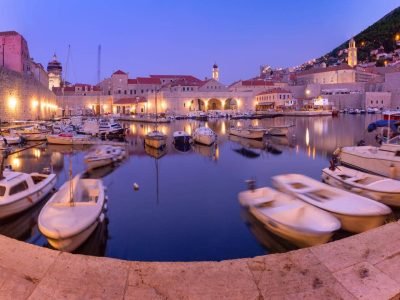
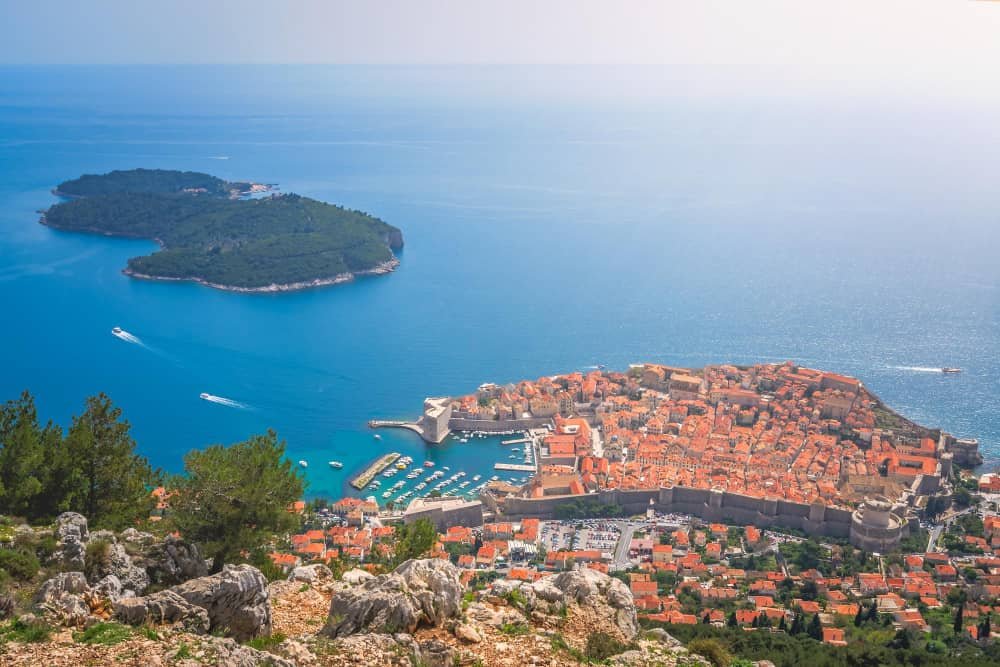
Known as the “Pearl of the Adriatic,” the Old City of Dubrovnik is one of the most recognizable UNESCO World Heritage Sites in Croatia. Surrounded by imposing stone walls and overlooking the Adriatic Sea, the historic center preserves centuries of architecture, maritime history, and cultural heritage within a remarkably compact area.
Dubrovnik developed into the center of the Republic of Ragusa, a prosperous maritime republic that became an important Mediterranean trading power. Commerce, skilled diplomacy, and an extensive network of international connections helped Ragusa maintain a remarkable degree of independence for centuries.
Today, that history is visible everywhere—from the monumental city walls and elegant palaces to churches, monasteries, fountains, narrow lanes, and the polished limestone of Stradun.
The Old City of Dubrovnik was inscribed on the UNESCO World Heritage List in 1979, making it one of Croatia’s original World Heritage properties.
A City Protected by Mighty Walls
Dubrovnik’s magnificent defensive walls are among the city’s defining features. Developed and strengthened over several centuries, the fortifications encircle much of the historic center and stretch for approximately 2 kilometers (1.2 miles).
The defensive system includes towers, bastions, gates, and fortresses positioned to protect the former maritime republic from attacks by both land and sea.
Walking the walls is one of the best ways to appreciate Dubrovnik’s layout. From above, you’ll have sweeping views of:
- The terracotta rooftops of the Old Town
- The Adriatic Sea and coastline
- Historic churches, monasteries, and palaces
- Nearby Lokrum Island
- Fort Lovrijenac, dramatically positioned outside the western city walls
Take your time on the walk. The views change constantly as the route passes above residential streets, historic buildings, courtyards, and the waterfront.
Highlights of Dubrovnik’s Old Town
Inside the walls, Dubrovnik contains an impressive concentration of historic landmarks.
Stradun (Placa) is the city’s famous main thoroughfare and one of the easiest places to begin exploring. Its smooth limestone pavement, historic façades, cafés, and surrounding side streets form the lively heart of the Old Town.
Other highlights include:
- Rector’s Palace – Once the administrative center and residence of the rector of the Republic of Ragusa.
- Sponza Palace – An elegant historic building combining Gothic and Renaissance architectural elements.
- Dubrovnik Cathedral – An important Baroque landmark with a treasury containing religious artworks and relics.
- Franciscan Monastery – Known for its beautiful cloister and historic pharmacy tradition.
- Dominican Monastery – Home to an important collection of religious art.
- Onofrio’s Great Fountain – Part of the sophisticated 15th-century water-supply system that brought fresh water into the city.
It’s worth stepping away from Stradun as well. Some of Dubrovnik’s most memorable corners are found along the steep stairways, narrow side streets, small squares, and quieter residential areas away from the busiest route.
A City Restored After War
Dubrovnik’s historic center suffered serious damage during the 1991–1992 conflict, including the shelling of the Old Town.
In the years that followed, extensive conservation and restoration work was undertaken to repair damaged roofs, historic buildings, streets, churches, and other structures while maintaining the architectural character of the UNESCO-listed city.
Looking across Dubrovnik today, it’s easy to focus entirely on its beauty. Understanding this more recent chapter of its history, however, adds important context to the city’s remarkable preservation.
Dubrovnik on the Screen
Dubrovnik reached an even larger international audience after appearing prominently as King’s Landing in Game of Thrones. Several locations around the Old Town and surrounding fortifications became instantly recognizable to fans of the series.
Film tourism can be a fun addition to a visit, but Dubrovnik’s real story is far more interesting. Its maritime republic, diplomatic history, architecture, defensive system, and centuries of Mediterranean trade give the city a depth that goes well beyond its role as a filming location.
Best Time to Visit
The best balance of pleasant weather and manageable crowds usually comes in May, June, September, and early October.
July and August bring hot weather and the largest number of visitors. If you’re traveling during peak season, exploring early in the morning can make a significant difference.
Evenings are another wonderful time to wander through the Old Town, particularly after some day visitors have departed.
Visitor Tips
- Walk the city walls early. You’ll generally encounter cooler temperatures and fewer people.
- Wear comfortable shoes. Dubrovnik’s smooth limestone streets and numerous steps can be tiring after several hours of sightseeing.
- Explore beyond Stradun. The quieter lanes and stairways reveal a more intimate side of the Old Town.
- Allow several hours for the historic center. A full day gives you more time for museums, churches, the walls, and a relaxed meal.
- Consider staying overnight. Dubrovnik feels noticeably different in the evening and early morning compared with the busiest daytime hours.
- Bring sun protection and water in summer. Large sections of the city walls have little shade.
The Old City of Dubrovnik deserves its reputation as one of Croatia’s great cultural treasures, but its appeal goes far beyond the famous walls and Adriatic views. Its streets preserve the story of a sophisticated maritime republic that traded across the Mediterranean while developing its own distinctive architecture, institutions, and traditions.
For anyone exploring the UNESCO World Heritage Sites in Croatia, Dubrovnik is an essential stop—and one that’s even more rewarding when you give yourself enough time to look beyond the postcard views.
Episcopal Complex of the Euphrasian Basilica in the Historic Centre of Poreč
The Episcopal Complex of the Euphrasian Basilica in Poreč is one of Croatia’s most impressive examples of early Christian and Byzantine art and architecture. Hidden within the historic center of this coastal Istrian town, the complex is best known for its extraordinary 6th-century mosaics, which still shimmer above the altar more than 1,400 years after they were created.
The site is particularly fascinating because today’s basilica is only one layer of a much longer story. Remains of earlier Christian buildings survive within the complex, allowing visitors to trace the development of an important religious center from the early centuries of Christianity through the Byzantine period and beyond.
The Episcopal Complex was inscribed on the UNESCO World Heritage List in 1997.
A Masterpiece of Early Byzantine Art
The present basilica was built during the 6th century under Bishop Euphrasius, incorporating elements of earlier Christian structures that had occupied the site.
Its greatest treasures are the mosaics decorating the apse. Created from countless pieces of colored and reflective material, they transform dramatically as the light changes inside the church.
At the center is an image of the Virgin Mary holding the Christ Child, surrounded by angels, saints, and other figures. Bishop Euphrasius himself also appears in the composition, providing a rare visual connection between the building and the man responsible for its construction.
The mosaics are not simply beautiful decoration. Their imagery, materials, and craftsmanship provide valuable insight into the religious art and cultural connections of the Adriatic during the Byzantine period.
More Than Just a Basilica
The UNESCO property encompasses an episcopal complex, not simply the main church.
Visitors can explore several interconnected historic spaces, including:
- The Euphrasian Basilica – The centerpiece of the complex and home to its celebrated mosaics.
- The Atrium – An open courtyard that forms part of the historic approach to the basilica.
- The Baptistery – An important element of the early Christian complex.
- The Episcopal Palace – Associated with the bishops who administered the religious center.
- Archaeological remains and floor mosaics – Evidence of earlier buildings that occupied the site.
- The Bell Tower – A later addition offering elevated views across Poreč and the surrounding coastline.
Exploring the entire complex rather than simply entering the basilica gives a much better understanding of why UNESCO considers the site so important.
Architectural and Artistic Highlights
The Euphrasian Basilica combines architecture, mosaics, sculpture, and decorative details from different periods.
Look for:
- The golden mosaics of the apse, especially the central image of the Virgin and Child.
- Marble columns and carved capitals dividing the interior.
- Early Christian floor mosaics preserved from earlier phases of the site.
- Decorative stonework and architectural details reflecting centuries of change.
- The relationship between the basilica, atrium, baptistery, and episcopal buildings, which helps reveal the organization of an early Christian religious complex.
It’s worth slowing down inside the basilica. Many of its most interesting details are easy to miss if you focus only on the famous apse.
UNESCO Recognition
The Episcopal Complex of the Euphrasian Basilica was added to the UNESCO World Heritage List in 1997 because of its exceptional preservation and importance in understanding early Christian and Byzantine architecture.
The complex preserves significant parts of its original architectural arrangement and decoration, while also containing evidence of earlier Christian buildings on the same site.
Its 6th-century mosaics are particularly important, illustrating the artistic and religious influences that connected the Adriatic coast with the wider Byzantine world.
Best Time to Visit
Poreč is especially enjoyable during May, June, September, and early October, when the weather is generally comfortable for combining sightseeing with walks around the Old Town.
July and August are considerably busier because Poreč is also a popular summer destination on the Istrian coast.
If you’re visiting during peak season, arriving earlier in the day can provide a quieter experience inside the complex.
Visitor Tips
- Don’t rush the mosaics. Look at them from different positions inside the basilica, as their appearance changes with the light.
- Explore the entire episcopal complex. The baptistery, atrium, archaeological remains, and other spaces provide important historical context.
- Climb the bell tower if it’s open. The elevated views across Poreč’s rooftops and the Adriatic make a worthwhile addition to the visit.
- Look down as well as up. Some of the site’s oldest surviving features are the floor mosaics beneath your feet.
- Dress appropriately. The basilica remains a religious site.
- Allow time for Poreč’s Old Town. Its narrow streets, Roman heritage, historic buildings, and waterfront make it worth exploring beyond the UNESCO complex.
The Episcopal Complex of the Euphrasian Basilica may not have the international fame of Dubrovnik or Plitvice Lakes, but it is one of the most rewarding UNESCO World Heritage Sites in Croatia for travelers interested in art, architecture, and early Christianity.
Its greatest appeal comes from seeing so many layers of history in one place—from traces of earlier Christian buildings to the magnificent Byzantine mosaics that still dominate the basilica today. Combined with the atmospheric streets of Poreč, it makes an excellent cultural stop on any journey through Istria and northern Croatia.
Historic City of Trogir
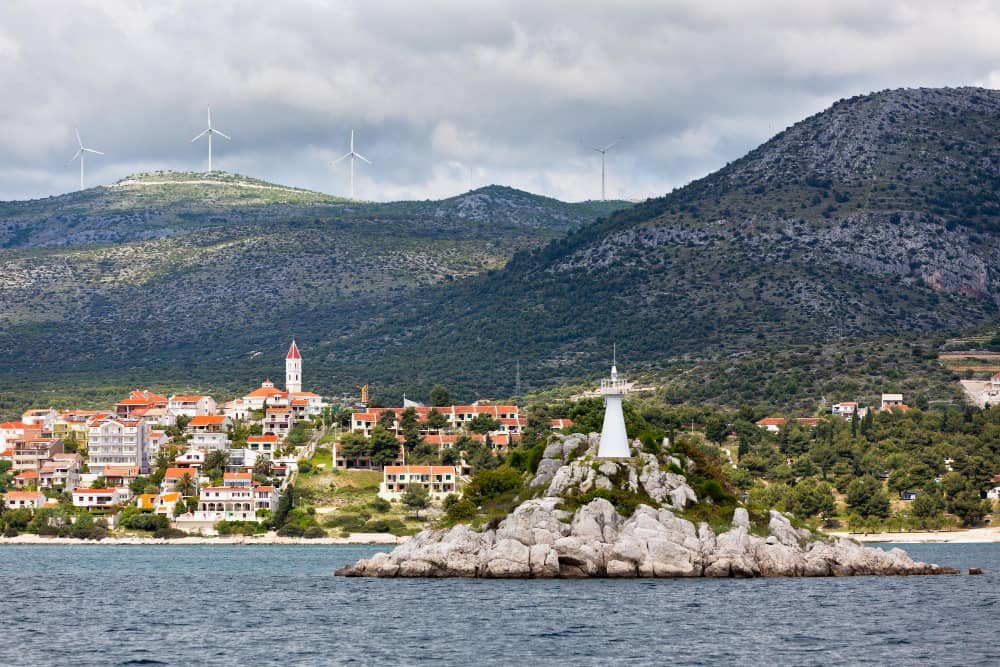
The Historic City of Trogir packs more than two thousand years of history into a remarkably small area. Set on a small island between the Croatian mainland and the island of Čiovo, its historic center is a maze of narrow stone streets, churches, courtyards, palaces, and defensive structures shaped by successive generations.
Trogir’s architecture reflects influences from the Greeks and Romans through the Romanesque, Gothic, Renaissance, and Baroque periods. Yet despite all those layers, the Old Town feels surprisingly cohesive and is compact enough to explore almost entirely on foot.
UNESCO inscribed the Historic City of Trogir on the World Heritage List in 1997.
More Than Two Millennia of History
Trogir’s origins stretch back to the Hellenistic period, when Greek settlers established the settlement of Tragurion. It later developed under Roman rule and continued to evolve through the medieval period.
Over the centuries, different rulers and cultural influences left their mark on the town. Particularly important was the period of Venetian rule, which influenced Trogir’s architecture, fortifications, and urban character.
What makes the city especially valuable is the survival of its historic urban layout. Its narrow lanes and compact blocks preserve evidence of centuries of development rather than representing a town rebuilt to imitate the past.
Walking through Trogir today, you can move from Romanesque churches to Gothic and Renaissance palaces within minutes.
Highlights of Trogir
Trogir’s Old Town is small, but there is plenty to see once you start looking beyond the main square.
Highlights include:
- Cathedral of Saint Lawrence – The city’s most important religious monument, particularly famous for the magnificent portal created by Master Radovan in the 13th century.
- Kamerlengo Fortress – A 15th-century fortress at the western end of the historic center that reflects Trogir’s Venetian period.
- City Loggia – Part of the historic civic center and one of the most recognizable buildings around the main square.
- Clock Tower – Another prominent feature of Trogir’s central square.
- Cipiko Palace – A historic noble residence displaying Gothic and Renaissance architectural elements.
- Waterfront Promenade – A pleasant place to walk beside the Old Town, especially in the evening when the waterfront becomes lively with cafés and restaurants.
The real pleasure, however, comes from wandering without a strict route. Trogir is small enough that getting temporarily lost in its narrow streets usually leads to another courtyard, church, stone passage, or architectural detail.
Cathedral of Saint Lawrence and Radovan’s Portal
If you see only one monument in Trogir, make it the Cathedral of Saint Lawrence.
Construction of the cathedral extended over several centuries, which helps explain the mixture of architectural styles visible today. Its most celebrated feature is Radovan’s Portal, completed in 1240 and richly decorated with biblical scenes, animals, figures, and intricate stone carvings.
The portal rewards close inspection. Rather than simply photographing the entrance and moving on, spend a few minutes studying the individual figures and decorative details.
The cathedral’s bell tower is another highlight. Visitors who climb it are rewarded with elevated views across Trogir’s red rooftops, the surrounding coastline, and nearby Čiovo.
A Living Historic Town
Trogir isn’t simply a collection of protected monuments. Restaurants, cafés, small shops, homes, churches, and everyday community life continue within and around the historic center.
That’s particularly noticeable in the evening. Once some of the daytime tour groups leave, the narrow streets and waterfront take on a more relaxed atmosphere.
Sitting in a small square or walking along the promenade after sunset can be just as memorable as visiting the major monuments.
UNESCO Recognition
The Historic City of Trogir was added to the UNESCO World Heritage List in 1997 because of its exceptional urban and architectural heritage.
UNESCO highlights the continuity of Trogir’s urban development and the way successive architectural periods have been incorporated into the historic town.
Romanesque churches stand alongside Renaissance and Baroque buildings, while the street pattern preserves evidence of the settlement’s much earlier origins.
This layering of different periods is central to understanding why such a small Croatian town holds such significant international heritage status.
Best Time to Visit
The most comfortable months for exploring Trogir are generally April through June and September through October.
July and August bring hot weather and larger crowds, particularly during the middle of the day.
If you’re visiting in summer, arrive early or stay into the evening. The Old Town is particularly atmospheric after sunset, when its stone buildings are illuminated and the waterfront restaurants begin filling up.
Visitor Tips
- Allow at least half a day. Trogir is compact, but rushing through it means missing many of its architectural details.
- Visit the Cathedral of Saint Lawrence. Radovan’s Portal alone makes the cathedral worth seeing.
- Climb the bell tower if it’s open and you’re comfortable with heights.
- Explore the side streets. Some of Trogir’s most atmospheric corners are away from the waterfront and main square.
- Visit Kamerlengo Fortress. It’s an important reminder of the town’s defensive and Venetian history.
- Stay for the evening if possible. Trogir becomes more relaxed once many day visitors leave.
- Combine Trogir with Split. The two UNESCO cities are close enough to visit as part of the same itinerary, although each deserves time of its own.
The Historic City of Trogir proves that a UNESCO destination doesn’t have to be enormous to contain an extraordinary amount of history. Within just a few streets, visitors can encounter traces of Greek settlement, medieval churches, Venetian fortifications, Renaissance residences, and centuries of everyday life.
For travelers exploring the UNESCO World Heritage Sites in Croatia, Trogir is particularly easy to combine with nearby Split and Šibenik, making this stretch of the Dalmatian coast one of the richest areas in the country for cultural sightseeing.
Cathedral of St. James in Šibenik
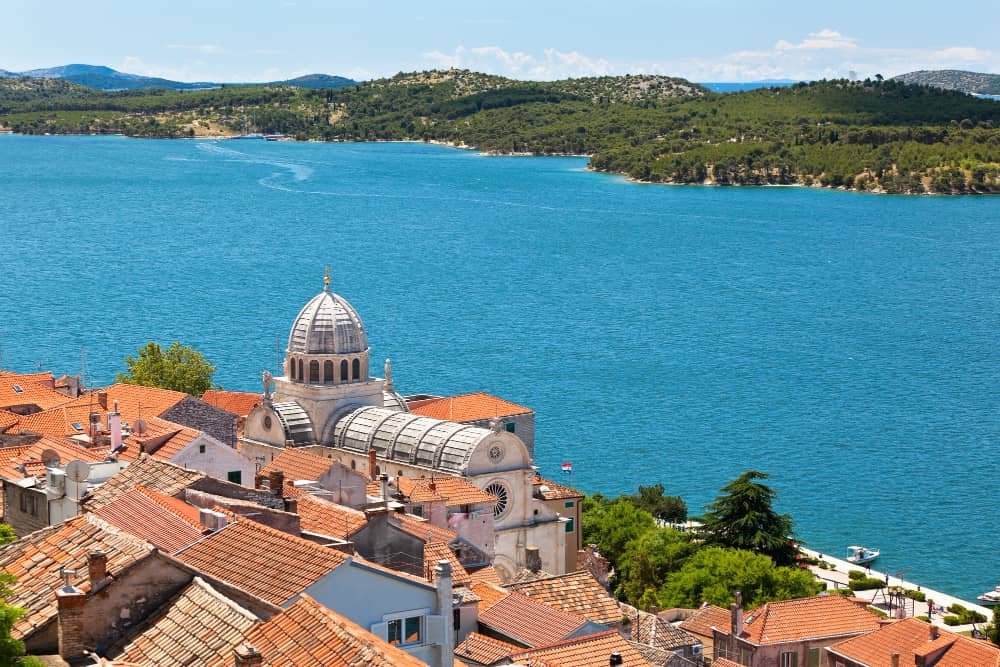
The Cathedral of St. James in Šibenik is one of the most distinctive architectural landmarks on Croatia‘s Adriatic coast. Rising above the historic center of Šibenik, the cathedral brings together Gothic and Renaissance architecture in a building famous for both its sculptural details and innovative use of stone.
Construction stretched across more than a century and involved several generations of architects, sculptors, and stonemasons. The result is a cathedral that reflects the transition between two major periods of European architecture while retaining a character all its own.
The Cathedral of St. James was inscribed on the UNESCO World Heritage List in 2000.
More Than a Century of Construction
Construction of the cathedral began in 1431 and continued through much of the 15th and into the 16th century.
Several architects contributed to its development, but one of the most important was Juraj Dalmatinac, also known as Giorgio da Sebenico. His work transformed the project and helped give the cathedral its distinctive combination of architecture and sculpture.
Later, Nikola Firentinac (Niccolò di Giovanni Fiorentino) continued the work, contributing to the cathedral’s Renaissance character and helping complete important parts of the structure.
Because construction took place over such a long period, the cathedral provides a fascinating opportunity to see Gothic and Renaissance ideas meeting within a single monument.
An Extraordinary Stone Structure
One of the cathedral’s most important characteristics is the way stone was used in its construction.
Large, carefully shaped stone slabs and structural elements were assembled using sophisticated building techniques, particularly in the cathedral’s upper sections, vaulting, and dome.
Rather than simply decorating a conventional structure with stone, the builders made stone itself central to the cathedral’s architectural system.
This innovative approach is one of the reasons the Cathedral of St. James holds such an important place in the history of Renaissance architecture along the Adriatic.
The Famous Frieze of 71 Faces
Perhaps the cathedral’s most memorable exterior feature is the remarkable frieze of 71 sculpted human heads.
The faces are strikingly individual. Some appear serious, others weathered or expressive, and each seems to have its own personality.
They have traditionally been interpreted as portraits of people from 15th-century Šibenik, although the exact identities and meaning behind the figures remain uncertain.
Take time to walk slowly around the exterior. The heads are easy to overlook from a distance, but up close they become one of the most fascinating details of the entire cathedral.
Architectural Highlights
Several features deserve particular attention:
- The stone dome – One of the cathedral’s defining architectural features and an important part of its Renaissance design.
- The Frieze of 71 Heads – A remarkable series of individualized stone faces decorating the exterior.
- The Baptistery – Richly decorated with intricate Renaissance sculpture and architectural details.
- Carved portals – Featuring elaborate religious figures and decorative stonework.
- Interior vaulting – Demonstrating the sophisticated stone construction used throughout the cathedral.
- Gothic and Renaissance details – Evidence of the different architects and artistic periods involved in its long construction.
The cathedral rewards close inspection. Many of its most interesting details are found not in its overall scale but in the sculpture, stone joints, decorative motifs, and architectural transitions.
UNESCO Recognition
UNESCO inscribed the Cathedral of St. James in Šibenik on the World Heritage List in 2000.
Its significance lies partly in the successful exchange of architectural ideas between northern Italy, Dalmatia, and Tuscany during the 15th and 16th centuries.
UNESCO also highlights the cathedral’s innovative construction techniques and the remarkable harmony achieved between its architecture and sculpture.
Rather than representing purely Gothic or purely Renaissance architecture, St. James demonstrates how different traditions were combined to create something distinctive to the Adriatic region.
Best Time to Visit
Šibenik is particularly pleasant during May, June, September, and early October, when temperatures are comfortable for exploring the cathedral and surrounding Old Town.
July and August are warmer and busier, so visiting earlier in the morning or later in the afternoon can make sightseeing more enjoyable.
The cathedral’s exterior is also beautiful in the softer light of late afternoon, when shadows make its carvings and architectural details easier to appreciate.
Visitor Tips
- Look closely at the 71 sculpted heads. They’re among the cathedral’s most unusual and memorable features.
- Don’t skip the baptistery. Its detailed stone carving is one of the artistic highlights of the building.
- Walk around the entire exterior. Different sides reveal architectural and sculptural details that aren’t visible from the main entrance.
- Explore Šibenik’s Old Town afterward. Its steep stone lanes, small squares, churches, and historic buildings deserve time of their own.
- Combine your visit with St. Michael’s Fortress. The elevated fortress offers excellent views across Šibenik and the Adriatic.
- Wear comfortable shoes. Šibenik’s historic center includes numerous stone steps and steep streets.
- Allow around two to three hours for the cathedral and a relaxed exploration of the surrounding historic center.
The Cathedral of St. James in Šibenik stands out among the UNESCO World Heritage Sites in Croatia because of the extraordinary relationship between its architecture, engineering, and sculpture.
Look beyond the cathedral’s impressive dome and you’ll discover the details that make it truly memorable: expressive stone faces, intricately carved portals, an elaborate baptistery, and construction techniques that demonstrate the skill and ambition of the craftsmen who worked here centuries ago.
And there’s another reason to include Šibenik on a Croatia UNESCO itinerary: the city is also connected to the Fortress of St. Nicholas, part of the separate UNESCO-listed Venetian Works of Defence. That gives travelers the opportunity to experience two very different World Heritage properties while visiting the Šibenik area.
Stari Grad Plain on Hvar Island
The Stari Grad Plain on Hvar Island offers a very different experience from Croatia’s palaces, cathedrals, and fortified cities. At first glance, it may look like a peaceful Mediterranean farming landscape. Look closer, however, and you’ll find a system of fields whose origins stretch back more than 2,000 years.
Greek colonists established an agricultural landscape here in the 4th century BC, dividing the fertile land into carefully organized plots. Remarkably, the basic pattern of those ancient divisions can still be recognized today.
Even more importantly, the land continues to be used for agriculture. Vineyards, olive groves, and other Mediterranean crops make Stari Grad Plain a living cultural landscape rather than simply an archaeological site.
UNESCO inscribed Stari Grad Plain on the World Heritage List in 2008.
A Landscape Shaped by the Ancient Greeks
Greek settlers from the island of Paros established the colony of Pharos in 384 BC in what is now Stari Grad.
The surrounding fertile plain was systematically divided into geometric agricultural parcels. Stone boundaries, tracks, and other elements helped organize the land and establish a pattern that has survived through centuries of political, cultural, and agricultural change.
This ancient organization of the landscape is one of the main reasons Stari Grad Plain is so significant.
Instead of seeing a reconstructed Greek settlement, visitors are looking across land that preserves the imprint of how ancient colonists divided and worked the countryside.
Highlights of Stari Grad Plain
The plain is best explored slowly. There isn’t one monumental attraction that defines the UNESCO site; the landscape itself is the attraction.
Look for:
- Ancient field divisions – The geometric organization of the agricultural landscape remains one of its defining features.
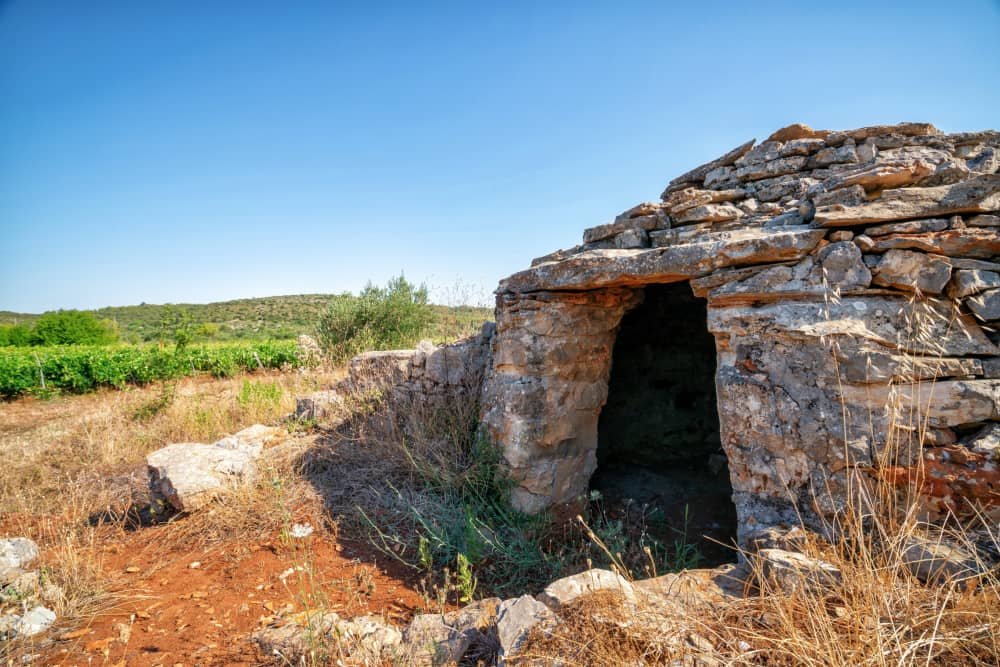
- Traditional dry-stone walls – Built without mortar, these walls divide fields and contribute to the character of the landscape.
- Vineyards and olive groves – Agriculture remains an important part of the plain today.
- Historic paths and roads – Routes through the landscape help reveal how the fields were organized and connected.
- Traditional stone structures – Small rural buildings and shelters reflect generations of agricultural use.
- Archaeological remains – Evidence from different periods reveals how the plain continued to develop after its Greek origins.
Walking or cycling through the area makes it much easier to appreciate the scale and organization of the ancient landscape than simply viewing it from a road.
A Living Cultural Landscape
One of the most important things to understand about Stari Grad Plain is that agriculture didn’t disappear when the ancient Greek period ended.
The fertile land continued to be cultivated through Roman, medieval, Venetian, and modern times.
Grapes and olives remain particularly important crops, continuing agricultural traditions deeply connected with the Mediterranean landscape.
This continuity is what makes the site special. Stari Grad Plain isn’t preserved by freezing it at one moment in history. Its heritage survives partly because people have continued using and caring for the land.
Visitors therefore experience both an ancient cultural landscape and a working agricultural region at the same time.
Stari Grad and Ancient Pharos
A visit to the plain is even more rewarding when combined with nearby Stari Grad.
The town traces its origins to ancient Pharos and is among the oldest settlements on Hvar Island. Today, its historic streets, stone houses, churches, small squares, and waterfront create an attractive base for exploring the UNESCO landscape.
Spending time in both places helps connect the ancient settlement with the agricultural land that supported it.
The Stari Grad Museum can also provide useful historical and archaeological context before or after exploring the plain.
UNESCO Recognition
UNESCO added Stari Grad Plain to the World Heritage List in 2008 because it preserves an exceptionally important ancient agricultural landscape.
The organization of the land established by Greek colonists remains visible through its field divisions, stone boundaries, roads, and patterns of cultivation.
Just as importantly, the agricultural function of the plain has continued for centuries.
This combination of an ancient land-division system and continued agricultural use makes Stari Grad Plain an outstanding example of a Mediterranean cultural landscape shaped by a long relationship between people and the land.
Best Time to Visit
The most comfortable periods for exploring Stari Grad Plain are generally April through June and September through October.
Spring brings green landscapes and pleasant temperatures, while late summer and early autumn coincide with an important period in the agricultural calendar, including the grape harvest.
July and August can be beautiful, but midday temperatures may make walking or cycling across the exposed landscape uncomfortable.
During summer, consider visiting in the morning or late afternoon instead.
Visitor Tips
- Explore by bicycle or e-bike. The relatively open landscape is well suited to cycling and allows you to cover more ground than walking.
- Don’t expect a conventional attraction. The value of Stari Grad Plain comes from understanding the entire landscape rather than seeing one famous monument.
- Visit the Stari Grad Museum. Learning about ancient Pharos first can make the field system much easier to appreciate.
- Look closely at the stone walls and field boundaries. They’re essential elements of the historic landscape.
- Bring water and sun protection. Shade can be limited in exposed parts of the plain.
- Respect private agricultural land. Remember that many areas remain actively cultivated.
- Combine the plain with Stari Grad. Together, the historic town and agricultural landscape provide a much fuller picture of Hvar’s ancient heritage.
The Stari Grad Plain is a reminder that UNESCO World Heritage isn’t limited to spectacular monuments. Here, the most important feature is the landscape itself and the way people have organized, cultivated, and cared for it across generations.
For travelers exploring the UNESCO World Heritage Sites in Croatia, Stari Grad Plain provides something genuinely different: a chance to walk or cycle through a Mediterranean landscape where patterns established in antiquity remain visible in the fields around you.
And because it’s located on Hvar Island, a visit can easily be combined with historic Stari Grad, local food and wine, coastal scenery, and some of Croatia’s most beautiful island landscapes.
Stećci Medieval Tombstone Graveyards in Croatia
The Stećci Medieval Tombstone Graveyards are among the most unusual UNESCO World Heritage Sites connected with Croatia. Instead of belonging to a single city or archaeological site, this transnational World Heritage property brings together 28 medieval necropolises across Bosnia and Herzegovina, Croatia, Montenegro, and Serbia.
Croatia is home to two of the 28 UNESCO-listed components: the Velika and Mala Crljivica necropolises at Cista Velika and the St. Barbara necropolis at Dubravka in Konavle.
Dating primarily from the medieval period, stećci are monumental stone tombstones found across parts of the western Balkans. Their distinctive forms, carved decorations, inscriptions, and mysterious imagery provide an extraordinary window into the communities that lived in this region centuries ago.
The Stećci Medieval Tombstone Graveyards were inscribed on the UNESCO World Heritage List in 2016.
Croatia’s UNESCO Stećci Sites
Croatia contributes two locations to this international World Heritage property.
- Velika and Mala Crljivica at Cista Velika – Located in the Dalmatian hinterland, this archaeological area preserves an important collection of medieval stećci.
- St. Barbara at Dubravka – Located in the Konavle region south of Dubrovnik, this necropolis preserves another significant group of decorated medieval tombstones.
These sites are far quieter than Croatia’s famous UNESCO destinations such as Dubrovnik or Plitvice Lakes, but that’s part of their appeal. They provide an opportunity to encounter medieval Balkan heritage within the landscapes where these monuments were originally created.
What Are Stećci?
Stećci—stećak in the singular—are monumental medieval stone tombstones characteristic of parts of the western Balkans.
They appeared in significant numbers during the later Middle Ages and continued to be produced into the early Ottoman period.
Stećci vary considerably in size, decoration, and form. Common types include:
- Flat stone slabs
- Chest-shaped monuments
- Tall upright forms
- Gabled or roof-shaped tombstones
- Pillars and other monumental forms
Some are relatively simple, while others are richly decorated with carvings or inscriptions.
Their variety is one reason these monuments remain so interesting to historians and archaeologists.
Symbols and Stone Carvings
The carvings found on stećci are among their most fascinating features.
Decorative motifs can include:
- Human figures
- Horsemen
- Hunting scenes
- Animals
- Crosses
- Rosettes
- Spirals and geometric patterns
- Floral and vine-like decorations
- Weapons and shields
- Figures with raised arms
- Scenes that may represent social or ceremonial activities
Not every tombstone is decorated, and the meaning of individual symbols isn’t always certain.
That’s part of what makes stećci so intriguing. Rather than providing one simple explanation of medieval life, they preserve a complex visual language influenced by local artistic traditions, religious beliefs, social status, and the cultural environment of the medieval Balkans.
Stećci don’t fit neatly within the modern borders that divide Southeast Europe today.
Thousands of these medieval monuments survive across Bosnia and Herzegovina, Croatia, Montenegro, and Serbia, demonstrating how closely connected communities across the region once were.
Their distribution also makes the UNESCO property particularly appropriate as a transnational site. Rather than presenting stećci as belonging exclusively to one modern country or religious tradition, the World Heritage listing recognizes them as part of a broader cultural phenomenon that developed across the medieval western Balkans.
For travelers interested in Balkan history, that makes these monuments especially valuable.
UNESCO Recognition
UNESCO inscribed the Stećci Medieval Tombstone Graveyards on the World Heritage List in 2016.
The property consists of 28 selected necropolises containing significant examples of these medieval monuments.
Their importance comes not only from the tombstones themselves but also from their relationship with the surrounding landscape, inscriptions, decorative motifs, burial traditions, and the cultural connections they reveal across the region.
Together, the selected sites preserve an exceptional record of medieval funerary art and cultural traditions in Southeast Europe.
Best Time to Visit
The Croatian stećci locations are easiest to explore during spring and autumn, when temperatures are generally more comfortable for visiting outdoor archaeological sites.
Summer is also possible, but inland areas can become hot and exposed during the middle of the day.
The Dubravka site in Konavle is particularly convenient for travelers already visiting Dubrovnik, while Cista Velika can fit naturally into a road trip through inland Dalmatia.
Visitor Tips
- Don’t expect major tourist infrastructure. These are archaeological and cultural heritage sites rather than large conventional attractions.
- Take time to examine individual stones. Differences in shape, carving, and decoration become much more apparent up close.
- Read available interpretation. Understanding the historical context makes the monuments considerably more meaningful.
- Don’t climb, sit, or stand on the tombstones. They are protected medieval monuments.
- Bring water and sun protection, particularly during warmer months.
- Visit Dubravka while exploring Konavle. It’s an easy way to add a lesser-known UNESCO experience to a Dubrovnik itinerary.
- Consider Cista Velika on an inland Dalmatian road trip. It offers a very different perspective from Croatia’s better-known coastal heritage.
The Stećci Medieval Tombstone Graveyards reveal a side of Croatian history that many visitors never encounter. There are no enormous city walls, imperial palaces, or spectacular waterfalls here. Instead, the experience comes from standing among centuries-old stones and looking closely at the symbols medieval craftsmen carved into them.
They also tell a larger Balkan story. Because stećci extend across several modern countries, they remind us that the history of this region has always crossed today’s national borders.
For travelers exploring the UNESCO World Heritage Sites in Croatia, the Croatian stećci sites provide a fascinating opportunity to move beyond the country’s famous attractions and discover a quieter but equally meaningful part of its medieval heritage.
Venetian Works of Defence Between the 16th and 17th Centuries
The Venetian Works of Defence Between the 16th and 17th Centuries are another example of Croatia’s UNESCO heritage extending beyond the borders of a single country. This transnational World Heritage property brings together important examples of Venetian fortification architecture in Croatia, Italy, and Montenegro.
The fortifications were part of the enormous defensive network created by the Republic of Venice to protect its territories, ports, maritime routes, and strategic positions at a time when warfare was being transformed by the increasing use of gunpowder and artillery.
Croatia contributes two components to the UNESCO property: the Defensive System of Zadar and the Fortress of St. Nicholas near Šibenik.
UNESCO inscribed the transnational property on the World Heritage List in 2017.
Fortress of St. Nicholas near Šibenik
The Fortress of St. Nicholas occupies a dramatic position at the entrance to St. Anthony Channel, the narrow sea passage leading toward Šibenik.
Built during the 16th century, the fortress was designed to strengthen the maritime defenses of Šibenik and prevent hostile ships from reaching the city through the channel.
Its position was carefully chosen. Any vessel attempting to approach Šibenik from the Adriatic would have to pass the fortress, placing the entrance to the city under the control of its defenders.
The fortress is associated with the Venetian architect Gian Girolamo Sanmicheli and represents the changing approach to military architecture during the Renaissance, when defensive structures increasingly had to withstand cannon fire rather than traditional medieval siege warfare.
Today, the fortress remains one of the most striking military monuments on the Croatian coast.
What to See at the Fortress of St. Nicholas
The experience begins before you even enter the fortress. Its location between the Adriatic and St. Anthony Channel is an important part of understanding why it was built here.
Look for:
- The fortress’s distinctive geometric design
- Massive stone defensive walls
- Gun positions designed for artillery
- Views across St. Anthony Channel
- The relationship between the fortress and the entrance to Šibenik
- The surrounding coastal and maritime landscape
Seeing the fortress from the water can be particularly impressive because it reveals how effectively its position controlled access to the channel.
Access arrangements can change, so check current official visitor information before planning your trip rather than assuming every route or area will be open.
Defensive System of Zadar
The second Croatian component of the UNESCO property is the Defensive System of Zadar.
Zadar was an extremely important Venetian stronghold on the eastern Adriatic, and its defenses were substantially developed to respond to new military threats and advances in artillery.
Instead of relying solely on tall medieval walls, Renaissance military engineers created systems of lower, stronger defenses incorporating bastions, walls, gates, and other fortified elements.
Parts of this defensive landscape remain integrated into modern Zadar, making it possible to encounter UNESCO-listed fortifications while walking through the city.
Zadar’s Land Gate
One of the most recognizable surviving elements of Zadar’s fortifications is the Land Gate (Kopnena vrata).
Completed in 1543, the monumental gateway served as an important entrance into the fortified city from the mainland.
Its elaborate Renaissance design is very different from a purely functional military entrance. Architectural decoration turns the gate into both a defensive structure and a statement of Venetian power.
One of its most recognizable features is the Winged Lion of Saint Mark, the traditional symbol associated with the Republic of Venice.
The Land Gate is an excellent place to begin exploring how Zadar’s Renaissance defenses became incorporated into the modern city.
Why Venice Built These Fortifications
During the 16th and 17th centuries, the Republic of Venice controlled territories stretching far beyond the city of Venice itself.
Its possessions included strategically important ports, islands, coastal settlements, and trade routes across the Adriatic and eastern Mediterranean.
At the same time, military technology was changing rapidly. The growing effectiveness of artillery made many traditional medieval fortifications increasingly vulnerable.
Venetian engineers responded by developing new defensive systems based on geometric layouts, bastions, thicker walls, and carefully planned fields of fire.
The Croatian fortifications at Zadar and Šibenik form part of this much larger story of military innovation and competition for control of the Adriatic.
UNESCO Recognition
UNESCO inscribed the property officially known as Venetian Works of Defence between the 16th and 17th Centuries: Stato da Terra – Western Stato da Mar on the World Heritage List in 2017.
The complete transnational property includes six components in Italy, Croatia, and Montenegro.
Together, they illustrate the development and spread of the alla moderna system of fortification created in response to the increasing use of firearms and artillery.
Croatia’s components are particularly interesting because they demonstrate two different defensive situations: Zadar as a fortified city and St. Nicholas as a maritime fortress controlling access to Šibenik.
Best Time to Visit
The most comfortable months for exploring these fortifications are generally April through June and September through October.
Summer offers long daylight hours but can also bring high temperatures, particularly when walking around exposed fortifications during the middle of the day.
Early morning and late afternoon are good choices for sightseeing and photography.
Zadar is particularly famous for its sunsets, so exploring the historic defenses can easily be combined with an evening along the city’s waterfront.
Visitor Tips
- Check access to the Fortress of St. Nicholas before visiting. Tours, transportation, and opening arrangements can change.
- See St. Nicholas from the water if possible. Its strategic position becomes much easier to understand from the channel.
- Combine the fortress with the Cathedral of St. James. Šibenik gives you the unusual opportunity to experience components of two separate UNESCO World Heritage properties in the same area.
- Explore Zadar on foot. Sections of its historic defensive system are integrated into the modern city.
- Don’t miss the Land Gate. It’s one of the most impressive surviving Renaissance elements of Zadar’s fortifications.
- Allow time beyond the UNESCO monuments. Both Zadar and Šibenik have historic centers, waterfronts, museums, restaurants, and other attractions worth exploring.
- Visit later in the day during summer. Cooler temperatures make walking around the fortifications considerably more comfortable.
The Venetian Works of Defence reveal a side of Croatia’s history that can easily be overlooked when focusing on Roman palaces and medieval churches. These structures were built for a very practical reason: to control territory, protect strategic ports, and respond to rapidly changing military technology.
They also help explain Croatia’s place within the wider history of the Adriatic. The fortifications at Zadar and Šibenik were pieces of a defensive system that stretched across modern national borders and connected distant territories of the Venetian Republic.
For travelers exploring the UNESCO World Heritage Sites in Croatia, visiting both Croatian components provides an excellent opportunity to see how Renaissance military engineering shaped two of the country’s most historic coastal cities.
Best UNESCO World Heritage Sites to Visit First
With 10 UNESCO World Heritage properties associated with Croatia, you don’t necessarily need to see every one on your first trip. Some fit naturally into a classic Croatian itinerary, while others are better suited to travelers with specific interests in archaeology, architecture, hiking, or lesser-known historic sites.
If this is your first visit, Dubrovnik, Split, and Plitvice Lakes National Park are the three UNESCO destinations I’d prioritize. From there, it’s easy to add Trogir, Šibenik, Zadar, or Hvar depending on your route.
Best UNESCO Sites for First-Time Visitors
If you only have a few days, these five sites provide an excellent introduction to Croatia’s cultural and natural heritage:
| UNESCO Site | Best For | Recommended Time |
|---|---|---|
| Plitvice Lakes National Park | Lakes, waterfalls, hiking, photography | Full day |
| Old City of Dubrovnik | Medieval history, architecture, city walls | 1–2 days |
| Historic Complex of Split | Roman history, architecture, local culture | Full day |
| Historic City of Trogir | Medieval streets and architecture | Half day |
| Cathedral of St. James in Šibenik | Gothic and Renaissance architecture | 1–2 hours |
You don’t have to plan an entire trip around UNESCO status, either. Several of these destinations are close enough to combine naturally.
For example, Split and Trogir work particularly well together, while Šibenik offers access to both the Cathedral of St. James and the nearby Fortress of St. Nicholas.
Best for History Lovers
Travelers interested in archaeology, architecture, and European history have an exceptional range of choices.
Start with:
- Historic Complex of Split with the Palace of Diocletian for Roman history.
- Old City of Dubrovnik for the story of the Republic of Ragusa and its impressive fortifications.
- Historic City of Trogir for layers of Greek, Roman, medieval, Venetian, and later architecture.
- Cathedral of St. James in Šibenik for Gothic and Renaissance architecture.
- Episcopal Complex of the Euphrasian Basilica in Poreč for early Christian and Byzantine art.
- Stari Grad Plain for an ancient Greek agricultural landscape that remains in use today.
- Stećci Medieval Tombstone Graveyards for a less familiar side of medieval Balkan history.
Together, these sites reveal just how many civilizations and cultural influences have shaped the Croatian coast and interior.
Best for Nature Lovers
Plitvice Lakes National Park is the obvious choice for travelers who want to combine UNESCO heritage with outdoor exploration.
Its interconnected lakes, waterfalls, forests, limestone landscape, and extensive walking routes make it completely different from Croatia’s historic UNESCO cities.
But it isn’t Croatia’s only UNESCO experience for nature lovers.
The Croatian components of the Ancient and Primeval Beech Forests of the Carpathians and Other Regions of Europe protect important forest areas within Northern Velebit National Park and Paklenica National Park.
That makes the Velebit region particularly appealing to hikers who want to experience a quieter and wilder side of Croatia.
Best Lesser-Known UNESCO Experiences
Dubrovnik and Plitvice may receive most of the international attention, but several less-famous Croatian UNESCO sites are well worth adding to your itinerary.
Consider:
- Stari Grad Plain – Explore a living agricultural landscape whose organization dates back to ancient Greek colonists.
- Euphrasian Basilica in Poreč – Step inside to see remarkable 6th-century mosaics.
- Stećci Medieval Tombstone Graveyards – Discover a medieval funerary tradition shared across several Balkan countries.
- Venetian Works of Defence – Explore Renaissance military architecture in Zadar and near Šibenik.
- UNESCO-protected beech forests – Experience old-growth forest landscapes within the Velebit mountain region.
These places can add much more variety to a Croatia itinerary, especially if you’ve already visited the country’s headline attractions.
Which UNESCO Sites Are Easiest to Combine?
One advantage of exploring Croatia’s UNESCO heritage is that several properties are located relatively close together.
Split + Trogir
This is one of the easiest combinations. You can explore Diocletian’s Palace in Split and visit Trogir as a half-day or evening excursion.
Šibenik + Fortress of St. Nicholas
Šibenik gives you access to components of two different UNESCO World Heritage properties: the Cathedral of St. James and the Venetian Works of Defence.
Zadar + Paklenica
Explore Zadar’s Venetian fortifications before heading toward Paklenica National Park for hiking and Croatia’s UNESCO-protected beech forests.
Dubrovnik + Konavle
After exploring Dubrovnik, head south into Konavle to discover the UNESCO-listed stećci at Dubravka.
Stari Grad + Stari Grad Plain
These are natural companions. Explore the historic town before walking or cycling through the ancient agricultural landscape surrounding it.
If You Only Have One Week
Trying to visit all 10 UNESCO properties in seven days would turn your vacation into a race. A better approach is to concentrate on the main north-to-south route through Dalmatia.
A practical one-week UNESCO itinerary could look like this:
Day 1 – Plitvice Lakes National Park
Spend a full day exploring the lakes, waterfalls, boardwalks, and forest trails.
Day 2 – Zadar
Explore the Old Town and surviving elements of the UNESCO-listed Venetian defensive system.
Day 3 – Šibenik
Visit the Cathedral of St. James and explore Šibenik’s historic center. If your schedule and current access arrangements allow, add the Fortress of St. Nicholas.
Day 4 – Trogir and Split
Spend the morning in Trogir before continuing to Split and exploring Diocletian’s Palace.
Day 5 – Split
Give yourself additional time for the palace, museums, waterfront, and surrounding historic center rather than rushing south immediately.
Day 6 – Travel to Dubrovnik
Enjoy the coastal journey and arrive with enough time for an evening walk through the Old Town.
Day 7 – Dubrovnik
Walk the city walls and explore the historic streets, churches, palaces, and museums of the UNESCO-listed Old City.
If you have 10 to 14 days, you can begin adding Poreč and Istria, Hvar and Stari Grad Plain, the Velebit beech forests, and Croatia’s stećci sites without turning the trip into a checklist.
The best UNESCO World Heritage Sites in Croatia ultimately depend on what you enjoy most. First-time visitors will probably get the greatest impact from Dubrovnik, Split, and Plitvice Lakes, while returning travelers can go much deeper with places such as Stari Grad Plain, Poreč, the stećci necropolises, and Croatia’s UNESCO-protected forests.
Rather than trying to collect every UNESCO site in a single trip, choose the ones that fit naturally into your route. You’ll spend less time traveling and more time actually experiencing the history, landscapes, and culture that earned these places their World Heritage status.
Suggested Croatia UNESCO Road Trip
A road trip is one of the best ways to explore the UNESCO World Heritage Sites in Croatia, particularly the concentration of historic cities and monuments along the Adriatic coast.
However, Croatia is longer than it may appear on a map, and its UNESCO properties stretch from Istria in the northwest to Dubrovnik and Konavle in the far south. Add Hvar Island, Plitvice Lakes, and the protected beech forests of the Velebit mountains, and trying to see everything in a few days quickly becomes unrealistic.
Instead of racing between sites, choose an itinerary that matches the amount of time you actually have.
5-Day UNESCO Highlights Itinerary
With five days, concentrate on Croatia’s UNESCO highlights rather than attempting to see every property.
Day 1 – Plitvice Lakes National Park
Begin at Plitvice Lakes National Park and give yourself most of the day to explore its lakes, waterfalls, forest trails, and wooden boardwalks.
Staying nearby the night before can help you enter earlier and avoid spending a large part of your first day driving.
Day 2 – Zadar and Šibenik
Travel toward the Adriatic coast and stop in Zadar to see parts of its UNESCO-listed Venetian defensive system, including the Land Gate.
Continue south to Šibenik, where the Cathedral of St. James represents a separate UNESCO World Heritage property.
This makes the Zadar–Šibenik stretch particularly rewarding for travelers interested in Renaissance architecture and Venetian history.
Day 3 – Trogir and Split
Explore the compact Historic City of Trogir in the morning before continuing to nearby Split.
Spend the rest of the day discovering Diocletian’s Palace, the Peristyle, palace substructures, Cathedral of Saint Domnius, and the surrounding historic center.
Stay overnight in Split.
Day 4 – Split to Dubrovnik
Enjoy a slower morning in Split before beginning the journey south to Dubrovnik.
Arriving later in the day gives you the opportunity to experience Dubrovnik’s Old Town in the evening, when the historic streets can feel very different from the busiest daytime hours.
Day 5 – Dubrovnik
Dedicate your final day to the Old City of Dubrovnik.
Walk the city walls, explore Stradun, Rector’s Palace, historic churches and monasteries, and spend time wandering through the smaller streets away from the main attractions.
Five days is fast-paced, but this route introduces you to several of Croatia’s most important UNESCO sites without making every day revolve around long-distance driving.
7-Day UNESCO Road Trip
Seven days gives you more breathing room and allows you to add Hvar and the Stari Grad Plain.
Day 1 – Plitvice Lakes National Park
Spend the day exploring Croatia’s most famous natural UNESCO World Heritage Site.
Day 2 – Zadar
Travel to Zadar and explore its historic center and UNESCO-listed Venetian defensive works.
Day 3 – Šibenik and Trogir
Visit the Cathedral of St. James in Šibenik before continuing south to the Historic City of Trogir.
Stay in Trogir or nearby Split.
Day 4 – Split
Give Split a full day.
Explore Diocletian’s Palace, its substructures, Peristyle Square, Cathedral of Saint Domnius, and the surrounding historic center without trying to squeeze everything into a few hours.
Day 5 – Stari Grad Plain, Hvar Island
Travel to Hvar Island and explore Stari Grad Plain.
Combine the UNESCO agricultural landscape with historic Stari Grad, and consider staying overnight on Hvar rather than immediately returning to the mainland.
Day 6 – Travel to Dubrovnik
Continue south toward Dubrovnik.
Use the afternoon or evening for a first walk through the Old Town.
Day 7 – Dubrovnik
Spend a full day exploring Dubrovnik’s UNESCO-listed historic center and famous city walls.
This itinerary still doesn’t cover every Croatian UNESCO property, but it provides a much more enjoyable introduction than trying to check all 10 off a list in one week.
10- to 14-Day Croatia UNESCO Road Trip
If your goal is to experience all of Croatia’s UNESCO World Heritage properties, plan approximately 10 to 14 days and organize the trip geographically.
A north-to-south route could include:
Poreč → Northern Velebit/Paklenica → Plitvice Lakes → Zadar → Šibenik → Cista Velika → Trogir → Split → Hvar/Stari Grad Plain → Dubrovnik → Konavle
This route allows you to incorporate:
- Euphrasian Basilica in Poreč
- Croatia’s UNESCO-protected beech forests
- Plitvice Lakes National Park
- Venetian defensive works in Zadar
- Cathedral of St. James in Šibenik
- Fortress of St. Nicholas near Šibenik
- Stećci at Cista Velika
- Historic City of Trogir
- Diocletian’s Palace and historic Split
- Stari Grad Plain on Hvar
- Old City of Dubrovnik
- Stećci at Dubravka in Konavle
Some of these locations belong to the same transnational UNESCO property, which is why the number of individual Croatian locations you’ll visit is greater than the number of World Heritage properties associated with the country.
Driving Tips for a Croatia UNESCO Road Trip
Self-driving gives you the most flexibility, particularly when visiting lesser-known UNESCO components outside the major cities.
Keep these practical tips in mind:
- Croatian motorways charge tolls. Check current toll rates and accepted payment methods before your trip.
- Don’t underestimate driving times. Coastal traffic can become heavy during July and August.
- Avoid driving into historic centers. Dubrovnik, Split, Trogir, and other old towns are much easier to explore after parking outside their pedestrian areas.
- Reserve accommodation early in summer. Popular coastal destinations can fill quickly during peak season.
- Plan Hvar separately. Ferry schedules and whether you’re traveling with a vehicle will affect your itinerary.
- Check access before visiting remote UNESCO components. Conditions, opening arrangements, and tours can change.
- Give Plitvice a full day. Treating it as a quick roadside stop doesn’t do the park justice.
- Build some flexibility into your schedule. Weather, ferry connections, summer traffic, and mountain conditions can all affect travel times.
Can You Visit Every UNESCO Site in One Trip?
Yes, but don’t try to do it in a week.
For travelers specifically interested in UNESCO heritage, 10 to 14 days is a much more realistic starting point. Two weeks gives you enough flexibility to explore the major sites while also including less-visited places such as Poreč, the Velebit beech forests, Stari Grad Plain, and Croatia’s stećci necropolises.
And there’s no reason to make the entire trip about ticking UNESCO sites off a checklist.
Leave time for beaches, local restaurants, small coastal towns, hiking, island scenery, and spontaneous stops along the way. Those experiences often become just as memorable as the famous monuments.
A Croatia UNESCO road trip works best when the World Heritage Sites provide the backbone of the journey rather than becoming a race to collect all 10. Follow the country geographically, give the major destinations enough time, and you’ll experience an extraordinary mix of Roman history, medieval cities, Renaissance architecture, ancient agricultural landscapes, forests, mountains, and Adriatic scenery along the way.
Best Time to Visit Croatia’s UNESCO World Heritage Sites
Croatia’s UNESCO World Heritage Sites can be visited throughout the year, but the experience changes considerably with the seasons. Weather, crowds, ferry schedules, daylight hours, and access to outdoor sites can all affect your trip.
For most travelers, the best time to visit Croatia’s UNESCO World Heritage Sites is May through June or September through early October. These shoulder-season months generally provide a good balance of pleasant weather, longer daylight hours, and fewer visitors than the July and August peak.
The ideal season also depends on where you’re going. Exploring Dubrovnik in October is very different from hiking in the Velebit mountains, so consider the individual destinations as well as the overall season.
Spring: April to June
Spring is an excellent time for a UNESCO-focused trip through Croatia.
Temperatures become increasingly comfortable for walking through Dubrovnik, Split, Trogir, Poreč, Zadar, and Šibenik, while Croatia’s natural landscapes turn green after winter.
At Plitvice Lakes National Park, spring often brings abundant water and lush vegetation, creating beautiful conditions around the lakes and waterfalls.
Why visit in spring?
- Comfortable temperatures for sightseeing and walking.
- Generally fewer visitors than during July and August.
- Green landscapes and spring vegetation.
- Longer daylight hours as summer approaches.
- Good conditions for road trips.
- Easier sightseeing in historic cities before peak-season crowds arrive.
May and June are particularly attractive if you want warm weather without experiencing the busiest part of the summer season.
Summer: July to August
Summer is Croatia’s peak travel season.
The Adriatic coast is at its liveliest, with warm weather, busy waterfronts, outdoor dining, festivals, beaches, and frequent connections to popular islands.
It’s a wonderful time to experience Croatia, but not necessarily the easiest season for intensive UNESCO sightseeing.
Popular destinations such as Dubrovnik, Split, Plitvice Lakes, Trogir, and Hvar can become very busy, and midday temperatures can make long walking tours tiring.
Advantages of visiting in summer:
- Long daylight hours.
- Warm Adriatic water.
- Frequent seasonal transportation connections.
- Lively coastal cities and islands.
- Numerous festivals and cultural events.
Things to consider:
- Larger crowds at major attractions.
- Higher accommodation prices in popular destinations.
- Hot conditions for walking and hiking.
- Heavier traffic on popular coastal routes.
- Busy ferry connections and island destinations.
If you’re visiting during July or August, start sightseeing early in the morning whenever possible. Take a break during the hottest part of the afternoon and return to the historic centers later in the day.
Autumn: September to October
Early autumn may offer the best overall balance for travelers interested primarily in Croatia’s UNESCO sites.
September often retains much of summer’s warmth while gradually bringing fewer visitors. By October, historic cities can feel noticeably quieter.
Autumn is particularly rewarding at:
- Plitvice Lakes National Park, as the surrounding forests begin changing color.
- Stari Grad Plain, during an important period in the agricultural calendar.
- Dubrovnik, when walking the city walls can be more comfortable.
- Split and Trogir, where cooler temperatures make exploring stone streets easier.
- Northern Velebit and Paklenica, where autumn can provide beautiful hiking scenery when conditions are suitable.
September is especially useful if you want to combine UNESCO sightseeing with beaches and island travel.
Winter: November to March
Winter reveals a quieter side of Croatia.
Dubrovnik, Split, Trogir, Šibenik, Poreč, and Zadar receive far fewer visitors than during summer, making this an interesting season for travelers who care more about history and architecture than beaches.
Accommodation can also be less expensive in some destinations.
However, winter requires more flexibility.
Ferry schedules may be reduced, some attractions can operate shorter hours, and weather conditions may affect mountain areas and outdoor sites.
Plitvice Lakes National Park can be spectacular when snow and ice transform the landscape, but don’t plan a winter trip based solely on photographs of frozen waterfalls. Conditions vary, and parts of the visitor network may be affected by weather.
Winter is best for travelers who value quiet historic cities and don’t mind cooler temperatures or reduced seasonal services.
Seasonal Comparison
| Season | Typical Conditions | Crowd Levels | Best For |
|---|---|---|---|
| Spring | Mild to warm | Low to moderate | Sightseeing, road trips, hiking, photography |
| Summer | Hot and sunny | High to very high | Islands, beaches, festivals, longer days |
| Autumn | Warm to mild | Moderate to low | UNESCO road trips, hiking, photography, food and wine |
| Winter | Cool; colder inland and in mountains | Low | Quiet city breaks, architecture, off-season travel |
Best Months for Different Types of Travelers
For first-time visitors:
Choose May, June, or September for the best balance of weather, transportation, and manageable crowds.
For photographers:
Consider May, late September, and October, particularly for Plitvice Lakes and Croatia’s mountain landscapes.
For hikers:
Late spring and early autumn generally provide better conditions than the hottest part of summer, although mountain weather should always be checked before setting out.
For beaches + UNESCO sightseeing:
June and September are particularly attractive because you can combine cultural sightseeing with warmer coastal conditions.
For fewer crowds:
Consider April, May, October, or the winter months, depending on the destinations you want to visit.
When Should You Go?
If your main goal is exploring the UNESCO World Heritage Sites in Croatia, I’d choose May, June, September, or early October.
For perhaps the best overall combination, September is hard to beat. You can still enjoy the Adriatic coast and islands while generally encountering more comfortable sightseeing conditions than during the height of summer.
May and early June are excellent alternatives, especially if Plitvice Lakes, hiking, and a road trip through several regions are priorities.
Whatever season you choose, check current opening hours, ferry schedules, park conditions, and access information before traveling. Croatia’s UNESCO properties range from historic city centers and churches to islands, mountain forests, and archaeological landscapes, so conditions can vary considerably from one site to another.
Travel Tips for Visiting Croatia’s UNESCO World Heritage Sites
Exploring Croatia’s UNESCO World Heritage Sites is relatively straightforward, but a little planning can make a big difference—especially during the busy summer months.
Some sites are located in major cities and can be reached easily on foot, while others require a car, ferry, boat excursion, or hike. Before setting out, check current opening hours, ticket requirements, transportation schedules, and access conditions for the specific places you plan to visit.
Book Popular Attractions in Advance
Advance planning is particularly important for Plitvice Lakes National Park, where tickets use designated entrance periods and availability can become limited during busy travel dates.
For other popular attractions, purchasing tickets online can still save time and help organize your sightseeing.
During peak season, consider booking ahead for:
- Plitvice Lakes National Park
- Dubrovnik City Walls
- Popular museums and attractions within Dubrovnik
- Ferry connections if you’re traveling with a vehicle
- Tours or transportation to the Fortress of St. Nicholas
Always use official websites or authorized ticket providers and check current entry arrangements before your trip.
Start Exploring Early
Early morning is one of the best times to experience Croatia’s most popular UNESCO destinations.
This is particularly helpful in Dubrovnik, Split, Trogir, and Plitvice Lakes National Park, where visitor numbers can increase considerably later in the day during summer.
Starting early often means:
- Cooler temperatures
- Quieter streets and walking routes
- More time to explore without rushing
- Better conditions for photography
There’s another strategy that works well in historic cities: return in the evening.
Split, Dubrovnik, and Trogir have a completely different atmosphere after sunset, when the stone streets are illuminated and many daytime visitors have departed.
Wear Comfortable Shoes
This sounds like a small detail until you’ve spent six hours walking across polished stone streets, steep stairways, fortress walls, and uneven paths.
Comfortable footwear with good grip is particularly useful in:
- Dubrovnik
- Split
- Trogir
- Šibenik
- Poreč
- Zadar
For Plitvice Lakes, Paklenica, and Northern Velebit, choose footwear appropriate for the trail and current weather conditions rather than ordinary city shoes.
Don’t Treat Every UNESCO Site the Same
Croatia’s World Heritage properties are remarkably diverse, and they require different styles of travel.
You can wander freely through much of historic Split, while Plitvice Lakes requires more careful route planning. Stari Grad Plain is best understood as an entire cultural landscape, while the Cathedral of St. James can be appreciated within a relatively short visit.
The stećci necropolises and UNESCO-protected beech forests are different again, with fewer conventional tourist facilities and more emphasis on the landscape around them.
Check what you’re actually visiting before you arrive. It will help you choose the right amount of time, clothing, transportation, and expectations.
Respect Historic and Natural Sites
UNESCO designation comes with a responsibility to protect these places for future generations.
While visiting:
- Stay on designated trails and boardwalks where required.
- Don’t climb or sit on archaeological monuments or medieval tombstones.
- Avoid touching mosaics, carvings, and fragile historic surfaces.
- Follow photography restrictions inside churches and museums.
- Never remove stones, plants, or other natural materials.
- Dispose of waste responsibly.
- Follow instructions from park staff and heritage-site personnel.
This is particularly important at natural sites such as Plitvice Lakes and the UNESCO-protected beech forests, where visitors should avoid disturbing sensitive habitats.
Rent a Car for Lesser-Known UNESCO Sites
You don’t necessarily need a car for Dubrovnik, Split, Trogir, Poreč, or central Zadar. In fact, a car can become an inconvenience once you reach their historic centers.
But having one becomes extremely useful if you’re planning a larger UNESCO road trip.
A rental car makes it easier to reach:
- Cista Velika and its stećci
- Paklenica National Park
- Northern Velebit
- Rural areas around Stari Grad Plain
- Smaller towns and attractions between major UNESCO destinations
A good strategy is to use a car for traveling between regions, then park outside historic centers and explore them on foot.
Plan Ferries Carefully
If Stari Grad Plain on Hvar Island is part of your itinerary, ferry planning becomes important.
Schedules vary by season, and traveling with a rental car requires more planning than traveling as a foot passenger.
Check:
- Departure port
- Arrival port
- Whether the ferry carries vehicles
- Seasonal schedules
- Vehicle reservation requirements
- Your rental company’s rules concerning ferry travel
Give yourself some flexibility rather than planning a tight connection immediately after a ferry crossing.
Stay Overnight When You Can
Day trips are convenient, but some of Croatia’s historic cities are at their best early in the morning and after sunset.
Staying overnight in Dubrovnik, Split, Trogir, or Stari Grad gives you the opportunity to experience these places outside the busiest sightseeing hours.
Instead of rushing back to a bus or cruise ship, you can enjoy dinner, walk through illuminated streets, and return to major landmarks early the following morning.
Combine UNESCO Sites with Nearby Attractions
Croatia’s relatively compact geography makes it easy to combine World Heritage Sites with other worthwhile destinations.
Consider pairing:
- Split + Trogir
- Šibenik + Fortress of St. Nicholas
- Šibenik + Krka National Park
- Zadar + Paklenica National Park
- Dubrovnik + Konavle
- Dubrovnik + Lokrum Island
- Poreč + the hill towns of Istria
- Plitvice Lakes + Rastoke
- Stari Grad Plain + Stari Grad and the rest of Hvar Island
These combinations make the trip feel less like a checklist of monuments and more like an exploration of each region.
Leave Room for Croatian Food and Local Culture
UNESCO status may bring you to a destination, but don’t spend the entire trip moving from monument to monument.
Stop at local markets. Try regional dishes. Visit a small winery or olive oil producer. Sit at a café in an old square. Walk along the waterfront without having another attraction scheduled immediately afterward.
Different regions also have their own culinary traditions. Istria, Dalmatia, Hvar, Dubrovnik, and Croatia’s inland regions don’t all offer the same experience.
That local context is part of what makes a UNESCO road trip through Croatia so rewarding.
Check Current Information Before You Go
Opening hours, ticket prices, ferry schedules, trail conditions, and access arrangements can change.
Before visiting, check current information for:
- Entry tickets and opening hours
- Ferry and boat schedules
- Parking
- Road conditions
- Hiking trails
- Weather
- Seasonal closures
- Guided tours
- Accessibility
This is particularly important for Plitvice Lakes National Park, the Fortress of St. Nicholas, Hvar ferry connections, Paklenica, and Northern Velebit.
A successful trip through the UNESCO World Heritage Sites in Croatia isn’t about seeing as many places as possible. Give yourself enough time to understand what you’re looking at, explore beyond the main photo spots, and experience the communities and landscapes surrounding each site.
You’ll come away with much more than photographs of famous landmarks—you’ll have a better understanding of the civilizations, traditions, and natural forces that have shaped Croatia over thousands of years.
FAQs About UNESCO World Heritage Sites in Croatia
How Many UNESCO World Heritage Sites Are There in Croatia?
Croatia has 10 properties inscribed on the UNESCO World Heritage List. They include historic cities, religious monuments, an ancient agricultural landscape, medieval tombstone graveyards, Venetian fortifications, Plitvice Lakes National Park, and protected European beech forests.
Some are entirely within Croatia, while others form part of larger transnational UNESCO World Heritage properties shared with other European countries.
What Is the Most Famous UNESCO Site in Croatia?
The Old City of Dubrovnik is probably Croatia’s most internationally recognized UNESCO World Heritage Site. Its historic walls, stone streets, churches, palaces, and spectacular position overlooking the Adriatic have made it one of the country’s signature destinations.
Plitvice Lakes National Park and Diocletian’s Palace in Split are also among Croatia’s most famous UNESCO attractions.
Is Plitvice Lakes National Park a UNESCO World Heritage Site?
Yes. Plitvice Lakes National Park was inscribed on the UNESCO World Heritage List in 1979.
The park is internationally important for its interconnected lakes, waterfalls, forests, and ongoing natural processes responsible for the formation of travertine barriers.
Plitvice was also one of Croatia’s first three World Heritage inscriptions, together with the Old City of Dubrovnik and the Historic Complex of Split with the Palace of Diocletian.
Which UNESCO World Heritage Site Should I Visit First?
For a first trip to Croatia, start with the site that fits your itinerary and interests best.
Choose Plitvice Lakes National Park if nature and photography are your priorities.
Choose Dubrovnik if you want medieval history, monumental city walls, and Adriatic scenery.
Choose Split and Diocletian’s Palace if you’re particularly interested in Roman history and want to experience an ancient monument that remains part of a living city.
If your itinerary allows, visiting all three provides an excellent introduction to Croatia’s UNESCO heritage.
Can You Visit All of Croatia’s UNESCO World Heritage Sites in One Trip?
Yes, but allow enough time.
A 10- to 14-day trip can incorporate Croatia’s 10 UNESCO World Heritage properties, although visiting every individual Croatian component of the transnational properties requires additional travel.
A car provides the greatest flexibility for reaching places such as Cista Velika, Paklenica, Northern Velebit, and Konavle, while ferries are necessary for reaching Hvar Island and Stari Grad Plain.
If you have only one week, it’s better to concentrate on several major UNESCO sites rather than rushing through the entire list.
Which UNESCO Sites in Croatia Are Best for Families?
Several Croatian UNESCO destinations work particularly well for families, depending on the children’s ages and interests.
Popular choices include:
- Plitvice Lakes National Park for waterfalls, lakes, and outdoor exploration.
- Diocletian’s Palace in Split for Roman history and maze-like historic streets.
- Historic City of Trogir for a compact Old Town that’s relatively easy to explore.
- Dubrovnik for its fortifications, historic streets, and dramatic coastal setting.
Keep in mind that Dubrovnik includes numerous steps and Plitvice can involve considerable walking, so choose routes appropriate for your family.
Are Croatia’s UNESCO Sites Open Year-Round?
Many of Croatia’s UNESCO destinations can be visited throughout the year, particularly historic centers such as Dubrovnik, Split, Trogir, Zadar, Šibenik, and Poreč.
However, individual museums, churches, visitor centers, national parks, ferries, and guided attractions may operate on reduced schedules outside the main tourist season.
Weather can also affect access to outdoor and mountain destinations.
Always check current opening hours and access information before traveling.
What Is the Best Time to Visit Croatia’s UNESCO World Heritage Sites?
For most travelers, May, June, September, and early October offer the best combination of pleasant weather and manageable crowds.
July and August provide long days and excellent conditions for combining sightseeing with beaches and island travel, but they’re also the busiest and hottest months.
Spring and early autumn are particularly good for a road trip involving several UNESCO destinations.
Are Guided Tours Worth Booking?
They can be, especially at sites where understanding the history significantly improves the experience.
A knowledgeable guide can be particularly useful at Diocletian’s Palace, Dubrovnik, the Euphrasian Basilica, Stari Grad Plain, and the stećci necropolises, where important details aren’t always obvious without historical context.
You don’t need a guide everywhere, though. Many travelers will be perfectly comfortable exploring places such as Trogir and central Zadar independently.
Are Any of Croatia’s UNESCO Sites Natural?
Yes.
Plitvice Lakes National Park is Croatia’s best-known natural World Heritage property, famous for its lakes, waterfalls, forests, and ongoing travertine-forming processes.
Croatia also participates in the transnational Ancient and Primeval Beech Forests of the Carpathians and Other Regions of Europe World Heritage property, with protected forest components in the Velebit region.
These natural properties provide an interesting contrast to Croatia’s better-known historic cities, churches, fortifications, and archaeological landscapes.
Which Croatian UNESCO Sites Are Transnational?
Croatia participates in several UNESCO properties that extend across modern national borders.
These include the Stećci Medieval Tombstone Graveyards, the Venetian Works of Defence between the 16th and 17th Centuries, and the Ancient and Primeval Beech Forests of the Carpathians and Other Regions of Europe.
Each property includes Croatian components as part of a larger international World Heritage listing.
What Are the Three UNESCO Sites Croatia Had Inscribed in 1979?
Croatia’s three properties first inscribed on the World Heritage List in 1979 are:
- Old City of Dubrovnik
- Historic Complex of Split with the Palace of Diocletian
- Plitvice Lakes National Park
Today, they remain three of the country’s most famous and frequently visited World Heritage destinations.
Why Are Croatia’s UNESCO World Heritage Sites Important?
Croatia’s World Heritage properties preserve an extraordinary range of cultural and natural history.
Within one country, travelers can encounter a Roman imperial palace in Split, Byzantine mosaics in Poreč, medieval Dubrovnik and Trogir, Renaissance architecture in Šibenik, Venetian fortifications, ancient Greek agricultural patterns on Hvar, medieval stećci tombstones, the waterfalls of Plitvice, and protected European beech forests.
Together, these places demonstrate how Croatia has been shaped by different civilizations, cultures, religions, trade networks, landscapes, and natural processes over thousands of years.
That’s what makes exploring the UNESCO World Heritage Sites in Croatia so rewarding: no two sites tell exactly the same story.
Final Thoughts on Croatia’s UNESCO World Heritage Sites
Croatia’s UNESCO World Heritage Sites reveal just how much history and natural diversity is packed into this relatively small country. You can walk through the remains of Diocletian’s Roman palace in Split, circle the medieval walls of Dubrovnik, admire Byzantine mosaics in Poreč, explore an ancient Greek agricultural landscape on Hvar, and hike beside the turquoise lakes and waterfalls of Plitvice Lakes National Park.
And some of the most interesting places aren’t necessarily the most famous. The stećci tombstones, Venetian fortifications, and UNESCO-protected beech forests tell very different stories about Croatia and its connections with the wider Balkans and Europe.
If this is your first trip, don’t feel that you need to visit all 10 UNESCO properties at once. Dubrovnik, Split, and Plitvice Lakes make an excellent starting point, while Trogir and Šibenik are easy additions to a Dalmatian itinerary. With more time, you can venture farther into Istria, Hvar, Velebit, and Croatia’s lesser-visited archaeological landscapes.
Most importantly, don’t turn your trip into a checklist. Give yourself time to wander through the old streets, stop at viewpoints, try the local food, and explore the landscapes surrounding the monuments.
The UNESCO World Heritage Sites in Croatia aren’t simply places to photograph. Together, they tell a story stretching from ancient Greek and Roman civilization through the medieval and Renaissance periods to the extraordinary natural processes still shaping Croatia today.
What's your reaction?